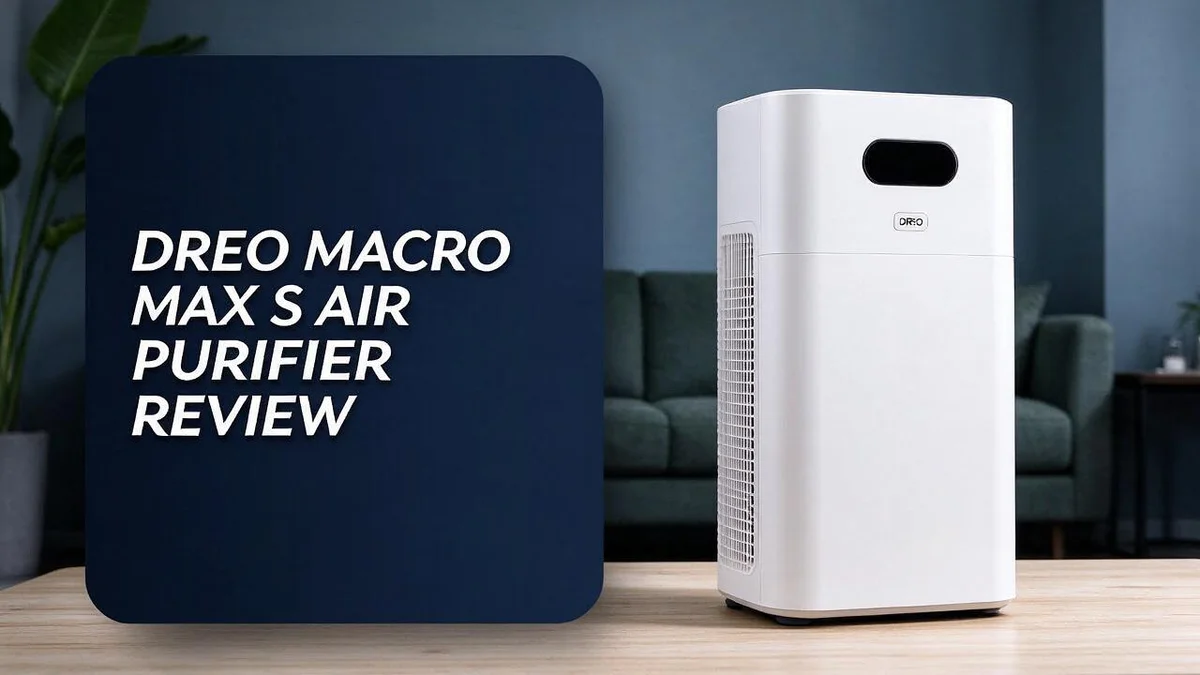
Dreo Macro Max S Air Purifier Review: Worth Trying?
Clean air matters more than most people think. Dust, pollen, and smoke can build up fast inside a home. A good air purifier can make a real difference.
The Dreo Macro Max S (model DR-HAP003S) is one option worth a close look. It is rated for rooms up to 423 sq ft. It uses multiple filter stages to trap small particles. Smart sensors also check the air quality in your room.
Many reviewers say this unit runs powerful yet quiet. One podcast reviewer said it cleans a room in just minutes. Another review from 2022 praised its very high build quality.
In a Nutshell
- Room coverage: The Macro Max S is rated for rooms up to 423 square feet. Most living rooms and bedrooms fit comfortably within that size, so one unit can handle the main space in your home.
- Multi-stage filtration: This unit uses several filter stages. Each stage catches different particles, so the air gets cleaned in layers instead of one pass.
- Smart sensing: The built-in air quality sensor checks the room on its own. It adjusts its work based on what it finds, so you do not need to guess when to change settings.
- Fast results: Reviewers say the unit cleans a room in minutes. That speed helps when you need fresh air right away, like after cooking or a busy day.
- Solid construction: Reviewers often praise the very high build quality. The unit feels sturdy and well made, which suggests it can handle daily use.
- Reliability check: Coway and Winix lead many Reddit recommendations for reliability. Readers who want a long track record should compare these brands before making a choice.
Filtration and Air Cleaning Performance


Last update on 2026-11-18 / Affiliate links / Images from Amazon Product Advertising API
Filtration decides how well any air purifier does its job. Air enters the unit, passes through the filters, and leaves cleaner. The Dreo Macro Max S follows this same path.
Think of each filter as a gate. Larger dust and hair get caught first. Finer particles, like smoke residue and allergens, meet the next gate. Each stage has a clear job, and this order lets the later filters do their work well.
Placement matters more than many people expect. Set the unit in an open spot, away from walls and heavy furniture. Blocked air intakes force the motor to work harder.
Closed doors make a big difference. A purifier works best in a sealed room. If air keeps flowing in from a hallway, the unit must clean the same air again and again.
Daily life puts different loads on the filters. Homes with pets, cooking smoke, or heavy dust may need longer sessions. Running the unit on a higher setting for a short time can help during these periods.
Check the filter indicator often. Ignoring it may reduce how well the unit performs over time. Clean filters help the unit perform as designed. Set a simple phone reminder so you never miss a change.
Speed settings also change the sound level. One Macro Pro review notes more noise in Turbo mode, so test lower speeds at night. Find the setting that keeps the room clean and still lets you sleep.
Air quality also changes with the seasons. Pollen rises in spring, while dry winter air carries more dust from heating systems. Adjust your routine as the year changes so the unit keeps pace.
Consistent use matters most. Run the unit every day, not only when the air feels stuffy. Steady operation keeps dust and particles from building up in the room.
Room Coverage and Sizing
Room size sets the limit for any air purifier. Many people skip this step and guess instead. A quick measurement helps you avoid that mistake.
Start by measuring the room. Multiply the length by the width to get the floor area in square feet. Then compare that number with the unit’s rated coverage.
Ceiling height matters too. A tall room holds more air than a standard room. So the air takes longer to pass through the filters.
Open floor plans need extra thought. A living room that connects to a kitchen or hallway counts as one larger space. Air moves freely between these areas, so you may need to cover the full space.
Think about the air change rate. Purifiers cycle room air through the filters again and again. How often the full room volume passes through the unit shapes how fast the air gets cleaner.
Bedrooms and home offices often make good matches. These rooms tend to be smaller and more closed off. A single unit can reach every corner with less effort.
Sources of pollution change the math. Pets, cooking, and frequent foot traffic add more particles. A room with these habits may need more frequent use to keep the air fresh.
Know your main goal. Some people want clean air in one bedroom. Others want fresh air across a whole apartment. Your goal shapes how much coverage you need.
If your room sits near the upper limit, treat it as a tight fit. Choose a unit with some extra capacity so the air stays cleaner between cycles.
Rooms with high ceilings or many windows also need a closer look. Sunlight and drafts can shift air around the space.
Finally, measure twice before you decide. A small error in the math can leave a room under cleaned. Clear numbers help you choose with confidence.
Noise Levels and Fan Modes
Noise matters just as much as clean air. Nobody wants a machine that drowns out the TV or keeps them awake at night.
A podcast reviewer called the Dreo Macro Max S powerful, energy efficient, and quiet all at once. That mix is less common than it sounds. Many purifiers get loud once they work hard.
Fan modes control how hard the unit works. Each speed changes the airflow, and airflow changes the sound.
Low speeds suit quiet hours. They move less air, so they make less noise. Use them for reading, working, or relaxing in the evening.
Higher speeds suit busy moments. Cooking smoke, pet hair, or a crowded room can all call for extra power. Switch up when the air feels heavy.
Start on a middle setting. Then adjust based on how the room feels and how much hum you hear.
Pay attention to your own tolerance. Some people sleep fine with a soft hum, while others notice every small change in pitch.
The research does not include exact decibel numbers for this model. Look for official sound ratings in the product manual or spec sheet. Those numbers give a clearer picture than any guess.
A Macro Pro review notes that noise rises at its highest setting. That model differs from the Max S, but it shows a pattern. Expect louder sound at maximum speed on most purifiers.
Try a simple test. Run the unit at each speed for a few minutes. Listen from your usual seat or bed.
Use a timer for high speeds. Let the room clean quickly, then drop back to a low setting. This habit keeps noise low and air clean.
A calm machine is easier to live with. You will likely keep it running every day when it stays out of your way.
Top 3 Alternatives
Looking for another option? These three air purifiers each suit a different room size and lifestyle.
Levoit Core 300

Last update on 2026-11-19 / Affiliate links / Images from Amazon Product Advertising API
This model suits small bedrooms and home offices. It uses a True HEPA filter that traps tiny particles like dust, pollen, and pet dander. The unit runs quietly on sleep mode, so it works well at night. It is a great pick for a first air purifier.
Coway Airmega 400

Last update on 2026-11-19 / Affiliate links / Images from Amazon Product Advertising API
This unit fits larger spaces like open living rooms. It cleans air in rooms up to about 1,560 square feet. Its smart sensors adjust fan speed based on air quality. A green filter also captures odors and gases. Many people who want strong performance in a big area choose this model.
Blueair Blue Pure 211+

Last update on 2026-11-17 / Affiliate links / Images from Amazon Product Advertising API
This purifier works well for medium rooms and family spaces. It combines a particle filter with activated carbon to reduce smells. The slim design fits easily beside a couch or desk. It runs at a gentle fan speed for quiet daily use. It is a practical choice for everyday comfort.
Filter Costs and Maintenance
A clean filter does most of the hard work. The Dreo Macro Max S relies on its filters to trap dust, odors, and fine particles. Good care keeps that work steady.
Start by learning the filter layers. Read the manual and find each one. Knowing what each layer does helps you spot trouble early.
Start with the outer layer. Use a soft brush or a vacuum with a brush attachment. Loose dust comes off easily, so you rarely need to wash anything hard.
Keep the vents clear, too. Blocked intake or outlet grills force the fan to work harder. Wipe them with a dry cloth every few weeks.
Store spare filters the right way. Keep them sealed in their original packaging. Place them in a cool, dry closet until you need them. Moisture can weaken the material before you install it.
Handle new filters with clean hands. Oils from your skin attract dust fast. Pull off the plastic wrap just before installation, not hours earlier.
Write the install date on a sticker or calendar. This simple habit removes the guessing game. You will know when a swap is due, even if the reminder feels slow or unclear.
Reset the indicator after each change. Check your manual for the exact reset steps. Skipping this step can keep showing a false warning and confuse your routine.
Keep the model number handy. Use HAP003 when you search for replacements. This helps you match the right size, shape, and filter type.
Buy from sellers you trust. Look for product pages that list compatible filter codes. A close match may fit poorly. Gaps around the edges let dirty air slip past the filter.
Finally, look at the filters with your own eyes. Heavy gray dust or a dark, matted look means a swap is near. Trust what you see and keep your care routine steady.
Build Quality and Design
Build quality matters more than many buyers expect. A unit that feels solid will last longer in a busy home.
Reviewers describe the Dreo Macro Max S as having very high build quality. That praise gives you a good starting point for your own check.
Start with a close look at the body. Press gently on the panels and feel for flex. A firm shell usually means a better fit and fewer rattles over time.
Next, check how the parts line up. Gaps between the top, sides, and base can signal loose assembly. Even spacing looks neat and often shows careful manufacturing.
Pay attention to the controls too. Buttons should feel clear and respond with a crisp press. Mushy or sticky buttons can frustrate you after weeks of daily use.
Shell wear shows up over time. Scuffs and loose trim are early signs of weak materials. Check these areas after a few months of use.
Design also affects where the unit fits. Measure the footprint and height before you choose a spot. A slim body can tuck beside a sofa or desk, while a wide one may crowd a small bedroom.
A simple shape blends into most rooms. Clean lines suit living rooms, offices, and nurseries alike. Visual calm can matter as much as performance.
Handling matters too. Look for a grip point or stable base that makes moving the unit easier. Lift it with both hands and keep the weight close to your body.
Stability is a key part of design. A flat, level floor keeps the unit steady during high fan speeds. Avoid soft rugs or uneven tile where it may wobble.
Coway and Winix often earn praise on Reddit for reliability. Compare the build feel of each brand side by side. Your own hands will show you the difference fast.
Finally, trust your senses during the first setup. A well built unit should feel calm, stable, and ready for daily use.
Pros and Cons
Pros
- It cleans a room in just minutes.
- It covers rooms up to 423 sq ft.
- It uses several filter stages to trap particles.
- It includes smart sensing that reacts to changing air quality.
Cons
- The research lists no drawbacks specific to this model.
- Rooms larger than 423 sq ft fall outside its rated range.
- Reddit users often prefer Coway and Winix for reliability.
Who Should Buy It
Some buyers will get the most from this unit. Start with your daily routine. The right match depends on where you plan to use it.
Busy households often want a device they can run every day. This model suits people who prefer a simple routine over constant checking.
Pet owners share their homes with fur and dander all week. A machine that keeps pace with shedding can ease that daily load.
Remote workers spend long hours in one room. A steady unit in that space keeps the air feeling fresher through the workday.
Small spaces make a strong case too. A studio or single bedroom sits well inside the rated range, so the fit feels natural.
Energy use matters to many shoppers. The research describes this model as energy efficient, which helps during long daily runs.
People who notice dust often want steady results. This unit fits that goal in a compact room.
First time buyers may feel unsure about which model fits. Compare your room size and habits before you decide.
Some buyers compare a few close options first. The Dreo Macro Pro and Alen BreatheSmart 75i are common rivals.
On one ranking, the Macro Pro scores higher than the Alen. That result gives shoppers a useful point of comparison.
Large open layouts call for a different choice. Look for a unit built for bigger rooms if your space stretches far.
Gift buyers can also consider this model. It works well for a friend who wants easy air care at home.
Keep your room size and habits in mind. That simple check shows whether this machine fits your home.
Final Verdict
The short answer is simple: the Dreo Macro Max S makes a strong case for most homes. Its strengths show up in everyday use, not only on paper.
Reviewers describe the unit as powerful, energy efficient, and quiet. Those traits matter most when a purifier runs for hours. A machine that stays calm at night can sit in a bedroom without disturbing sleep.
Think of this model as a steady daily helper. It works well for dust, pet hair, and general household particles. Its layered filtering keeps working through busy days.
Expect steady results rather than instant miracles. Indoor air changes throughout the day. Consistent use matters more than short bursts of high speed.
The research lists no cons for this exact model. That gap is encouraging, yet it does not replace hands-on testing. Every home has its own air and habits. Read more than one source before you decide.
Noise in Turbo mode appears in a review of the Macro Pro. That finding applies to a different model, so keep it separate when comparing. Still, the Macro Pro and the Alen BreatheSmart 75i make useful reference points. Comparing them side by side helps you see which features matter most.
Keep the area around the unit open so air can flow in and out.
Who benefits most from this purifier? Households with pets, busy schedules, or a bedroom that needs quiet operation often fit well. Smaller rooms also suit this model nicely. Buyers who want a simple daily routine may appreciate its straightforward feel.
Measure your room, think about your daily routine, and decide whether you want a quiet everyday workhorse. If those needs match, the Dreo Macro Max S deserves a spot on your shortlist.
Frequently Asked Questions
Should I pick this model or a Coway or Winix unit?
Many Reddit users trust Coway and Winix for long term reliability. If a proven track record matters most, look at those brands too. This model stands out for its strong build quality and its several filter stages.
Where should I place the purifier?
Put it where you spend the most time. Place it on a flat surface with open space around it. Keep it away from curtains and bedding so air can move freely.
How often should I change the filters?
Check the user manual for the exact schedule. Filters wear down faster in homes with pets or heavy dust. Mark your calendar so you never miss a change.
Does it remove odors and smoke?
The research does not cover odor or smoke results for this model. Read the product details and recent reviews to see how it handles those. Set clear expectations before you buy.
How does it compare with the Macro Pro?
The Macro Pro is a separate model with its own specs. Compare room size, noise levels, and filter details on each listing. That side by side check shows which unit fits your space best.

I’m Maya Brown, the voice behind Pure Breeze Vault. I write detailed, honest, and easy-to-follow air purifier reviews to help readers compare features, understand filter technologies, and choose products with confidence. My goal is to make research simpler, clearer, and more practical for anyone improving indoor air quality at home.