Levoit Core 300-RF Replacement Filter Review 2026: Still Worth It?
Your Levoit Core 300 air purifier works hard every day. It pulls dust, pollen, pet dander, and cooking smells out of your room. Then one morning the red light glows and the airflow feels weak. That red light means one thing. Your filter is full and the machine needs fresh media.
The Levoit Core 300-RF is the genuine replacement filter for that job. It is a single cylinder that drops into the base of the unit. It costs far less than a new purifier, yet it restores almost all of the original cleaning power.
This review covers the real experience of buying, unboxing, and living with the Core 300-RF through a full replacement cycle. You will read about the good parts, the annoying parts, and the things the filter simply cannot do.
Key Takeaways
- The Core 300-RF is a three stage cylinder filter. It combines a nylon pre filter, an H13 True HEPA layer, and a high efficiency activated carbon layer in one sealed unit. You replace the whole cylinder, not individual layers.
- HEPA performance is rated at 99.97 percent of particles down to 0.3 microns. That covers dust, pollen, mold spores, pet dander, and smoke particles in a bedroom sized space.
- Levoit recommends replacement every six to eight months. Heavy use, pets, wildfire season, or a smoker in the house will shorten that window to four or five months.
- Installation takes under two minutes. Twist the bottom cover, lift out the old filter, drop in the new one, then hold the reset button for about three seconds to clear the red light.
- Genuine filters fit tighter and smell cleaner than most budget copies. Many cheap alternatives leak air around the edges and arrive with a chemical odor that lingers for days.
- The filter is not washable and not recyclable in most areas. This is the biggest ongoing cost and the biggest environmental downside of owning a Core 300.
What Is the Levoit Core 300-RF Replacement Filter?


Last update on 2026-11-19 / Affiliate links / Images from Amazon Product Advertising API
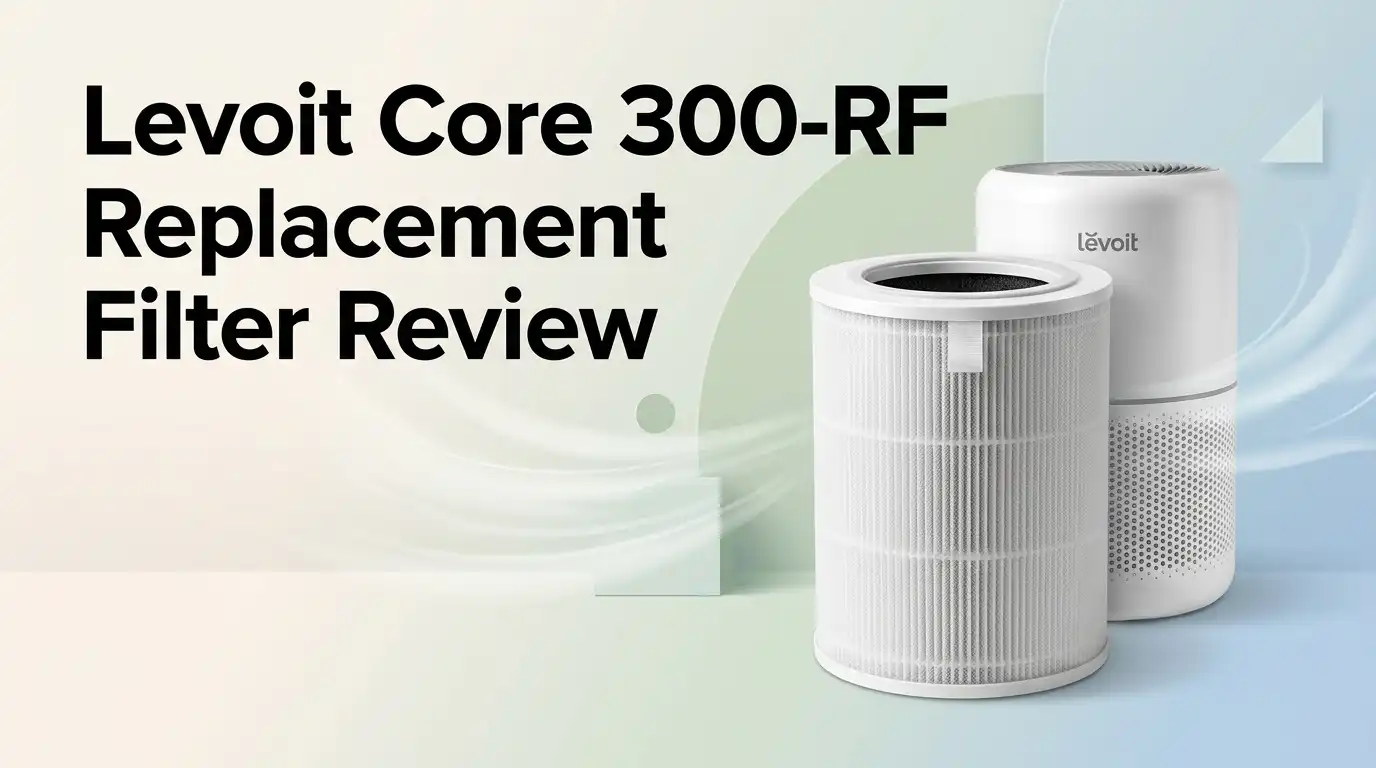
The Core 300-RF is the factory filter made by Levoit for the Core 300 family of air purifiers. It fits the Core 300, the Core 300S, the Core 300-P, the Core 300S-P, and the Core P350-P. The shape is a tall white cylinder that sits inside the round body of the purifier.
Air enters through vents around the base. It passes through the filter wall from outside to inside. Clean air then exits through the top grille.
The whole design is simple on purpose. There are no screws, no clips, and no tools. The filter carries its own plastic frame, so you never touch raw fiber media with your fingers. This single piece design is a big reason the Core 300 stays popular with first time air purifier buyers.
Unboxing Experience and First Impressions
The filter arrives in a slim cardboard box with the Levoit logo printed directly on the surface. Inside, the cylinder sits inside a clear sealed plastic bag. That bag matters. It keeps the carbon from absorbing warehouse smells before the filter reaches you.
The first thing you notice is weight. The cylinder feels heavier than it looks because of the carbon layer. The second thing is smell. A genuine unit has a faint clean carbon scent, a little like a new water pitcher filter. It fades within an hour of running.
Printing quality is a useful authenticity clue. Real packaging shows crisp text and a molded part number. Counterfeit boxes often have blurry logos and a stuck on label instead of printed codes.
Three Stage Filtration Explained Simply
Stage one is the nylon pre filter on the outer surface. It grabs the big stuff first. Think hair, lint, visible dust, and pet fur. This layer protects the deeper media and extends overall filter life.
Stage two is the H13 True HEPA layer. This is the heart of the filter. It traps 99.97 percent of airborne particles at 0.3 microns. That includes pollen, dust mite debris, mold spores, and fine smoke particles.
Stage three is high efficiency activated carbon. Carbon does not trap particles. It adsorbs gases and odor molecules instead. Cooking smells, pet odor, and light VOC fumes stick to the carbon surface.
The three layers work in sequence, so skipping replacement hurts all three stages at once.
Installation Steps and the Reset Button
Turn the purifier off and unplug it first. Flip the unit upside down on a soft surface. Twist the bottom cover counterclockwise and lift it away. The old filter pulls straight out with a gentle tug.
Remove the new filter from its plastic bag completely. People forget this step surprisingly often. A bagged filter blocks airflow and triggers overheating behavior.
Slide the new cylinder in with the pull tab facing out. Replace the cover and twist clockwise until it clicks. Plug the unit back in and power it on.
Now clear the red light. Press and hold the check filter button for about three seconds until the light turns off. If the light stays on, unplug the unit for a minute and repeat the hold.
Top 3 Alternative for Levoit Core 300-RF Replacement Filter

Last update on 2026-11-19 / Affiliate links / Images from Amazon Product Advertising API
Levoit Core 300-P Air Purifier Pet Allergy Replacement Filter

Last update on 2026-11-19 / Affiliate links / Images from Amazon Product Advertising API
Levoit Core 300-P Air Purifier Toxin Absorber Replacement Filter

Last update on 2026-11-19 / Affiliate links / Images from Amazon Product Advertising API
Levoit Core 300-P Air Purifier Smoke Remover Replacement Filter
Real World Performance After Installation
The change is immediate and physical. Airflow from the top grille feels stronger on every fan speed. On speed three the breeze reaches noticeably further across the room than it did with the tired old filter.
Dust settling on nightstands slows down within the first week. People with spring pollen allergies usually report easier mornings after two or three nights of continuous use. The purifier itself did not get better. It simply stopped fighting a clogged filter.
Smell response is quick too. Kitchen odors from frying fish or onions clear in roughly twenty to thirty minutes in a small room.
Expect the biggest improvement if your old filter was past the eight month mark. Owners who replace early see smaller gains.
Filter Life and When to Replace It
Levoit recommends replacement every six to eight months for average use. That assumes the purifier runs several hours a day in a normal home.
Real life rarely matches the average. Homes with two cats and a dog often need a new filter at four or five months. Apartments near busy roads or construction sites burn through filters faster. Wildfire smoke season can cut life in half in a single month.
The check filter light is a timer, not a sensor. It counts running hours, so it cannot see how dirty your filter actually is.
Use your eyes and nose instead. A gray outer surface, weak airflow, or returning odors means replacement time, regardless of what the light says.
Noise Levels and Airflow Changes
A fresh filter makes the purifier quieter at the same fan setting. The reason is simple. A clogged filter forces the motor to push harder against resistance, and that effort adds hum and whoosh.
On sleep mode the Core 300 with a new Core 300-RF stays near library quiet. You hear a soft breath of air and nothing more. On the highest setting it produces a steady white noise that many people use for sleeping.
Do not expect silence on high. The fan is small and it spins fast to move air.
If your purifier suddenly sounds rattly after a filter change, the bottom cover is probably not twisted fully into place.
Odor and Smoke Control Honestly Assessed
The carbon layer works, but it has limits. It handles everyday household smells well. Cooking odors, trash can smells, litter box odor, and musty closet air all improve.
Heavy smoke is a different story. The carbon layer in the standard Core 300-RF is a coating, not a thick packed bed of pellets. Thin carbon saturates faster than thick carbon. Chain smoking or regular indoor cigar use will exhaust it within weeks.
The Smoke Remover variant exists for exactly that reason. It adds more carbon capacity for ash, soot, and lingering tobacco smell.
For strong chemical fumes, fresh paint, or new furniture off gassing, the Toxin Absorber version performs better than the standard white filter.
Color Coded Variants and Which One Fits You
Levoit sells four versions of the same cylinder. Each one keeps the same HEPA core and changes the carbon chemistry.
The white Original filter suits general dust, pollen, and light odors. It is the default choice for most bedrooms.
The yellow Pet Allergy filter targets pet dander and pet odor with a special coating. Cat and dog owners notice the difference most.
The green Toxin Absorber filter focuses on VOCs, formaldehyde, and chemical smells. It fits new homes and recently renovated rooms.
The blue Smoke Remover filter handles ash, soot, and tobacco smoke.
All four cost roughly the same and all four install identically. Pick based on your main problem, not on price.
Genuine Filters Versus Third Party Copies
Third party Core 300 filters sell for noticeably less, sometimes half the price in two packs. Some perform acceptably. Many do not.
The common complaints follow a pattern. Loose fit lets dirty air bypass the media entirely. Thin carbon fails within weeks. Strong chemical smell appears straight out of the bag and never fully fades.
A filter that leaks air around the edge is worse than a dirty genuine filter. Bypass air never gets cleaned at all.
If you buy third party, check that the seller lists H13 grade media and that reviews mention a snug fit. Avoid any filter that arrives loose in a plain bag with no seal. The savings are not worth breathing an unknown chemical coating in your bedroom.
Price and Value in 2026
Genuine single packs sit in the low thirty dollar range at list price, with frequent discounts and a subscribe and save option that trims the cost further. Two packs lower the per unit price.
Run the math over a year. Two filters per year at discounted prices land around fifty dollars annually. That is roughly fifteen cents per day for cleaner bedroom air.
Compared with the purifier itself, the filter is the real long term cost. Over three years you may spend more on filters than you spent on the machine.
The value still holds up because the Core 300 remains one of the strongest cleaners in its size class. You are paying to keep good hardware performing at its rated level.
What the Core 300-RF Does Not Do Well
Honesty matters here. This filter has clear weaknesses.
It is not washable. Vacuuming the outer pre filter surface helps slightly, but washing destroys the HEPA media and the carbon. Water ruins it permanently.
It is not recyclable in most curbside programs. The plastic frame, fiber media, and carbon are bonded together.
The carbon layer is thin. Serious chemical exposure or heavy smoke overwhelms it quickly.
There is no filter life sensor. The light counts hours only.
It also does nothing about carbon monoxide, radon, or humidity. And it will not rescue a room that has an active mold source behind the wall. Fix the cause first.
Pros and Cons
Pros
- Genuine H13 True HEPA media captures 99.97 percent of particles at 0.3 microns
- Three stages in one sealed cylinder, so replacement takes under two minutes
- Tight factory fit prevents dirty air from bypassing the media
- Four color coded variants cover pets, smoke, chemicals, and general dust
- Restores airflow and lowers fan noise immediately after installation
- Frequent discounts and subscription pricing make the running cost reasonable
Cons
- Not washable and not reusable in any way
- Carbon layer is thin and saturates fast in smoky homes
- Filter light is a timer, so it ignores actual filter condition
- Hard to recycle because materials are bonded together
- Costs add up over three years of ownership
- Counterfeit listings are common, so careful buying matters
Who Should Buy This Filter
Buy the genuine Core 300-RF if you already own a Core 300 series purifier and want predictable performance. It is the safest choice for allergy sufferers, asthma households, and parents running a purifier in a nursery.
Pick a variant that matches your main complaint. Pets point to yellow. New furniture points to green. Tobacco points to blue. Everything else points to white.
Skip the genuine filter only if budget is tight and you can verify a reputable third party brand with real H13 media and sealed packaging.
Anyone running the purifier twenty four hours a day should buy a two pack. Having a spare on the shelf removes the temptation to stretch a dead filter for another month.
Final Verdict
The Levoit Core 300-RF does exactly what a replacement filter should do. It restores airflow, restores particle capture, and restores odor control for a fraction of the price of a new purifier.
The weaknesses are real but predictable. Thin carbon, no washability, and a timer based reminder light are the trade offs for a compact and affordable design.
The fit quality is the strongest argument for buying genuine. A sealed cylinder that hugs the housing cleans every cubic foot of air that enters the machine.
Rating: 4.5 out of 5. For bedroom sized spaces, this filter remains an easy recommendation in 2026.
Frequently Asked Questions
How often should I replace the Core 300-RF filter?
Replace it every six to eight months under normal use. Homes with pets, smokers, or heavy outdoor pollution should replace every four to five months. Check the outer surface for gray buildup as a visual cue.
Can I wash or vacuum the Levoit Core 300-RF filter?
Never wash it. Water destroys the HEPA fibers and ruins the carbon layer. You may gently vacuum the outer pre filter surface once a month to remove hair and lint, which extends life slightly.
Why is my red filter light still on after replacement?
The light is a timer that needs a manual reset. Power the unit on, then press and hold the check filter button for about three seconds until the light turns off. Unplug for one minute and retry if needed.
Do third party Core 300 filters damage the purifier?
They will not damage the motor, but a loose fit allows unfiltered air to bypass the media. Poor quality carbon may also release a chemical smell. Choose sellers who confirm H13 grade media and sealed packaging.
Which Core 300-RF variant is best for pet owners?
The yellow Pet Allergy version works best. Its carbon coating targets pet odor and dander more effectively than the standard white Original filter, which suits general dust and pollen instead.
Does the Core 300-RF remove viruses or mold?
It captures mold spores and particles that carry viruses at the rated 99.97 percent efficiency. It does not kill anything and it cannot remove mold growing on a wall. Fix moisture problems at the source.

I’m Maya Brown, the voice behind Pure Breeze Vault. I write detailed, honest, and easy-to-follow air purifier reviews to help readers compare features, understand filter technologies, and choose products with confidence. My goal is to make research simpler, clearer, and more practical for anyone improving indoor air quality at home.