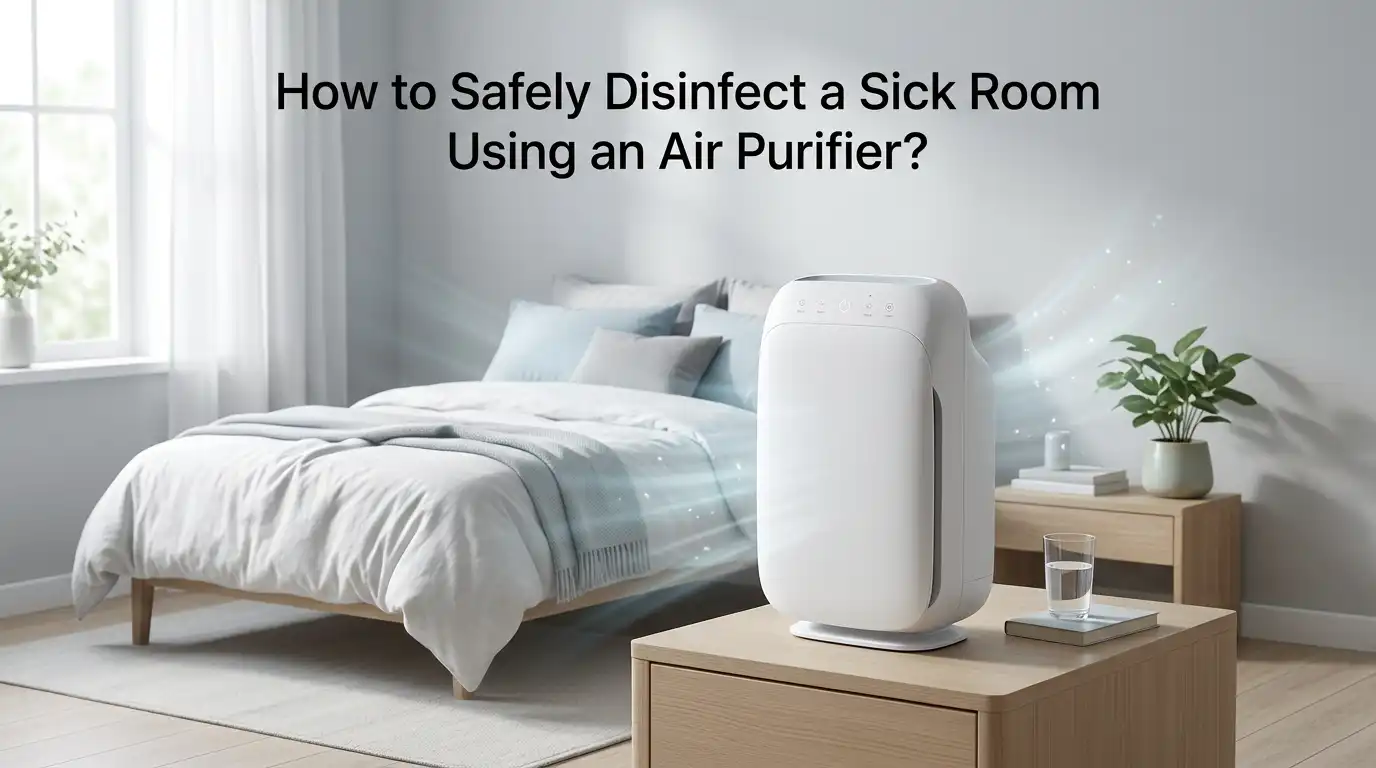
How to Safely Disinfect a Sick Room Using an Air Purifier?
If someone in your home is sick, the room can feel heavy fast. The air may seem stale. Surfaces may worry you. You may want one simple fix. An air purifier can help, but it is not the whole answer.
A safe sick room needs clean air, smart surface cleaning, and a clear routine you can follow without stress.
This guide gives you a practical plan. You will learn what an air purifier can do, where to place it, how long to run it, and what else you must clean to lower the spread of germs.
Key Takeaways
- An air purifier helps clean the air, but it does not clean the whole room by itself. It can pull tiny airborne particles through a filter, which helps lower the amount of germs floating in the room. That is useful. Still, you must also clean hands, hard surfaces, bedding, and shared items.
- A true HEPA purifier is the safest first choice for most homes. HEPA filters can trap at least 99.97 percent of particles at 0.3 microns in lab testing. That makes them a strong option for a sick room. The catch is size. A small unit in a large room will not do enough.
- Room size and airflow matter more than many people think. A purifier must match the room. A higher clean air delivery rate usually means faster cleaning. You will get better results if the unit is not blocked by walls, curtains, or furniture. Placement changes performance.
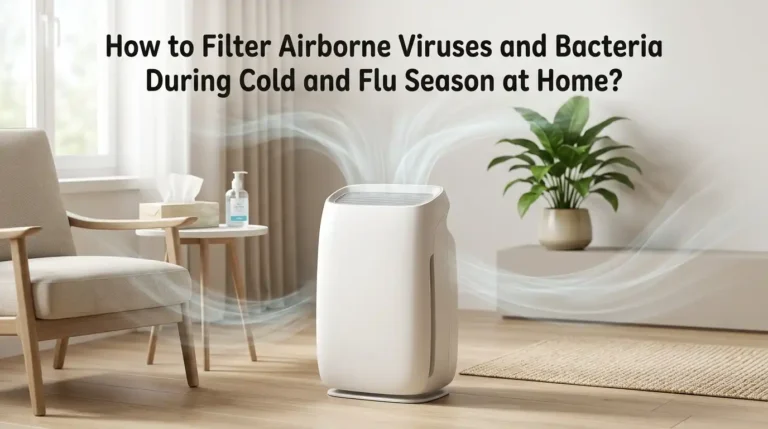
- Fresh air and filtration work better together. Open windows, exhaust fans, and a purifier can lower the amount of stale indoor air faster than one method alone. This mix is often the best low stress plan. The limit is weather, outdoor smoke, and safety for children or pets.
- Surface disinfection still matters in a sick room. Clean first with soap or detergent. Then disinfect hard high touch surfaces if someone is sick or if a person at home has a weak immune system. Keep surfaces wet for the full label contact time. Never mix cleaners.
- The safest routine is simple and steady. Run the purifier for long periods, clean shared touch points often, handle laundry carefully, and protect yourself with gloves and hand washing. Small actions done well beat big actions done once. That is how you make the room safer day after day.
What an air purifier can really do
An air purifier helps remove particles from the air. That means it can lower airborne germs, dust, and fine particles that stay suspended in a sick room. This is the main benefit. If the purifier uses a true HEPA filter, it can trap very small particles very well. That gives the room cleaner air over time.
Still, an air purifier does not wipe down a bedside table. It does not wash sheets. It does not replace hand washing or surface disinfection. That is the limit you need to remember. If you think of a purifier as one part of a larger cleaning plan, it becomes very useful.
The main pros are easier breathing, less stale air, and lower airborne particle load. The main cons are noise, filter costs, and weak results if the unit is too small or badly placed.
Choose the right purifier size and filter
Start with the room size. Measure the length and width of the room. Multiply those numbers to get square feet. Then compare that number with the purifier rating. A unit should match or exceed the room size. If the ceiling is high, go one size up. Bigger coverage is usually safer than barely enough coverage.
Next, check the filter type. A true HEPA filter is the best simple choice for a sick room. It is made to trap fine particles. Also look at the clean air delivery rate. A higher number usually means faster air cleaning. If you want help with odors, choose a unit with activated carbon too.
The pros of a HEPA unit are strong particle capture and clear home use guidance. The cons are louder high settings and regular filter replacement. Avoid vague claims that promise whole room disinfection without clear filter details.
Prepare the sick room before cleaning
Before you turn on the purifier and start cleaning, set up the room. Keep only the items the sick person needs inside. Remove extra pillows, loose paper, unused clothes, and clutter from the floor and tables. Less clutter means fewer surfaces to clean. It also helps air move more freely. That makes the purifier work better.
If possible, keep a trash bin with a liner in the room. Keep tissues, hand soap, and a laundry bag close by. Try to limit shared objects like remotes, mugs, chargers, and towels. If the room has an attached bathroom, keep basic cleaning supplies there too.
The main pros of room prep are faster daily cleaning and better airflow. The main con is that it takes a few minutes at the start. Still, that short setup saves time every day after that.
Place the purifier where it works best
Placement can change results more than many people expect. Put the purifier in the sick room itself, not in the hall, if your goal is cleaner air around the sick person. Keep space around the unit. Do not push it against a wall. Do not hide it behind a chair or curtain. Blocked airflow means slower cleaning.
Try to place the unit where it can pull room air evenly. If possible, keep it closer to the source of exhaled air than to the doorway, but do not point a strong air stream from the sick person straight at others. A flat open spot on the floor often works well. Keep the intake and outlet clear.
The pros of good placement are faster particle removal and better full room mixing. The cons are noise near the bed and less floor space. Even so, good placement is worth it.
Run the purifier the right way day and night
A purifier works best when it runs long enough. In a sick room, continuous use is usually the smart plan. Run it all day if possible. Use a higher fan speed when the sick person is awake, coughing more, or when another person enters the room. More airflow usually means faster cleaning.
At night, you can lower the speed if noise disrupts sleep, but do not shut the unit off unless you must. If your purifier has an auto mode, remember that some auto sensors react more to dust than to fine exhaled particles. A steady manual setting often gives more reliable results in a sick room.
The pros of long run time are more clean air and fewer stale air pockets. The cons are sound and energy use. If you must choose, keep the purifier running longer rather than running it stronger for only a short time.
Add fresh air without spreading germs
Fresh air helps lower indoor germ build up. Open a window if outdoor conditions are safe and clean. Even a small opening can help. Use more than one method if you can. A purifier plus open windows plus an exhaust fan often works better than just one step. This layered plan is simple and effective.
If you use a fan, point it so air moves out, not across people. A bathroom fan or kitchen exhaust fan that vents outdoors can also help move stale air out of the home. If weather is bad, outdoor air quality is poor, or the room is unsafe for an open window, keep the window closed and rely more on filtration.
The pros of ventilation are lower indoor particle build up and fresher air. The cons are heat loss, cold drafts, noise from outside, and outdoor smoke or pollen.
Clean and disinfect hard surfaces safely
Air cleaning helps with airborne particles. Hard surfaces need their own routine. First clean with soap or detergent and water. This removes dirt and a large share of germs. Then disinfect high touch surfaces if someone is sick. Focus on doorknobs, light switches, bed rails, tables, faucets, toilet handles, and phones. These are the places people touch again and again.
Read the product label before you start. Wear gloves if the label says to do so. Keep the room ventilated while you clean. Most important, leave the disinfectant on the surface long enough to work. The surface should stay wet for the full contact time. Never mix bleach with other cleaners.
The pros of this method are strong surface germ control and clear safety steps. The cons are chemical smell, skin irritation risk, and the need to follow directions closely.
Handle bedding laundry and trash with care
Soft items can collect body fluids, used tissues, and everyday germs. Change pillowcases, sheets, and towels on a regular schedule, especially if they become damp or visibly dirty. Handle laundry gently. Try not to shake it around the room. That helps reduce extra particles in the air.
Use regular detergent and dry items fully. Wash your hands after handling dirty laundry. Clean the laundry basket if it holds soiled items. For trash, tie off used tissues and disposable cleaning items in a lined bin. Empty it often, especially in a room with coughing or sneezing.
The pros of careful laundry and trash handling are a cleaner room and less cross use of dirty items. The cons are more frequent washing and a little more daily work. Still, this step closes a gap that air cleaning alone cannot fix.
Compare common air cleaning methods
The best known method is a HEPA purifier. Its biggest pro is strong particle removal with clear home guidance. Its con is cost over time from filters and power use. For most people, this is still the best first option. It is simple and proven for airborne particles.
Ventilation is another method. Open windows and exhaust fans can move stale air out fast. The pros are low cost and better fresh air. The cons are weather, outdoor pollution, and safety limits. This method works best with a purifier.
Some devices use ions or ozone. Their marketing can sound strong, but the downside is serious. Ozone can irritate the airways, and some added technologies have less clear home proof. DIY fan and filter boxes can help in some cases. Their pro is lower price. Their con is uneven build quality and less polished safety and noise control.
Common mistakes that make the room less safe
One common mistake is buying a purifier for a small office and putting it in a large bedroom. That leaves too much air untreated. Another mistake is turning the unit on for only an hour or two. Air cleaning needs time and steady use. Short bursts give short results.
A third mistake is bad placement. If the purifier is behind furniture, next to thick curtains, or shut in a corner, airflow drops. Another mistake is forgetting the filter. A clogged filter can lower performance. Follow the replacement schedule.
Many people also assume air cleaning means no surface cleaning is needed. That is false. A safe sick room still needs regular cleaning of touch points, shared objects, and laundry. Last, avoid devices that make ozone in occupied spaces. Cleaner air should not come with a new breathing problem.
Build a simple daily routine that works
The safest plan is the one you can actually follow every day. Start each morning by opening the window for a short time if outdoor air is safe. Then run the purifier on a medium or high setting. Wipe the main touch points once or twice a day. Keep tissues, water, soap, and a lined trash bin easy to reach. This keeps the room functional and calmer.
In the evening, replace any very dirty towels or bedding, empty trash, wash your hands, and check the purifier air path for blockage. If another person enters the room, keep the purifier running and limit the visit time. If the sick person shares a bathroom, clean touch points there too.
The pros of a daily routine are less stress and fewer missed steps. The only con is consistency. Still, a simple routine is what makes all the other advice stick.
FAQs
Can an air purifier disinfect a sick room by itself?
No. An air purifier helps clean the air. It can lower airborne particles, which is very helpful. It does not disinfect hard surfaces, bedding, hands, or shared items. Use it as one part of a full cleaning plan, along with surface disinfection, laundry care, hand washing, and good ventilation.
Should I keep the bedroom door closed when someone is sick?
In many homes, keeping the sick person in one room can help limit spread to shared spaces. A closed door can support that goal. Still, the room also needs airflow. Use the purifier inside the room, and add window ventilation or an exhaust fan when safe. Balance isolation with clean air.
Is a higher fan speed always better?
A higher fan speed usually cleans the air faster. That is the main benefit. The downside is more noise. Use high speed during active illness, visits, coughing, or cleaning. Then lower it only if sleep becomes hard. Long run time matters a lot, so choose a setting you can keep on for hours.
Are ionizers or ozone purifiers a good idea for a sick room?
Use caution. Some devices that make ozone can irritate the airways. That is the opposite of what a sick person needs. A true HEPA purifier is the safer simple choice for most homes. If a product makes bold air disinfection claims without clear filter details, skip it and choose a method with clearer safety guidance instead.

I’m Maya Brown, the voice behind Pure Breeze Vault. I write detailed, honest, and easy-to-follow air purifier reviews to help readers compare features, understand filter technologies, and choose products with confidence. My goal is to make research simpler, clearer, and more practical for anyone improving indoor air quality at home.