How to Clean a Vicks Cool Mist Humidifier and Keep It Mold Free?
Your Vicks cool mist humidifier works hard to keep the air in your home comfortable. But inside that water tank, bacteria, mold, and mineral deposits can build up faster than you think. A dirty humidifier does not add moisture to your air. It pushes germs and allergens straight into the room you breathe in every day.
The U.S. Environmental Protection Agency recommends cleaning portable humidifiers every three days during regular use.
Skip that routine, and you risk pink slime, white mineral crust, and that musty smell nobody wants. The good news? Cleaning your Vicks cool mist humidifier is simple, cheap, and takes less than 30 minutes.
In a Nutshell
- White vinegar is your best friend for descaling. Pour undiluted white vinegar into the water tank and base, let it soak for 15 to 20 minutes, and scrub away mineral buildup with a soft brush. Vinegar is safe, affordable, and effective against hard water deposits without damaging plastic parts.
- Bleach disinfects but must be diluted properly. Mix half a teaspoon of bleach with half a gallon of water to kill bacteria and mold spores. Never mix bleach with vinegar, and always rinse the unit thoroughly before using it again.
- Daily water changes prevent most problems. Empty the tank every day, rinse it with fresh water, and refill with clean or distilled water. Stagnant water is the main cause of bacterial growth and pink slime inside humidifiers.
- Distilled water reduces mineral buildup significantly. Tap water contains minerals that leave white dust on surfaces and crusty deposits inside the unit. Switching to distilled water cuts your cleaning time and protects your humidifier’s parts.
- Deep clean once a week during heavy use. A weekly vinegar soak and bleach disinfection cycle keeps mold, bacteria, and odors under control. The EPA and most manufacturers agree that regular deep cleaning is necessary for safe operation.
- Always air dry completely before storing. Moisture left inside a closed humidifier creates a perfect environment for mold growth. Dry every piece before you put the unit away for the season.
How to Prepare Your Vicks Cool Mist Humidifier for Cleaning
Start by unplugging the humidifier from the wall outlet. Never clean any electrical appliance while it is connected to power. Safety comes first every single time.
Remove the water tank from the base and take off the mist nozzle. If your model has a cooling chamber, removable tray, or medicine cup, remove those parts as well. Set each piece on a clean towel on your counter.
Empty all remaining water from both the tank and the base. Old water sitting in the reservoir contains bacteria even if it looks clear. Pour it down the drain and give both pieces a quick rinse under the faucet.
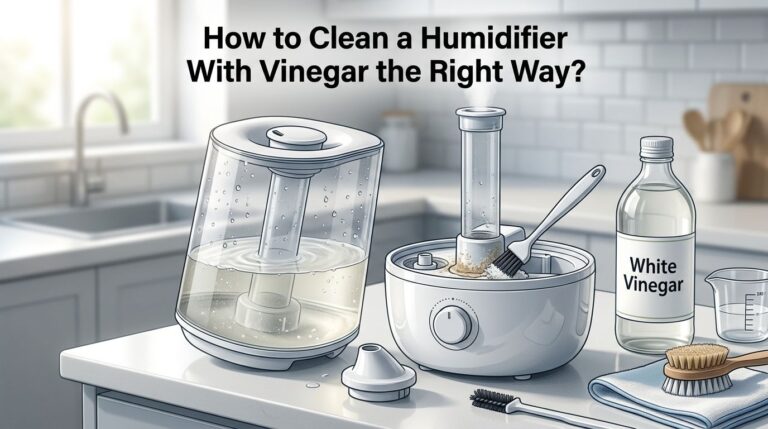
Gather your supplies: white distilled vinegar, bleach, a soft bristle brush or old toothbrush, clean cloths, and measuring spoons. You do not need any special cleaning products. These household items do the job perfectly.
How to Descale the Water Tank With White Vinegar
Mineral deposits from tap water create a hard, crusty film inside the tank over time. White vinegar dissolves these deposits without scratching or damaging the plastic.
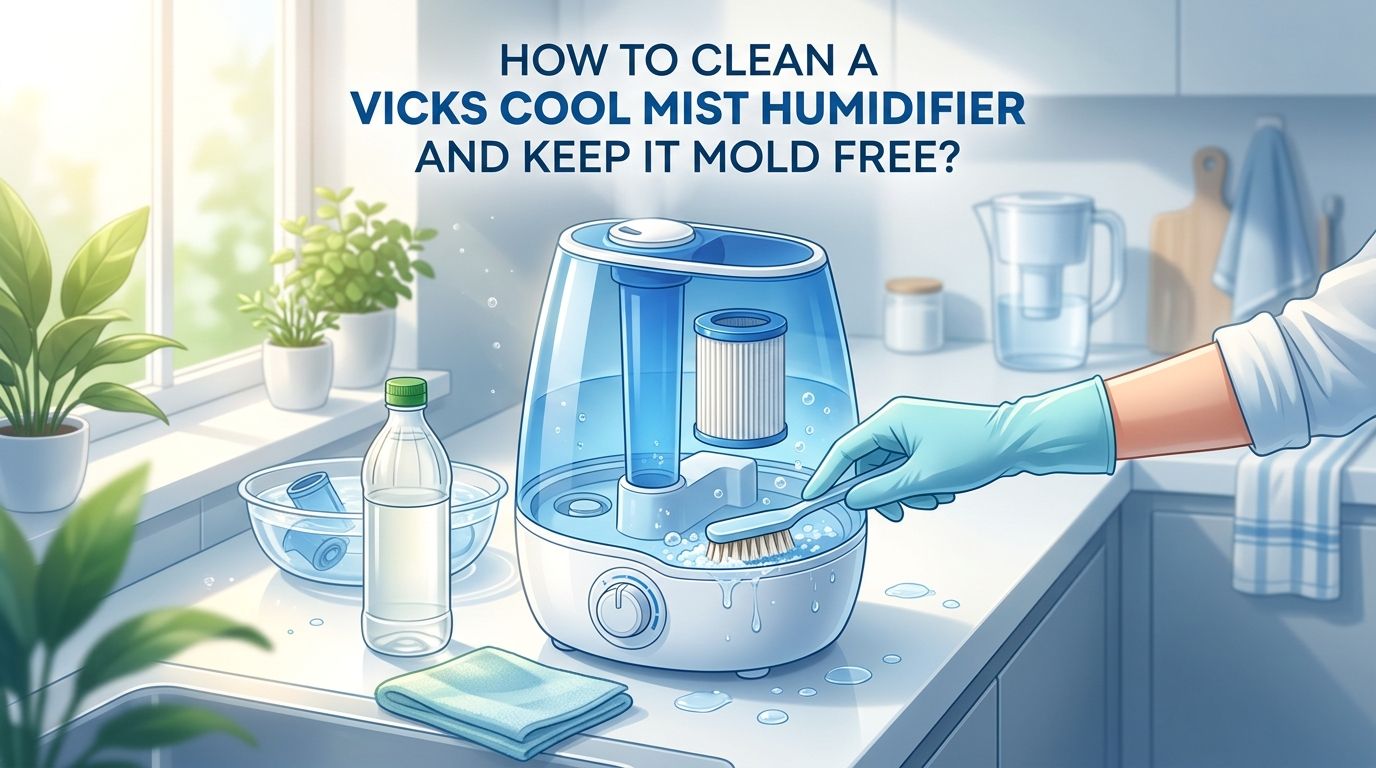
Pour one to two cups of undiluted white distilled vinegar directly into the water tank. Swish the vinegar around so it coats the entire interior surface. Place the tank cap back on and let the vinegar sit for 15 to 20 minutes.
After soaking, use a soft brush or clean cloth to scrub the inside walls. Pay extra attention to corners and the area around the tank opening where buildup tends to collect. For stubborn deposits, let the vinegar soak for an additional 10 minutes.
Pros of vinegar: Nontoxic, inexpensive, effective on mineral buildup, safe for plastic surfaces, and leaves no harmful residue.
Cons of vinegar: Strong smell during cleaning, may need multiple treatments for heavy scale, and does not disinfect as effectively as bleach against bacteria.
How to Clean the Humidifier Base and Reservoir
The base holds standing water and collects the most grime. Pour enough undiluted vinegar into the base to cover the bottom completely. Let it sit for 15 to 20 minutes.
Use a soft brush to scrub the inside of the reservoir. An old toothbrush works great for reaching tight spaces around the ultrasonic disc or nebulizer. Avoid using hard or abrasive tools because they can scratch the surface and create tiny grooves where bacteria hide.
Drain the vinegar and rinse the base under warm running water. Repeat the rinse two or three times until you can no longer smell vinegar. Wipe the base dry with a clean cloth.
If your model has a small float or sensor at the bottom of the base, clean around it gently. These parts are sensitive and can break if you scrub too hard.
How to Disinfect Your Vicks Humidifier With a Bleach Solution
Descaling removes mineral deposits, but disinfecting kills bacteria and mold. You need both steps for a truly clean humidifier. Use bleach for disinfection after the vinegar descaling step.
Mix half a teaspoon of liquid bleach into half a gallon of cool water. Pour this solution into the water tank and swish it around. Let it sit for 20 minutes so the bleach can kill any remaining microorganisms.
Pour some of the bleach solution into the base as well. Allow it to soak for the same amount of time. After 20 minutes, empty both pieces and rinse thoroughly with clean water at least three times.
Pros of bleach: Kills bacteria, mold, and viruses effectively. Works quickly and is widely available.
Cons of bleach: Must be diluted correctly to avoid damage. Requires thorough rinsing to prevent chemical mist. Should never be mixed with vinegar or other cleaners due to toxic fume risk.
How to Remove Pink Mold and Slime From a Vicks Humidifier
That pink or orange residue inside your humidifier is a type of bacteria called Serratia marcescens. It thrives in moist environments and can cause respiratory irritation if dispersed into the air.
To remove pink mold, fill the tank with a 50/50 mix of white vinegar and water. Let it soak for 30 minutes. Then scrub the affected areas with a soft brush until the pink color disappears completely.
For stubborn pink slime on the base or hard to reach parts, apply 3% hydrogen peroxide directly to the area. Let it bubble for a few minutes, then scrub and rinse. Hydrogen peroxide breaks down the bacterial film effectively.
After cleaning, disinfect the entire unit with the bleach solution described above. Pink mold returns quickly if you skip daily water changes, so make emptying and rinsing the tank a daily habit.
How to Clean the Mist Nozzle and Small Parts
The mist nozzle is where moisture exits the humidifier. Mineral deposits and bacteria collect here and can block the mist output or send contaminated particles into the air.
Remove the nozzle from the unit. Soak it in a bowl of undiluted white vinegar for 15 to 20 minutes. Use a small brush, cotton swab, or pipe cleaner to gently scrub inside and around the nozzle opening.
If your model includes a medicine cup or VapoPad holder, remove it and wash it with warm water and a small amount of mild dish soap. Rinse well and let it air dry completely.
Check all rubber gaskets and seals during this step. Wipe them with a damp cloth to remove any buildup. Replace any gaskets that show cracks or discoloration, as damaged seals can lead to leaks.
How to Clean a Vicks Humidifier Without Vinegar
Not everyone has vinegar on hand or enjoys the strong smell. Hydrogen peroxide is an effective alternative that also disinfects.
Pour one cup of 3% hydrogen peroxide into the water tank. Add water to fill the tank halfway. Let the solution sit for 30 minutes, then scrub with a soft brush and rinse thoroughly.
Pros of hydrogen peroxide: Disinfects and descales at the same time, breaks down into water and oxygen, and has no harsh chemical residue.
Cons of hydrogen peroxide: Less effective on heavy mineral deposits than vinegar. May require longer soaking time for tough buildup.
You can also use mild dish soap and warm water for light cleaning between deep cleans. Add a few drops of soap to warm water, wash the tank and base, and rinse until no soap remains. Soap alone does not disinfect, so pair this method with a hydrogen peroxide treatment for best results.
How to Use Distilled Water to Reduce Mineral Buildup
The type of water you use makes a big difference in how often you need to clean. Tap water contains calcium, magnesium, and other minerals that leave white dust on furniture and crusty deposits inside your humidifier.
Distilled water has these minerals removed through a purification process. Using distilled water in your Vicks cool mist humidifier reduces white mineral dust in the air and slows down scale buildup inside the unit.
You will still need to clean and disinfect regularly because bacteria can grow in any standing water. But your cleaning sessions will be faster and easier with far less scrubbing.
Distilled water costs a few dollars per gallon at most grocery stores. If you run your humidifier daily, this small investment saves you time and extends the life of your unit.
How to Set Up a Weekly Cleaning Routine for Your Humidifier
Consistency is the key to a clean humidifier. Build a simple routine that takes less than 30 minutes each week and your Vicks cool mist humidifier will stay fresh all season.
Daily tasks: Empty the water tank each morning. Rinse it with clean water. Wipe the base with a dry cloth. Refill with fresh or distilled water before each use.
Weekly tasks: Descale the tank and base with undiluted white vinegar. Soak for 20 minutes. Scrub all parts with a soft brush. Disinfect with a diluted bleach solution. Rinse everything thoroughly. Air dry all parts before reassembling.
End of season tasks: Perform a full deep clean. Dry every component completely. Store the humidifier in a cool, dry place with the tank cap off to allow air circulation. Never store with water inside.
This schedule aligns with EPA recommendations and keeps mold, bacteria, and mineral buildup under control throughout the season.
How to Know When Your Vicks Humidifier Needs Replacement Parts
Sometimes cleaning is not enough. Worn or damaged parts can reduce performance and create health risks even after a thorough wash.
Check the mist nozzle for cracks or permanent discoloration. A damaged nozzle can alter the mist output and may harbor bacteria in tiny crevices that cleaning cannot reach.
Inspect the water tank for scratches on the interior surface. Deep scratches create hiding spots for mold and make complete cleaning almost impossible. If the tank looks cloudy or rough after cleaning, consider replacing it.
Look at the ultrasonic disc or nebulizer in the base. A thick layer of mineral deposits that does not come off with vinegar soaking can reduce mist output significantly. Replacement parts are usually available from the manufacturer’s website.
Rubber seals and gaskets wear out over time. If you notice leaking around the base after cleaning and reassembly, a new gasket often fixes the problem.
How to Avoid Common Mistakes When Cleaning a Vicks Humidifier
Many people make errors that damage their humidifier or leave it less clean than they think. Avoid these common mistakes to get the best results.
Never mix bleach and vinegar. This combination creates chlorine gas, which is toxic. Always use these cleaners in separate steps with a rinse in between.
Do not use abrasive scrubbers like steel wool or scouring pads. These scratch the plastic and create grooves where bacteria grow. Stick to soft brushes, cloths, and cotton swabs.
Avoid running the humidifier with vinegar or cleaning solution inside. Some people think running the unit with vinegar will clean it from the inside. This can damage internal components and release chemical mist into your room.
Do not skip the rinse step. Leftover bleach or vinegar in the tank will be dispersed into the air when you turn the unit on. Rinse at least three times with clean water after every cleaning session.
Never reassemble while parts are still wet. Moisture trapped inside a sealed unit encourages immediate mold growth. Air dry every piece before putting the humidifier back together.
How to Store Your Vicks Cool Mist Humidifier at the End of the Season
Proper storage prevents mold growth and damage during the months you do not use the unit. A few extra minutes now saves you a messy cleanup later.
Perform a full deep clean using the vinegar and bleach steps described earlier in this guide. Scrub every part including the nozzle, tank, base, and any removable accessories.
Dry each component completely. Place the parts on a clean towel in a well ventilated area and let them air dry for several hours or overnight. Do not use a hair dryer or direct heat source, as high temperatures can warp plastic.
Once dry, store the humidifier in its original box or a clean, dry storage bag. Leave the tank cap off or slightly loose so air can circulate inside. Store in a closet or shelf away from direct sunlight and extreme temperatures.
Before using the humidifier next season, perform another full cleaning cycle even if it was cleaned before storage. Dust and airborne particles can settle inside during months of sitting idle.
Frequently Asked Questions
How often should I clean my Vicks cool mist humidifier?
Clean your humidifier every three days during daily use, according to the EPA. Perform a vinegar descaling and bleach disinfection at least once per week. Change the water in the tank every single day, even if the tank is not empty. This routine prevents bacteria, mold, and mineral buildup from becoming a problem.
Can I use tap water in my Vicks cool mist humidifier?
You can use tap water, but it will cause mineral deposits to build up faster inside the unit. Tap water also releases white mineral dust into the air, which can settle on furniture. Distilled water reduces both issues and makes cleaning easier. If you must use tap water, clean the unit more frequently.
Is pink slime in my humidifier dangerous?
Pink slime is caused by the bacterium Serratia marcescens. While it rarely causes serious illness in healthy adults, it can irritate the lungs and airways, especially in people with asthma, allergies, or weakened immune systems. Clean it immediately with vinegar and hydrogen peroxide, then disinfect with a diluted bleach solution.
Can I use hydrogen peroxide instead of bleach to disinfect?
Yes. 3% hydrogen peroxide works as both a descaler and a mild disinfectant. It breaks down into water and oxygen, leaving no chemical residue. However, bleach is more effective at killing a wider range of bacteria and mold spores. For the most thorough disinfection, bleach remains the stronger option.
Why does my Vicks humidifier smell bad even after cleaning?
A lingering smell usually means bacteria or mold remains in a spot you missed. Check the inside of the mist nozzle, the underside of the tank cap, and any rubber gaskets. Soak these parts in vinegar for 30 minutes and scrub with a small brush. If the smell persists after a full cleaning cycle, the unit may need replacement parts or a longer bleach soak.
Can I put essential oils in my Vicks cool mist humidifier?
Most Vicks cool mist models are not designed for essential oils added directly to the water tank. Oils can damage plastic parts and clog the ultrasonic disc. Use only Vicks VapoPads or the designated medicine cup if your model includes one. Check your specific model’s user manual before adding anything other than water to the tank.

I’m Maya Brown, the voice behind Pure Breeze Vault. I write detailed, honest, and easy-to-follow air purifier reviews to help readers compare features, understand filter technologies, and choose products with confidence. My goal is to make research simpler, clearer, and more practical for anyone improving indoor air quality at home.