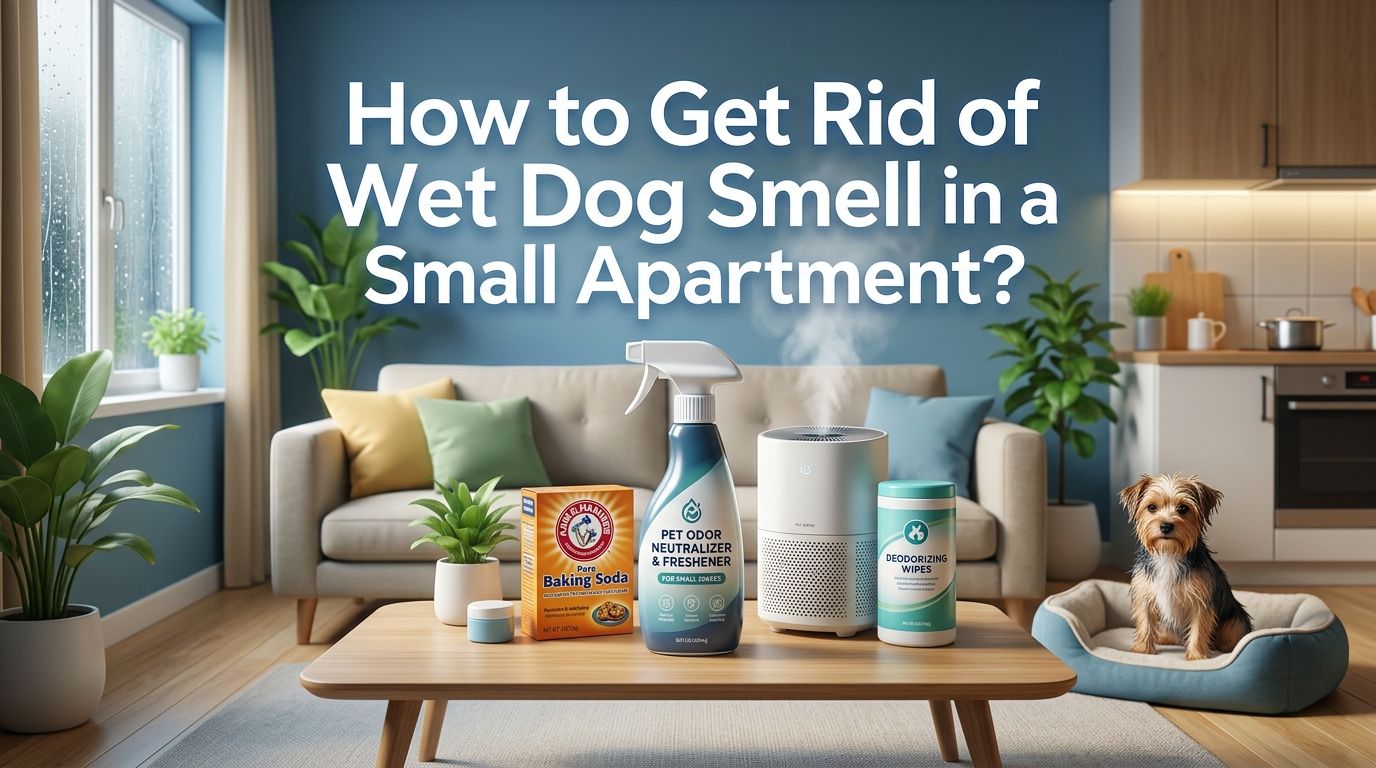
How to Get Rid of Wet Dog Smell in a Small Apartment?
You love your dog. But that strong, musty smell after a walk in the rain or a bath? Not so much. In a small apartment, wet dog smell has nowhere to go. It clings to furniture, carpets, and curtains.
It fills every room in minutes. And if you do not act quickly, the odor settles deep into fabrics and surfaces. The good news is you can fix this problem with simple, affordable methods.
This post gives you clear, step by step solutions to remove that wet dog smell from your apartment fast. You will learn what causes the odor, how to prevent it, and which cleaning methods work best for tight spaces.
In a Nutshell
- Wet dog smell comes from microorganisms on your dog’s skin. Bacteria and yeast live naturally in your dog’s fur. When the fur gets wet, moisture releases volatile organic compounds from these microorganisms into the air. This is what creates that familiar, unpleasant odor. The longer your dog stays damp, the worse the smell gets.
- Drying your dog quickly is the single most effective first step. A thorough towel dry followed by a blow dryer on a cool or warm setting stops the odor at the source. The faster you remove moisture from your dog’s coat, the less time bacteria have to produce smell.
- Baking soda and white vinegar are your best budget tools. Baking soda absorbs odors from carpets, furniture, and dog bedding. White vinegar neutralizes smell on hard surfaces. Together, these two household staples can tackle most wet dog smell problems without any special products.
- Enzymatic cleaners break down odor at the molecular level. Unlike regular cleaners that mask smells, enzymatic cleaners use bio enzymes to decompose the organic matter that causes odors. They convert these compounds into harmless substances like carbon dioxide and water.
- Air circulation and purification make a big difference in small spaces. Opening windows, running fans, and using an air purifier with an activated carbon filter can remove airborne odor particles fast. HEPA filters alone capture dander but need a carbon layer to handle smells.
- Prevention beats cleanup every time. Regular grooming, washing dog bedding weekly, and keeping a dedicated drying station near your door will stop the smell before it spreads through your apartment.
Why Does Wet Dog Smell Happen in the First Place?
The wet dog smell is not just “dirty dog” odor. It has a scientific explanation. Microorganisms like bacteria and yeast live naturally on your dog’s skin and fur. These organisms produce waste in the form of volatile organic compounds. When your dog is dry, these compounds stay trapped close to the skin and fur.
Water changes everything. When fur gets wet, moisture causes those compounds to evaporate into the air. According to the American Kennel Club, this evaporation process releases the concentrated smell all at once.
In a small apartment, these airborne particles have less space to disperse. They quickly saturate the air and settle on soft surfaces like couches, rugs, and bedding.
Some breeds produce more natural oils than others, which means they can smell stronger when wet. Dogs with thick double coats or skin folds tend to hold more moisture and harbor more bacteria.
Dry Your Dog Immediately After Getting Wet
Speed matters. The longer your dog stays wet, the more odor fills your apartment. Keep a stack of absorbent towels near your front door so you can start drying your dog the moment you walk inside. Press the towel firmly into the coat and squeeze rather than rub to avoid pushing moisture deeper.
After toweling, use a pet blow dryer or a regular hair dryer on a cool or low heat setting. Work through the coat section by section. Pay extra attention to areas that trap moisture: under the belly, behind the ears, between the toes, and around skin folds.
Pros: This method stops the smell at its source, costs nothing extra, and works instantly.
Cons: It takes time and patience, especially with large or thick coated dogs. Some dogs resist blow drying.
Open Windows and Boost Air Circulation Right Away
Small apartments trap odors because the air has limited room to move. The fastest way to reduce airborne wet dog smell is to increase ventilation. Open windows on opposite sides of your apartment if possible. This creates cross ventilation and pushes stale, smelly air out.
Turn on any ceiling fans or standing fans you have. Point a fan toward an open window to push the odor outside. If your apartment has a bathroom exhaust fan or kitchen range hood, turn those on too. Every bit of air movement helps.
Pros: Free, immediate, and effective at reducing airborne odors within minutes.
Cons: Not ideal during extreme weather, heavy rain, or high pollen days. Does not remove odor already trapped in fabrics.
Even 15 to 20 minutes of good airflow can make a noticeable difference. Make this your go to first response every time your dog comes home wet.
Use Baking Soda on Carpets, Rugs, and Upholstery
Baking soda is one of the most effective and affordable odor absorbers you can use. It is odorless itself but pulls other smells right out of fabrics. Sprinkle a generous layer of baking soda over your carpets, area rugs, couch cushions, and any fabric surface your dog touches.
Let the baking soda sit for at least 30 minutes. For stronger smells, leave it overnight. Then vacuum it up thoroughly. The baking soda will have absorbed a significant amount of the trapped odor.
Pros: Extremely cheap, safe for pets and humans, easy to apply, and genuinely effective at absorbing embedded smells.
Cons: Requires vacuuming afterward, does not work well on hard surfaces, and may need repeated applications for deep set odors.
For dog beds and blankets, you can sprinkle baking soda directly on them, let it sit, then shake off the excess before washing. This pre treatment boosts the cleaning power of your regular laundry cycle.
Clean Hard Surfaces with White Vinegar Solution
White vinegar is a natural odor neutralizer. Its acidity breaks down the organic compounds that cause wet dog smell. Mix equal parts white vinegar and water in a spray bottle. Spray this solution on hard floors, baseboards, walls, and any wipeable surface in your apartment.
Wipe the surfaces down with a clean cloth. The vinegar smell will fade within 30 minutes and take the dog odor with it. Pay special attention to baseboards and lower walls because dogs often brush against these areas and leave behind oils and dander.
Pros: Affordable, pet safe, kills bacteria on contact, and neutralizes odor rather than masking it.
Cons: The vinegar smell is strong at first and may bother some people. Not suitable for natural stone surfaces like marble or granite, as the acid can cause damage.
You can also add a few drops of pet safe essential oil like lavender to the mixture for a more pleasant scent. Avoid tea tree oil and other oils that are toxic to dogs.
Try Enzymatic Cleaners for Stubborn Odors
Sometimes baking soda and vinegar are not enough. If your carpet or couch has absorbed months of dog smell, you need something stronger. Enzymatic cleaners use bio enzymes to break down organic matter at a molecular level. They target the proteins, fats, and waste compounds that cause persistent pet odors.
These cleaners convert odor causing molecules into harmless byproducts like carbon dioxide and water. They do not just cover up the smell. They eliminate it at the source. Apply the enzymatic cleaner according to the directions on the bottle and allow it to sit for the recommended time.
Pros: Extremely effective on deep, stubborn odors. Breaks down the actual source of the smell rather than masking it. Safe for most surfaces and pet friendly.
Cons: More expensive than DIY solutions. Requires dwell time to work properly. Some formulas need multiple applications for old, set in stains.
Enzymatic cleaners are especially useful on carpet padding, mattress covers, and upholstered furniture where wet dog moisture has soaked deep into the material.
Wash All Dog Bedding and Fabric Items Weekly
Dog beds, blankets, and toys hold an enormous amount of odor. In a small apartment, even one unwashed dog bed can make the whole space smell. Wash all dog bedding in hot water once a week to kill bacteria and remove oils.
Add half a cup of white vinegar to the rinse cycle for extra odor fighting power. You can also add baking soda to the wash cycle. This combination is safe for fabrics and very effective at pulling out embedded smells.
Do not forget items people often overlook. Wash couch throw blankets your dog lies on. Clean the covers on decorative pillows. Wipe down crate surfaces and wash crate pads regularly. In a small apartment, every fabric item collects dog smell faster because everything is closer together.
Pros: Removes odor at the fabric level, prevents buildup, and keeps your apartment smelling fresh between deep cleans.
Cons: Requires consistent weekly effort. Some dog beds are bulky and hard to fit in apartment sized washers.
Invest in an Air Purifier with Activated Carbon
A good air purifier can make a dramatic difference in a small apartment. But not all air purifiers handle pet odor. HEPA filters capture 99.97% of particles like dander and fur down to 0.3 microns, but they do not remove odor molecules. For smell, you need an activated carbon filter.
Activated carbon absorbs volatile organic compounds from the air. This is exactly what causes wet dog smell. Look for an air purifier that combines both HEPA and activated carbon filtration. Place it in the room where your dog spends the most time.
Pros: Runs continuously and cleans the air 24/7. Removes dander, hair, and odor. Very effective in small enclosed spaces.
Cons: Initial purchase cost can be high. Filters need regular replacement. Carbon filters lose effectiveness over time and must be changed on schedule.
In a studio or one bedroom apartment, a single unit with proper room coverage can keep the air noticeably fresher throughout the entire space.
Groom Your Dog Regularly to Reduce Odor Buildup
Prevention is always easier than cleanup. Regular grooming reduces the amount of bacteria, oil, and dander on your dog’s skin and coat. This means less odor when your dog does get wet.
Brush your dog several times a week to remove loose fur and distribute natural oils evenly. Bathe your dog every three to four weeks with a dog specific shampoo that has antibacterial or antifungal properties. Overbathing can strip natural oils and cause the skin to produce even more oil to compensate, which makes the smell worse.
Pros: Reduces the root cause of the odor. Keeps your dog’s coat healthier. Less fur and dander in your apartment means fewer surfaces absorbing smells.
Cons: Time consuming. Professional grooming adds up in cost. Some dogs do not enjoy the process.
Clean your dog’s ears regularly too. Ear infections caused by yeast or bacteria are a common source of strong dog odor that many owners overlook.
Create a Dog Drying Station Near Your Front Door
In a small apartment, you need to stop the wet dog smell before it spreads past the entryway. Set up a dedicated drying station right by your front door. Keep old towels, a doormat or absorbent rug, and a microfiber drying mitt in a basket near the entrance.
The moment you walk in with a wet dog, dry their paws, belly, and coat on the mat before they run to the couch or bed. This contains the moisture and smell to one small, easy to clean area.
Pros: Simple to set up. Prevents odor from spreading to furniture and carpets. Saves you from a full apartment cleanup.
Cons: Requires discipline and consistency. The drying station towels and mat need washing regularly too.
You can also place a washable waterproof mat under the drying area to protect your floors. This small investment of space and effort saves a lot of cleaning time later.
Control Humidity Levels in Your Apartment
Humidity makes every odor worse. Moisture in the air keeps the volatile compounds from wet dog smell suspended longer. In a small apartment, humidity levels can rise quickly from a wet dog, a hot shower, or cooking.
Use a dehumidifier to keep indoor humidity between 30% and 50%. Your air conditioner also acts as a dehumidifier, so running it helps during warmer months. A simple hygrometer can help you monitor your apartment’s humidity levels.
Pros: Reduces the intensity and duration of all odors in your apartment. Also prevents mold and mildew growth.
Cons: Dehumidifiers use electricity and need their water reservoirs emptied. Can make the air feel uncomfortably dry if overused.
Lower humidity also makes your dog’s coat dry faster after getting wet. This directly reduces the time bacteria have to produce those smelly compounds.
Use Natural Deodorizers to Keep Your Apartment Fresh
Between deep cleaning sessions, natural deodorizers help maintain a fresh smelling apartment. Place small bowls of baking soda in corners and near your dog’s favorite spots. Replace the baking soda every two to four weeks for best results.
Activated charcoal bags are another excellent option. They absorb odors from the air passively and can last for months. Place them near dog beds, in closets, and in any enclosed space where smell accumulates.
Ground coffee spread in a shallow dish can also absorb odors in a room. Some dog owners simmer a pot of water with cinnamon sticks, citrus peels, and cloves on the stove to create a natural, pleasant aroma that replaces the dog smell.
Pros: Low cost, chemical free, and pet safe. Work passively without any effort.
Cons: Only mask or mildly absorb odors. Not powerful enough for strong or deeply embedded smells. Need regular replacement.
Build a Consistent Cleaning Routine
The secret to a fresh smelling apartment with a dog is consistency, not intensity. You do not need to deep clean every day. But you do need a regular schedule. Vacuum all floors and soft surfaces two to three times per week. Mop hard floors weekly with a vinegar solution.
Wash dog bedding every week. Wipe down baseboards and furniture surfaces every two weeks. Refresh baking soda on carpets once a month. A simple 15 minute daily tidy that includes wiping your dog’s paws and brushing their coat can prevent 90% of odor buildup.
Pros: Prevents smell from building up in the first place. Easier and less stressful than emergency deep cleans.
Cons: Requires forming a habit. Can feel repetitive. Apartments with multiple dogs need more frequent cleaning.
Small apartments actually have an advantage here. There is less space to clean, so maintaining freshness takes less time than it would in a house.
Frequently Asked Questions
How long does wet dog smell last in an apartment?
Without intervention, wet dog smell can linger for 24 to 48 hours or longer in a small apartment. The odor clings to fabrics and stays in the air. If your dog gets wet regularly and surfaces are not cleaned, the smell can become permanent. Quick drying, ventilation, and regular cleaning can eliminate the smell within an hour or two.
Does baking soda really remove dog smell from carpets?
Yes. Baking soda is a proven odor absorber. It pulls moisture and volatile compounds out of carpet fibers. For best results, sprinkle it generously and let it sit for at least 30 minutes before vacuuming. For strong odors, leave it overnight. You may need to repeat the process a few times for deep set smells.
Can I use essential oils to cover wet dog smell?
You can use pet safe essential oils like lavender or chamomile in a diffuser or diluted spray. However, many essential oils are toxic to dogs, including tea tree, peppermint, and eucalyptus in concentrated forms. Always check that an oil is safe for dogs before using it in your apartment. Essential oils mask the smell but do not remove the cause.
How often should I bathe my dog to prevent the smell?
Most dogs do well with a bath every three to four weeks. Bathing too frequently strips the natural oils from your dog’s skin. This causes the skin to overproduce oil, which actually makes the smell worse. Use a gentle, dog specific shampoo with antibacterial properties. Between baths, use grooming wipes to keep the coat fresh.
Do air purifiers eliminate wet dog smell completely?
Air purifiers with activated carbon filters can significantly reduce wet dog smell in the air. They absorb the volatile organic compounds that cause the odor. However, they do not clean odor out of fabrics and surfaces. You still need to clean carpets, furniture, and bedding. An air purifier works best as part of a complete odor control routine, not as a standalone solution.
Is the wet dog smell harmful to humans?
The smell itself is not harmful. It comes from natural bacteria and yeast on your dog’s skin. However, very strong or unusual odors from your dog could signal a health problem like a skin infection, ear infection, or dental disease. If your dog smells much worse than normal, even when dry, schedule a visit with your veterinarian to rule out underlying health issues.

I’m Maya Brown, the voice behind Pure Breeze Vault. I write detailed, honest, and easy-to-follow air purifier reviews to help readers compare features, understand filter technologies, and choose products with confidence. My goal is to make research simpler, clearer, and more practical for anyone improving indoor air quality at home.