How to Prevent Outdoor Odors From Entering an Apartment Bedroom?
Living in an apartment means dealing with smells you did not create. Exhaust fumes, cigarette smoke from neighbors, trash odors, cooking smells, and even industrial pollutants can drift right into your bedroom.
These unwanted scents affect your sleep quality, your comfort, and your overall health. The problem is common, and it frustrates millions of apartment dwellers every single day.
The good news? You do not need to move out or spend a fortune to fix this issue. Most outdoor odors enter your bedroom through gaps in windows, cracks around doors, ventilation systems, and poorly sealed walls.
In a Nutshell
- Seal all gaps and cracks first. Outdoor odors enter your apartment bedroom through tiny openings around windows, doors, walls, and vents. Applying weatherstripping, caulk, and door sweeps eliminates the most common entry points and produces an immediate improvement in air quality. This step alone can block up to 80% of incoming smells.
- Use air purifiers with activated carbon filters. HEPA filters capture particles, but activated carbon filters are what actually absorb odor molecules. Place a quality air purifier near your bedroom window or door for continuous odor removal. Carbon filters need regular replacement to stay effective.
- Create positive air pressure inside your bedroom. A small fan blowing filtered outdoor air or recirculated indoor air into your sealed bedroom pushes air outward through any remaining gaps. This means outside smells cannot drift in because the airflow direction works against them.
- Block and filter your ventilation openings. Apartment vents and HVAC returns are direct highways for outdoor odors. Placing activated carbon filter material over vent covers catches smell molecules before they spread through your room. Check and replace these filters monthly.
- Use natural odor absorbers as a second line of defense. Bowls of activated charcoal, baking soda, or white vinegar placed around your bedroom absorb lingering smells that bypass your other defenses. These affordable solutions work quietly in the background and require minimal effort.
- Talk to your landlord about building level solutions. If odors persist after your personal efforts, the problem may involve shared ductwork, plumbing vents, or structural gaps. Your landlord has a responsibility to maintain livable conditions, and a professional inspection can uncover hidden issues you cannot fix alone.
Identify How Outdoor Odors Enter Your Bedroom
Before you seal anything, you need to find exactly where the smells come in. Outdoor odors travel through air gaps around windows and doors, through ventilation ducts, through cracks in walls or flooring, and through plumbing penetrations. Each entry point requires a different fix.
A simple way to locate drafts is the incense test. Light a stick of incense and hold it near window frames, door edges, electrical outlets, and vent covers. Watch the smoke trail carefully. If it flickers or gets pulled in a direction, you found an air leak. Mark each spot with tape so you can address them all later.
Pay attention to when the smell is strongest. If it happens at specific times of day, the source may be linked to a neighbor’s routine or local traffic patterns. This information helps you target the right solution. Identifying every entry point is the first and most important step in this entire process.
Seal Your Windows With Weatherstripping and Caulk
Windows are the biggest entry point for outdoor smells in most apartments. Even closed windows can have tiny gaps between the frame and the wall or between the sash and the frame. These gaps allow odor carrying air to flow right into your bedroom.
Apply self adhesive foam weatherstripping along the edges where the window meets the frame. For gaps between the window frame and the wall, use silicone caulk to create a permanent seal. Both materials are affordable and easy to apply without tools or experience.
Pros: Extremely affordable (under $10 for most windows). Easy to install in minutes. Improves energy efficiency and reduces noise too.
Cons: Foam weatherstripping wears down over time and needs replacement every 1 to 3 years. Caulk requires a clean, dry surface for proper adhesion. Renters should check their lease before applying permanent caulk, as some landlords prefer removable solutions.
Install Door Sweeps and Draft Blockers
Your bedroom door and your apartment’s front door are both potential pathways for outdoor smells. The gap between the bottom of the door and the floor can be a quarter inch or more, which is enough for odors to flow through freely.
A door sweep attaches to the bottom edge of your door and creates a seal against the floor or threshold. Look for sweeps with a rubber or silicone strip that presses firmly against the ground. For renters who cannot drill into their door, adhesive door sweeps or simple draft stopper rolls that sit along the base of the door work as alternatives.
Pros: Door sweeps block smells, drafts, dust, and even insects. They install in under 10 minutes and cost very little.
Cons: Adhesive models may fall off over time, especially in humid conditions. Some door sweeps can create slight resistance when opening or closing the door. Draft stopper rolls need repositioning each time you use the door.
Use an Air Purifier With Activated Carbon
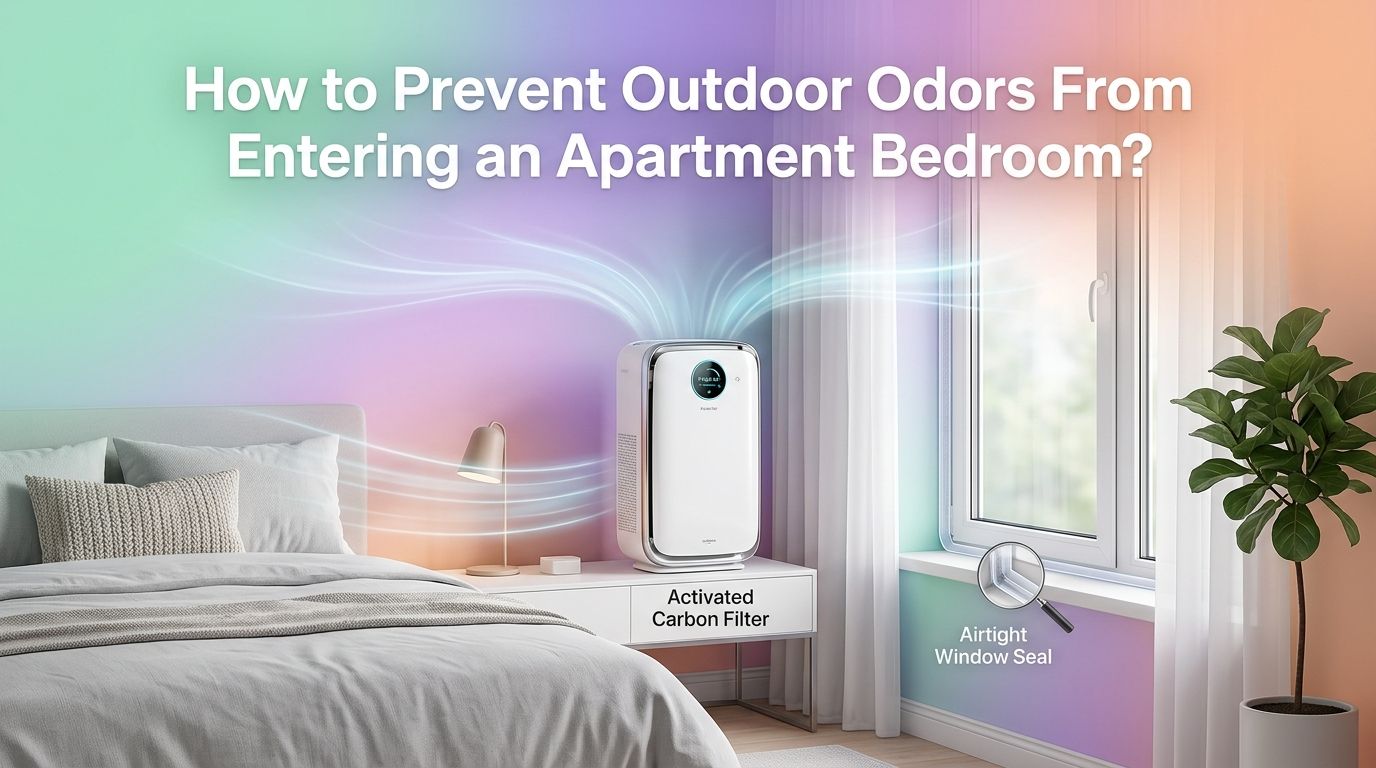
An air purifier acts as a constant cleaning system for your bedroom air. However, not all air purifiers handle odors equally. HEPA filters capture particles like dust and pollen, but they do not remove odor molecules. You need activated carbon filtration to absorb gaseous pollutants and smells.
Place your air purifier near the most likely odor entry point, such as the window or the bedroom door. Run it on a medium or high setting during peak odor times. The carbon filter traps volatile organic compounds (VOCs) and odor molecules as air passes through it.
Pros: Works continuously without any effort from you. Improves overall air quality beyond just odors. Available in many sizes for different room dimensions.
Cons: Carbon filters need replacement every 3 to 6 months depending on usage, and replacement filters add ongoing cost. Units with enough carbon for serious odor removal can be noisy on high settings. Electricity costs increase slightly with 24/7 operation.
Create Positive Air Pressure in Your Bedroom
This method is one of the most effective and least known solutions for keeping outdoor smells out. Positive air pressure means the air pressure inside your bedroom is slightly higher than the air pressure outside it. This forces air outward through any gaps, which prevents outside air and smells from flowing in.
You can create positive pressure by placing a fan in one window that blows filtered air into the room while keeping all other windows and doors sealed. Attach a furnace filter or a HEPA filter panel to the intake side of the fan to ensure the incoming air is clean. The slight overpressure pushes stale and smelly air out through any remaining small cracks.
Pros: Highly effective at preventing all types of odor infiltration. Works even if you cannot perfectly seal every gap. Low cost setup with a box fan and a filter panel.
Cons: Requires one window to remain partially open or dedicated to the fan setup. Less effective in windy conditions or extreme temperature differences. Increases heating or cooling costs slightly because you are pulling in outside air.
Cover and Filter Your Ventilation Vents
Apartment HVAC systems and bathroom exhaust vents connect multiple units through shared ductwork. This means your neighbor’s cooking smells, cigarette smoke, or other odors can travel directly into your bedroom through the supply vents, return vents, or exhaust openings on your walls or ceiling.
Cut a piece of activated carbon filter material to fit over each vent cover in your bedroom. Secure it behind the vent grille with tape or magnets. This adds a layer of odor filtration to every vent without blocking airflow completely. You can buy carbon filter sheets at most hardware stores.
Pros: Directly targets one of the most common and overlooked odor entry points in apartments. Affordable and easy to install or replace. Does not require any permanent modifications.
Cons: Reduces airflow slightly, which can affect heating and cooling performance. Filters lose effectiveness after 30 to 60 days and need regular replacement. Very strong odors may still pass through a single layer of carbon material.
Seal Wall Penetrations and Electrical Outlets
Odors can travel through gaps around electrical outlets, light switches, cable or internet ports, and pipe penetrations in your bedroom walls. These openings connect your unit to shared wall cavities, which act as channels for smell transfer between apartments and from outside.
For electrical outlets and switches, install foam gasket inserts behind the cover plates. These are pre cut foam pieces that fit standard outlet and switch boxes. For larger gaps around pipes or cables, use removable caulk or expanding foam sealant to fill the space. Always turn off the power at the breaker before working near electrical outlets.
Pros: Eliminates hidden odor pathways that most people overlook completely. Gasket inserts cost just a few dollars for a pack. Quick to install with basic tools.
Cons: Expanding foam can be messy and difficult to remove if you rent. You must exercise caution around electrical wiring. Some wall gaps may be inaccessible without removing baseboards or trim.
Use Natural Odor Absorbers in Your Bedroom
Even after sealing and filtering, some faint smells may still linger. Natural odor absorbers provide a passive second line of defense that works around the clock without electricity or noise. These substances chemically neutralize or physically trap odor molecules from the air.
Place bowls of activated charcoal near your window and door. Activated charcoal is more effective than regular charcoal because its porous structure gives it a much larger surface area for trapping odors. Baking soda in open containers also absorbs acidic odor compounds effectively. White vinegar in a small bowl neutralizes many common smells, though its own scent fades within hours.
Pros: Extremely affordable and completely natural. No noise, no electricity, and no maintenance beyond periodic replacement. Safe for use around children and pets.
Cons: Works slowly and is best for mild to moderate odors rather than strong persistent smells. Activated charcoal needs to be replaced or recharged (by placing it in sunlight) every 1 to 2 months. Baking soda loses its absorbing power after about 30 days and needs to be refreshed.
Manage Your Bedroom Ventilation Schedule
Sometimes the simplest solution is adjusting when and how you ventilate your bedroom. If the outdoor odor has a predictable pattern, such as morning traffic fumes, evening cooking smells, or late night cigarette smoke, you can time your ventilation to avoid peak odor hours.
Open your windows during off peak hours when the air outside smells cleanest, typically early morning or late at night in most urban areas. Close all windows before the odor source becomes active. Run your air purifier on high during the smelly hours and switch to a lower setting during clean air periods. This strategy minimizes odor exposure while still providing fresh air for healthy sleep.
Pros: Costs nothing at all. Reduces your reliance on mechanical filtration. Gives you fresh air without the accompanying bad smells.
Cons: Requires you to know the odor schedule, which takes observation over several days. Not practical if the smell is constant or unpredictable. May not work well in climates where window opening is limited by weather.
Try a DIY Box Fan Air Filter
A box fan air filter, sometimes called a Corsi Rosenthal box, is a proven DIY air cleaning setup that you can build for under $30. It uses a standard 20 inch box fan attached to one or more furnace filters to create a powerful and affordable air purifier for your bedroom.
Tape a MERV 13 rated furnace filter to the intake side of a box fan using painter’s tape or duct tape. For better performance, tape four filters into a cube shape and mount the fan on top. This creates strong airflow through a large filter surface area. The MERV 13 rating captures fine particles, and adding a carbon pre filter layer helps trap odor molecules as well.
Pros: Much cheaper than commercial air purifiers with comparable performance. Easy to build in under 15 minutes. Replacement filters are widely available and inexpensive.
Cons: Louder than most commercial air purifiers, especially on high speed. Bulky and not visually attractive in a bedroom. Filters need replacement every 2 to 3 months depending on air quality.
Communicate With Your Landlord or Property Manager
If outdoor odors continue despite your personal efforts, the issue may be a building level problem that requires professional attention. Shared ductwork, broken exhaust fans, poorly sealed building envelopes, and plumbing vent leaks are all common sources of persistent odor issues in apartments.
Document the problem with dates, times, and descriptions of the odors you experience. Take photos of any visible gaps or damage. Send a written request to your landlord or property manager asking for an inspection. In many areas, persistent odor infiltration can be considered a habitability issue, which gives you legal standing to request repairs.
Pros: Addresses the root cause instead of just the symptoms. Professional repairs last longer than DIY fixes. Your landlord is typically responsible for building envelope maintenance.
Cons: Resolution can be slow, especially with unresponsive landlords. You may need to involve local housing authorities if your landlord does not act. Some structural repairs require temporary disruption to your living space.
Consider Window Insulation Film for Extra Protection
Window insulation film adds another layer of sealing to your bedroom windows. This clear plastic film attaches to the window frame with double sided tape and shrinks tight with a hair dryer. It creates a sealed air pocket between the film and the glass that blocks drafts and odor carrying air currents.
This solution is especially useful for older apartments with single pane windows or windows that do not close tightly. The film is transparent, so it does not block light or views. Apply it at the start of the season when outdoor odors are worst and remove it when you want to open your windows again.
Pros: Very affordable at around $5 per window. Adds insulation value that reduces energy bills. Creates a nearly airtight seal over the entire window surface.
Cons: Prevents you from opening the window while installed. Removal can leave adhesive residue on some window frames. Must be reapplied each time you remove it, as the film is not reusable.
Build a Consistent Odor Defense Routine
The most effective approach combines multiple methods into a consistent daily routine. No single solution blocks 100% of outdoor odors, but layering several strategies together creates a comprehensive defense system for your bedroom.
Start your routine by sealing all gaps and cracks as your foundation. Add a quality air purifier with carbon filtration for continuous cleaning. Place natural odor absorbers near entry points as backup. Manage your ventilation schedule around peak odor times. Check your seals and filters monthly to make sure everything performs at its best. This layered approach ensures that even if one method fails, others continue protecting your air quality.
Making this a habit takes just a few minutes each week. Replace filters on a set schedule. Refresh your baking soda and charcoal monthly. Inspect weatherstripping for wear every few months. Consistency is what separates a bedroom that always smells fresh from one that constantly battles outside odors.
Frequently Asked Questions
Why does my apartment bedroom smell like outside even with the windows closed?
Even with windows shut, air can enter through gaps around the window frame, under doors, through electrical outlets, and via shared HVAC ductwork. Older buildings tend to have more air leaks because of settling and worn seals. Temperature differences between inside and outside also create pressure changes that pull odor carrying air into your space. A thorough inspection of all potential entry points will reveal where the smells are getting through.
Do air purifiers actually remove outdoor odors from a bedroom?
Yes, but only if they have activated carbon filters. Standard HEPA filters remove airborne particles like dust and pollen, but they do not trap the gaseous molecules that cause smells. Look for an air purifier with a substantial amount of activated carbon, ideally several pounds, for effective odor removal. Thin carbon pre filters found in budget models may not provide enough absorption for strong outdoor smells.
Can I seal my apartment windows without losing my security deposit?
Absolutely. Use removable weatherstripping, painter’s tape, and removable caulk for temporary sealing solutions that peel off cleanly. Window insulation film also removes without damage in most cases. Avoid permanent silicone caulk or screws unless your landlord gives written permission. Always photograph the original condition of your windows before making any changes.
How often should I replace activated charcoal or carbon filters?
Activated charcoal bags in your bedroom should be replaced or recharged every 1 to 2 months. You can recharge some charcoal products by placing them in direct sunlight for a few hours. Carbon filters in air purifiers typically last 3 to 6 months, but heavy odor exposure shortens their lifespan. Follow the manufacturer’s guidelines and replace filters sooner if you notice a decrease in odor removal performance.
Is positive air pressure safe to use in an apartment bedroom?
Yes, creating mild positive air pressure is safe and is actually used in hospitals and clean rooms to keep contaminants out. The key is to filter the incoming air properly and avoid creating excessive pressure that strains your HVAC system. A single box fan with a quality filter attached is enough for most bedrooms. Make sure your bedroom is not completely airtight, as you still need some air exchange for healthy oxygen levels.
What is the cheapest way to stop outdoor smells from entering my bedroom?
The most affordable approach is to seal gaps with foam weatherstripping and use a draft stopper under your door. Both cost under $10 combined. Add open containers of baking soda near entry points for passive odor absorption. If you need mechanical filtration, a DIY box fan filter using a MERV 13 furnace filter costs around $25 to $30 and delivers strong performance at a fraction of the cost of a commercial air purifier.

I’m Maya Brown, the voice behind Pure Breeze Vault. I write detailed, honest, and easy-to-follow air purifier reviews to help readers compare features, understand filter technologies, and choose products with confidence. My goal is to make research simpler, clearer, and more practical for anyone improving indoor air quality at home.