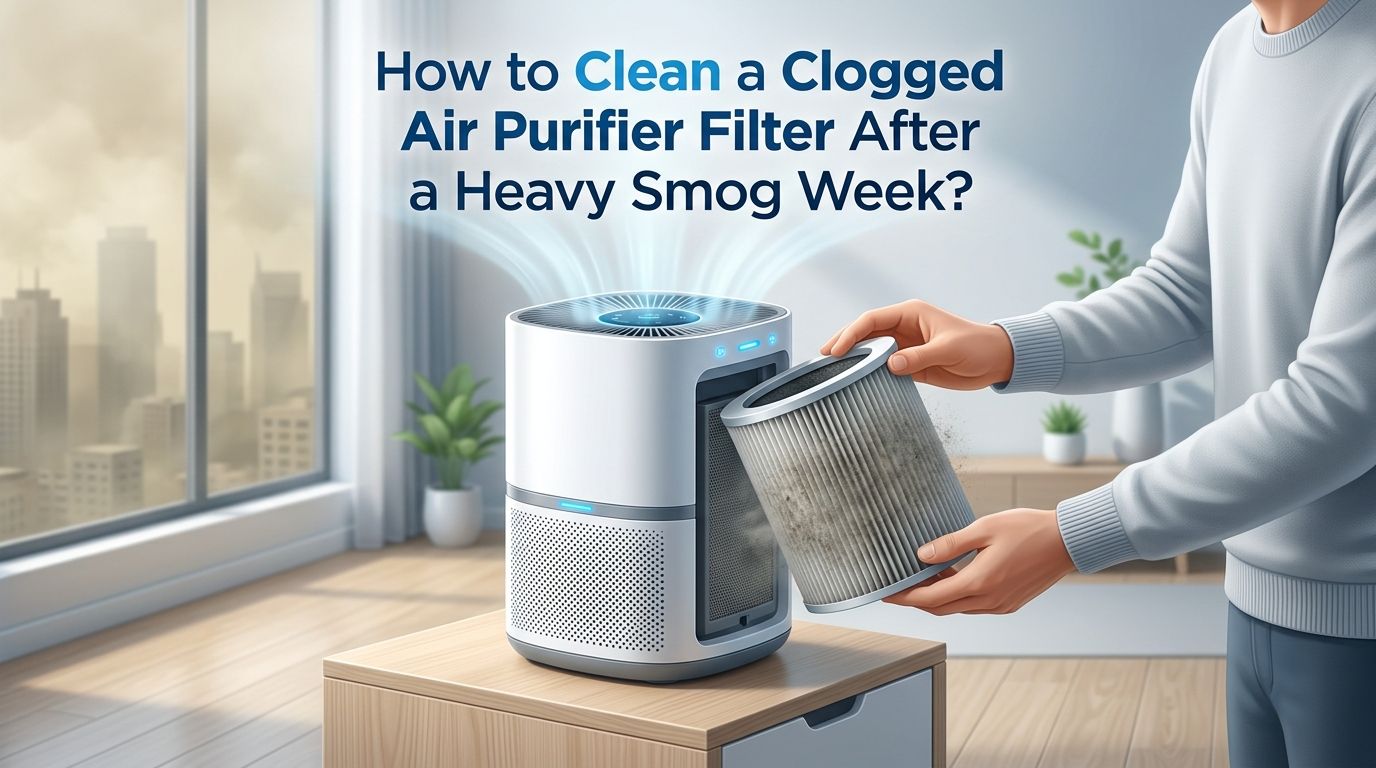
How to Clean a Clogged Air Purifier Filter After a Heavy Smog Week?
You just survived a week of thick, heavy smog. Your air purifier ran around the clock. Now it sounds louder than usual. The airflow feels weaker. There is a musty smell coming from the vents.
Your air purifier filter is likely clogged. A clogged air purifier filter does not just stop cleaning the air. It forces your purifier to work harder, raises energy use, and can even push trapped pollutants back into your room.
After a heavy smog week, your filter absorbs a massive load of PM2.5 particles, dust, soot, and chemical pollutants. All of this buildup can cut your filter’s lifespan in half.
Key Takeaways
- Heavy smog clogs filters faster than normal conditions. A single week of intense smog can deposit enough fine particulate matter (PM2.5) on your filter to equal several weeks of regular use. This means your filter may need attention much sooner than the schedule in your user manual suggests.
- Always check your filter type before cleaning. HEPA filters, activated carbon filters, and pre filters each need a different cleaning approach. Using the wrong method can permanently damage your filter. Check your user manual first to confirm if your filter is washable or disposable.
- Vacuuming is the safest cleaning method for most HEPA filters. According to lab tests by Smart Air, vacuuming a HEPA filter can improve airflow by up to 10% without damaging particle capture ability. Washing a HEPA filter with water, on the other hand, significantly reduces its ability to capture small particles like PM2.5.
- Pre filters are the easiest to clean and the most important to maintain. These front line filters catch large particles like dust, pet hair, and visible soot. Cleaning them regularly takes pressure off your main HEPA filter and helps it last longer.
- Sometimes replacement is the only safe option. If your filter has turned dark grey or black after a smog event, or if your purifier still smells or sounds strained after cleaning, it is time for a new filter. No amount of cleaning can restore a filter that has reached full capacity.
- Set reminders to check filters after any major pollution event. Do not wait for the scheduled replacement date. Heavy smog, wildfires, and construction dust can all shorten your filter’s effective life. A quick visual check takes less than two minutes and can save you from breathing dirty air.
Why Heavy Smog Clogs Your Air Purifier Filter So Fast
Smog is not ordinary dust. It contains a dense mix of PM2.5 particles, nitrogen dioxide, sulfur dioxide, ozone, and volatile organic compounds. These particles are extremely small, often less than 2.5 micrometers in diameter. Your air purifier pulls in all of this during a smog event.
A standard HEPA filter captures 99.97% of airborne particles down to 0.3 microns. That is great for your lungs but brutal on the filter. During a heavy smog week, the filter absorbs far more pollutants per hour than it would on a clear day.
This rapid buildup blocks the tiny fibers inside the filter. Airflow drops. The motor works harder. Energy use increases. The result is a clogged, overworked filter that can no longer do its job. Understanding this helps you see why post smog cleaning is not optional. It is essential.
Signs Your Air Purifier Filter Is Clogged
Before you start cleaning, confirm that your filter actually needs attention. Several clear signs point to a clogged filter.
Reduced airflow is the most common indicator. Place your hand near the air outlet. If the breeze feels noticeably weaker than before, the filter is likely blocked. A louder motor sound is another red flag. The purifier has to push harder to move air through a dirty filter.
You might also notice unpleasant odors coming from the unit. This happens when trapped particles start breaking down or when an activated carbon filter is saturated. Some purifiers have a filter indicator light that turns red or orange. Pay attention to it.
Finally, if your allergy or asthma symptoms suddenly get worse despite running the purifier, that is a strong sign. A clogged filter can actually recirculate pollutants instead of removing them.
Tools and Supplies You Will Need
Gathering your supplies before you start saves time and prevents mistakes. Here is what you need.
A vacuum cleaner with a soft brush attachment is the most important tool. This lets you remove surface dust and debris without damaging the filter material. You will also want a microfiber cloth for wiping down the purifier’s exterior and internal housing.
Keep a screwdriver nearby if your purifier requires one for opening the filter compartment. Have a clean, dry surface or an old towel ready to place the filter on during inspection.
If your filter is washable, prepare a basin of lukewarm water. Do not add soap or detergent unless the manufacturer’s manual specifically says so. You may also want a pair of disposable gloves. Dirty filters from a smog week can contain irritating chemicals. Protect your hands and work in a well ventilated area.
Step 1: Turn Off and Unplug the Air Purifier
This sounds obvious, but many people skip it. Always power down and unplug your air purifier before touching the filter.
Working on a running unit is dangerous. The fan blades inside are spinning at high speed. Unplugging also prevents electrical damage if you accidentally touch internal wiring.
Once unplugged, let the unit sit for about five minutes. This allows the motor to cool down and any residual airflow to stop. During this time, move the purifier to a clean workspace. A garage, balcony, or well ventilated room works best.
Cleaning a smog loaded filter indoors can release trapped particles back into your living space. You do not want to breathe in the very pollutants you are trying to remove. Place a towel or newspaper under the unit to catch any falling dust or debris.
Step 2: Remove and Inspect the Pre Filter
The pre filter is the first layer of defense. It sits at the front of the purifier and catches large particles like dust, hair, lint, and visible soot.
Open the purifier’s front panel or filter compartment. Most units use clips or a simple slide mechanism. Pull the pre filter out gently. Hold it up to a light source. If light barely passes through, the pre filter is heavily loaded.
After a smog week, expect to see a thick, grey or brownish layer of buildup. This is normal. The good news is that most pre filters are designed to be cleaned and reused.
Take a photo of the filter before cleaning. This helps you compare its condition over time and decide when full replacement is needed. If the pre filter is torn or warped, replace it. A damaged pre filter lets more particles reach your HEPA filter, shortening its life significantly.
Pros of cleaning pre filters: Free, quick, and extends the life of your main filter.
Cons: Does not address deep contamination in the HEPA or carbon layers.
Step 3: Clean the Pre Filter Thoroughly
Pre filters are the easiest type to clean. Start by tapping the filter gently over a trash can to shake loose any large debris. Do this outdoors if possible.
Next, use a vacuum cleaner with a soft brush attachment. Run the brush slowly over both sides of the filter. Cover every section. This removes fine dust that tapping cannot dislodge.
If your pre filter is washable (check the manual), rinse it under lukewarm running water. Avoid hot water because it can warp the filter material. Do not use soap unless the manufacturer approves it. Gently rub the surface with your fingers to loosen stubborn grime.
After washing, shake off excess water and let the filter air dry completely. This may take 12 to 24 hours depending on humidity. Never reinstall a damp filter. Moisture inside the purifier can cause mold growth, which creates a bigger air quality problem than the one you started with.
Pros of washing pre filters: Deep clean, removes embedded particles, restores airflow.
Cons: Requires long drying time, not suitable for all pre filter types.
Step 4: Clean or Assess the HEPA Filter
The HEPA filter is the core of your air purifier. It captures the tiniest particles including PM2.5, pollen, bacteria, and mold spores. Cleaning it requires extra care.
First, check your manual. Most HEPA filters are not washable. Washing a standard HEPA filter with water damages the delicate fiber mesh. Lab tests from Smart Air showed that washing HEPA filters significantly reduced particle capture performance. The water breaks down the fine fibers that trap microscopic pollutants.
If your HEPA filter is not washable, your best option is gentle vacuuming. Use a soft brush attachment on low suction. Run the brush lightly across the filter surface. Do not press hard or push the vacuum nozzle into the filter material. The goal is to remove surface dust only.
Smart Air’s tests found that vacuuming improved airflow by a small amount, roughly 10%, while keeping particle capture nearly unchanged. This makes vacuuming the safest cleaning method for most HEPA filters.
Pros of vacuuming HEPA filters: Safe, preserves filter performance, quick process.
Cons: Limited improvement, cannot remove deeply embedded particles.
If your manual says the HEPA filter is washable, rinse it under cold running water only. Do not scrub it. Do not use soap. Let it dry completely for 24 hours or more before reinstalling.
Pros of washing washable HEPA filters: Removes more buildup than vacuuming alone.
Cons: Risk of reduced particle capture, very long drying time, not all filters survive water exposure.
Step 5: Address the Activated Carbon Filter
Activated carbon filters handle what HEPA filters cannot. They absorb gases, odors, smoke chemicals, and volatile organic compounds. After a smog week, this filter often takes the hardest hit.
Carbon filters work through a process called adsorption. The carbon’s porous surface traps gas molecules. Once all the pores are filled, the filter stops working. You cannot unclog carbon pores with vacuuming or washing.
Your cleaning options here are limited. You can vacuum the surface to remove any dust sitting on top of the carbon layer. Some manufacturers suggest placing the carbon filter in direct sunlight for a few hours. UV exposure may help release some trapped odors, though results vary.
However, if your carbon filter was exposed to heavy smog for an extended period, replacement is usually the best choice. A saturated carbon filter can start releasing trapped chemicals back into the air. This is the opposite of what you want.
Pros of vacuuming carbon filters: Removes surface debris, quick and easy.
Cons: Does not restore adsorption capacity, limited real benefit after heavy pollution exposure.
Step 6: Clean the Purifier’s Interior and Exterior
The filter is only part of the equation. Pollutants also settle inside the filter housing, air intake grille, and fan area.
Use a dry microfiber cloth to wipe down the inside of the filter compartment. If you see visible soot or residue, dampen the cloth slightly with water. Wipe all surfaces clean. Pay special attention to the air intake vents on the outside of the unit. These can collect a surprising amount of grime during a smog week.
Use a vacuum with a narrow nozzle attachment to clean dust from the fan blades if they are accessible. Do not spray any liquid directly into the purifier’s motor or electronic components.
Wipe the exterior housing with a damp cloth. A clean exterior prevents surface dust from being pulled back into the purifier the next time you turn it on. Dry all surfaces before reassembling the unit. This step takes just a few minutes but makes a real difference in overall performance.
When to Replace Instead of Clean
Cleaning has its limits. There are clear situations where replacement is the only smart choice.
If your HEPA filter has turned from white to dark grey or nearly black, it has captured all it can. No amount of vacuuming will bring it back. If you notice a persistent chemical or musty smell after cleaning, the filter material itself is saturated.
Another sign is a noticeable drop in airflow even after thorough cleaning. If the purifier still sounds strained or the air output remains weak, the filter fibers are likely packed beyond recovery.
Most manufacturers recommend replacing HEPA filters every 6 to 12 months under normal conditions. After a heavy smog event, that timeline can shrink to 3 to 4 months. Carbon filters often need replacement even sooner, sometimes every 2 to 3 months in polluted environments.
Do not gamble with a worn out filter. Running a purifier with a spent filter wastes electricity and gives you a false sense of security. You think the air is clean, but the purifier is just circulating the same dirty air. Check your filter after every major pollution event.
How to Extend Filter Life During Future Smog Events
Prevention is cheaper and easier than repair. A few simple habits can protect your filters during the next smog event.
Close all windows and doors when outdoor pollution is high. This reduces the total volume of dirty air your purifier has to process. Seal any gaps around windows with weather stripping tape if needed.
Run the purifier on a medium setting instead of the highest speed. While a higher setting cleans faster, it also pushes more pollutants through the filter per minute. A medium setting balances cleaning power with filter preservation.
Clean your pre filter before a forecasted smog event. A clean pre filter catches more large particles and protects the HEPA filter behind it. Use an indoor air quality monitor to track PM2.5 levels. This tells you when to run the purifier harder and when to give it a break.
Reduce indoor pollution sources during smog events. Avoid cooking with strong oils, burning candles, or using chemical sprays. Every particle your purifier does not have to catch is extra life for your filter.
Common Mistakes to Avoid When Cleaning Filters
Many people damage their filters during cleaning without realizing it. Here are the most common errors.
Using compressed air to blow dust off a HEPA filter pushes particles deeper into the fiber mesh. This actually makes clogging worse. Avoid it entirely.
Scrubbing the filter surface with a brush or sponge tears the delicate HEPA fibers. Once torn, the filter cannot capture fine particles and must be replaced.
Reinstalling a wet filter creates mold and bacteria problems inside the purifier. Always wait until the filter is completely bone dry before putting it back. Touch the center of the filter to check for any remaining dampness.
Ignoring the carbon filter is another common mistake. Many people focus only on the HEPA filter and forget that the carbon layer also needs inspection. A saturated carbon filter introduces bad smells and can release trapped chemicals.
Finally, do not rely solely on indicator lights. Some purifiers use a simple timer for the filter light. It may turn red based on hours of use, not actual filter condition. A visual inspection is always more reliable than an automated reminder.
How Often Should You Clean After Smog Exposure
The right cleaning schedule depends on how bad the smog was and how long it lasted.
After a mild smog event lasting one to two days, check and clean the pre filter. A quick visual inspection of the HEPA filter should be enough. You probably will not need to do more.
After a moderate smog week lasting three to five days, clean the pre filter thoroughly and vacuum the HEPA filter. Inspect the carbon filter for odor saturation.
After a severe or extended smog event lasting more than a week, clean every component. Vacuum the HEPA filter, wash the pre filter, and seriously consider replacing the carbon filter. Also clean the purifier’s interior housing.
As a general rule, perform a visual filter check at least once a month during pollution season. During heavy smog periods, check every week. This proactive approach keeps your purifier working at peak performance and prevents surprise failures when you need clean air the most.
Frequently Asked Questions
Can I wash a HEPA filter with water to remove smog buildup?
You should only wash a HEPA filter if the manufacturer specifically labels it as washable. Lab tests show that washing a standard HEPA filter with water reduces its ability to capture small particles like PM2.5. The water damages the fine fiber mesh that traps pollutants. If your filter is not marked as washable, use gentle vacuuming instead. This preserves performance while removing surface dust.
How do I know if my air purifier filter needs replacement after a smog week?
Look for these signs: the filter has turned dark grey or black, airflow remains weak even after cleaning, or you smell persistent odors from the purifier. If the purifier’s motor sounds louder than normal after cleaning, the filter is likely at full capacity. A visual inspection is more reliable than the purifier’s built in timer or indicator light.
Can I use compressed air to clean a clogged air purifier filter?
No. Compressed air pushes particles deeper into the filter fibers instead of removing them. This worsens the clog and reduces filter performance. Stick with a vacuum cleaner using a soft brush attachment on low suction for the safest results.
How long does a HEPA filter last during heavy pollution?
Under normal conditions, most HEPA filters last 6 to 12 months. During heavy or repeated smog events, this can drop to 3 to 4 months or less. The more pollutants the filter captures per day, the faster it reaches full capacity. Monitor your filter’s color and airflow regularly during pollution season.
Is it safe to run an air purifier with a clogged filter?
Running a purifier with a clogged filter is not effective. The reduced airflow means the unit cleans very little air. In some cases, a saturated filter can release trapped pollutants back into the room. It also forces the motor to work harder, which increases energy use and can shorten the purifier’s overall lifespan. Clean or replace the filter as soon as you notice performance issues.
Can sunlight help restore an activated carbon filter?
Some users place carbon filters in direct sunlight for a few hours to release trapped odors. This may provide minor improvement for lightly used filters. However, sunlight cannot restore the carbon’s adsorption capacity once the pores are fully saturated. After heavy smog exposure, replacement is the more reliable option.

I’m Maya Brown, the voice behind Pure Breeze Vault. I write detailed, honest, and easy-to-follow air purifier reviews to help readers compare features, understand filter technologies, and choose products with confidence. My goal is to make research simpler, clearer, and more practical for anyone improving indoor air quality at home.