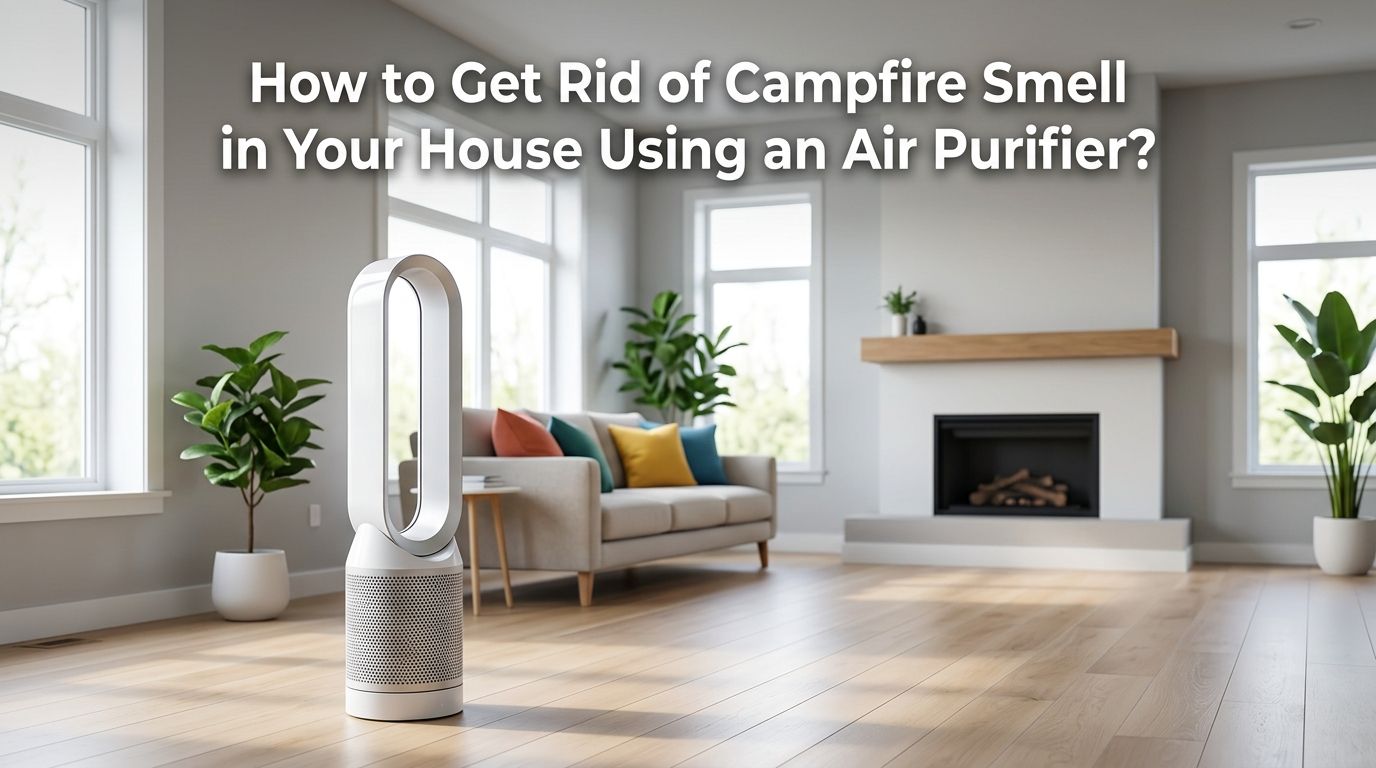
How to Get Rid of Campfire Smell in Your House Using an Air Purifier?
You came home from a fun camping trip, and now your entire house smells like a campfire. Your clothes, your hair, and even your furniture carry that strong, smoky odor. Opening windows helps a little, but the smell just won’t go away.
Campfire smoke contains fine particles, volatile organic compounds (VOCs), and gases that cling to surfaces and float in your indoor air.
These are the same compounds found in wildfire smoke, including benzene and formaldehyde. The EPA warns that wood smoke can irritate your lungs, cause inflammation, and weaken your immune system.
In a Nutshell
- HEPA filters alone are not enough. A True HEPA filter captures 99.97% of particles down to 0.3 microns, but it does not remove gaseous odors. You need an activated carbon filter combined with HEPA to tackle both smoke particles and the smell.
- Placement matters more than you think. Position your air purifier at least 6 inches from any wall and keep 3 to 5 feet of open space in front of it. Central placement in the most affected room gives the best results.
- Run your air purifier on the highest setting for the first 24 to 48 hours. After that, you can switch to a medium setting and keep it running continuously for up to two weeks until the smell is completely gone.
- Ventilation speeds up the process. Open windows on opposite sides of your home to create cross ventilation while the air purifier runs. This flushes out odor particles faster.
- Wash and clean all soft surfaces. Air purifiers clean the air, but campfire smoke also settles on fabrics, carpets, and upholstery. You must clean these surfaces to stop them from releasing odor back into the air.
- Consider room size before choosing a unit. Match the air purifier’s Clean Air Delivery Rate (CADR) to your room’s square footage. An undersized purifier will struggle to make a noticeable difference.
Why Does Campfire Smoke Smell Linger So Long Indoors
Campfire smoke is a complex mixture. It contains fine particulate matter (PM2.5), carbon monoxide, and dozens of VOCs like benzene and formaldehyde. These tiny particles are small enough to penetrate deep into fabrics, carpets, curtains, and even painted walls.
Unlike cooking odors that fade within hours, campfire smoke has a sticky quality. The tar and resin compounds in wood smoke act like a glue that binds to surfaces. This is why you can still smell campfire smoke days or even weeks after exposure.
Your HVAC system can also spread the smell. Smoke particles get trapped in your air ducts and filters, and every time the system runs, it pushes those odors back into your living space. Research from the University of Colorado found that VOCs from smoke can linger indoors for months after the initial exposure if left untreated.
How Campfire Smoke Affects Your Indoor Air Quality
The health effects of lingering smoke are real and well documented. According to the EPA, wood smoke can cause coughing, wheezing, asthma attacks, and even heart problems in sensitive individuals. Children, elderly adults, and people with respiratory conditions face the highest risk.
Fine particles from campfire smoke measure 2.5 microns or smaller. These particles bypass your nose and throat and travel deep into your lungs. Some even enter your bloodstream. A Harvard study confirmed that prolonged exposure to PM2.5 alters both heart and lung function.
VOCs from smoke add another layer of concern. Compounds like benzene are known carcinogens. Formaldehyde irritates the eyes, nose, and throat. Even healthy adults report headaches, sore throats, and dry coughs after spending time in smoke-affected spaces.
This is why acting quickly matters. The longer smoke particles sit in your home, the deeper they settle into your belongings and the harder they become to remove.
Why a Standard Air Purifier May Not Be Enough
Many people assume that any air purifier will solve a smoke problem. This is a common mistake. A basic air purifier with only a HEPA filter captures particles but does nothing for gaseous odors. The smell you notice from campfire smoke comes mostly from VOCs and gases, not the visible particles.
HEPA filters work by trapping solid particles in a dense mesh of fibers. They are excellent at removing dust, pollen, and particulate matter. However, gas molecules pass right through a HEPA filter because they are far smaller than the filter’s mesh openings.
To remove the campfire smell, you need activated carbon filtration. Carbon works through a process called adsorption, where gas molecules stick to the surface of the carbon material. Without this second layer of filtration, your air purifier will improve particle counts but leave the odor largely untouched.
Pros of HEPA only purifiers: Effective at removing visible smoke haze and fine particles. Affordable and widely available. Low maintenance.
Cons of HEPA only purifiers: Cannot remove gaseous odors. Won’t eliminate the campfire smell. Limited effectiveness for VOC removal.
The Role of Activated Carbon Filters in Odor Removal
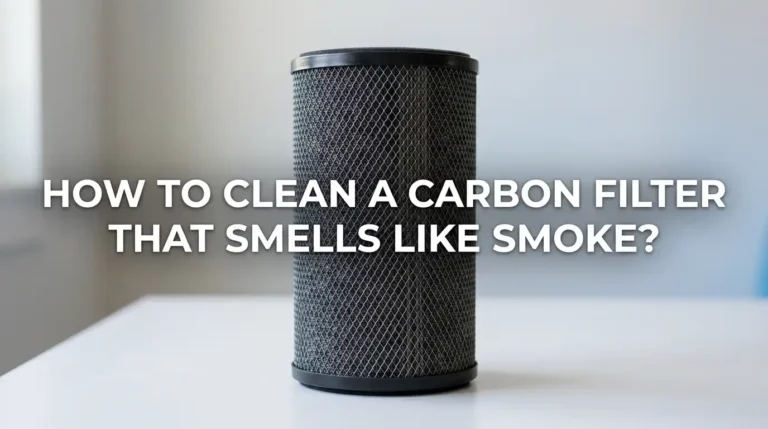
Activated carbon is the key ingredient for removing campfire smell. This material has millions of tiny pores that create an enormous surface area. A single gram of activated carbon can have a surface area of 3,000 square meters. These pores trap odor molecules as air passes through.
Not all carbon filters are equal. Thin carbon sheets or carbon sprayed filters found in budget purifiers contain very little actual carbon. They saturate quickly and stop working within days. Look for purifiers that use pelletized or granular activated carbon in a thick filter bed. These last longer and capture more odor molecules.
Smart Air’s research confirms that carbon filters remove odors that HEPA filters cannot. The two filter types serve completely different purposes. A carbon filter won’t remove particles, and a HEPA filter won’t remove gases. You need both working together for full campfire smoke elimination.
Pros of activated carbon filters: Excellent at removing VOCs and gaseous odors. Effective against a wide range of chemical compounds. Safe and chemical free.
Cons of activated carbon filters: Must be replaced regularly as carbon becomes saturated. Thicker filters cost more. Cannot remove particulate matter on their own.
How to Choose the Right Air Purifier for Campfire Smoke
Selecting the right air purifier saves you time and frustration. Focus on three main features: filter type, CADR rating, and room coverage.
First, choose a unit that combines a True HEPA filter with a substantial activated carbon filter. The carbon filter should weigh at least a few pounds. Lightweight carbon sheets will not provide meaningful odor removal for campfire smoke.
Second, check the Clean Air Delivery Rate (CADR) for smoke. This number tells you how many cubic feet of clean air the purifier produces per minute. The Association of Home Appliance Manufacturers recommends a smoke CADR that is at least two thirds of your room’s square footage.
Third, confirm the room coverage matches your space. An air purifier rated for 200 square feet will struggle in a 500 square foot living room. If your main living area is large, consider using two smaller units placed on opposite sides of the room.
Also consider noise levels. You will run this purifier continuously for days or weeks. Choose a model that operates quietly enough for your comfort, especially if you plan to use it in a bedroom.
Step by Step Guide to Using an Air Purifier for Campfire Smoke
Follow these steps to get the fastest and most complete odor removal from your air purifier.
Step 1: Close all windows and doors in the room where you will run the purifier. This creates a sealed environment and prevents new odor particles from entering. You can ventilate later, but start with a closed room for maximum efficiency.
Step 2: Place the air purifier in the center of the most affected room. Keep it at least 6 inches from any wall and ensure 3 to 5 feet of clearance in front of the air outlet. Remove any furniture or objects that block airflow around the unit.
Step 3: Set the purifier to the highest fan speed. Run it at this setting for the first 24 to 48 hours. This aggressive approach cycles the room’s air multiple times per hour and captures the maximum amount of smoke particles and odors.
Step 4: After 48 hours, reduce the fan speed to medium and keep it running continuously. Experts recommend running purifiers 24/7 for at least two to four weeks after smoke exposure. Turning the purifier off allows settled particles to re-enter the air.
Step 5: Move the purifier to the next most affected room and repeat the process. If you own multiple units, run them in different rooms at the same time for faster results.
Where to Place Your Air Purifier for Maximum Smoke Removal
Placement is one of the most overlooked factors in air purifier performance. Poor placement can reduce your purifier’s effectiveness by 50% or more, even if you own a high quality unit.
The best position is near the center of the room on a flat, stable surface. Placing the purifier 2 to 3 feet off the ground on a table or shelf can improve performance because smoke particles tend to rise with warm air. However, floor placement still works well for most units.
Avoid placing the purifier in corners, behind furniture, or against walls. These positions restrict airflow and create dead zones where smoky air cannot reach the filter. Keep at least 12 inches of breathing room on all sides of the unit for proper air circulation.
If you can identify the strongest source of the smell, such as a pile of camping gear or a smoky jacket, place the purifier near that source. The closer the purifier is to the odor source, the faster it will capture those particles before they spread throughout the room.
In open floor plans, position the purifier in the area where you spend the most time. You can move it to different zones throughout the day to provide coverage across a larger space.
Supporting Methods to Speed Up Campfire Smell Removal
An air purifier works best as part of a multi-step cleaning approach. These additional methods attack the smell at its source and help your purifier work faster.
Wash all fabrics immediately. Clothes, towels, bedding, and blankets that were exposed to campfire smoke should go through a hot wash cycle with your regular detergent. Add a cup of baking soda to the wash for extra odor absorption. Run items through a second wash if the smell persists.
Vacuum carpets and upholstered furniture. Use a vacuum with a HEPA filter bag to prevent spreading particles back into the air. Sprinkle baking soda on carpets, let it sit for 30 minutes, and then vacuum it up. The baking soda absorbs trapped odor molecules.
Wipe down hard surfaces. Smoke residue settles on countertops, tables, shelves, and walls. Use a mixture of warm water and white vinegar to wipe all hard surfaces. The vinegar neutralizes smoke compounds on contact.
Pros of combined cleaning methods: Attacks smoke at the source and in the air simultaneously. Reduces the workload on your air purifier. Produces faster results.
Cons of combined cleaning methods: Time consuming and labor intensive. May require multiple rounds of cleaning. Some items like heavy curtains may need professional cleaning.
How Ventilation Works Together With an Air Purifier
Ventilation and air purification serve different but complementary roles. Ventilation replaces indoor air with fresh outdoor air. An air purifier cleans the air that stays inside. Using both strategies together gives you the fastest results.
Cross ventilation is the most effective method. Open windows on opposite sides of your home to create a natural airflow path. Place your air purifier between the two windows so it can filter the air as it moves through the space.
Choose the right time to ventilate. Open windows during dry, breezy weather for the best effect. Avoid ventilating on humid days because moisture can lock smoke odors into fabrics and surfaces.
After ventilating for 30 to 60 minutes, close the windows and let the air purifier run in a sealed room. This “purge and purify” cycle removes the bulk of smoke particles through ventilation and then cleans the remaining contamination with the purifier.
Keep in mind that ventilation alone is rarely enough for campfire smoke. Research from the Colorado Department of Public Health confirms that smoke particles settle on indoor surfaces and continue to release VOCs long after the air clears. Your air purifier handles this ongoing off-gassing that ventilation cannot.
How Long Does It Take for an Air Purifier to Remove Campfire Smell
The timeline depends on several factors including room size, smoke intensity, purifier capacity, and surface contamination. Here is a general guideline based on common scenarios.
For light smoke exposure, such as smoke that drifted in through open windows, a properly sized air purifier can clear the air in 12 to 24 hours. You may notice improvement within the first few hours as the carbon filter captures the most concentrated odor molecules.
For moderate exposure, like returning home in smoke saturated clothing and gear, expect 3 to 7 days of continuous purifier operation. You should clean all contaminated fabrics and surfaces during this time to prevent re-contamination of the air.
For heavy exposure, such as campfire smoke that filled your home for hours, the process can take 2 to 4 weeks. Experts recommend running the purifier 24/7 during this period. Change your HVAC filters every 30 days until the smell disappears completely.
If the smell persists beyond four weeks despite continuous purification and surface cleaning, the smoke may have penetrated deep into porous materials like drywall, insulation, or wood. In these cases, you may need professional ozone treatment or thermal fogging to fully eliminate the odor.
When to Replace Your Air Purifier Filters During Smoke Removal
Heavy smoke exposure puts extreme stress on your air purifier filters. Both the HEPA filter and the carbon filter will need replacement sooner than their normal lifespan suggests.
Check your HEPA filter weekly during active smoke removal. If it appears visibly dark or gray, it is saturated with particles and needs replacement. A clogged HEPA filter restricts airflow and forces your purifier to work harder while cleaning less effectively.
Activated carbon filters are trickier to evaluate because you cannot see when they are full. A clear sign of saturation is when the campfire smell returns even while the purifier is running. This means the carbon can no longer adsorb additional odor molecules. Replace the carbon filter immediately when this happens.
During campfire smoke removal, plan to replace your carbon filter every 2 to 4 weeks instead of the usual 3 to 6 month replacement schedule. HEPA filters may need replacement every 1 to 2 months instead of the standard 6 to 12 months.
Keep spare filters on hand before you start the cleaning process. Running a purifier with saturated filters wastes electricity and provides no real benefit. Some units have filter replacement indicators that alert you when performance drops.
DIY Air Cleaning Options for Campfire Smoke
If you do not own an air purifier, you can build a simple DIY air cleaner using a box fan and a MERV 13 furnace filter. The EPA has researched this method and confirmed it can significantly reduce indoor smoke concentrations.
Attach the MERV 13 filter to the back of a standard 20 inch box fan using tape or bungee cords. Make sure the filter’s airflow arrow points toward the fan. Turn the fan on medium or high speed, and it will pull smoky air through the filter, trapping particles.
This method works well for particle removal but has limited effectiveness against odors because MERV filters do not contain activated carbon. To add odor removal, place a shallow pan of activated charcoal near the fan’s air output. You can buy loose activated charcoal at pet stores or hardware stores.
Pros of DIY air cleaners: Very affordable, costing under $30 for the fan and filter. Easy to build in minutes. EPA tested and proven effective for particle removal.
Cons of DIY air cleaners: Poor odor removal without additional carbon. Noisier than commercial air purifiers. Filters need frequent replacement during heavy smoke. No CADR rating or guaranteed performance standard.
Preventing Campfire Smell From Entering Your Home in the Future
Prevention saves you from the hassle of lengthy smoke removal. A few simple habits can keep campfire odors outside where they belong.
Change clothes before entering your home. Keep a set of clean clothes in your car. Change out of your smoky camping clothes in the garage or on the porch. Place the dirty clothes directly into a sealed bag or laundry basket with a lid.
Shower before sitting on furniture. Campfire smoke clings to your hair and skin. A quick shower removes most of the smoke particles before they transfer to your couch, bed, or chairs.
Store camping gear in the garage. Do not bring smoky tents, sleeping bags, or backpacks inside your home. Hang them outdoors or in a well ventilated garage to air out for a day or two before bringing them inside.
Run your air purifier proactively. Turn on your air purifier before you arrive home from a camping trip. If someone else is home, ask them to start the purifier 30 minutes before you walk through the door. This gives the purifier time to begin cleaning the air immediately as smoke enters.
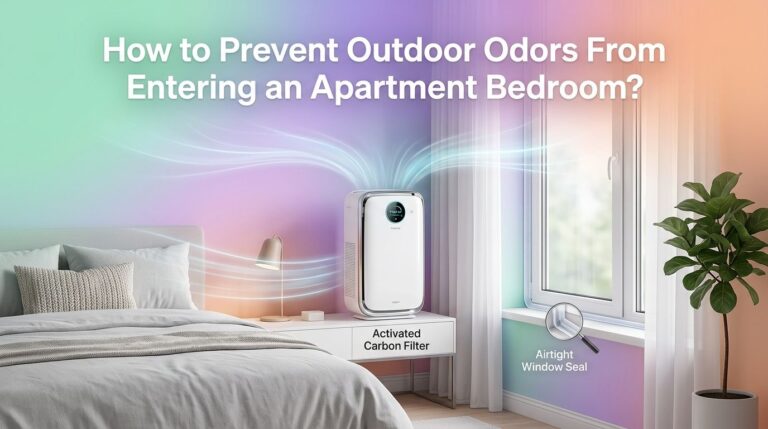
Seal gaps around doors and windows to prevent outdoor smoke from drifting inside. Weatherstripping and door sweeps are inexpensive solutions that also improve your home’s energy efficiency.
Common Mistakes People Make When Using Air Purifiers for Smoke
Even with the right equipment, mistakes can slow down or prevent effective smoke removal. Avoid these common errors to get the best results.
Running the purifier on the lowest fan speed is a frequent mistake. Low settings are designed for maintenance mode, not active smoke removal. Always use the highest setting during the first 48 hours and at least medium speed after that.
Placing the purifier in a corner is another common error. Corners restrict airflow from two sides and create dead zones in the room. Central or near central placement allows the purifier to draw air from all directions.
Forgetting to clean surfaces while running the purifier causes a cycle of re-contamination. The purifier cleans the air, but smoke particles on your couch release new odor molecules continuously. You must clean surfaces and run the purifier at the same time for real progress.
Using an undersized purifier for your room is a mistake that wastes time and electricity. A small purifier in a large room will never cycle enough air to make a difference. Always match the purifier’s rated room coverage to your actual room size, or go one size larger for better performance.
Finally, turning off the purifier too soon is a common mistake. The air may smell fine after a few hours, but off-gassing from surfaces continues for days or weeks. Keep the purifier running longer than you think necessary to catch those lingering VOCs.
Frequently Asked Questions
Can an air purifier completely remove campfire smell from a house?
Yes, an air purifier with both a HEPA filter and a thick activated carbon filter can remove campfire smell from indoor air. However, the purifier only cleans the air itself. Smoke odors trapped in fabrics, carpets, and upholstery must be cleaned separately through washing, vacuuming, and surface wiping. A combined approach of air purification and surface cleaning provides the most complete results.
How long should I run my air purifier after campfire smoke exposure?
For light smoke exposure, run the purifier continuously for at least 24 to 48 hours. For moderate to heavy exposure, keep it running 24/7 for two to four weeks. The key is continuous operation because turning the purifier off allows settled particles on surfaces to release back into the air. You can reduce the fan speed after the first 48 hours but do not stop the purifier until the smell is completely gone.
Do HEPA filters remove campfire smoke smell?
HEPA filters remove smoke particles very effectively, capturing 99.97% of particles down to 0.3 microns. However, HEPA filters do not remove the gaseous odor compounds that cause the campfire smell. You need an activated carbon filter in addition to the HEPA filter for complete odor elimination. Using HEPA alone will clear the visible haze but leave the smell behind.
Is a DIY box fan air purifier effective against campfire smoke?
A DIY air cleaner made from a box fan and a MERV 13 filter is effective at reducing airborne particles. The EPA has tested and confirmed this method works for particle removal. However, it does not remove gaseous odors because MERV filters lack activated carbon. For odor removal, you would need to supplement the DIY cleaner with activated charcoal placed nearby or invest in a commercial purifier with carbon filtration.
Can campfire smoke indoors be harmful to my health?
Yes. Campfire smoke contains fine particulate matter, benzene, formaldehyde, and other VOCs that pose health risks. According to the EPA and the American Lung Association, exposure can cause coughing, wheezing, asthma attacks, eye irritation, headaches, and even heart problems in sensitive individuals. Children, elderly adults, and people with pre-existing respiratory conditions are especially vulnerable. Prompt air cleaning protects your household’s health.
How often should I replace filters when removing campfire smoke?
During active smoke removal, replace activated carbon filters every 2 to 4 weeks because they saturate much faster than normal. Check HEPA filters weekly and replace them if they look visibly dark or if airflow seems reduced. Keep spare filters available so you can swap them out without interruption. Once the campfire smell is gone, return to the manufacturer’s recommended replacement schedule.

I’m Maya Brown, the voice behind Pure Breeze Vault. I write detailed, honest, and easy-to-follow air purifier reviews to help readers compare features, understand filter technologies, and choose products with confidence. My goal is to make research simpler, clearer, and more practical for anyone improving indoor air quality at home.