How to Clear Wildfire Smoke From a Living Room Quickly?
Wildfire smoke does not stay outside. It seeps through tiny gaps in windows, doors, and vents. Within minutes, your living room can fill with a hazy, throat burning fog of fine particulate matter known as PM2.5.
These particles are smaller than 2.5 microns, which means they travel deep into your lungs and even enter your bloodstream.
The EPA warns that wildfire smoke is one of the most dangerous forms of indoor air pollution, and people exposed to it face higher risks of respiratory illness, heart problems, and worsened asthma.
Key Takeaways
- Seal your home first, then clean the air. Before you try to remove smoke, you need to stop more smoke from entering. Close all windows and doors and block gaps with damp towels or weatherstripping tape. This step alone can reduce new smoke infiltration by a significant amount.
- HEPA air purifiers are the gold standard. Studies show that HEPA based portable air cleaners can reduce indoor PM2.5 concentrations by 48% to 78%. If you own one, place it in your living room and run it on the highest setting.
- A DIY box fan filter works surprisingly well. EPA research confirms that a box fan with a MERV 13 filter attached can perform as well as a small commercial air purifier. This is a low cost option that anyone can build in minutes.
- Do not open windows unless outdoor air quality is safe. Check your local Air Quality Index (AQI) before ventilating. If the AQI is above 100, keep windows sealed and rely on indoor filtration instead.
- Clean surfaces after clearing airborne smoke. Smoke particles settle on furniture, floors, and walls. Use damp cloths to wipe these surfaces down. Dry dusting will push particles back into the air.
- Natural odor absorbers help with the smell but not with particles. Baking soda and activated charcoal can reduce lingering smoke odors over time, but they do not filter harmful PM2.5 from the air. Use them as a supplement, not a substitute.
Why Wildfire Smoke Indoors Is a Serious Health Risk
Wildfire smoke contains a mixture of gases and fine particles produced by burning vegetation, buildings, and other materials. The most dangerous component is PM2.5, which refers to particulate matter smaller than 2.5 microns in diameter. To put that in perspective, a single human hair is about 70 microns wide. These tiny particles bypass your nose and throat and lodge deep in your lung tissue.
The health effects are real and well documented. Short term exposure to wildfire smoke can cause coughing, wheezing, eye irritation, headaches, and shortness of breath. People with asthma, chronic obstructive pulmonary disease (COPD), heart conditions, or compromised immune systems face even greater risk. Children and elderly individuals are also more vulnerable.
Studies from the January 2025 Los Angeles fires showed that PM2.5 levels reached 225 micrograms per cubic meter in some neighborhoods.
The World Health Organization considers anything above 15 micrograms per cubic meter over a 24 hour period to be unhealthy. That means indoor spaces near active wildfires can exceed safe limits by 10 to 15 times if no action is taken.
Your living room is often the largest and most used space in your home. It also tends to have the most windows and doors, making it one of the easiest rooms for smoke to enter. Acting quickly to clear this space protects everyone in your household from both immediate symptoms and longer term health damage.
Step One: Seal Your Living Room From Outside Smoke
The first thing you should do is stop additional smoke from getting inside. Every second you spend filtering air while fresh smoke pours in through gaps is wasted effort. Start by closing all windows and doors tightly.
Check around your window frames and door frames for visible gaps. Older homes often have worn weatherstripping that allows outside air to leak in freely. You can use painter’s tape or masking tape as a quick temporary seal along window edges. For larger gaps under doors, roll up a damp towel and press it firmly against the bottom of the door.
If your home has a fireplace, close the damper completely. An open chimney acts like a funnel for outdoor smoke. Similarly, check any pet doors or mail slots and cover them with plastic sheeting secured by tape.
Pros of sealing your living room: This method is free, fast, and requires no special equipment. It immediately reduces the volume of new smoke entering the space, making every other method you use afterward more effective.
Cons of sealing your living room: A tightly sealed room will get warm and stuffy without air conditioning. If you seal too aggressively for too long without any air circulation, carbon dioxide levels can rise. This is a temporary measure, not a permanent solution. You should ventilate as soon as outdoor air quality improves.
Use a HEPA Air Purifier on the Highest Setting
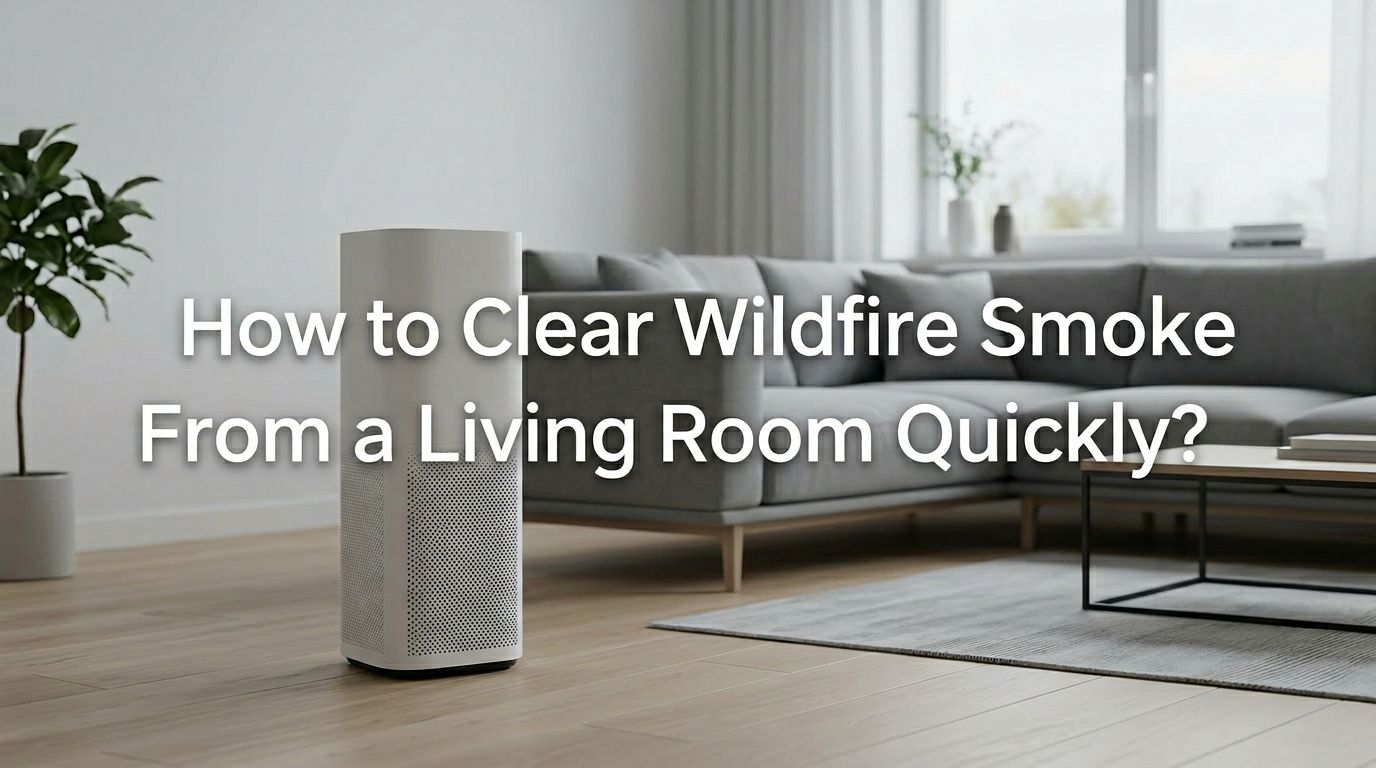
If you own a portable air purifier with a true HEPA filter, this is your most powerful tool. HEPA stands for High Efficiency Particulate Air, and these filters capture 99.97% of particles at 0.3 microns, which includes the dangerous PM2.5 particles found in wildfire smoke.
Place the air purifier in the center of your living room or as close to the center as possible. Make sure nothing blocks the air intake or output vents. Turn it to the highest fan speed for the fastest results. According to research published in peer reviewed journals, HEPA based air cleaners can reduce indoor PM2.5 by 50% to 80% during active wildfire smoke events.
The key metric to check is the Clean Air Delivery Rate (CADR). This number tells you how many cubic feet of air the purifier can clean per minute. For a standard living room of about 250 to 350 square feet, you want a CADR of at least 200 for smoke. Check the label or manual of your device for this rating.
Pros of HEPA purifiers: They are the most effective single solution for removing fine particles from indoor air. Results are measurable and fast. Most units are quiet on lower settings and portable enough to move between rooms.
Cons of HEPA purifiers: They can be expensive upfront. Filter replacements add ongoing costs. During heavy smoke events, you may need to replace filters more frequently than the manufacturer recommends. They also do not remove gaseous pollutants or volatile organic compounds (VOCs) unless they include an activated carbon layer.
Build a DIY Box Fan Air Filter in Minutes
You do not need to spend hundreds of dollars on an air purifier. EPA research has confirmed that a DIY air cleaner made from a box fan and a furnace filter can reduce smoke particle concentrations effectively. This setup is sometimes called a Corsi Rosenthal Box when built with multiple filters.
The simplest version requires just two items: a standard 20 inch box fan and a MERV 13 or higher furnace filter of the same size. Attach the filter to the back of the fan (the intake side) using tape or bungee cords. Make sure the airflow arrow on the filter points into the fan. Turn the fan on high and let it run.
For a more advanced version, tape four MERV 13 filters together in a cube shape with the fan on top blowing upward. Seal the edges and bottom with cardboard and tape. This design pulls air from four sides and increases the total surface area, which makes the filter last longer and move more air.
Pros of the DIY approach: It is extremely affordable. A box fan and a MERV 13 filter together cost a fraction of a commercial purifier. EPA testing found this method comparable to a small commercial air cleaner in terms of particle removal. You can build it in under 10 minutes with basic supplies.
Cons of the DIY approach: It is louder than most commercial air purifiers. The single filter version has a lower CADR than premium HEPA devices. You should only use newer model box fans that meet current safety standards. Keep the setup away from obstructions to prevent overheating.
Upgrade Your HVAC System Filter
If your home has a central heating and cooling system, it already has a built in air filter. However, most standard HVAC filters are rated MERV 8 or lower, which means they capture large dust particles but let fine wildfire smoke particles pass right through.
The Harvard T.H. Chan School of Public Health recommends upgrading to MERV 13 or higher filters during wildfire smoke events. These filters can trap much smaller particles, including the PM2.5 range that matters most for health.
To make this work, set your HVAC fan to “On” rather than “Auto.” The “Auto” setting only runs the fan during heating or cooling cycles. The “On” setting keeps air circulating through the filter continuously. This turns your entire duct system into a whole house air cleaner.
Pros of upgrading your HVAC filter: It cleans air throughout your entire home, not just one room. Installation takes minutes. MERV 13 filters are widely available at hardware stores and are affordable.
Cons of upgrading your HVAC filter: Not all HVAC systems can handle the increased airflow resistance of a MERV 13 filter. Check your system’s specifications before upgrading. Running the fan continuously also increases electricity costs. During extremely heavy smoke, you may need to change the filter every one to two weeks instead of every few months.
Open Windows Only When Outdoor Air Is Clean
Cross ventilation is one of the fastest ways to flush smoke out of a room. But there is a critical condition: you should only open windows when the outdoor Air Quality Index (AQI) has dropped below 100. Opening windows during poor outdoor air quality will make your indoor air worse, not better.
Check the AQI using the AirNow website or app provided by the EPA. This tool gives real time readings from monitoring stations near you. If your area shows green (0 to 50) or yellow (51 to 100), you can safely open windows. If it shows orange, red, or purple, keep everything sealed.
When conditions are safe, open windows on opposite sides of your living room to create cross ventilation. Place a fan in one window blowing outward to push smoky air outside. The fresh air will enter from the other side. This can flush a room in 15 to 30 minutes on a breezy day.
Pros of ventilation: It is free and fast. Natural airflow replaces stale, smoky air with fresh outdoor air. It also helps with stuffiness and elevated carbon dioxide levels from prolonged sealing.
Cons of ventilation: It only works when outdoor air quality is good. During active wildfire events, this option may be unavailable for days. It also allows pollen, dust, and other outdoor pollutants to enter your home.
Avoid Activities That Add to Indoor Smoke and Particles
While you work to clear smoke, avoid doing things that add more particles to your indoor air. This sounds obvious, but many common activities make the problem worse without people realizing it.
Do not burn candles, incense, or use your fireplace. These all release fine particles and gases that compound the effects of wildfire smoke. Cooking on a gas stove also releases nitrogen dioxide and particulate matter.
If you must cook, use a microwave, toaster oven, or electric cooktop instead. Run your kitchen exhaust fan if it vents directly outside, but be aware that exhaust fans can also pull outdoor smoke inward through other openings in your home.
Avoid vacuuming with a standard vacuum cleaner. Most vacuums without HEPA filtration will stir settled particles back into the air. If you must vacuum, use a machine with a sealed HEPA filter system. Otherwise, wait until the air is clear and use a damp mop or damp cloth to wipe surfaces instead.
Pros of reducing indoor sources: This costs nothing and takes no time. It simply prevents you from making an already bad situation worse. It also preserves the effectiveness of your air purifier or filter by not adding extra particles.
Cons of this approach: It requires lifestyle adjustments during a stressful time. Going without hot cooked meals, candles, or vacuuming can feel frustrating, especially during multiday smoke events.
Use Activated Carbon to Remove Smoke Odors and VOCs
Wildfire smoke contains more than just particles. It also releases volatile organic compounds (VOCs) such as formaldehyde, benzene, and acrolein. These gaseous pollutants are responsible for much of the harsh smell and can cause eye irritation, headaches, and nausea. HEPA filters alone do not capture VOCs.
Activated carbon (also called activated charcoal) adsorbs gaseous pollutants. The word “adsorb” means the gases stick to the surface of the carbon rather than passing through it. You can use activated carbon in two ways. First, many air purifiers include an activated carbon pre filter layer. Running one of these units addresses both particles and gases simultaneously.
Second, you can place bowls of activated charcoal powder in your living room. Set them on tables, shelves, and near areas where you notice the strongest smell. The charcoal will slowly absorb odors over several hours to days. Replace the charcoal every two to three days during heavy smoke events.
Pros of activated carbon: It targets the gaseous pollutants that HEPA filters miss. It is widely available and inexpensive. Placing bowls of charcoal requires no electricity or special equipment.
Cons of activated carbon: Bowls of charcoal work slowly and have limited capacity. They will not make a noticeable difference in the first hour. Activated carbon also does not remove fine particles, so it must be used alongside a HEPA filter or DIY air cleaner for full protection.
Place Bowls of Baking Soda and White Vinegar Strategically
Two common household items can help you fight lingering smoke smells in your living room. Baking soda is a natural odor absorber that neutralizes acidic odor molecules in the air. White vinegar works similarly by breaking down smoke residue.
Fill several small bowls with baking soda and place them around your living room. Put them on coffee tables, windowsills, bookshelves, and near upholstered furniture.
Leave them in place for at least 24 to 48 hours for the best results. You can also sprinkle baking soda directly on fabric sofas and carpets, let it sit for several hours, and then vacuum it up with a HEPA filtered vacuum.
For white vinegar, fill bowls with undiluted vinegar and place them in the same way. Some people mix equal parts vinegar and water in a spray bottle and lightly mist fabric surfaces. The vinegar smell will fade as it dries, taking some of the smoke odor with it.
Pros of baking soda and vinegar: Both are extremely cheap and available in any grocery store. They are nontoxic and safe around children and pets. They work passively without electricity.
Cons of baking soda and vinegar: They only address odor, not airborne particles or health risks. They take hours or days to show results. Vinegar has a strong smell that some people find unpleasant. Neither method replaces proper air filtration.
Wipe Down All Surfaces With Damp Cloths
After you clear airborne smoke, a large amount of fine particulate matter will have settled on every surface in your living room. Furniture, shelves, floors, walls, electronics, and decorative items all collect a thin layer of soot and ash. If you do not clean these surfaces, particles will become airborne again with foot traffic, drafts, or any disturbance.
Use a damp microfiber cloth to wipe hard surfaces. The moisture captures particles instead of pushing them into the air. Work from top to bottom. Start with the highest shelves and light fixtures, then move to tables and counters, and finish with the floor. For walls, use a cloth dampened with a mild mixture of warm water and a small amount of dish soap.
For fabric surfaces like couch cushions and curtains, remove and wash what you can in a washing machine. Items that cannot be washed should be taken outside (when air quality permits) and shaken or beaten to release trapped particles. You can also use a HEPA filtered vacuum on upholstery and rugs.
Pros of damp wiping: It physically removes settled particles from your living space. It prevents re suspension of soot into the air. It is free and requires only water and a cloth.
Cons of damp wiping: It is time consuming, especially in a large living room with many surfaces. You may need to repeat the process multiple times during extended smoke events. Delicate items like electronics require extra care to avoid water damage.
Create a Designated Clean Air Room
The EPA recommends creating a clean air room in your home during prolonged wildfire smoke events. This is a single room where you concentrate your air cleaning efforts to maintain the best possible air quality.
Choose a room with the fewest windows and doors. A bedroom or small living room works well. Close all doors and windows. Seal any gaps with tape or damp towels. Place your air purifier or DIY box fan filter in this room and run it continuously. This is the room where your family should spend the most time, especially for sleeping.
If your living room serves as your main gathering space, it can be your clean air room. Just close it off from the rest of the house by shutting interior doors. The smaller the volume of air your purifier needs to clean, the faster and more effectively it will work.
Pros of a clean air room: It maximizes the performance of your air filtration equipment. It gives your household a reliable retreat from poor air quality. The EPA specifically recommends this approach during heavy smoke events.
Cons of a clean air room: It confines your household to one space, which can feel restrictive. The rest of your home remains smoky. If you have a large family or pets, one room may feel cramped. You still need an air purifier or filter to make the room effective.
Run a Humidifier to Settle Airborne Particles
Adding moisture to the air can help heavy particles drop out of suspension and settle on surfaces faster. A humidifier raises the relative humidity in your living room, which causes tiny smoke particles to absorb moisture, become heavier, and fall to the floor or onto furniture where they can be wiped away.
Set your humidifier to maintain indoor humidity between 40% and 60%. Going above 60% can encourage mold growth and create new problems. Place the humidifier near the center of the room for the most even distribution of moisture.
If you do not own a humidifier, you can place shallow pans of water on top of heating vents or hang damp towels in the room. While these methods are slower, they do add some moisture to the air.
Pros of humidification: It speeds up the settling of larger particles. It also soothes irritated airways and dry eyes caused by smoke exposure. It works alongside air purifiers without interfering with them.
Cons of humidification: It does not actually remove particles from the room. The particles simply move from the air to surfaces, so you still need to wipe everything down. Excessive humidity creates a risk of mold. Humidifiers also require regular cleaning to prevent bacterial growth.
Wash or Replace Soft Furnishings That Absorbed Smoke
Fabric absorbs smoke like a sponge absorbs water. Curtains, throw pillows, blankets, rugs, and upholstered furniture all trap smoke particles and odors deep in their fibers. Even after you clear the air, these items will slowly release smoke particles and smells back into your living room for days or weeks.
Machine wash everything that is washable. Use the hottest water setting that the fabric care label allows. Add a half cup of baking soda to the wash cycle for extra odor removal. For items that cannot go in the washing machine, steam cleaning is an effective alternative because the high temperature helps break down and release trapped smoke compounds.
For large items like sofas and heavy rugs, consider professional cleaning if the smoke exposure was severe or prolonged. If the smell persists after multiple cleaning attempts, the item may need to be replaced entirely. Smoke particles can bond permanently to certain synthetic fibers.
Pros of washing and replacing soft furnishings: This addresses a major source of lingering smoke smell that air filtration alone cannot fix. Freshly laundered fabrics immediately improve the quality of your indoor environment.
Cons of washing and replacing soft furnishings: It requires significant time and effort. Large items may need professional cleaning, which costs money. In severe cases, replacing furniture is expensive. Repeated washing can also wear out fabrics faster.
Monitor Your Indoor Air Quality With a Sensor
You cannot always tell by smell or sight whether your air is safe. Fine PM2.5 particles are invisible to the naked eye, and your nose can become desensitized to smoke odor within minutes. An indoor air quality monitor gives you actual numbers so you know if your efforts are working.
Look for a monitor that measures PM2.5 concentration in micrograms per cubic meter. Readings below 12 micrograms per cubic meter are considered good. Anything above 35 micrograms per cubic meter over a 24 hour average is unhealthy. Some monitors also track temperature, humidity, and VOC levels.
Place the monitor in the center of your living room at breathing height, roughly three to five feet off the ground. Check it after each cleaning action you take. You should see PM2.5 numbers dropping as you seal the room, run your air purifier, and wipe down surfaces.
Pros of air quality monitoring: It removes guesswork and gives you data. You can see in real time whether your air purifier is working. It helps you decide when it is safe to open windows or when you need to do more.
Cons of air quality monitoring: Sensors cost money. Lower priced models may not be highly accurate. The numbers can also cause anxiety if they remain elevated despite your efforts. They are a diagnostic tool, not a solution.
Know When to Call Professionals or Evacuate
Sometimes the smoke infiltration is too severe for home remedies. If your indoor air quality remains unhealthy after sealing, filtering, and cleaning, you may need professional help. Indoor air quality professionals can assess your home’s air tightness, identify hidden entry points for smoke, and recommend long term solutions.
You should also consider temporary evacuation if anyone in your household belongs to a sensitive group. This includes people with asthma, heart disease, COPD, pregnant women, young children, and adults over 65. If a family member experiences persistent coughing, chest pain, difficulty breathing, or dizziness, seek medical attention immediately.
Local emergency management agencies and public health departments often set up clean air shelters during major wildfire events. These are public buildings with high quality air filtration where you can go for relief. Check your local government website or call 211 for information on shelters near you.
Pros of professional help and evacuation: It protects the most vulnerable members of your household. Professionals can solve problems that DIY methods cannot. Clean air shelters provide immediate relief.
Cons of professional help and evacuation: Professional services cost money and may not be immediately available during a widespread wildfire event. Evacuation disrupts your routine and requires access to transportation.
Frequently Asked Questions
How long does it take to clear wildfire smoke from a living room?
With a HEPA air purifier running on high in a sealed room of about 300 square feet, you can expect to see significant improvement within one to two hours. A DIY box fan filter may take slightly longer. The exact time depends on the severity of the smoke, the size of the room, and how well you have sealed it from outside air. Monitoring your PM2.5 levels with a sensor gives you the most accurate picture of progress.
Can I use scented candles or air fresheners to cover wildfire smoke smell?
No, and this is important. Scented candles add more fine particles and combustion byproducts to your air. Air fresheners only mask the odor and do nothing to remove harmful particles. Both can irritate your lungs further during a smoke event. Stick with baking soda, activated charcoal, or proper air filtration to address smoke odor safely.
Does running a bathroom exhaust fan help remove wildfire smoke?
Bathroom exhaust fans vent air to the outside, which creates negative pressure in your home. This negative pressure pulls outdoor air in through gaps and cracks, which means you could actually bring more smoke inside. During active smoke events, the EPA recommends limiting the use of exhaust fans unless they are paired with filtered makeup air.
Is a MERV 13 filter safe for all HVAC systems?
Not all HVAC systems are designed to handle the increased airflow resistance of a MERV 13 filter. Using a filter that is too restrictive can reduce airflow, strain your blower motor, and increase energy costs. Check your HVAC system’s manual or contact a technician to confirm the maximum MERV rating your system supports before making the switch.
How often should I replace my air purifier filter during a wildfire smoke event?
During periods of heavy smoke, filters clog much faster than normal. The EPA recommends checking your filter every few days and replacing it sooner than the manufacturer’s standard schedule suggests. If you notice reduced airflow from your purifier or a visible darkening of the filter, it is time for a replacement. Having spare filters on hand before wildfire season starts is a smart preparation step.
Should I use an ozone generator to remove wildfire smoke?
No. The EPA and several state health agencies advise against using ozone generators in occupied spaces. Ozone is a lung irritant that can worsen respiratory symptoms, especially during a smoke event when your lungs are already stressed. Ozone generators may reduce some odors, but the health risks far outweigh the benefits. Stick with HEPA filtration and activated carbon instead.

I’m Maya Brown, the voice behind Pure Breeze Vault. I write detailed, honest, and easy-to-follow air purifier reviews to help readers compare features, understand filter technologies, and choose products with confidence. My goal is to make research simpler, clearer, and more practical for anyone improving indoor air quality at home.