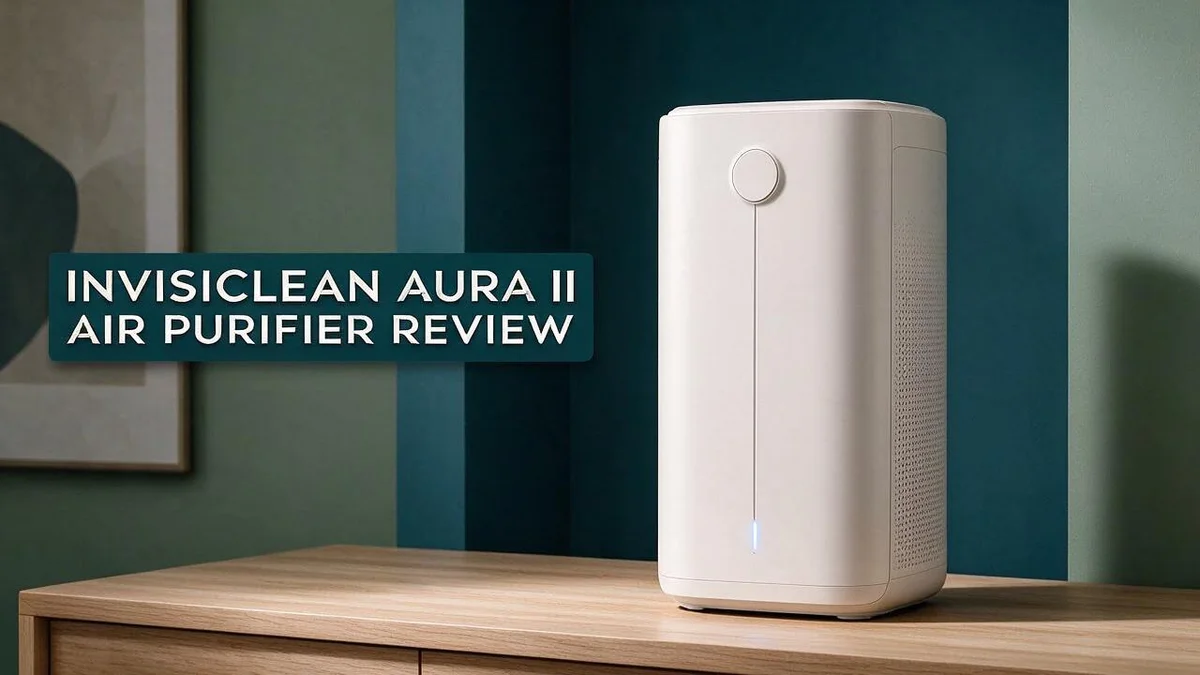
InvisiClean Aura II Air Purifier Review 2026: Real-World Performance
Clean air matters more than most people think. Dust, pet hair, and smoke odors can build up fast inside your home. A good air purifier can make a real difference.
The InvisiClean Aura II Air Purifier (Model IC-5018) promises to tackle these problems with four filter types. It combines True HEPA, activated carbon, an ionizer, and UVC light. Many shoppers want to know if it lives up to the hype.
This review takes a closer look. We check the specs, the everyday pros and cons, and what real users say. We also point out where the details seem unclear.
In a Nutshell
- Easy to move around: This unit feels light yet sturdy. Its rear wheels glide well across hardwood floors, so you can shift it between rooms with little effort.
- Solid user rating: Reviewers give it 4.2 out of 5 stars. The number of reviews differs between listings, so the score may come from a small group of people.
- Room size needs a closer look: Sources list very different coverage areas, from about 319 square feet up to 1,000 square feet. Measure your room first so you know what fits your space.
- Ionizer claims face doubt: A Reddit user on r/AirPurifiers calls the ionizer claims false advertising. The user says the effect lasts only a short time.
- Aimed at common household concerns: The brand markets this unit for pets, allergy sufferers, and smoke odors. Readers with these needs should look closely at the details below.
- Key takeaway: The Aura II offers several filter types and easy mobility. Still, the mixed room size data and ionizer doubts mean you should verify the claims yourself before deciding.
Filtration Stages

Last update on 2026-11-18 / Affiliate links / Images from Amazon Product Advertising API
The Aura II pulls room air through several layers. Each layer has one main job, so the order matters. Knowing how the stages work helps you see how clean air reaches you.
Stage one: True HEPA. Air first meets the True HEPA layer. This layer traps tiny particles like dust, pollen, and pet dander. For allergy sufferers, this stage does much of the heavy lifting.
Stage two: Activated carbon. Next, air moves through activated carbon. This material grabs gases and odors instead of particles. Cooking smells and other lingering scents often get trapped here.
Stage three: Ionizer. The ionizer gives airborne particles a small electric charge. Charged particles then cling to nearby surfaces or the unit itself. Think of this stage as a helper rather than a main filter.
Stage four: UVC light. UVC light exposes passing air to ultraviolet rays. The light aims to reduce some microbes moving through the unit. This step adds another layer of protection in shared spaces.
A fan drives this whole process. It pulls room air inside and pushes it through each layer. Steady airflow keeps the cleaning cycle moving from start to finish.
Why the order matters. Each stage works best when air reaches it in the right sequence. Large particles get caught early, so later layers stay cleaner. Clean layers help the unit perform well over time.
What this means for you. Clear stages make it easier to know what the unit handles. Pet owners can focus on the HEPA layer. Households sensitive to odors can rely on the carbon layer. Check your filters often, because particles build up and reduce their strength over time.
Room Coverage and Airflow
Room size shapes how well any air purifier works. The clean air delivery rate, often shown as CFM, tells you how quickly filtered air leaves the unit. One listing for this model shows 171 CFM.
Think of CFM as the volume of clean air the unit pushes out each minute. A higher number usually means faster cleaning in a larger space.
To get a rough sense of fit, measure your room first. Multiply the length by the width to find the floor area. Then check how often the air can cycle through the unit.
This cycle rate is often called air changes per hour. It describes how many times the purifier can process all the air in a room each hour. Many homes aim for several changes per hour.
Open floor plans need extra thought. Air drifts easily into hallways and kitchens. Placing the unit near the center of the main living area helps it catch more particles.
Closed doors make a real difference. Shutting doors keeps airflow focused on one zone. The purifier then works on a smaller space instead of losing air to other rooms.
Placement also affects airflow. Keep the unit away from walls, curtains, and heavy furniture. Blocked intake or exhaust paths reduce how much air passes through the filters.
Fan speed is another lever you control. Choose a higher setting when smoke, cooking fumes, or pet dander spike. Switch to a lower setting for quieter, steady filtering overnight.
Try a simple comfort check. Notice how stuffy the room feels before running the unit. Then compare the air after an hour on a medium setting.
High ceilings and stairwells also pull air upward. Rooms like these may need a longer run time to clear. Plan for extra hours in those spaces.
Clean air depends on both the room and the machine. Matching the unit to your space gives the best results. Smart placement and fan choices help you get the most from it.
Portability and Build Quality
The Aura II rolls on rear wheels, so you can shift it without lifting it every time. These wheels handle hardwood floors especially well.
Hardwood floors suit this design best. Smooth surfaces let the wheels glide with little effort. Clear the path first so nothing blocks the wheels.
Build quality also deserves a closer look. The body feels solid when you hold it, and the frame gives a steady sense during everyday use.
Stability matters more than most people expect. A unit that sits unevenly can wobble or tip. Check that all sides rest flat on your floor.
Pet owners often place purifiers on the floor where pets roam. A firm base and steady wheels help the unit stay upright when a curious cat or dog bumps into it.
Carpet performance is not covered in the available research. Thick rugs may make rolling harder, so test the move in your own space.
The research also skips details about materials and warranty terms. You can find those facts on the official product page or in recent owner reviews.
Wheel quality can change over time. Dust, hair, and small debris may collect around the wheels and slow them down. A quick wipe every few weeks keeps them rolling freely.
Consider how often you plan to move the unit. If you shift it between rooms each day, smooth wheels matter more. If it stays in one corner, stability matters more than mobility.
Think about storage too. A compact footprint fits beside a bed or sofa more easily. Measure the space you have before you set the unit down for good.
Move it with care. Follow the manual for lifting, roll slowly, and watch for cords or door frames. Smooth moves protect both the unit and your home.
Check the controls after each move. Bumps can loosen connections or shift buttons. A short test run confirms that everything works as expected before you rely on it.
Top 3 Alternatives
Levoit Core 300


Last update on 2026-11-19 / Affiliate links / Images from Amazon Product Advertising API
The Levoit Core 300 is a compact choice for small bedrooms, nurseries, or home offices. It uses a true HEPA filter that traps dust, pollen, and pet hair.
Because it runs very quietly, many people use it overnight. Its auto mode adjusts the fan speed based on the air quality. Setup takes only a few minutes. Just plug it in and press the power button.
Blueair Blue Pure 211+

Last update on 2026-11-17 / Affiliate links / Images from Amazon Product Advertising API
The Blueair Blue Pure 211+ fits medium sized living rooms and open spaces. It combines a washable fabric prefilter with a HEPASilent main filter.
The fabric cover catches larger particles, so the main filter lasts longer. This design reduces how often you need to swap filters. Many owners praise its simple controls and modern look.
Coway Mighty
The Coway Mighty uses four stage filtration to clean the air in one pass. It works well in rooms up to about 361 square feet.
An indicator light tells you when the filter needs attention. Its sleep mode dims the display, so the light will not disturb you at night. This model is a strong pick for bedrooms and home offices.
Ionizer and UVC Claims
The Aura II also includes an ionizer and a UVC light. Both features sound impressive on the product listing. Many shoppers want to know if they truly work, so let us look at each claim closely.
The ionizer promise needs a close look.
The brand suggests the ionizer clears particles from your air. However, a Reddit user on r/AirPurifiers calls this false advertising. That user says the effect only lasts for a short time.
Why does a temporary effect matter?
Particles that stick to a wall can loosen later. Then they drift back into the room you breathe. Dust that lands on a surface can also get stirred up again. A true cleaning method should remove particles, not just move them.
Some ionizers also produce ozone, which can irritate the lungs. Ask the brand about this before you rely on the feature.
The UVC claim sounds strong but needs context.
UVC light can damage the genetic material of some microbes. The word can matters here, because results depend on exposure. Air moves past the lamp only as fast as the fan pushes it. A brief pass may not stop every germ. Lamp strength, airflow, and lamp placement all shape the outcome.
The research does not include lab data for this unit. Short claims often hide missing details, so read the fine print.
Smart steps before you trust these claims.
Look for independent lab tests from a neutral source. Check whether the brand names the UVC dose or test method. Read recent owner reviews for real experiences. Pet owners and allergy sufferers should focus on particle removal first. A lab report would settle many of these questions quickly. Until then, treat the extra features as bonuses, not guarantees.
Do not let the marketing decide for you. Compare the claims with your own needs.
Bottom line: the ionizer claim looks weak, and the UVC claim needs proof. Clear proof beats marketing every time.
Pros and Cons
Pros
- It uses True HEPA and activated carbon filters together.
- It feels light enough to move but still sturdy.
- Shoppers give it a 4.2 out of 5 star rating.
- It targets pet owners, allergy sufferers, and smoke odor concerns.
- It includes extra air cleaning tools beyond basic filtering.
Cons
- Coverage claims differ between listings, so room size stays unclear.
- The rating comes from a small number of reviews.
- The 171 CFM airflow figure appears in only one listing.
- No competitor comparison is available in the current research.
Who Should Buy It
Start with the people who use the room most. A remote worker may want clean air during long hours at a desk. A parent may care most about a nursery or shared bedroom.
Light sleepers should check the noise first. The research does not list a sound level for this model. Read owner reviews that mention night use, since a loud fan can ruin a good night’s rest.
People with breathing conditions should talk with a doctor first. A purifier can help keep indoor air cleaner. However, it does not replace medical care. Share your symptoms and ask whether this type of device fits your needs.
Current owners of a True HEPA unit may see smaller gains. Extra tools only help when they match your air problems. If your existing device already handles most of the work, the added features may matter less.
Apartment dwellers should match the unit to one main room. Small homes often have one space that needs the most help. Measure that room before you commit.
Leave some open space around the unit so air can move freely.
Shoppers who want long term proof should read recent feedback. The current rating comes from a small group of reviewers. Look for owners who describe use after several months, not just the first day.
Buyers should compare the unit against their own checklist. Write down your top two air concerns. Then see if this model addresses those first. A short list keeps extra features from distracting you.
Consider this model a strong option only if it fits your list. Use the points above as a filter. If it suits your room, your health needs, and your noise limits, it may be a good pick. If not, keep looking.
Final Verdict
The InvisiClean Aura II can suit many homes. It rolls easily across hardwood, and its layered filters handle common household air issues. Still, the right answer depends on your space and your daily routine.
Think of this unit as a helpful tool, not a complete fix. Air purifiers reduce particles in the air you breathe. They do not stop dust from settling on furniture or pollution from entering through open doors.
A simple test helps you decide. Measure the length and width of your main room, then multiply them. This gives you the square footage.
Compare that number with the listed coverage. If the match is tight, expect slower results in a busy room.
Think about your daily routine as well. A unit that runs all night in a bedroom faces different demands than one in a busy family room. Plan where it will sit, then judge its results after a full week of use.
Who should say yes? Buyers who want one flexible unit for a bedroom, office, or living area may like this design. Pet owners who want help with fur and dander may also find it useful.
Who should wait? Shoppers who expect instant results should keep looking for now. Careful research beats quick hope.
Maintenance matters more than many buyers expect. Check how easy it is to reach the filters before you commit. Follow the maker’s guide for change timing, and mark the date on your calendar.
Use this quick checklist before you buy:
- Measure your main room first.
- Confirm the return window in case the unit does not suit your space.
- Read recent owner comments for filter and setup notes.
- Check the warranty terms on the seller page.
Bottom line: The Aura II deserves a spot on your shortlist. Treat its claims as starting points, verify them, and match the unit to your real air concerns. Smart shopping leads to cleaner air at home.
Frequently Asked Questions
Does the ionizer really clean the air?
One reviewer says the ionizer falls short. A Reddit user on r/AirPurifiers claims it only makes particles stick to surfaces for a short time. Plan to wipe surfaces and vacuum often so dust does not build up.
Can I move it from room to room?
Yes, the rear wheels make this easy. They roll well over hardwood floors. Keep cords and rugs clear of the path before you roll it.
How do I keep the filters working well?
Check the filter indicator light and the user manual. Write replacement dates on a calendar so you never forget. Clean the outside housing with a dry cloth, not water.
Can I run it all day?
Many owners run purifiers for long periods to keep the air fresh. Check the manual first for safe run times. If noise bothers you, try a lower fan speed at night.
Should I avoid looking at the UVC light?
Yes, you should stay away from the light when the unit runs. The UVC light sits inside the unit, so you do not need to touch it. Keep the unit closed and avoid staring at the lamp during operation.

I’m Maya Brown, the voice behind Pure Breeze Vault. I write detailed, honest, and easy-to-follow air purifier reviews to help readers compare features, understand filter technologies, and choose products with confidence. My goal is to make research simpler, clearer, and more practical for anyone improving indoor air quality at home.