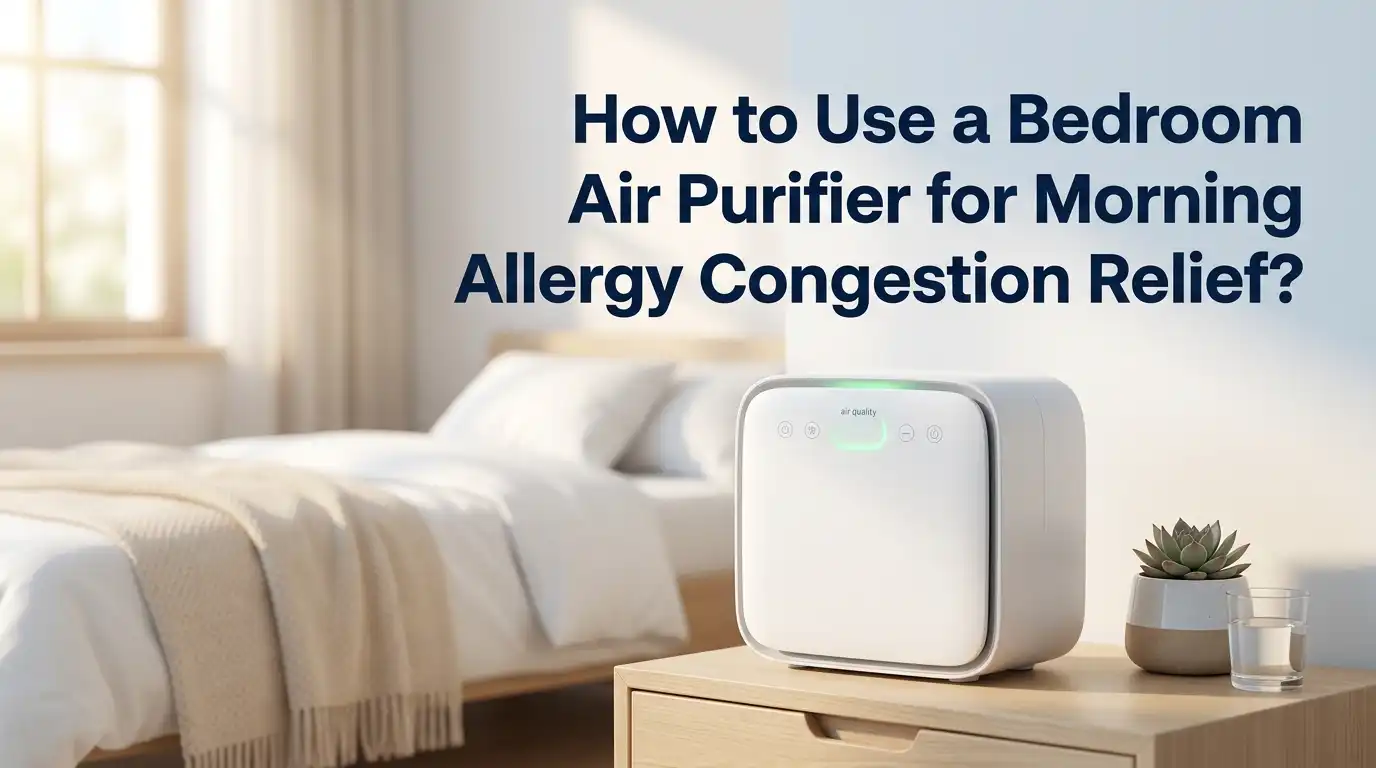
How to Use a Bedroom Air Purifier for Morning Allergy Congestion Relief?
If you wake up with a blocked nose, sneezing, or heavy sinus pressure, your bedroom may be feeding your allergies all night. Dust mites hide in bedding. Pollen lands on sheets and hair.
Pet dander settles into soft fabrics. Mold can grow when the room stays damp. A bedroom air purifier can help, but only if you use it the right way and pair it with the right bedroom habits. That is the part many people miss.
This guide gives you a clear plan. You will learn what an air purifier can fix, what it cannot fix, where to place it, how long to run it, and which bedroom changes give the fastest results.
In a Nutshell
- A bedroom air purifier can help, but it is not a full cure. EPA says portable air cleaners can reduce indoor particles and may improve some allergy symptoms. A study on people with allergic rhinitis found that active HEPA air purifiers cut bedroom PM2.5 levels and reduced allergy medication use by 26.3% after six weeks. Still, symptom scores did not improve for every person. That means you should expect real help, but not magic.
- The best filter choice for allergies is a true HEPA style particle filter. This type is the best fit for pollen, pet dander, and fine airborne dust. If smells or smoke also bother you, an activated carbon stage can help with gases and odors. Avoid machines that intentionally produce ozone, because EPA warns that ozone can irritate the lungs.
- Your bedroom setup matters as much as the purifier. Cleveland Clinic links morning allergy flare ups to pets in bed, open windows, dusty bedding, and pollen on your skin and hair. Mayo Clinic also recommends dust mite proof covers, weekly hot washing, washable curtains, and keeping pets out of the bedroom. These changes lower the amount of allergen that the purifier has to catch.
- Humidity control is a major part of morning congestion relief. EPA says indoor humidity should stay between 30 and 50 percent. CDC says to keep humidity no higher than 50 percent to reduce mold growth. Dust mites also like warm, damp rooms. If your bedroom feels muggy, a purifier alone will not solve the problem.
- Simple night habits can cut what reaches your nose before sleep. Close windows during high pollen periods. Shower before bed. Change clothes after time outside. Consider a saline rinse before sleep if pollen is a trigger for you. These steps keep allergens out of your pillow, hair, and sinuses, so your purifier starts the night with a smaller job.
- If your congestion stays strong, get medical help. An air purifier helps with airborne triggers, but it cannot remove dust mites buried deep in a mattress, fix a sinus infection, or replace proper allergy care. Cleveland Clinic and Mayo Clinic both note that medicine, nasal sprays, or an allergist may still be part of the answer.
Why your nose feels blocked the moment you wake up
Morning congestion often means your body spent the whole night breathing in allergens. Your bedroom can hold dust mites, pet dander, pollen, and mold. If those triggers sit near your face for seven or eight hours, your nose can swell and fill with mucus by sunrise. You are not imagining it. Morning allergies are real.
Open windows can bring in pollen. Pets can carry outdoor allergens on their fur. Bedding can trap dust, hair, and mite waste. Even your own hair and clothes can bring pollen into bed after a long day outside. That is why symptoms often peak after sleep.
Pros: Once you know the trigger pattern, you can fix it with clear bedroom changes.
Cons: If you blame only outdoor pollen, you may miss indoor causes like dust mites and humidity.
What a bedroom air purifier can really do
A good bedroom air purifier can remove a big share of airborne particles from the room. EPA says portable air cleaners can reduce indoor air pollution, and some studies show improvement in allergy or asthma symptoms. That makes a purifier useful for morning allergy congestion, especially if pollen, pet dander, or floating dust is part of your problem.
There is also solid clinical evidence behind this. In one study, active HEPA air purifiers lowered bedroom PM2.5 by 51.8% and cut allergic rhinitis medication use by 26.3% after six weeks. That is promising, even though self reported symptoms did not improve in every measure.
Pros: A purifier works while you sleep and helps reduce airborne triggers.
Cons: It cannot remove every pollutant, and it does very little for allergens trapped deep in bedding, carpet, or damp surfaces.
Choose a true HEPA purifier and avoid the wrong technology
For allergy congestion, the safest starting point is a purifier with a HEPA particle filter. HEPA style filtration is the main choice for pollen, pet dander, and fine dust. AAFA also points out that many air cleaners make bold claims, so you should focus on clear filtration details instead of vague labels.
If odors, smoke, or cooking smells bother you too, add a model with activated carbon. EPA notes that particle filters and gas filters do different jobs, so one machine may need both types if you want both benefits.
Pros of HEPA: strong particle removal and the best match for allergy triggers.
Pros of carbon: helps with smells and gases.
Cons of ionizers or ozone devices: EPA warns to avoid units that intentionally produce ozone because ozone irritates the lungs.
Match the purifier to your bedroom size
A purifier only works well if it is strong enough for your room. EPA says to choose a portable air cleaner with a CADR that matches the size of the room where you use it. AAFA says the same thing. If the unit is too small, it will run hard and still leave stale air in corners.
Measure your bedroom and check the square footage before you buy. If your room has high ceilings, a lot of soft furniture, or strong allergy triggers, go one size up. More clean air is better than barely enough clean air.
Pros of sizing up: faster cleaning and better coverage.
Cons of an undersized unit: low impact and wasted money. Cons of a very large unit: it may cost more and create more noise on high speed.
Put the purifier in the best place in your bedroom
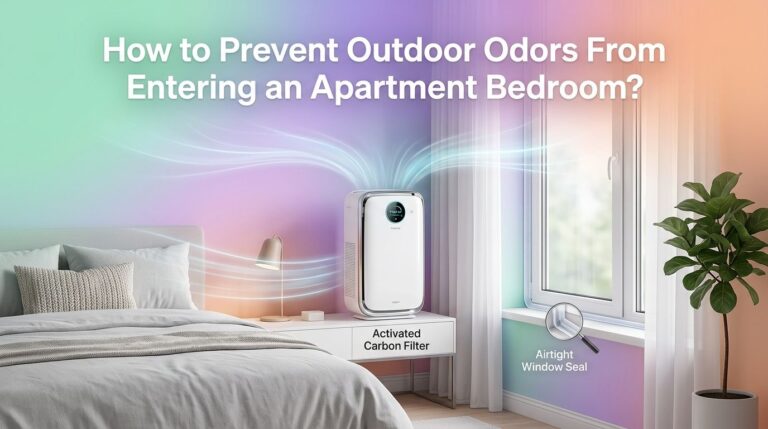
Placement changes results. A purifier should sit where air can move freely, not behind curtains, under shelves, or pressed into a corner. EPA says airflow should not be blocked by furniture or curtains. That simple mistake can cut the amount of air the machine actually cleans.
Mayo Clinic suggests directing clean air toward your head when you sleep. In real life, that means placing the purifier a short distance from the bed, with space around it, so clean air reaches your breathing zone without blowing dust off nearby surfaces.
Pros of bedside placement: cleaner air near your face all night.
Cons: if the airflow is too strong or too noisy, sleep may suffer. Try a higher setting before bed, then a quieter one overnight.
Run it at the right times and change filters on time
An air purifier helps most when it runs long enough. EPA says higher fan speeds and longer run times usually increase the amount of air filtered. For morning congestion, start the machine at least one to two hours before bed and keep it running through the night. That gives your room time to clear before your head hits the pillow.
Filter care matters just as much as run time. EPA warns that a dirty, overloaded filter will not work well. Check the filter on schedule and replace it when the maker recommends or sooner if your room gets dusty fast.
Pros of all night use: steady reduction of airborne allergens.
Cons: some people dislike fan noise.
Pros of regular filter changes: steady performance.
Cons: skipped maintenance turns a good plan into a weak one.
Control humidity to slow dust mites and mold
If your room is damp, an air purifier may help with airborne particles but still leave the real source alive. EPA says indoor humidity should stay between 30 and 50 percent. CDC says to keep home humidity no higher than 50 percent to prevent mold growth. Dust mites also love moisture.
Use a small humidity meter in the bedroom. If levels stay high, add a dehumidifier, run bathroom exhaust fans after showers, and fix leaks fast. AAFA says to keep humidity below 50 percent and run a fan in the bathroom for 15 to 20 minutes after showering.
Pros of humidity control: it attacks mold and dust mite growth at the source.
Cons: a dehumidifier adds one more machine to manage. But if your room is damp, this step often changes everything.
Make your bed harder for dust mites
Your bed can be the biggest allergy problem in the room. Cleveland Clinic explains that bedrooms are prime spaces for dust mites, and Mayo Clinic recommends dust mite proof covers for pillows, mattresses, and box springs. These covers act as a barrier between you and the allergen source.
Wash sheets, pillowcases, and blankets every week in water heated to at least 130 F. Both Mayo Clinic and AAFA recommend hot weekly washing. Vacuum the mattress and replace old pillows on schedule.
Pros of allergen covers: low effort after setup.
Pros of weekly hot washing: removes fresh buildup.
Cons: covers alone may help exposure more than symptoms, so use them with a purifier and room cleaning for better results.
Keep pollen from entering the room at night
A purifier cannot win if you keep adding fresh pollen to the room. Cleveland Clinic says open windows can stir up allergens and leave you miserable by morning. Mayo Clinic also advises closing windows during pollen season and relying on air conditioning instead.
Your own body can also carry pollen inside. Shower before bed. Change out of outdoor clothes. If pollen is a strong trigger, a saline rinse before sleep may help wash irritants out of the nose. Cleveland Clinic recommends showering before bed and notes that saline rinses can help clear pollen from the sinus area.
Pros of closed windows: lower pollen load overnight.
Cons: some people miss the breeze. In allergy season, clean indoor air matters more than cool night air. Your nose will likely agree.
Clean floors and fabrics without stirring up dust
Soft surfaces hold allergens for long periods. Mayo Clinic suggests removing carpet if possible and choosing washable curtains and easy to clean furniture. Cleveland Clinic says hard surfaces are better because dust mites do not grow well there.
If you cannot remove carpet, vacuum weekly with a HEPA vacuum and damp dust other surfaces. Store books, stuffed items, and extra fabric in closed bins so they do not collect dust near your bed. Mayo Clinic also recommends cutting down on clutter that traps dust.
Pros of hard flooring: easier cleaning and less dust storage.
Cons: replacing carpet costs money.
Pros of weekly vacuuming: good backup if you keep carpet.
Cons: vacuuming alone does not beat a very dusty room.
Set clear pet rules for the bedroom
Pets are a major reason many people stay congested in the morning. Cleveland Clinic says pets can bring pollen and ragweed into bed on their coats, even if you do not react strongly to the animal itself. A full night beside that fur can be enough to trigger symptoms by morning.
Mayo Clinic says pets should stay out of the bedroom if possible. AAFA adds that wiping pets down after outdoor play can help lower what they bring inside, and weekly baths may reduce dander.
Pros of a pet free bedroom: quick drop in overnight exposure.
Cons: it can be hard to change sleep habits with a pet. If full separation feels hard, start with no pets on the bed and clean the room more often.
Build a simple bedtime routine for easier breathing
A purifier works best as part of a short evening routine. Start by closing the windows, turning on the purifier, and checking that the room door is not opening to a dusty hallway or pet area. Then shower, change into clean sleepwear, and keep worn outdoor clothes out of the bedroom.
Next, do a quick surface reset. Put laundry away, clear clutter from the floor, and keep pillows dry and fresh. If your nose already feels loaded with pollen, try a saline rinse before bed. These steps take only a few minutes, but they reduce what reaches your nose all night.
Pros of a routine: small actions add up and support the purifier.
Cons: results are weaker if you do it once and stop. Consistency is what turns a purifier from a gadget into a real relief tool.
Know when the purifier is not enough
If you have made these changes and still wake up badly blocked, look past the purifier. You may have strong dust mite allergy, mold exposure, pet allergy, chronic sinus trouble, or a medicine issue that needs a doctor. Cleveland Clinic says daily antihistamines or steroid nasal sprays may help, and medical care is a good next step if symptoms keep going.
A purifier also cannot fix soaked carpet, hidden leaks, or mold on walls. CDC says if mold is growing in your home, you need to clean it up and fix the moisture problem. That is a source issue, not just an air issue.
Pros of getting medical help early: faster relief and a clearer diagnosis.
Cons of waiting too long: more poor sleep, more congestion, and more guesswork. If your nose stays blocked for weeks, do not force the purifier to carry the whole job alone.
FAQs
How long does it take for a bedroom air purifier to help morning allergy congestion?
Some people notice cleaner air within a few nights, especially if pollen or pet dander is the main trigger. But better morning symptoms often take longer because bedding, carpet, and room habits still matter.
In one study, measurable benefits in medication use were seen after six weeks of active purifier use. That is a good reminder to give the purifier time and combine it with cleaning, bedding control, and humidity control.
Should I sleep with the air purifier on all night?
Yes, that is usually the best plan for allergy relief. EPA says longer run times and higher fan speeds usually filter more air. Running the purifier before bed and all night helps keep the air around your pillow cleaner.
If noise bothers you, use a higher speed before sleep and a lower speed overnight. That gives you a better balance of comfort and clean air.
Can an air purifier remove dust mites from my mattress?
No. An air purifier can catch airborne dust mite particles, but it cannot pull live mites and waste out of a mattress or pillow. For that, you need dust mite proof covers, weekly hot washing, and regular mattress care.
That is why a purifier works best as one part of a full bedroom plan. It helps the air. Your bedding routine fixes the source near your face.
Do I need a dehumidifier and an air purifier?
Maybe. If your room is dry enough, a purifier may be enough for airborne particles. But if your room stays above 50 percent humidity, a dehumidifier can be a big help because mold and dust mites grow better in damp spaces.
Think of it this way. The purifier cleans the air. The dehumidifier makes the room less friendly to allergen growth. In damp bedrooms, the two tools often work better together.

I’m Maya Brown, the voice behind Pure Breeze Vault. I write detailed, honest, and easy-to-follow air purifier reviews to help readers compare features, understand filter technologies, and choose products with confidence. My goal is to make research simpler, clearer, and more practical for anyone improving indoor air quality at home.