How to Reduce the Spread of Airborne Illnesses in a Shared Office?
A shared office can help people work faster, solve problems, and feel connected. It can also help germs move from one person to another. That risk goes up when people sit close together, meet in small rooms, or come in sick because they feel pressure to keep working.
The good news is simple. You do not need one perfect fix. You need a few smart steps that work together. Cleaner air, better habits, clear rules, and small layout changes can cut risk in a real and practical way.
Recent public health guidance also points to a strong layered approach. That means each step adds protection. If you want a safer office without making work feel cold or hard, this guide will show you what to do next.
In a Nutshell
- Air is the first thing to fix. Airborne illness spreads fastest in indoor spaces with weak air flow. Open windows when possible. Run the building system during work hours. Aim for cleaner indoor air instead of waiting for people to get sick. Public guidance for indoor spaces points to a goal of about 5 or more air changes per hour of clean air. That is a useful target for offices.
- Filters matter more than most teams think. A better HVAC filter can trap more tiny particles that carry viruses. Many building experts recommend MERV 13 when the system can handle it. If the system cannot, use the highest level it can support safely. This step is quiet, steady, and easy to keep running every day.
- Portable HEPA cleaners work well in weak spots. They help most in meeting rooms, call booths, reception areas, and rooms with poor air flow. Research has shown strong gains from this method. Cleaner air close to people makes a real difference.
- Policies shape behavior. If staff feel punished for staying home, some will come in sick. That one choice can affect the whole office. A clear stay home rule, remote work options, and paid sick time reduce spread fast.
- Masks still help in the right moments. A good mask with a close fit adds a useful layer during local surges, after exposure, or when someone is getting over an illness. This is extra helpful in crowded rooms and public facing areas.
- Small habits protect the whole team. Better meeting rules, simple spacing, healthy humidity, and regular review keep the office safer over time. The best office plan is simple enough to follow every day and flexible enough to use more strongly during higher risk weeks.
Understand How Airborne Illness Spreads at Work
Airborne illness spreads when an infected person breathes, talks, coughs, or sneezes. Tiny particles can stay in the air, especially in closed rooms with poor air flow. In a shared office, that means risk builds in meeting rooms, break rooms, and open plan spaces.
This matters because people do not need close physical contact every time. They can inhale air that carries germs. That is why cleaner air is such a big part of prevention.
Your first step is to map office risk. Look at crowded zones, rooms with no windows, and areas where people talk for long periods. Check where people gather before lunch, after meetings, and during busy hours.
Pros: This method costs little and helps you focus on the biggest problems first.
Cons: It does not fix anything by itself. You still need action after the review.
Bring in More Fresh Air Every Day
Fresh outdoor air helps dilute virus particles indoors. That means each breath contains fewer germs. Start with the easy fixes. Open windows and doors when weather and security allow. Use exhaust fans in kitchens and restrooms. Run the HVAC fan during office hours instead of only when heating or cooling starts.
If you manage the building, ask your HVAC team if the system meets current ventilation needs. Public guidance for indoor spaces supports aiming for 5 or more clean air changes per hour when possible.
Make this practical. Open windows before staff arrive. Keep meeting room doors open between meetings. Add a short air out period after crowded sessions.
Pros: Fresh air is low cost and helps the whole office.
Cons: It can be hard in very hot, cold, noisy, or polluted outdoor conditions.
Upgrade Your HVAC Filters Without Guessing
Many offices already have HVAC systems, but the filter level is often too low for better particle control. A stronger filter can capture more of the tiny particles that carry viruses. Building guidance often points to MERV 13 as a strong office option when the system can support it safely.
Do not guess here. Ask your HVAC contractor what filter rating your system can handle without harming air flow. Also ask if the filters are sealed well. Air that slips around the filter does not get cleaned.
Change filters on schedule. Keep records. If one area always feels stale, inspect that branch of the system first.
Pros: Upgraded filtration works in the background and protects large areas at once.
Cons: Higher grade filters can reduce air flow if the system is not built for them.
Add Portable HEPA Cleaners to Weak Spots
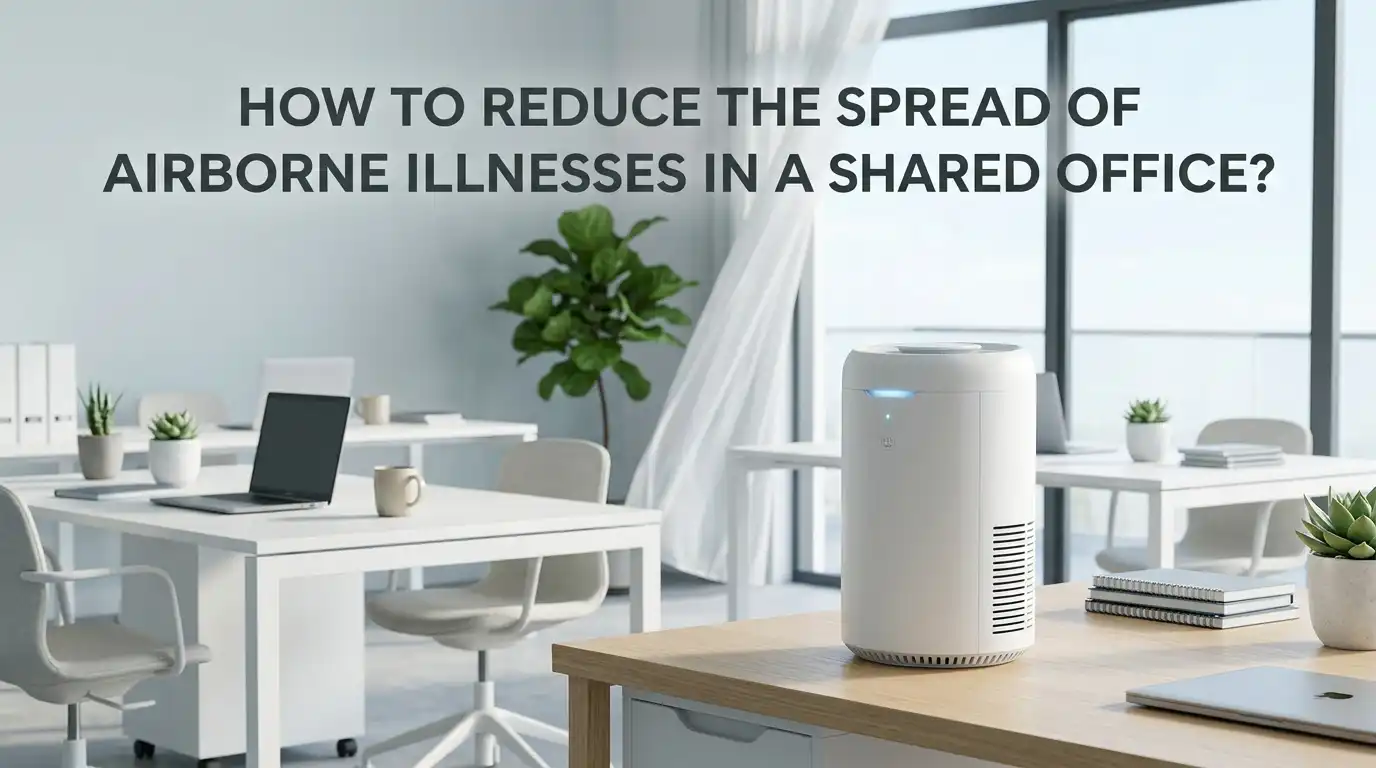
Portable HEPA cleaners are one of the best fixes for rooms that have poor ventilation. Put them in meeting rooms, training rooms, reception spaces, and small offices that hold several people. Size the unit for the room, not for the price tag.
Placement matters. Put the cleaner near where people gather, but not in a spot that blows air straight from one face to another. Keep doors and vents clear so the unit can pull and clean room air well.
Research on indoor aerosol exposure has found that portable HEPA cleaners reduce exposure, and the effect becomes much stronger when people also wear masks during higher risk periods.
Pros: HEPA cleaners are flexible and fast to deploy.
Cons: Some units are noisy, need regular filter changes, and only help when sized and placed well.
Fix Meetings and Small Room Habits
Many office outbreaks start in the same places. Small rooms. Long talks. Closed doors. Packed calendars. The room may look clean, but the air can still carry risk. That is why meeting habits matter.
Start with room limits. Set a safe number of people for each room. Keep short gaps between meetings so air can refresh. Use larger rooms for longer discussions. Move casual one on one chats to open areas when privacy is not needed.
If a room has weak ventilation, use a HEPA cleaner there and keep the meeting short. You can also shift some updates to video calls, even inside the same building.
Pros: Meeting changes are easy to start and cost little.
Cons: Some teams may resist new habits, and private work can be harder in open spaces.
Ask Sick Staff to Stay Home Without Guilt
A strong office air plan fails fast if people feel forced to show up sick. This is one of the most important steps. If someone has fever, cough, chills, fatigue, or other respiratory symptoms, they should stay home. Public health guidance also supports returning after symptoms improve overall and fever is gone for at least 24 hours, then using extra caution for the next few days.
Write this rule in plain language. Make it easy to find. Train managers to support it. Offer remote work if the person feels well enough to do light tasks from home.
The goal is simple. Remove guilt. Remove mixed messages. Remove the idea that showing up sick is a sign of commitment.
Pros: This cuts spread at the source.
Cons: Teams need backup plans so work still moves when people are out.
Use Masks During Risky Periods
Masks are useful when the office risk rises. That includes local surges, known exposures, crowded events, or the days after someone returns from illness. A better fit gives better protection. A close fitting respirator style mask protects more than a loose cloth mask.
You do not need a year round mask rule in every office. A smarter plan is to keep good masks on hand and use them at the right time. Offer them at reception. Put them near meeting rooms. Ask exposed staff to wear one for a few days indoors.
A well timed mask policy can protect both the wearer and the people around them. One study found that masking plus portable HEPA cleaning cut simulated aerosol exposure much more than either step alone.
Pros: Masks are fast, cheap, and flexible.
Cons: Some people dislike them, and poor fit reduces the benefit.
Keep Indoor Humidity in a Healthy Range
Very dry indoor air can make respiratory spread easier. It can dry the nose and throat and make it harder for the body to clear particles well. Research also suggests that many respiratory viruses do better at very low and very high humidity, while a middle range is better for people.
A smart office target is about 40 to 60 percent relative humidity. Use a simple monitor to track this during heating season, when indoor air often gets too dry. If levels stay low, ask your building team whether safe humidification is possible.
Do not overdo it. Too much moisture can support mold and other problems. This is a balance step, not a set and forget step.
Pros: Healthy humidity supports comfort and air health.
Cons: It needs monitoring, and poor control can create moisture issues.
Adjust the Office Layout to Cut Direct Exposure
Office layout shapes how air and people move. If desks face each other at close range, people breathe into the same zone for hours. If traffic funnels through one narrow area, many short contacts add up across the day.
Try simple layout fixes first. Turn desks so people do not sit face to face all day. Spread out shared seating. Create one way walking paths in tight aisles if space allows. Move printers, bins, and snack stations out of crowded corners.
You can also protect higher risk staff by placing them in better ventilated zones or quieter corners. Small layout changes can reduce both close range exposure and crowding.
Pros: This approach is low cost and visible.
Cons: It may reduce desk density and require some team adjustment.
Clean Shared Items and Improve Basic Hygiene
Airborne spread is the main issue here, but shared surfaces still matter in busy offices. Phones, keyboards, door handles, coffee machines, and meeting remotes pass through many hands. Good hygiene also supports the air strategy because people touch their face often without noticing.
Keep hand sanitizer at the entrance, in meeting rooms, and near shared tools. Clean high touch items on a simple schedule. Ask staff to cover coughs and wash hands after coughing, sneezing, or blowing the nose.
Do not let surface cleaning replace air fixes. It is a support layer, not the main layer. Air first, hygiene second, both together is the better mindset.
Pros: Hygiene steps are easy to explain and easy to repeat.
Cons: They do little for stale indoor air if used alone.
Make High Risk Weeks Easier to Handle
Office risk changes through the year. Cold season, local outbreaks, client events, and travel periods can all raise the chance of spread. A fixed plan can miss these changes. A flexible plan works better.
Create a simple high risk mode. When illness rises in the community or several team members report symptoms, switch on extra steps for one or two weeks. Increase remote work. Turn on more HEPA units. Shorten in person meetings. Encourage masks indoors. Delay large gatherings.
This method helps the office respond early instead of reacting after many people get sick. It also feels fair because the stronger rules are linked to a real trigger.
Pros: Flexible rules fit real life and reduce fatigue.
Cons: You need someone to track trends and tell the team when the mode changes.
Teach the Team and Review the Plan Often
Even a good plan fails if people do not understand it. Staff need clear, short guidance. Tell them what airborne spread means. Show them where air cleaners are. Explain when to stay home, when to mask, and who to contact with concerns.
Keep the message simple. One page is enough. Add signs in meeting rooms and break areas. Train managers first because staff copy what leaders do.
Then review the plan every month or quarter. Ask what rooms still feel stuffy. Check filter change dates. Ask if sick leave rules are working. Look for patterns such as repeat illness after all hands meetings or team lunches.
Pros: Training builds steady habits and helps the office improve over time.
Cons: It needs follow through, or people will forget the rules.
Build a Simple Weekly Office Action Plan
The safest office plan is one that people can actually follow. Keep it short and repeatable. On Monday, check supplies, room air cleaners, and any illness reports. On Tuesday, review the meeting calendar for crowded rooms. Midweek, confirm filters, windows, and fan settings. On Friday, clean shared devices and note any weak spots.
Assign clear owners. One person checks HVAC requests. One person manages HEPA units. One person updates the team on high risk weeks. Managers should remind staff that staying home when sick protects everyone.
This turns prevention into a routine, not a panic response. Small weekly actions build a safer office culture over time.
Pros: A routine plan is easy to manage and easy to improve.
Cons: It works only if leaders stay consistent week after week.
FAQs
What is the most effective first step for a shared office?
Start with air. Increase fresh air, run the HVAC system well, and improve filtration. These steps help everyone in the office at the same time. If you do only one thing first, make the indoor air cleaner. Then add stay home rules and better meeting habits.
Are portable air cleaners enough on their own?
No. They help a lot, but they work best as one part of a layered plan. Use them with better ventilation, stronger filters, stay home rules, and masks during higher risk periods. A single device cannot fix every crowded room or every sick day decision.
Should every office require masks all year?
Not always. Many offices do better with a flexible mask plan. Keep quality masks available and ask people to use them during surges, after exposure, after illness, or in crowded indoor settings. This feels more practical and still adds real protection when risk rises.
How can a small office reduce spread on a low budget?
Use the low cost steps first. Open windows when possible. Run fans and HVAC longer. Set clear stay home rules. Keep meetings shorter. Space desks a bit more. Add hand sanitizer and basic cleaning. If you can buy only one device, place a portable HEPA cleaner in the room where people meet most often.

I’m Maya Brown, the voice behind Pure Breeze Vault. I write detailed, honest, and easy-to-follow air purifier reviews to help readers compare features, understand filter technologies, and choose products with confidence. My goal is to make research simpler, clearer, and more practical for anyone improving indoor air quality at home.