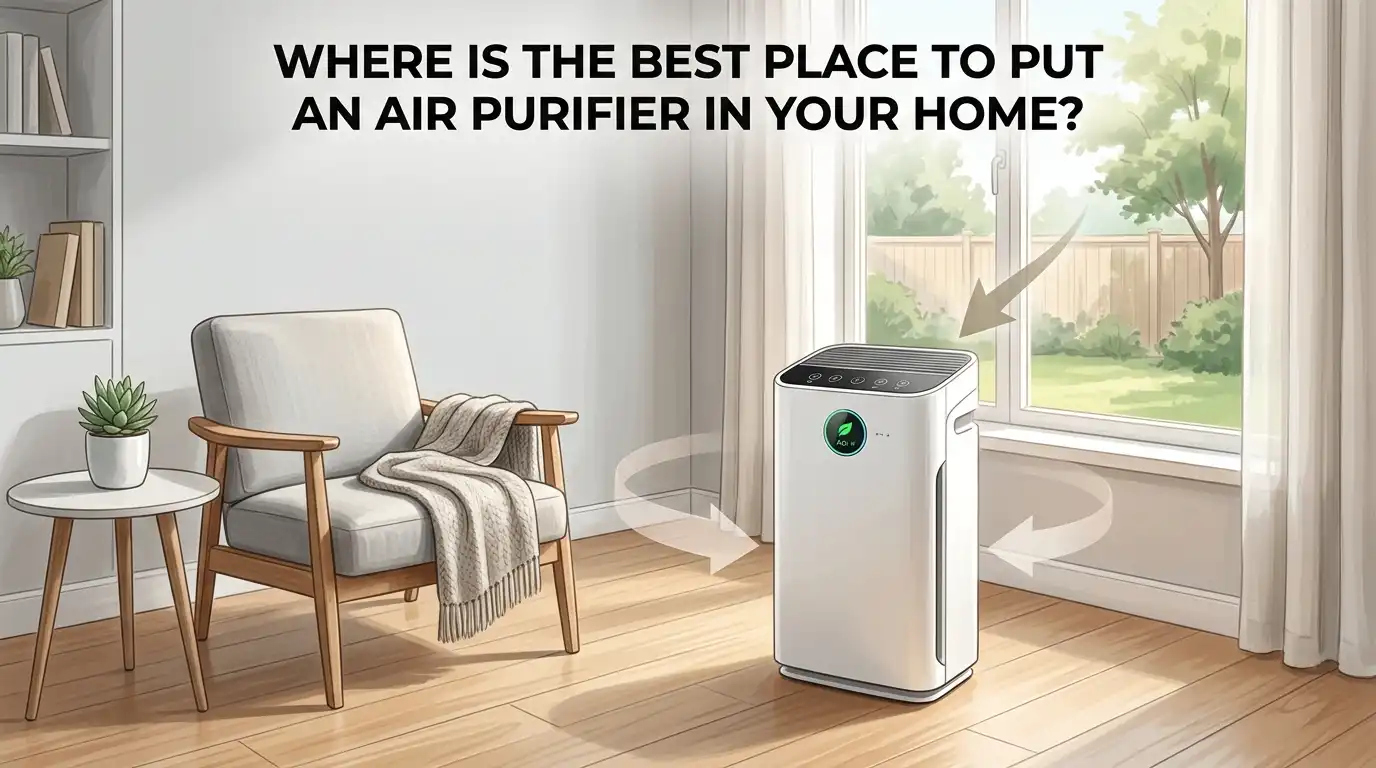
Where Is the Best Place to Put an Air Purifier in Your Home?
You just bought an air purifier. You plugged it in, set it in a corner, and hoped for the best. But here is the thing: where you place your air purifier matters just as much as the purifier itself.
Research on indoor air quality shows that correct placement can double the effective particle removal rate compared to a poorly positioned unit in the same room. That means your expensive HEPA filter could be doing half its job simply because it is sitting in the wrong spot.
Most people tuck their air purifier behind furniture, shove it against a wall, or leave it in whichever room had an open outlet. These mistakes reduce airflow, limit clean air delivery, and leave you breathing the same pollutants you were trying to remove.
Key Takeaways
- Placement can double your purifier’s performance. A HEPA air purifier placed in the center of a room with clear airflow can reduce airborne particles by 50% to 80%. The same unit pushed into a corner behind a couch may only achieve a 20% to 30% reduction. Position matters more than most people realize.
- The bedroom deserves top priority. You spend 7 to 9 hours sleeping in your bedroom each night. That is the longest stretch of continuous exposure to indoor air. Dust mite allergens rise from bedding each time you move. Placing a purifier 3 to 6 feet from your bed captures these particles before you breathe them in.
- Always keep 12 inches of clearance around your purifier. Air purifiers need space to pull in dirty air and push out clean air. Walls, furniture, and curtains block this airflow and reduce the effective cleaning rate by 30% to 50%. Give the unit room to breathe.
- Close the door to the room you are filtering. An open door forces the purifier to clean a much larger volume of air. A closed room lets the purifier focus on a smaller, contained space, which means faster and more complete air cleaning.
- Run the purifier continuously for the best results. Allergen particles build back up in room air within 20 to 30 minutes after you turn the unit off. A low or medium fan speed running all day uses about as much electricity as a light bulb and provides far better protection than occasional bursts on high.
- Floor or table depends on the room and unit type. Floor placement captures dust and pet dander well, but elevated placement on a nightstand or shelf brings clean air closer to your breathing zone. Match the height to where you spend the most time breathing.
Why Air Purifier Placement Matters So Much
Every air purifier comes with a CADR rating, which stands for Clean Air Delivery Rate. This number tells you how many cubic feet of air the unit can clean per minute. But that rating is tested under perfect laboratory conditions in a sealed chamber with no obstructions.
In a real room with furniture, walls, and doorways, the effective CADR drops significantly if the purifier sits in the wrong spot. A unit with a 200 CFM rating may only deliver 100 to 120 CFM of clean air to your breathing zone if you place it in a corner behind a bookshelf.
Think of it this way. The purifier creates a clean air zone around itself. The closer you sit or sleep to that zone, the cleaner the air you actually breathe. Move the purifier far away from where you spend time, and you lose that benefit.
The Breathing Zone Principle
The single most important concept for air purifier placement is the breathing zone. This is the area roughly 6 feet around your head at the height where you inhale. In your bedroom, the breathing zone is at bed height. In the living room, it is at seated height on your couch. In a home office, it is at desk height.
Your purifier should push clean air directly into this breathing zone. The output side of the unit should face you. The intake side should face the source of pollutants, such as a window, a pet bed, or a dusty area.
Placing the purifier across the room from you means clean air has to travel a long distance before reaching your lungs. By the time it gets there, it has mixed with unfiltered room air. Close placement creates a direct path of clean air that you benefit from immediately.
Best Placement for the Bedroom
The bedroom is the number one priority room for air purifier placement. You spend a third of your life there. Dust mite allergens become airborne every time you roll over, adjust your blankets, or shift your pillow. These particles are heaviest right around your bed.
Place the purifier on your nightstand or on the floor 3 to 6 feet from the head of your bed. Point the clean air output toward your pillow area. Make sure the intake side has at least 12 inches of open space behind or below it.
Pros: Maximum allergen reduction during sleep, direct delivery of clean air to your breathing zone, easy to run all night on a low setting.
Cons: Some units produce noise that may disturb light sleepers, and nightstand space may be limited in smaller bedrooms.
Always keep the bedroom door closed while the purifier runs. This contains the air volume and lets the unit clean the room much faster.
Best Placement for the Living Room
Living rooms are usually the largest room in the house. They also tend to have the most foot traffic, the most pet activity, and the most furniture. This makes placement a bit more challenging, but the same rules apply.
Position the purifier within 6 feet of your primary seating area, such as your couch or recliner. If you have pets, point the intake side of the purifier toward the area where your pet spends the most time. The output side should face your seating spot.
This creates a directional flow. Dirty air from the pet zone gets pulled into the filter, and clean air flows toward where you sit. This setup is especially effective for cat dander, which is lightweight and stays airborne for hours.
Pros: Targets the area where you actually breathe, captures pet dander before it reaches you, works well with larger tower style units.
Cons: Central placement may feel awkward in a well decorated room, and larger living rooms may need a higher CADR unit for full coverage.
Best Placement for a Home Office
Your home office is a high priority room if you work from home. You may spend 8 or more hours at your desk, making it your second longest exposure zone after the bedroom. Pollen, dust, and other particles collect around desks, bookshelves, and computer equipment.
Place the purifier on the floor or a low shelf within 3 to 5 feet of your desk chair. If you open a window for fresh air, position the purifier between the window and your desk. This creates an interception zone where incoming pollen and particles pass through the filter before they reach you.
Pros: Reduces allergy symptoms during long work hours, captures pollen from open windows, easy to position near your desk.
Cons: May take up valuable floor space in smaller offices, fan noise on higher settings can disrupt video calls.
Best Placement for the Kitchen
Kitchens generate a unique mix of airborne particles. Cooking releases smoke, grease particles, and volatile organic compounds. Trash cans and compost bins add odors. If you fry, grill, or sauté regularly, the kitchen air quality drops fast.
Place the purifier near the stove area or close to the trash can, but keep it at least 3 feet away from direct heat or steam. High humidity and heat can damage filters and reduce their lifespan. A purifier with an activated carbon filter works best in kitchens because it captures odors and gases, not just particles.
Pros: Reduces cooking odors and smoke particles, improves air quality during meal prep, helpful for open concept kitchens connected to living areas.
Cons: Humidity and grease can clog filters faster, units near stoves need more frequent filter replacements.
Best Placement for a Child’s Room or Nursery
Children breathe faster than adults. A child takes 20 to 30 breaths per minute compared to 12 to 20 for an adult. This means they inhale more airborne allergens per hour relative to their body size. Clean air in a child’s room is especially important.
Place the purifier 4 to 6 feet from the crib or bed on a stable surface that the child cannot reach or pull over. The clean air output should face the sleeping area. Use a quiet setting or night mode so the unit does not disturb sleep.
Pros: Reduces allergen exposure during the child’s longest exposure window, supports healthier sleep, protects sensitive developing lungs.
Cons: Safety concerns require careful placement to avoid tipping hazards, and quieter settings may reduce the filtration speed.
Floor vs. Elevated Placement
One common question is whether the air purifier should sit on the floor or on a table. The answer depends on the room and the type of particles you want to capture.
Floor placement works well for heavy particles like dust and pet hair that settle near the ground. Tower style purifiers that pull air from the bottom and push it out the top are designed for floor use. This position is ideal for pet owners because dander and fur accumulate at floor level.
Elevated placement on a nightstand, shelf, or table brings the clean air output closer to your breathing zone. This is better for bedrooms where you want filtered air at pillow height. It is also effective for lighter particles like pollen and mold spores that float at mid room height.
Pros of floor placement: Captures heavy particles effectively, stable and less likely to fall, works well with tower designs.
Cons of floor placement: Clean air must travel upward to reach your face, filters may clog faster from floor dust, carpet can block bottom intakes.
Pros of elevated placement: Clean air reaches your breathing zone directly, keeps the unit away from floor dust and moisture.
Cons of elevated placement: Requires a sturdy surface, takes up table space, risk of falling if bumped.
Common Air Purifier Placement Mistakes to Avoid
Many people reduce their purifier’s performance without realizing it. Here are the most frequent mistakes.
Pushing the unit against a wall. Most purifiers need at least 12 inches of clearance on all sides. A wall blocks the intake, and the unit works harder while cleaning less air. Pull it away from the wall and give it room.
Hiding it behind furniture. A purifier behind a couch, under a table, or inside a cabinet cannot circulate air properly. This can cut effective performance in half. Keep the unit in an open area with clear paths around it.
Placing it near heat sources. Radiators, space heaters, and direct sunlight can warp filters and damage sensors. Keep the purifier at least 3 feet from any heat source.
Running it with windows and doors open. Open windows allow outdoor pollutants to flood in continuously. The purifier cannot keep up with this constant influx of new particles. Close windows and doors in the room you are filtering.
Should You Move Your Air Purifier Between Rooms
If you own one purifier and want to cover multiple rooms, moving it throughout the day is a reasonable strategy. Place it in the bedroom during the night and move it to the living room or office during the day.
However, this approach has limits. Each time you move the purifier, it takes 20 to 45 minutes for the unit to bring the new room’s air quality down to a clean level. During that ramp up period, you are breathing unfiltered air.
The better long term solution is to have a dedicated purifier for each high priority room. The bedroom and the room where you spend the most waking hours should each have their own unit. You do not need expensive models for every room. A smaller, affordable HEPA unit works fine in a secondary space.
How to Check If Your Placement Is Working
You do not need expensive testing equipment to know if your air purifier placement is effective. A few simple checks can tell you a lot.
Hold a tissue near the intake. The tissue should pull toward the unit, confirming strong airflow. If the pull is weak, something may be blocking the intake. Check for furniture, walls, or debris around the unit.
Check the filter after two weeks. A filter that shows visible dust buildup is doing its job. If the filter looks clean after weeks of use, the purifier may not be getting enough airflow to its intake.
Notice your symptoms. If you placed the purifier in your bedroom and you still wake up congested or sneezing, the unit may be too far from your bed, or the door may be open. Adjust the position and try again for a few nights.
An indoor air quality monitor is a useful tool if you want precise data. These devices measure PM2.5 particle levels in real time and confirm whether your placement is reducing airborne pollutant counts.
Air Purifier Placement Tips for Pet Owners
Pets create a constant flow of dander, fur, and odors. Effective purifier placement can make a real difference in a home with dogs or cats.
Point the purifier’s intake toward your pet’s favorite spot. This might be a dog bed, a cat tree, or the couch cushion where your pet always sleeps. The intake side pulls in dander rich air directly from the source before it spreads across the room.
Position the clean air output toward your own seating or sleeping area. This creates a directional barrier of clean air between you and the allergen source. Research shows HEPA filters significantly reduce airborne pet allergen levels in homes with dogs and cats.
Pros: Directly targets the highest concentration of pet dander, reduces allergy symptoms for sensitive family members, limits odors from pet areas.
Cons: Pet hair can clog pre filters faster, requiring more frequent cleaning or replacement. Units placed near active pets may get knocked over.
Frequently Asked Questions
How far should an air purifier be from the wall?
Keep your air purifier at least 12 inches away from any wall. This clearance allows the intake and output vents to operate without restriction. Pushing the unit flat against a wall blocks airflow and can reduce the cleaning performance by 30% to 50%. If your purifier pulls air from the back, that rear clearance is especially critical.
Can I put an air purifier on carpet?
You can, but it is not ideal. Some purifiers have bottom mounted air intakes, and thick carpet fibers can block these vents. If you must place the unit on carpet, choose a model with side or rear intakes. You can also set the purifier on a thin, flat board or tray to create a small gap between the carpet and the unit’s base.
Should I put my air purifier near a window?
It depends on your goal. If you want to capture pollen or outdoor pollutants, placing the purifier near a closed window can help filter particles that seep through gaps. However, placing it next to an open window is a mistake. The constant flow of outdoor air overwhelms the unit, and it will never catch up. Close the window and let the purifier work in a sealed room.
Is it better to run the air purifier on high or low all day?
Running the purifier on a low or medium setting continuously is more effective than short bursts on high. Continuous operation keeps particle levels consistently low. High speed is useful for a quick initial cleanup, such as after cooking or vacuuming. Once the air clears, switch to a lower setting for steady maintenance.
Do I need an air purifier in every room?
You do not necessarily need one in every room. Focus on the rooms where you spend the most time, especially the bedroom and main living area. If you have allergies, asthma, or pets, adding a unit to secondary rooms improves overall air quality. A smaller, less expensive purifier works fine for rooms with less traffic.
How long does it take an air purifier to clean a room?
Most HEPA purifiers clean a standard bedroom (about 150 square feet) in 20 to 45 minutes on a medium or high setting. Larger rooms take longer. The exact time depends on the unit’s CADR rating and the room’s air volume. After the initial cleanup, keep the purifier running on low to maintain clean air levels throughout the day or night.

I’m Maya Brown, the voice behind Pure Breeze Vault. I write detailed, honest, and easy-to-follow air purifier reviews to help readers compare features, understand filter technologies, and choose products with confidence. My goal is to make research simpler, clearer, and more practical for anyone improving indoor air quality at home.