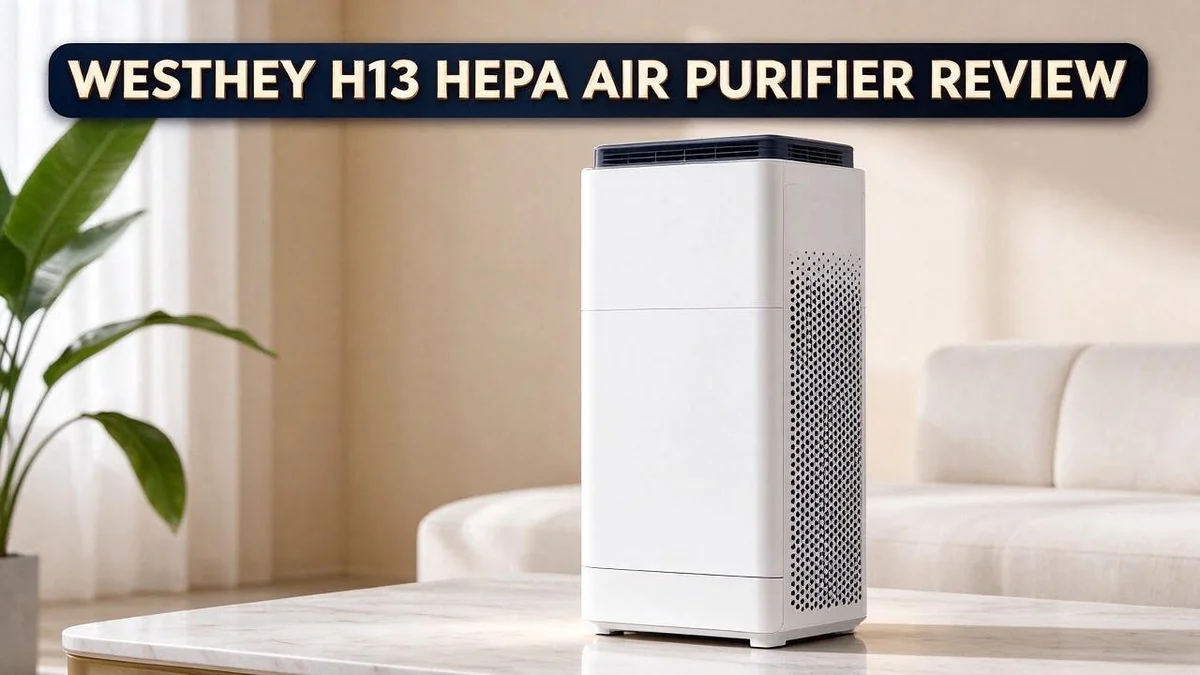
WESTHEY H13 HEPA Air Purifier Review: Worth Buying?
Is your home air really as clean as you think? Dust, pet hair, and pollen often hide in plain sight. A good air purifier can make a real difference.
The WESTHEY H13 HEPA Air Purifier promises true HEPA filtration that the brand says captures 99.97% of particles at 0.3 microns. It targets pet dander, odors, smoke, and pollen.
Many users say it runs quieter than they expected. Its simple controls keep things easy. A washable filter, a timer, and sleep mode add everyday convenience.
In this review, we look at the specs, the practical strengths, and the open questions. Stick around to see if this purifier fits your space.
In a Nutshell
-
Compact design: The unit measures 7.09 by 7.09 by 12.2 inches. It weighs about 3.5 pounds, so you can move it between rooms with ease.
-
Room size is unclear: The listings claim coverage up to 1,650 square feet. One review says it suits small rooms, so measure your space first before you choose it.
-
Handy extras: A PM2.5 display lets you track particle levels at a glance. The night light and timer, with 2, 4, 6, or 8 hour options, add daily convenience for bedtime use.
-
Washable prefilter: The prefilter can be rinsed clean instead of replaced each time. This feature helps catch pet hair and larger dust before it reaches the main filter.
-
Open questions remain: No independent lab tests are available yet. Most details come from retailer listings and one forum post, so treat the claims as a starting point.
-
H12 debate: A Reddit thread claims H13 may underperform H12 in recirculating units. That claim is unverified and not specific to this brand, so real test results matter most.
HEPA Filtration Performance

Last update on 2026-11-19 / Affiliate links / Images from Amazon Product Advertising API
Clean air depends on how well a filter catches tiny particles. Many people assume every air purifier performs the same way, but filter quality varies a lot. The filter is the heart of any purifier.
HEPA stands for high efficiency particulate air. A true HEPA filter uses a dense mat of fine fibers. These fibers trap dust, pollen, and pet dander as air passes through.
The WESTHEY H13 follows that design. Its filter rating focuses on 0.3 microns, which is often called the most penetrating particle size. Particles that are larger or smaller tend to get caught more easily.
Think of this as a stress test for the filter. A purifier that handles 0.3 microns well usually handles bigger particles too. This is why the rating matters for allergy sufferers.
Pet owners often ask about fur and dander. Pet hair is large, so the prefilter catches much of it first. The HEPA layer then handles the finer particles that slip through.
A HEPA filter only works well when it stays in good shape. Dust builds up over time and slows airflow. Check the filter on a regular schedule, and replace it when the manufacturer advises.
Look for a CADR rating or a separate lab report before you decide. These numbers show how much clean air a unit delivers.
Air changes per hour is a useful measure. It shows how often the unit can refresh the full room air. Higher numbers usually mean faster cleaning.
Use the unit with doors and windows closed. Outside air brings new particles in. Keeping the space sealed lets the filter do its job.
Place the purifier near the spot where you sit or sleep. Clean air matters most where you breathe the most. Keep it away from walls and curtains so air can flow freely.
In short, the HEPA design is solid on paper. Real results depend on upkeep, room setup, and fair testing. Read each claim with care and judge the unit by your own air.
Room Coverage and Sizing
Measure your room before you trust any number. Start with length times width to find the floor area. Then multiply that result by the ceiling height. This total shows the full air volume the unit must clean.
Listings give four different coverage figures, so the numbers alone can confuse you. Use your own measurements to decide if this unit fits your space.
Open floor plans need extra thought. A kitchen that flows into a living room creates one large air zone. Count the connected area, not just one room.
Ceiling height changes the math. Tall ceilings hold more air, so the unit needs more time to clean it. If your ceilings sit above eight feet, choose a smaller room size for safety.
Furniture placement matters too. Bookshelves, sofas, and bed frames can block airflow. Leave open space around the unit so air can move freely.
Give the unit space to breathe. Keep it a few feet from walls and corners. This setup helps the fan pull in air from across the room.
Think about the main job of each room. A bedroom needs quiet, steady cleaning overnight. A family room with cooking smells or pet play may need a stronger setting for longer stretches.
Portability is a helpful bonus. The unit weighs 3.5 pounds, so moving it takes little effort. You can carry it to a nursery during naps or to a home office during work hours.
Choose a size with room to spare. A unit that matches your room exactly may run hard all day. Extra capacity lets it work at lower speeds, which often keeps the sound level down.
Start small when your space is unclear. Run the unit on its highest setting for the first hour, then switch to auto mode. This quick check shows how the air responds in your home.
Pair this approach with the open questions from the listings. Test the unit in your own space and watch how quickly the PM2.5 display drops after you switch it on.
Noise Levels and Sleep Mode
Noise can make or break a bedroom purifier. Many people run these units all night. A loud fan can keep you awake. Reviewers say the WESTHEY H13 feels quieter than expected.
Sleep mode is the star feature for nighttime use. It runs the unit at a lower and gentler pace. This setting suits people who want clean air without extra sound.
The night light helps you find the door in the dark. You can skip a bright lamp on late night trips.
The timer gives you control over run time. Choose 2, 4, 6, or 8 hours. Set it to match your bedtime, and the unit shuts off on its own.
Auto mode adjusts fan speed based on the air around you. When the air is already clean, the unit slows down, which keeps the noise low.
No decibel rating appears in the research. Retailer listings do not give exact noise numbers. Most of the sound clues come from user reviews, not from a lab test.
Try a test night before you commit. Place the unit a few feet from your bed. Listen for any buzz, rattle, or whine during the first hour.
Use the lowest fan setting first. Then move up only if you need more airflow. Your ears and sleep quality will tell you the truth.
Sleep quality depends on steady sound more than loud sound. A constant low hum often fades into the background. Sudden clicks or changes in pitch can wake light sleepers.
Sound carries further at night because the room is quiet. Even a soft fan can seem loud in a silent bedroom.
Pair the sleep setting with the timer for best results. Start the timer at bedtime. Let the unit run for the full cycle, then check how the room feels in the morning.
Remember that a quiet unit still needs to do its job. Sound alone does not prove clean air. Pair your sleep routine with good filter care for steady results.
Overall, the quiet design suits most bedrooms. Light sleepers should still run a test night first.
Top 3 Alternatives
Levoit Core 300


Last update on 2026-11-19 / Affiliate links / Images from Amazon Product Advertising API
The Levoit Core 300 is a compact air purifier for smaller spaces. It uses a True HEPA filter to trap dust, pollen, and pet dander.
This model fits well in bedrooms and home offices. Its fan runs quietly, so it will not disturb your sleep. It also has a simple control panel, which makes it easy for first-time buyers to use.
Blueair Blue Pure 211+

Last update on 2026-11-20 / Affiliate links / Images from Amazon Product Advertising API
The Blueair Blue Pure 211+ combines a HEPA filter with a layer of activated carbon. The carbon absorbs odors, smoke, and cooking fumes.
This unit covers medium-sized rooms such as living rooms or kitchens. Its washable fabric pre-filter catches large particles, so you can clean it by hand. Choose this option if you want fresher air in busy family spaces.
Honeywell HPA300

Last update on 2026-11-19 / Affiliate links / Images from Amazon Product Advertising API
The Honeywell HPA300 is a larger unit built for big spaces. It uses a True HEPA filter that captures very small particles, including smoke and mold spores.
A smart sensor adjusts the fan speed based on air quality. A filter indicator also tells you when to replace the filter. It suits large rooms and open floor plans.
Pre-Filter Care and Replacement
The prefilter is the first line of defense. It catches large bits like hair and lint before air reaches the main filter.
Because the WESTHEY H13 has a washable prefilter, you can clean it at home.
Check it every couple of weeks. Look for a gray layer of dust on the mesh. Pet homes may need a look more often.
Tap the prefilter outside first. This removes loose dust before water touches it.
Rinse it under lukewarm water. Use a soft brush for stuck fur. Avoid harsh cleaners.
Let it dry completely. Air dry it in a shaded spot. Never put it in a dryer or near a heater. Damp filters can grow mold.
Reinstall only when it feels fully dry. Wet parts can harm the unit and reduce airflow.
Do not wash the HEPA filter. The research does not say the main HEPA filter is washable. Washing it may damage the fibers. Check the manual before you clean any other part.
Replacement timing matters too. The research does not list a set schedule for swapping the prefilter. Use the user manual or the maker’s support page for guidance.
A simple habit helps. Set a monthly reminder on your phone. Then check the prefilter during that time.
Clean filters help the unit run quietly. A clogged prefilter makes the fan work harder. That can add noise, which matters in a bedroom.
Watch for warning signs. A musty smell or weak airflow often means the filter needs attention. Check the prefilter first before you call support.
Dry time can take several hours. Plan your cleaning for a day when the unit is not in use. Keep a clean towel nearby to soak up extra water.
Wipe the outside with a dry cloth. Dust on the exterior can slip back into the room.
Good care keeps the unit working well. A tidy prefilter supports cleaner air in the room. Your effort leads to fresher air every day.
Pros and Cons
Pros
- Quieter than expected, so it works well for daily use.
- Simple one touch controls keep the setup easy.
- Targets pet hair, dander, odor, dust, pollen, and smoke.
- The aroma function adds a pleasant scent option.
- The washable prefilter saves you money on replacements.
Cons
- Coverage claims vary across listings, so sizing can confuse you.
- One review says it suits only small rooms.
- A forum post claims it may underperform the H12 in recirculating units, but this is unverified.
- No independent lab testing confirms the filtration claim yet.
Who Should Buy It
Not every household needs the same kind of air cleaner. This unit suits some buyers better than others.
Pet owners often make the strongest match. Fur and dander drift through living rooms every day. A steady airflow can catch many of those particles before they settle on sofas and rugs.
Renters in small apartments may appreciate the compact build. The light body moves easily from room to room. It also fits on a shelf or side table without crowding the space.
Busy people who want a set and forget device will like this model. Once it starts running, you rarely need to think about it. That makes it useful for people who dislike constant adjustments.
Shoppers who want clear proof before buying may want to wait. The filtration results come from the brand and retailers. Anyone who needs independent test data may feel unsure right now.
Buyers with large open spaces should measure first. Coverage figures vary from one listing to another. Compare your room size with the number on the box before you commit.
People who need a quiet nighttime routine may find it a helpful choice. A soft, even sound tends to blend into the background. Many people find that easier to sleep with than sudden or sharp noise.
Households that already own a recirculating unit should research carefully. Some users question how this model compares with the H12 in that setup. Reading recent owner feedback can help you decide.
Anyone who wants a simple daily upgrade may feel satisfied. It handles everyday air concerns without much effort. Small habits, like checking the prefilter, keep it working well over time.
Think about your own air quality goals before buying. Write down the problems you want to solve. Then decide whether this model fits your home and daily routine.
Final Verdict
The WESTHEY H13 earns a spot on your shortlist. It runs quietly, and its controls stay simple.
Our final take is positive, but it comes with caveats. The research shows real strengths. However, no independent lab testing backs up the filtration claim yet.
Room size deserves your first look. Listings quote different coverage numbers, and one review says the unit suits small rooms. Measure your space before you order.
Think about who you are as a buyer. Pet owners often get the most from this model because it targets fur, dander, and odor. Renters in compact apartments may also like its light frame.
Shoppers who need firm proof should wait. If that sounds like you, look for independent test results before you buy.
Try a simple test once it arrives. Run it in your main room for two weeks. Watch the PM2.5 display as the air clears. This gives you your own evidence instead of relying on marketing claims.
Placement also matters for results. Set it near where you sit or sleep, and keep the sides clear so air can move freely.
The bedroom works well for this model. Sleep mode and the soft night light suit late hours, and the timer lets you pick a run length.
If you want a second opinion, compare it with an H12 model side by side. A forum post raises doubts about H13 performance in recirculating units, though that claim remains unverified. Keep that in mind when you read reviews.
Think about the big picture before you commit. A good air purifier should match your daily life, not just a sales page. The WESTHEY H13 fits that test for many households.
Overall, this unit suits people who want a calm, low effort device. It works best in medium rooms and in homes with pets. Test it first, then decide with confidence. Take notes on how the room feels after a few days. Your room, your pets, and your comfort level will guide the final choice.
Frequently Asked Questions
Is the WESTHEY H13 good for sleeping?
Yes, many people use it in the bedroom. The sleep mode dims the display, so it will not disturb your rest. You can also turn on the night light for a soft glow. The timer lets you choose 2, 4, 6, or 8 hours, so the unit can stop on its own while you sleep.
What does 99.97% at 0.3 microns mean?
This number is the brand’s claim about how many tiny particles the filter can catch. The 0.3 micron size is often used in testing because it is one of the hardest sizes to capture. The number sounds strong, but it comes from the manufacturer and retailers. Keep it in mind as a claim until independent tests confirm it.
How does the PM2.5 display help you?
The PM2.5 display shows the level of fine particles in your room. These particles are small enough to breathe deep into the lungs. You can watch the number change as the unit runs. This gives you a simple way to see whether the air is getting cleaner over time.
Where can you find independent test results?
The current research does not include any lab tests from outside groups. Look for reviews from independent testing organizations before you decide. You can also read owner reports to see how the unit performs in homes like yours. Comparing several sources gives you a clearer picture than one listing alone.

I’m Maya Brown, the voice behind Pure Breeze Vault. I write detailed, honest, and easy-to-follow air purifier reviews to help readers compare features, understand filter technologies, and choose products with confidence. My goal is to make research simpler, clearer, and more practical for anyone improving indoor air quality at home.