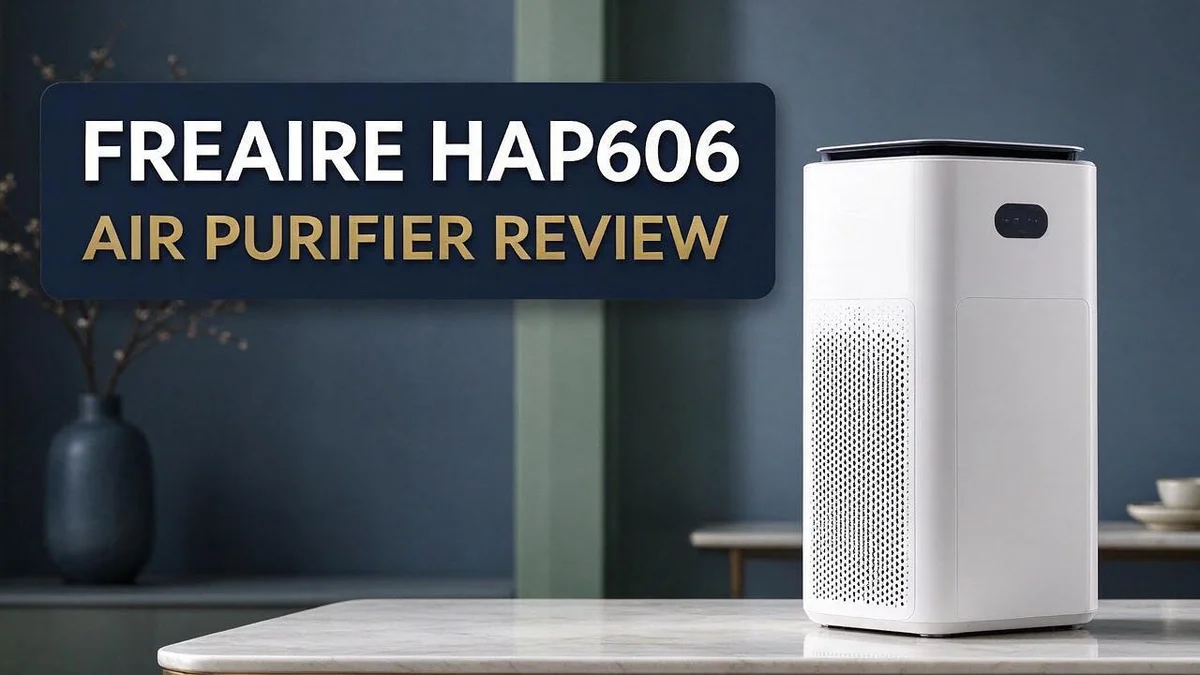
FreAire HAP606 Air Purifier Review: Worth the Splurge?
Clean air matters more than most people realize. Your home is where you breathe the most. Choosing the right purifier can make a real difference.
Today we take a close look at the FreAire HAP606 Air Purifier. This model aims to freshen up bedrooms, living rooms, and busy family spaces.
Inside, you get a True HEPA filter that captures 99.97% of particles as small as 0.3 microns. Three filter layers work together to trap tiny particles like dust and pollen.
The unit covers up to 1,800 square feet. It pulls air in from every side. A quiet 20 dB sleep mode keeps your nights calm.
You can also track your air quality live. The display shows AQI and PM2.5 levels as they change. Touch controls and a soft night light complete the design.
Is this purifier right for you? Keep reading to see what works, what does not, and who should buy it.
In a Nutshell
-
Quiet nights: The sleep mode runs at about 20 dB, so it rarely wakes light sleepers. It works well in bedrooms, nurseries, and home offices where calm matters most.
-
Air in from every side: A 360 degree intake pulls air in from both sides, and clean air exits from the top. This design helps the unit reach more of the room without you moving it around.
-
Three fan speeds: You can choose a gentle setting for quiet daytime use or a stronger setting for busy rooms. This flexibility lets you match the fan speed to your needs.
-
Layered filtration: Three filter layers work together to clean the air in your room. Each layer supports the main filter so the unit can handle everyday dust and particles.
-
Easy controls: Touch controls and a built in night light make nighttime use simple. You can adjust settings quickly without fumbling for buttons in the dark.
-
Mixed listing details: Weight and size numbers vary between sellers, so check the exact specs before you buy. One Reddit user also points out that no CADR rating appears on the listing.
Filtration Performance

Last update on 2026-11-17 / Affiliate links / Images from Amazon Product Advertising API
Filtration is where any air purifier proves its worth. The HAP606 works in stages. Each layer catches a different kind of particle, so the work gets shared.
Why the stages matter. Coarse dust and pet hair usually land on the first layer. This protects the finer layers from clogging too fast. Your filter then lasts longer between changes.
Think about what you breathe every day. Pollen, dust mites, and cooking smoke all float in indoor air.
Many of these particles are too tiny to see. A good filter needs to catch them before they settle on furniture or reach your lungs.
The CADR question. A Reddit user pointed out that no CADR figure is listed. CADR stands for clean air delivery rate. It tells you how fast a unit cleans the air in a given room.
Without that number, you must rely on the coverage claim alone.
Coverage claims also vary. Some listings suggest a larger room size than others. Treat the largest number with care. A safer plan is to match the unit to your smaller rooms and test how it performs.
Real results depend on your home. Closed doors help the unit work faster. Keep windows shut during heavy outdoor smog or wildfire smoke days. Run the unit on a higher fan speed for a short time after cooking or cleaning.
Placement changes results too. Set the unit a few feet away from walls and furniture. Keep it in the room where you spend the most time. Clear space lets air flow in from every side.
Filter care keeps performance strong. Check the filter every few months. Replace it when airflow drops or the air quality display stays high. Pair the unit with regular vacuuming for the best indoor air.
Coverage and Room Size
Room size is the first thing to check. Grab a tape measure and multiply the length by the width. That number gives you the square footage you need to match.
Leave some room to spare. Choose a unit that covers more space than your room. Extra capacity helps the purifier clean the air faster and keep it clean longer.
Open floor plans need extra thought. Many homes combine a kitchen, dining area, and living room into one large zone. Air moves freely across that space, so measure the full area, not just one corner.
Ceiling height matters too. Standard ceilings sit at eight feet. Taller ceilings hold more air, so the room needs more cleaning power than the floor area alone suggests.
Bedrooms need a different approach. A smaller bedroom often suits this model well. Place the unit near the bed so the air stays fresh while you rest overnight.
Think about how you use each room. A home office with one desk needs less power than a family room where kids play and pets nap. Busy spaces collect more dust, so they benefit from a larger margin.
Multiple rooms often need multiple units. One unit works best in one main space. Moving it from room to room leaves the other areas dusty. Many homes do better with two units placed in key rooms.
Doorways change the picture, too. An open door lets air travel between rooms. A unit in a central hallway may serve several nearby rooms at once.
A quick checklist helps. Measure each room. Note the ceiling height. Count how many people and pets use the space. Then compare those totals with the listed coverage.
Buyers who skip this step often end up disappointed. Five minutes with a tape measure saves time later.
Noise Levels and Sleep Mode
Noise matters most at night. A purifier that hums too loudly can keep you awake, even when it cleans the air well.
Twenty decibels sounds very soft. It is close to the sound of leaves rustling or a faint whisper. Most people stop noticing it after a few minutes.
Volume is only part of the story. The pitch and rhythm of a sound also shape your sleep.
A steady, low hum often fades into the background. A sharp whir or click can pull you out of sleep.
Placement affects sound too. A unit on a hard floor can carry vibrations into the room. Set it on a thick rug or a sturdy surface to soften the buzz.
Use two settings each day. Run the stronger speed before bedtime to clear the air. Then let sleep mode handle the quiet hours. Many people find this routine helps them drift off.
Noise can change over time. Dust that builds up inside the unit may make the fan work harder, which can raise the sound level. A clean unit usually runs more smoothly.
Doors shape the sound in your room. A closed bedroom door keeps the hum contained, which some sleepers find soothing. Others prefer hearing a little noise from the hallway.
Partners may have different needs. One person may enjoy a soft hum, while the other needs total silence. Talk about it before you buy. Compromise may mean placing the unit in the hallway or on the other side of the room.
Pets also react to sound. Some animals settle near a gentle hum. Others startle at sudden clicks. Watch your pet during the first few days.
Test before you rely on it. Run the unit for several nights and note any clicks, whirs, or changes in tone. Sit or lie in your usual spot to listen. Your own ears give the best answer.
The bottom line: Noise comfort is personal. The sleep mode gives a strong starting point, but your bedroom makes the final call.
Top 3 Alternatives
Levoit Core 300


Last update on 2026-11-19 / Affiliate links / Images from Amazon Product Advertising API
This compact purifier suits bedrooms, home offices, and small living spaces.
Its three-stage filter traps dust, pollen, pet dander, and smoke particles.
The auto mode reads the air and adjusts the fan speed for you. Setup takes only a few minutes.
Blueair Classic 480i

Last update on 2026-11-19 / Affiliate links / Images from Amazon Product Advertising API
This model handles larger rooms with ease and works well in busy spaces.
Its HEPASilent filter captures fine particles while the fan stays quiet.
You can control it from a smartphone app when you are away from home. A fabric layer catches large particles first, so the main filter lasts longer. Its clean design looks good in modern homes.
Coway Airmega 400

Last update on 2026-11-19 / Affiliate links / Images from Amazon Product Advertising API
This purifier works best for big open areas like living rooms and studios.
It combines a true HEPA filter with activated carbon to reduce odors and gases.
Built-in sensors track air quality in real time and adjust the fan for you. The green filter indicator shows when a replacement is due. Many owners say it feels easy to use every day.
Each model offers strong clean air results. Pick the one that fits your room size and daily needs.
Air Quality Monitoring and Controls
The display shows live air quality numbers. The HAP606 shows an AQI reading and a PM2.5 value on its screen. You can check the air at a glance.
PM2.5 refers to tiny particles about 2.5 microns wide. These particles can reach deep into the lungs, so they matter.
Watch the numbers change during daily life. Try cooking dinner, vacuuming, or opening a window. Then watch how fast the reading falls after you start the unit. This simple test shows how the purifier responds to real activity.
Touch controls make adjustments quick. You can change the fan speed right on the unit. Pick the lowest speed that keeps the reading steady.
Three fan speeds give you a middle ground. Use a higher speed when the number climbs. Drop back to a lower setting once the air looks clean again.
The night light adds a soft glow. Some people like it for finding the door in the dark. Others find it distracting at bedtime. Decide which fits your routine.
Remember that the display reads only one spot. The sensor measures air near the unit, not every corner of the home. Air also moves, so readings can shift from minute to minute. Treat the number as a helpful guide, not a final verdict.
Look for patterns over several days. Note the time of day when the reading rises. Cooking, cleaning, or heavy foot traffic may cause spikes.
If the number stays high for hours, look for a nearby source. A candle, a frying pan, or a pile of dusty fabric can push the reading up.
Make a simple habit of checking the screen each morning. Jot down the reading for one week. You will soon know which activities affect your air most.
Design, Size and Portability
The FreAire HAP606 has a simple, upright body. Its shape resembles Levoit Vital models, so buyers who know that line will feel familiar with it.
Weight matters when you move the unit often. At about 3.8 pounds, it lifts easily with one hand. Carrying it from the bedroom to the living room takes little effort.
Listings do not agree on size. Some show a width near 7.2 inches and a height near 13.9 inches. One listing gives 16 inches high, 12.5 inches wide, and 6 inches deep.
Check the exact numbers before you choose a spot. A taller unit may not fit under a low shelf or beside a tall lamp.
Air enters from the sides and leaves from the top. The 360° intake pulls air from every direction. Keep both sides clear so air can flow freely.
Furniture placed too close can block that airflow. Keep books, bags, and plants away from the top vent, since air exits there.
A flat, stable surface prevents tipping. A dresser, a side table, or a sturdy floor spot works well for daily use.
The power draw is low at 20 watts. A standard wall outlet handles it without trouble, so you do not need a special setup.
Cord reach also shapes placement. Route the cord away from walkways so nobody trips over it.
Build quality deserves a closer look. One Reddit user called the design cheap, and some shoppers may share that view. Still, the simple body blends into most rooms and does not demand attention.
When you move the unit, lift it from the base rather than the top vent. This habit protects the vent and keeps the unit steady in your hands.
Pros and Cons
Pros
– It uses a True HEPA filter to trap fine particles.
– It covers up to 1,800 square feet in most listings.
– Three filter layers work together to catch different types of debris.
– It pulls air in from every side before cleaning it.
Cons
– No CADR rating appears in the product listings.
– Its look resembles Levoit Vital models, so buyers may compare them.
– Some listings claim 2,600 square feet of coverage, which conflicts with others.
Who Should Buy It
Some shoppers will find this unit a strong match. It suits people who want cleaner air in one main room.
Light sleepers often make the happiest owners. The quiet sleep mode runs softly, so it rarely disturbs rest.
Allergy sufferers may notice a difference on tough days. The filter targets fine particles that often trigger sneezing, itchy eyes, and stuffy noses.
Parents of young children may like placing it in a nursery. Quiet running time matters when little ones nap.
Pet owners deal with fur and dander every single day. A purifier in the main living area can help reduce those loose particles.
Home offices collect dust from paper, printers, and foot traffic. Placing the unit near a desk can keep the work zone fresher.
Cooks often face smoke and steam in the kitchen. Keep it in a nearby room so grease and steam stay away from the filter.
Households with a shared bedroom may benefit from calmer nights. Partners with different sleep habits often need a machine that stays quiet.
People buying their first purifier want a simple starting point. Plug it in, choose a speed, and let it run without fuss.
Buyers who want exact test scores should look elsewhere first. Listings give few performance numbers, so comparing clean air output takes more digging.
Owners with open floor plans may need a stronger machine. Air can drift across large spaces faster than one compact unit can clean it.
Shoppers who want a standout look may prefer a different design. The style is simple, so taste plays a big role in the decision.
In short, this unit fits practical buyers. It works well for light sleepers, allergy sufferers, and pet owners who want a simple helper in a single room.
Final Verdict
The FreAire HAP606 works best as a simple, everyday purifier. It handles dust, pet hair, and smoke in a typical room. Its design stays simple, which keeps setup easy. For many homes, its strengths outweigh its rough edges.
Here is the bottom line. This unit suits buyers who want a plain machine that shows air quality in real time. It is not a luxury model, and it does not pretend to be one.
The live readout works as a guide rather than a lab result. Watch the number when you cook, vacuum, or open a window. You will learn how your home behaves within a few days.
Before you commit, do a quick check at home. Read the product details on each seller page you trust. Compare your room size with the coverage claim. If the numbers still feel unclear, plan for the smaller space.
Build quality is a fair concern, but daily use often matters more. Give the unit one week in your main room. Notice how often you change the fan speed and how the noise feels at night.
Check the warranty before you order. A clear return window gives you a safe way to test the unit. Keep the box and packaging for the first few weeks.
Good results also depend on routine. Clean the pre filter often and replace the HEPA layer on schedule. Steady care keeps the airflow strong and the fan running well.
A good fit means a clean room, steady habits, and realistic expectations. Shoppers who follow these steps will know quickly if the unit works for them, and that clarity saves time.
In short, the FreAire HAP606 offers a friendly starting point. It gives you a helpful readout, quiet nights, and easy controls. Test it in your space, then decide with confidence.
Frequently Asked Questions
Will it clear cooking smells?
A true HEPA filter catches particles well, but it does not catch most gases and odors. The listings do not mention an activated carbon layer. Smells from frying or spices may linger longer than dust does. Open a window while you cook for the best results.
Where should I place it in a room?
Set it on a flat floor with open space around all sides. Keep it away from curtains, couches, and walls. Good airflow helps it pull more air from the room, so it works harder and cleans faster.
Can I run sleep mode all night?
Yes, sleep mode keeps the fan at a gentle speed for overnight use. Many people also turn off the night light for total darkness. Check the manual to confirm how long the unit can run without a break.
How soon will I notice a difference?
Many people notice fresher air within the first day in a closed room. Results depend on room size, open doors, and how often you run the unit. Keep the door shut for a few hours to see the change more clearly.
How do I know when to clean or replace the filters?
Watch the air quality readout as a helpful clue. Most owners also check the manual for a filter schedule. Mark the date you start using the unit so you remember when it needs attention.

I’m Maya Brown, the voice behind Pure Breeze Vault. I write detailed, honest, and easy-to-follow air purifier reviews to help readers compare features, understand filter technologies, and choose products with confidence. My goal is to make research simpler, clearer, and more practical for anyone improving indoor air quality at home.