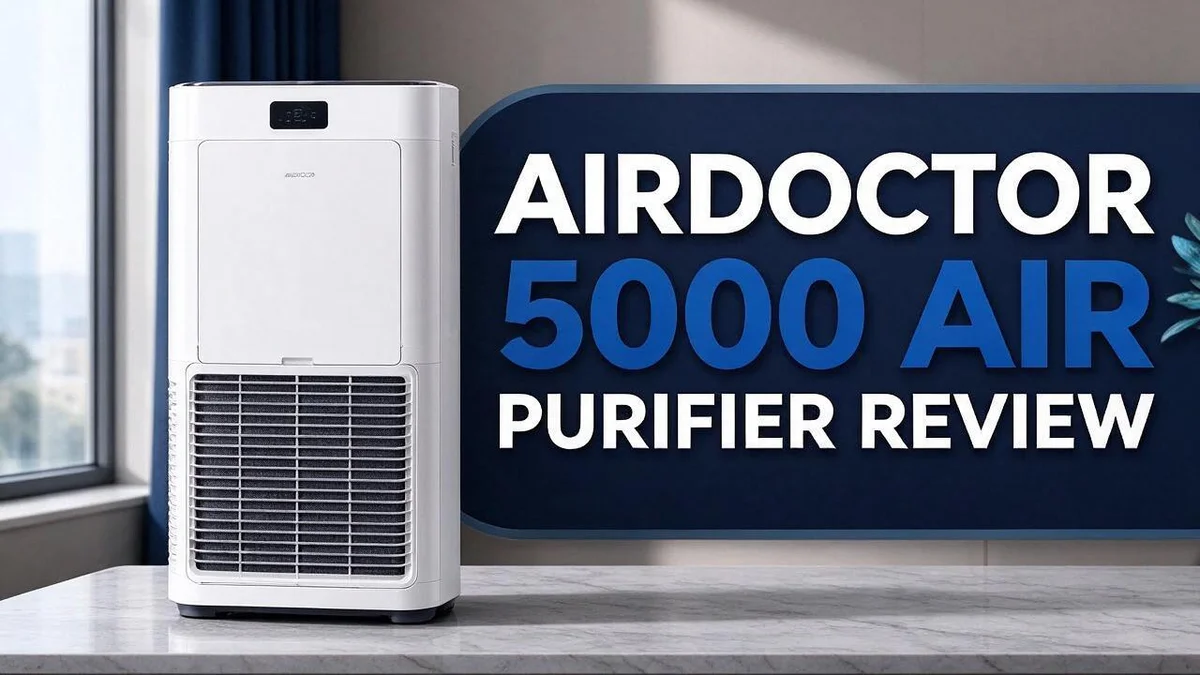
AirDoctor 5000 Air Purifier Review: Filtration, Coverage, and Performance
Do you want fresher air at home? The AirDoctor 5000 air purifier promises to help. Many people struggle with dust, pollen, and stale smells every day.
This review looks at how the unit performs in real rooms. We cover its coverage, filtration, and daily comfort. You will also see where it may fall short.
The AirDoctor 5000 covers rooms up to 1,001 square feet. It uses HEPA filtration to trap tiny particles. In one medium room test, it lowered PM2.5 and PM10 readings to 0.1 within one hour.
In a Nutshell
- HEPA filtration is the core feature. This type of filter traps dust, pollen, pet dander, and other tiny particles, so your air feels cleaner over time.
- Fine particle results look promising. In one hour of testing, a medium room saw PM2.5 and PM10 levels drop to 0.1, which shows strong capture of small airborne matter.
- Allergens and VOCs are a common focus. Owners often mention that the AirDoctor line may help reduce allergens and volatile organic compounds, which can ease daily irritation for sensitive people.
- Energy rating is unclear. The retailer listing does not state an energy efficiency rating. Shoppers who track power use should check the product details before they decide.
- Check the box on arrival. One Reddit user reported that an AirDoctor 3000 shipped without filters. Confirm that your filters arrive with the unit so you can start cleaning the air right away.
- Measure your room first. Know the square footage and layout before you buy. This helps you judge whether the unit fits your space and airflow needs.
Filtration and Particle Removal

Last update on 2026-11-18 / Affiliate links / Images from Amazon Product Advertising API
Particles hide in the air you breathe every day. Dust, pollen, pet hair, and smoke drift through rooms without much notice. The AirDoctor 5000 aims to catch these tiny bits before they settle.
Here is how it works. Air enters the unit and passes through a HEPA filter. This filter traps very small particles inside its dense fibers. Then clean air flows back into the room.
Size matters here. PM2.5 refers to particles about 2.5 microns wide. PM10 refers to larger particles, around 10 microns. Both can irritate eyes, noses, and lungs.
In one test, the unit lowered PM2.5 and PM10 to 0.1 in one hour. That test used a medium room. The result shows strong early performance on fine particles.
A separate review of the AirDoctor 5500 reported similar particle results. That model also produced no ozone. Ozone matters because some air cleaners release it as a side effect.
Clean air needs steady running. A single short run may not change the air much. Many people leave the purifier on low for longer periods to keep particle levels down.
Placement also affects results. Set the unit near where you sit or sleep. Keep it away from walls and furniture so air moves freely. Close doors and windows during use for better results.
Pets, cooking, and outdoor traffic add particles often. Run the purifier during these times. Dust the outside of the unit regularly so airflow stays strong.
Think about your room size too. The unit works best in rooms it is rated for. Larger spaces may need more time to clear.
Watch for changes in how the air feels. Many people notice less dust on shelves after a few days. Stuffy or dusty smells often fade as well.
Keep a simple log of run times if you want proof. Compare how your nose and eyes feel over one week.
Room Coverage and Sizing
Room size is only part of the story. Ceiling height also changes how much air the unit must clean. A room with tall ceilings holds more air, so the purifier must work harder.
Think in cubic feet, not just floor space. Multiply length, width, and height to find the room volume. Two rooms with the same floor area can feel very different.
Open floor plans need extra thought. A living room that flows into a kitchen shares its air with that space. Treat the whole open area as one room when you size the unit.
Closed doors help a smaller unit keep up. Shutting the door of a bedroom or office keeps the cleaned air inside. This simple habit helps the unit work more efficiently.
Think about where you spend the most time. A bedroom used for eight hours of sleep deserves steady clean air. Start with the main living area, then move the unit to the bedroom if needed.
Leave space around the unit. Walls, couches, and curtains can block airflow. Keep open space on every side so air can move in and out freely.
Some homes need more than one unit. A large home with separate zones often needs a purifier in each main space. One unit moved from room to room rarely covers the whole house well.
Oversizing a unit is usually fine for a smaller room. A stronger unit can run on a lower speed and use less effort. This choice gives you extra margin on busy days.
Busy hallways and shared family rooms collect more dust than quiet corners. Place the unit where people walk and gather most often. These zones often need longer daily run times.
Ceiling fans help move air around the room. A fan on a gentle setting can spread clean air to corners the unit reaches less often.
A good fit saves effort over time. Choose a size that matches the room you use most. This simple match gives you cleaner air where it matters most.
Noise Level and Operating Modes
Noise matters more than many buyers expect. A purifier runs for hours each day, so its sound becomes part of your home life. Nobody wants a loud hum while they read, work, or try to sleep.
Owners describe the AirDoctor 5000 as quiet during normal use. Still, every room sounds different. Listen closely during the first few days. Hard floors and open spaces can make a steady hum seem louder than it is.
Sleep is the main reason to care about noise. A bedroom unit should fade into the background. Place it a few feet from the bed, not right beside your pillow. This keeps the airflow gentle while you rest.
Auto mode changes how the unit behaves. The built-in sensors read the air and adjust the fan output. When the air looks clean, the unit eases off and runs more softly. When dust, smoke, or cooking fumes rise, it speeds up. You rarely need to touch the controls.
Manual control gives you more say. Turn the fan up when you vacuum, cook, or host guests. Then drop it back down once the air settles. Many people use auto mode most of the day and switch to manual only for busy moments.
If your model offers a sleep or night setting, use it in the bedroom. These settings keep the light and sound low. Check the control panel or app to see what options you have.
Watch for new sounds. A steady hum is normal, but a rattle, buzz, or grinding noise deserves attention. Make sure the unit sits level on the floor. Confirm that nothing blocks the vents. Clear any debris and listen again.
Try a simple routine for the first week. Run the unit on auto during the day. Switch to a quieter setting at night. Notice how the sound and comfort feel in each room. Small changes often make the biggest difference.
Top 3 Alternatives
Here are three strong alternatives worth a look.
Coway Airmega 400


Last update on 2026-11-18 / Affiliate links / Images from Amazon Product Advertising API
The Coway Airmega 400 suits large rooms. It covers up to 1,560 square feet. One unit can handle an open living area.
It uses a True HEPA filter and an activated carbon filter. The air quality sensor adjusts fan speed on its own.
Levoit Core 300

Last update on 2026-11-19 / Affiliate links / Images from Amazon Product Advertising API
The Levoit Core 300 fits small bedrooms and home offices. It covers up to 219 square feet and runs very quietly.
Its sleep mode dims the display light. Light sleepers often appreciate that feature. A filter change indicator also tells you when to swap parts.
Blueair Blue Pure 211+

Last update on 2026-11-17 / Affiliate links / Images from Amazon Product Advertising API
The Blueair Blue Pure 211+ works well as a middle choice. It covers up to 540 square feet.
The fabric prefilter can be washed. This keeps filter swaps less frequent. Its compact design fits on a desk or a floor.
The HEPASilent filter and carbon layer capture dust, pollen, and odors. Many households find this combination reliable for everyday use.
Filter Replacement and Running Costs
Filters do most of the work inside the AirDoctor 5000. Over time, they trap dust, pet hair, and pollen. Replace them on schedule to keep the air clean.
Check the box before you start using the unit. One owner report on a sister model described a purifier that shipped without filters. Confirm that your unit includes one.
Filter life depends on your home. A room with pets or heavy cooking wears filters faster. A quiet bedroom may keep its filter working well for longer.
Mark the date on a calendar. Write the install date on the filter frame or in your phone. This simple habit prevents long gaps without clean filtration.
Watch the unit for signs of a worn filter. The air may feel less fresh, or dust may build up on nearby furniture. Weak airflow can also signal a clogged filter.
Use replacement filters made for the same model. Matching parts help the unit fit well and run as designed. Keep a spare on hand so you never have to wait.
Running time also shapes your long-term routine. A unit that runs all day uses more electricity than one that runs in short bursts. Auto mode can help by adjusting fan speed to match the air quality.
The research did not list an energy efficiency rating for the 5000. Check the product manual for power details before you plan your daily use.
Keep a simple log of filter changes and run times. Over several months, the log reveals patterns in your home. You can then plan changes before performance drops.
Vacuum the outer grille and vents during each filter change. Dust on the outside blocks airflow. A clean body helps the unit move air more easily through the filter.
Plan ahead for each change. Set a reminder two weeks before the expected date. Order replacement filters early so the unit never sits idle.
Maintenance and Ease of Care
Good news first. Caring for the AirDoctor 5000 takes very little time. A quick wipe every few weeks keeps the unit looking fresh and working well.
Start with the outside. Dust settles on the top and sides over time. Use a soft, dry cloth to wipe the housing. Skip harsh sprays, since they can damage the finish.
Always unplug the unit first. Power off the unit before you clean any part of it. This keeps you safe and protects the electronics inside.
Check the control panel too. Fingerprints and dust gather on buttons and display areas. Wipe them with a slightly damp cloth, then dry the surface right away. Use a cloth you keep just for this job.
Keep liquids away from the internal parts. Moisture can harm the motor and the circuit board. Never spray water or cleaner directly onto the unit.
Give the unit some breathing room. Dust builds up near the intake areas. Move curtains, pillows, and furniture away from the sides each month. Clear airflow helps the unit draw in more air.
Look at the air sensors too. Dust on them can make readings less accurate. Use a gentle brush or dry cloth to clear away dust.
Make upkeep part of your routine. Pair the unit with your regular cleaning. Wipe the housing during your weekly dusting. A few minutes each week goes a long way.
Moving the unit calls for care too. Carry it with both hands and keep it upright. This protects the unit and the filter inside.
If you store the unit, choose a dry spot away from direct sunlight. Cover it with a clean cloth to block dust. Wrap the power cord loosely around the base. Clean and dry it before storage.
Simple habits keep the AirDoctor 5000 in good shape. A few minutes of attention each month makes a clear difference. Your home gets cleaner air for longer.
Pros and Cons
Pros
– Covers up to 1,001 square feet of living space.
– HEPA filtration captures fine particles from the air.
– Testing showed PM2.5 and PM10 levels dropping to 0.1 in one hour.
– Owners praise its removal of allergens and VOCs.
– Auto mode sensors adjust the unit to changing air conditions.
Cons
– No 5000-specific downsides appear in current research.
– Direct competitor comparisons are missing from the research.
– One Reddit user reported that an AirDoctor 3000 arrived without filters.
– Owner feedback specific to the 5000 model is limited.
Who Should Buy It
The AirDoctor 5000 suits several types of households. It works best for people who want cleaner air without a complicated routine.
Allergy sufferers often feel the change first. Pollen and dust can collect quickly indoors. A steady purifier may help ease that daily discomfort.
Pet owners also have good reason to take a look. Fur and dander drift through living spaces all day long. Placing the unit near a favorite resting spot can help catch some of that drift.
Light sleepers may appreciate how quietly the unit runs. Night time use can feel far less distracting.
People who dislike constant fiddling will likely enjoy the automatic setting. It lets the unit respond on its own. That hands off approach fits busy schedules well.
Homes with new furniture or fresh paint often carry more airborne chemicals. Owners report that the unit handles these gases well.
Families with young children often deal with dust from toys, floors, and play areas. A purifier can help keep the room feeling fresher between cleanings.
Anyone who works from home spends long hours in one room. Steady airflow can make that space feel more comfortable. It can also help during long workdays when windows stay closed.
People with asthma should talk with a doctor first. Air purifiers can support clean air, but they are not medical treatment.
Shoppers with large open layouts should think carefully. One unit may not reach every corner of a big home. A second unit could help balance the air.
Take a moment to check your room size and air concerns first. A good fit depends on your daily habits and home layout. Think about where you spend the most time before you decide.
Final Verdict
Our final verdict leans positive. The AirDoctor 5000 shows strong results in a medium room. It fits best in a main living space where people spend long hours.
That said, the picture is not complete yet. Our research found no cons specific to the 5000 model. That silence does not prove the unit is flawless. It only means fewer owners have shared detailed notes.
Energy use is another open question. The efficiency rating is not stated in the listings we checked. Buyers who plan to run a purifier all day should look for that number before they commit.
Comparisons matter too. We did not find direct competitor reviews in the research. Without side by side tests, it is hard to say how the 5000 stacks up against rival models. Read a few independent comparisons first.
Check the filter situation before you buy. One report about a sibling model arrived without filters. Confirm that your unit ships complete. Locate replacement filters early so you never run without them.
Placement also shapes results. Position the unit in the room where you sit or sleep most often. Keep windows and doors closed while it runs, so it can clean the air more effectively.
Our advice is simple. Choose this purifier if you want dependable cleaning for one main room. Skip it if you need whole home coverage or plan to cover a large open layout with a single unit.
The bottom line is clear. The AirDoctor 5000 delivers strong testing results for its size. Keep your expectations realistic, and review the details before you order. A little preparation helps you get the most from it.
Frequently Asked Questions
How can I tell if my room is the right size?
Measure the length and width of the room. Multiply those two numbers to find the floor area. Then compare that total with the coverage listed on the product page.
Where should I place the purifier?
Set it in open space, away from walls, curtains, and heavy furniture. Good airflow helps the unit pull air through the room. Avoid tight corners where stale air can collect.
How often should I care for the unit?
Wipe the outside shell regularly so dust does not build up. Check the filter status on a set schedule. Write the next replacement date on your calendar so you never miss it.
Can I move the purifier between rooms?
Yes, you can carry it from room to room. Results look strongest in one main space, though. Running it in several rooms at once may spread its effect thin. Pick the room where you spend the most time each day.
How will I know the purifier is working?
Many people notice the air feels fresher within a few days. Dust on shelves and floors may also build up more slowly. Keep the doors and windows closed while the unit runs so it can do its job.

I’m Maya Brown, the voice behind Pure Breeze Vault. I write detailed, honest, and easy-to-follow air purifier reviews to help readers compare features, understand filter technologies, and choose products with confidence. My goal is to make research simpler, clearer, and more practical for anyone improving indoor air quality at home.