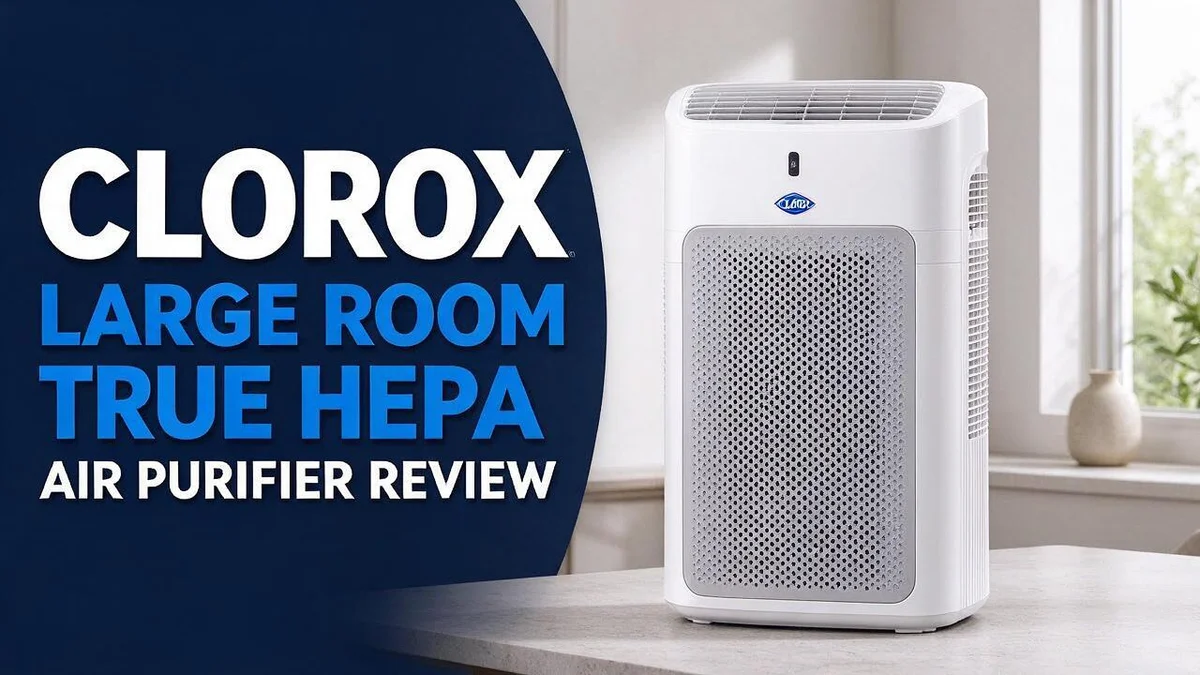
Clorox Large Room True HEPA Air Purifier Review 2026
Clean air matters more than most people think. Dust, pollen, smoke, and pet dander often float around your home unnoticed. A good air purifier can help you breathe easier every day.
The Clorox Large Room True HEPA Air Purifier (Model 11010) is built for bigger spaces. It offers a clean air delivery rate of up to 232 CFM for pollen. It also uses three stages of filtering.
It is ENERGY STAR qualified. The brand claims it captures 99.97% of allergens and particulates.
It also helps remove odors from pets, smoke, and cooking. A color-coded light shows air quality at a glance. Automatic operation keeps things simple.
In a Nutshell
- Strong airflow for bigger spaces: The unit moves 206 CFM for smoke, 219 CFM for dust, and 232 CFM for pollen. These clean air delivery rates show how well it handles everyday particles.
- Three stages of filtering: Air passes through three filter stages before it returns to the room. This layered approach helps tackle different types of particles.
- Easy air quality checks: A color-coded light shows the current air quality at a glance. You can see changes right away without any guesswork.
- Hands-off operation: The purifier runs automatically once you switch it on. This makes it a good match for busy households.
- Simple setup and controls: Setup is quick, and the interface is easy to understand. Most people can start using it with very little effort.
- Who it suits best: Families and pet owners who want steady, everyday air cleaning may like this model. The research lists no drawbacks, so check your room size and air cleaning needs first to see if it fits your home.
Filtration Stages and HEPA Performance
Filtration is the core of any air purifier. This model uses several layers, and each layer has a clear job. Together, they work as a team to clean the air in your room.
HEPA stands for high efficiency particulate air. A true HEPA filter uses a dense mesh that traps very small particles. Think of it as a fine net that catches dust, pollen, and pet hair.
The brand also claims the filter captures 99.9% of viruses and bacteria. Those claims come from the brand, so treat them as a starting point. Still, no filter works alone.
Regular dusting and vacuuming give the purifier less work to do. That habit helps the unit keep up with busy rooms.
In most layered designs, the outer layer catches larger particles first. This step protects the finer layers from clogging too fast.
Odor removal works differently. Smoke, cooking, and pet smells come from gases and tiny molecules. A HEPA mesh alone does not grab those well.
Many purifiers pair HEPA with activated carbon to handle odors. Carbon works like a sponge for gases, so it suits this job.
Filter care matters too. A clogged filter slows airflow and traps fewer particles. Check the filters often and replace them as the maker advises.
A quick visual check tells you a lot. Dark or dusty filters show that a change is due.
Placement also plays a role. Set the unit where you spend the most time, and keep it clear of curtains and furniture. Good airflow helps the filters do their job.
Air quality is not just about one filter. Each part of the system supports the others, so the whole unit performs better.
Clean filters keep the purifier working at its best. For families and pet owners, that steady care keeps the air fresh over time.
Room Coverage and Clean Air Delivery
Room coverage tells you how much space a purifier can truly clean. Many shoppers skip this step. Yet it decides whether the unit works well in your home.
Air changes per hour is the key idea here. It describes how many times the full volume of a room passes through the filter each hour. More cycles mean fewer particles float around between cleanings.
The research does not list a room size rating for this model. Check the box or manual for a square footage number. Match that figure to your space, not a guess.
Open floor plans need extra thought. Air moves freely between connected rooms. One unit may not reach every corner, so place it near the main living zone.
Placement matters as much as power. Keep the purifier a few feet away from walls and heavy furniture. Blocked intake or exhaust slows airflow and weakens results.
Daily activities also shape clean air delivery. Cooking, candles, and foot traffic add fresh particles to the room. Running the unit during these moments helps the air recover faster.
Ceiling height changes the math too. Taller rooms hold more air, so the purifier needs extra time to cycle the full volume. Plan for longer run times in those spaces.
Bedrooms and living rooms are the best fit for everyday use. Start the unit in the main room during the day. Then move it closer to your bed at night for steady cleaning.
Keep doors closed when possible. Closed doors trap clean air in one zone. This helps the purifier keep up with the space it serves.
Clean air delivery is a balance of power, space, and habits. Pick a unit sized for your room. Then place it well and run it consistently for the best results.
Odor Removal and Air Quality Indicator
Strong smells can hang around a home for hours. Pet accidents, smoke, and cooking odors are common culprits. The research lists odor removal for all three, which makes this unit useful for busy households.
Odors often build up slowly. A purifier that runs all day catches smells before they settle into curtains and sofas.
Pet owners know the struggle. Litter boxes, pet beds, and fur can all add to the smell. Placing the purifier near the pet zone helps it catch odors early.
Smoke needs extra care. Cigarette or candle smoke can cling to walls and fabric. Keep windows shut while the unit works on the smell.
Use the light as a simple cue. When the indicator shows that air quality has dropped, check for a new source like a burnt meal or a pet accident.
Kitchens need attention too. Turn on the purifier before you start frying or searing. The early start catches grease smoke before it spreads through the home.
Bedrooms deserve special attention. Smells from laundry, sweaty gear, or closets can build up overnight. Running the unit at night may help you wake up to fresher air.
Check the indicator often. Glance at the light when you walk past. Quick checks help you act before odors become strong.
Odor removal takes time. Strong smells may need a few hours of steady running to fade. Give the unit time, and clean the source too.
Good habits make a difference. Wipe spills quickly, wash pet bedding often, and empty trash bins. These steps lighten the load on the purifier.
Fresh air also makes a home more pleasant. Odor control supports the rest of the home. Rooms feel more comfortable for guests and family, and that comfort matters every day.
Keep the filter in good shape. A clean filter keeps airflow strong. Check the maker’s guidance for replacement timing.
Bottom line: For daily odor control in common rooms, this model gives you a clear signal and steady cleaning.
Top 3 Alternatives
Coway Mighty


Last update on 2026-11-19 / Affiliate links / Images from Amazon Product Advertising API
The Coway Mighty works well for large rooms that need steady, clean air.
It uses a True HEPA filter that catches tiny particles like dust, pollen, and pet dander.
The air quality indicator lights up when the air needs more cleaning. Auto mode adjusts the fan speed for you, so you never need to change settings.
Many owners also like the Eco mode for quiet nights.
Blueair Classic 680i

Last update on 2026-11-17 / Affiliate links / Images from Amazon Product Advertising API
The Blueair Classic 680i suits people who want smart features.
You can control it from the touch panel or from a companion app on your phone.
Its HEPASilent filter traps fine particles while the fan stays gentle on sound. Smart mode reads the air in real time and changes speed to match.
It is a strong choice for open plan living areas where people gather.
Honeywell HPA300

Last update on 2026-11-19 / Affiliate links / Images from Amazon Product Advertising API
The Honeywell HPA300 offers a simple setup for larger spaces.
Its True HEPA filter removes allergens, smoke, and common odors from the air.
Three fan speeds let you pick the right level for each part of the day. A filter change indicator reminds you when it is time for a new filter.
Many people use it in bedrooms, living rooms, and home offices where clean air matters most.
Energy Efficiency and Running Costs
Energy use matters more than many buyers expect. A purifier runs for many hours each day. Small differences in power draw can add up over a full year.
The Clorox model carries an ENERGY STAR qualified label. This label shows the unit meets a set of efficiency standards. It gives shoppers a simple way to check energy performance.
Fan speed plays a big role in energy use. Higher speeds move more air but also pull more power. Lower speeds work well for steady cleaning in rooms that stay calm.
Automatic operation helps here too. The unit adjusts its effort based on the air around it. That means it does not need to run at full power all the time.
Filter condition affects efficiency. A clogged filter forces the fan to work harder. Checking the filter on a regular schedule keeps airflow steady and the motor working smoothly.
Plan a simple routine for the year. Run the unit on higher speeds during cooking, cleaning, or pet messes. Switch to lower speeds once the air settles again.
Think about runtime, not just power. Running the purifier all day in an empty room wastes energy. Running it in the rooms people use most gives better results for every hour it works.
Fewer hours can still work well. Short, focused runs often clear a room faster than long, weak runs. Pick a strong setting for a short time, then let the unit rest.
Standby habits matter too. Many people leave devices on without thinking. Turning the purifier off in rooms that stay empty for long periods keeps the routine simple.
A busy home may need longer run times, and that is normal. Good habits keep energy use in a sensible range. Smart planning keeps the unit working hard only when it counts.
Energy efficiency gives this purifier a solid edge for daily use. With the right habits, the unit stays effective and efficient.
Setup and Everyday Ease of Use
Getting started with this Clorox model feels simple. You unpack the unit, plug it in, and turn it on. Most people can begin using it within minutes.
Some appliances need long setup steps before they work. This air purifier does not. Its layout keeps the process clear and direct.
The controls are easy to learn for everyone in the home. Buttons are straightforward, so you can change settings without reading a long guide. That makes the first day feel natural.
Automatic operation is a major help during the first week. You can let the purifier handle the work while you go about your routine.
Give the unit a short trial run before you judge it. Try it in a room you use often, like a home office or playroom. Notice how quickly the space feels fresher.
Once the unit runs smoothly, keep up a simple check. Glance at the body every week and make sure nothing blocks the air openings. A quick look keeps the unit working as expected.
Shared households benefit most from this simplicity. Kids, guests, and older adults can switch on the unit without help. Fewer questions mean fewer mistakes.
Ease of use also encourages steady habits. When turning on the purifier feels effortless, people run it more often. Consistent use gives the best results over time.
Many buyers want a device that fits into daily life without fuss. This model delivers that comfort from day one. Simple setup and clear controls make the difference.
Setup also reduces stress for new users. Nobody wants to wrestle with confusing menus. Instead, the purifier becomes a helpful part of the room.
Jot your preferred settings on a note near the unit. Anyone in the home can then follow the same routine.
Pros and Cons
Pros
- Simple setup helps you start using it fast.
- The controls are easy to learn for everyone at home.
- It removes pet, smoke, and cooking odors well.
- A color coded light shows air quality at a glance.
- Automatic operation keeps the air clean without constant checks.
Cons
- The room capacity is not listed, so check the size fit first.
- High fan speeds pull more power.
- The filter needs regular checks to keep it working well.
- Some performance claims come from the maker, so test it in your own space.
Who Should Buy It
Allergy sufferers often want a purifier that handles dust and pollen. This Clorox model lists strong clean air rates for both.
Pet owners may also benefit. Loose hair and particles can settle in shared rooms.
Pollen season can bring extra dust into the house. Running the unit during those weeks can help.
Busy families often spend time in one main living room. A purifier there helps everyone at once.
Hobbyists who work with wood, paper, or fabric create dust. A purifier can help keep that dust under control in a craft room.
Shared bedrooms also make a good fit. Two people breathe the same air at night, so a clean room can feel restful.
Home workers may benefit as well. Cleaner air can feel fresher during long days at a desk.
Homes with more than one pet may need the unit to run more often.
Large open layouts may need more than one unit. Check the floor plan before you decide.
Some buyers should look elsewhere. Shoppers who need independent proof should read outside reviews first.
The Healthy Climate Carbon Clean 16 Media Air Cleaner appears in a June 2024 roundup. It was recommended for allergy sufferers and pet owners. Comparing both models can help you decide.
A quick self check can guide the choice. Ask yourself which room needs the most help. Then think about who lives there.
In short, the ideal buyer wants steady clean air in a main living space. They also want a device that does its job without constant attention.
The best buyers have a clear goal. If that goal is cleaner air in a main room, this model deserves a close look. Take time to match the unit to your home. A good match leads to happy use over many months.
Final Verdict
Overall, the Clorox Large Room True HEPA Air Purifier is a strong choice for a main living area. Its airflow numbers for smoke, dust, and pollen look solid on paper. Real results still depend on your home.
The biggest question is room fit. Measure your space before you buy. Then compare the square footage with the airflow numbers and decide if one unit will do the job.
Ceiling height and open doorways also change how air spreads. Place the unit near the middle of the room, away from walls and heavy curtains, so air moves freely.
Look at your household next. A single unit works well for one shared room. It may struggle to cover a long open floor plan, so a second unit could help in that case.
Be honest about the claims, too. The filtration percentages come from the maker, so independent tests give a fuller picture. Read outside reviews before you commit.
Consider the competition. The Healthy Climate Carbon Clean 16 Media Air Cleaner appeared in a June 2024 roundup as a HEPA option for allergy sufferers and pet owners. Put both models side by side and check which one fits your needs.
Think about noise, too. Many people want a quiet machine for bedrooms. Ask a friend who owns one how loud it sounds on its top setting.
A purifier works best as one part of a clean home routine. Open windows when outdoor air is fresh, vacuum often, and groom pets regularly. Pair the unit with these habits for the best results.
Our verdict: this Clorox model suits families who want a simple machine for one main room. It handles odors, dust, and pollen with little effort. If your space is large or your needs are more demanding, test a few options first.
Frequently Asked Questions
Where should I place the purifier in the room?
Place it near the spot where your family sits most. Keep it away from walls and furniture so air can flow freely. Avoid placing it behind curtains or in a corner where air gets trapped.
Can it help on days with wildfire smoke?
Yes, it can help. The smoke airflow rating shows it moves a good amount of air. Keep windows closed on smoky days so the unit can clean the air faster.
Does the ENERGY STAR label matter for daily use?
The ENERGY STAR label means the unit meets energy efficiency guidelines. Running it on a lower setting for long periods keeps power use in check. This matters most if you plan to leave it on all day.
How long should I run it each day?
Most homes can leave it on automatic mode throughout the day. Run it longer after cooking, cleaning, or pet play. Give it a few extra hours after dusty chores so the air settles and gets filtered.
Are there any drawbacks to know about?
The research does not list any cons. That does not mean the unit is perfect for every home. Read independent reviews and test it in your own space before you decide.

I’m Maya Brown, the voice behind Pure Breeze Vault. I write detailed, honest, and easy-to-follow air purifier reviews to help readers compare features, understand filter technologies, and choose products with confidence. My goal is to make research simpler, clearer, and more practical for anyone improving indoor air quality at home.