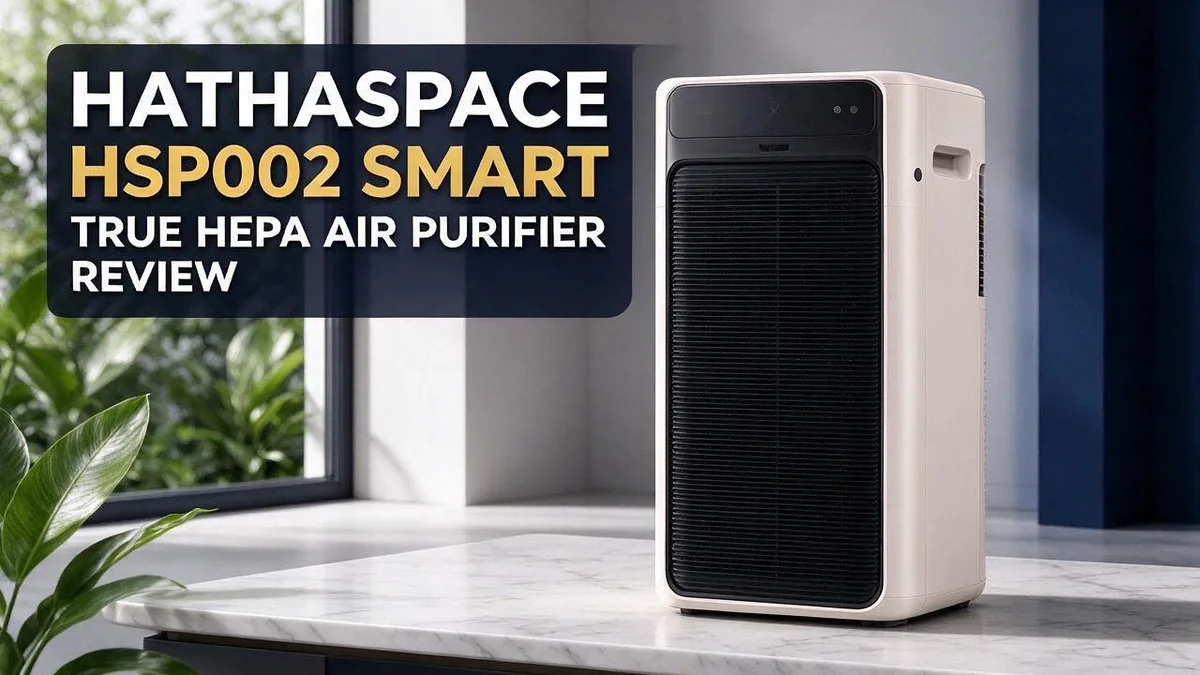
Hathaspace HSP002 Smart True HEPA Air Purifier Review
Dust, smoke, and pet dander can build up fast at home. Clean air matters more than most people realize. A good air purifier can make every room feel fresher.
The Hathaspace HSP002 Smart True HEPA Air Purifier aims to do just that. It claims to remove 99.9% of dust, smoke, pet dander, odors, and VOCs.
It covers rooms up to 1,500 square feet. That makes it a practical choice for larger spaces. Many shoppers also want a purifier that runs quietly in the background. The HSP002 offers quiet operation and a smart sensor. That means less guesswork for you.
In this review, we look at how it performs, who it suits best, and where it falls short. Keep reading to see if this smart purifier belongs in your home.
In a Nutshell
-
Quiet operation: The HSP002 runs quietly, so it fits well in bedrooms, nurseries, and home offices. Light sleepers and people who work from home will likely appreciate this trait.
-
Smart sensor: A built-in smart sensor helps the unit respond to changing air quality. You spend less time guessing when to adjust the settings.
-
Wide contaminant claims: Hathaspace says the unit removes 99.9% of dust, smoke, pet dander, odors, and VOCs. Independent test results for this specific model were not found in our research.
-
Efficiency rating: A calculator summary for the sibling HSP001 shows 100.0 CFM per watt, rated excellent. This figure comes from the HSP001, not the HSP002 directly.
-
Ongoing filter care: True HEPA filters need periodic replacement. Plan ahead so the air stays clean over time.
-
Sibling models: The HSP001 Smart True HEPA and the HSP003 Dual Filtration HEPA with activated carbon give you other options from the same brand to compare.
Filtration Performance

Last update on 2026-11-17 / Affiliate links / Images from Amazon Product Advertising API
When you look at filtration performance, the main question is simple. How well does the air leave the room cleaner? A True HEPA filter does the heavy lifting here.
Think about what moves through your home each day. Cooking releases grease and smoke. Shoes bring in soil. Pets shed fur and skin flakes.
A good filter needs to catch all of these before they settle on furniture or enter your lungs.
Many purifiers catch large bits first. The fine layers then trap smaller particles that slip past. This step by step process works well for mixed indoor pollution.
Odors and gases are a different challenge. HEPA material alone does not capture most gases. The HSP002 aims at odors and VOCs, so test this yourself. Notice whether cooking smells fade within an hour or two.
Clean air also depends on airflow. A purifier can only clean the air that moves through it. Place the unit in an open spot, away from walls and curtains. Keep doors closed in the room you want to clean.
Room size matters too. The stated coverage is a best case figure. If your room has high ceilings or an open layout, consider running the purifier on a higher setting for a while. This helps the air cycle more often.
Results also vary by home. A house with carpets, frequent cooking, or several pets will need more frequent cleaning cycles than a tidy apartment. Watch for dust on surfaces after a few days. That simple check tells you more than any number on a box.
Overall, filtration performance comes down to fit and habit. Pair the unit with clean filters, closed doors, and steady use. These steps help you get the most from the HSP002 in daily life.
Room Coverage and Sizing
Start by measuring the room where the purifier will sit most often. Multiply the length by the width to find the floor area. Write that number down before you compare it with any product claim.
Ceiling height matters too. A room with tall ceilings holds more air than a standard room. That extra volume means the unit must cycle more air to keep the space fresh.
Open floor plans need extra thought. A purifier in a kitchen that connects to a living room may clean both spaces. Still, air in distant corners may move more slowly.
Doors and hallways also shape airflow. Closed doors trap air inside one room, which helps the unit work more efficiently. Open doors let fresh air drift into other areas.
Placement changes coverage as well. Keep the unit a few feet away from walls, curtains, and large furniture. Clear space lets air move in and out freely.
Many experts suggest cycling the full room air several times each hour. This goal helps you choose the right fan speed. Higher speeds clean faster, so use them after cooking or cleaning.
Oversizing gives you extra headroom. A unit rated for a larger area can handle busy rooms with pets, frequent guests, or hobbies that release dust. You may run it on lower settings most of the day.
Use the rated area as a guide, not a promise. Real results depend on furniture, humidity, and how often people walk through the space. Give the unit time to work before you judge it.
Choose the room you use most first. Bedrooms, living rooms, and family spaces often deserve the top spot. Once you cover the main room, plan for secondary spaces with a simple daily routine.
Consider how many people share the space, too. A busy room produces more skin cells, fabric fibers, and everyday particles. Extra capacity keeps the air feeling clean during long evenings together.
Smart Sensor and Controls
The sensor does the watching for you. Most people do not check air quality all day. Instead, the HSP002 tracks the air and adjusts on its own. That takes a task off your list.
Nobody wants to remember a purifier setting while cooking dinner or chasing kids. A sensor handles that job in the background.
Air quality changes often at home. Cooking, cleaning, guests, and open windows all shift what you breathe. The sensor works to keep up with those changes.
Manual settings need effort every time the air changes. A sensor moves that effort to the machine, which many households find easier.
Quiet nights get a boost too. When the air already feels clean, the unit can ease off. Lower activity keeps the room calm while you sleep or work.
Control details are limited in public sources. The research we used does not list buttons, displays, or app options. Check the product manual for exact controls before you set up the unit.
Placement affects how well the sensor reads the room. Keep the unit clear of curtains, couches, and walls. Blocked vents can throw off readings and slow results.
Consistency matters more than bursts. Short bursts of cleaning leave gaps in air quality. A sensor that stays on watch can keep the air steadier across the whole day.
Trust your senses too. A sensor gives a helpful signal, but it cannot smell every problem. If you notice strong odors or haze, open a window or check the source.
The HSP002 suits people who want less hands on care. Busy parents, pet owners, and people with allergies may appreciate that approach.
Sensor control adds convenience without adding complexity. Pair it with regular checks of the room, and you get the most from this feature.
Top 3 Alternatives
Levoit Core 300


Last update on 2026-11-19 / Affiliate links / Images from Amazon Product Advertising API
The Levoit Core 300 is a compact air purifier that fits well in bedrooms. It uses a True HEPA filter to trap small particles like dust, pollen, and pet dander. The unit runs quietly on low settings, so it helps you sleep. Its simple controls make daily use easy. Many people also like the auto mode, which adjusts fan speed based on air quality.
Coway Mighty

Last update on 2026-11-19 / Affiliate links / Images from Amazon Product Advertising API
The Coway Mighty works well in medium-sized rooms like living rooms and home offices. It combines a True HEPA filter with an activated carbon layer. The carbon helps reduce odors from cooking, smoke, and pets. A color indicator shows air quality at a glance. Its clean design blends easily into most decor.
Honeywell HPA300

Last update on 2026-11-19 / Affiliate links / Images from Amazon Product Advertising API
The Honeywell HPA300 suits larger spaces and open layouts. It cleans the air several times each hour, so fresh air keeps flowing. The True HEPA filter captures allergens and fine dust. A filter change indicator tells you when it is time for a replacement. The sleep mode dims the lights and lowers the noise at night. Families who want steady performance often choose this model.
Quiet Operation and Sleep Use
Bedrooms need a different kind of care. Many people run a purifier at night. A loud fan can break up sleep, though.
The HSP002 is described as quiet in operation. This makes it a practical option for a bedroom or nursery.
Sound matters as much as airflow. You want clean air without a constant whoosh in your ears. Quiet running helps you drift off more easily.
Place the unit on a dresser or nightstand. Keep it a short distance from the bed so air reaches you without blowing directly on your face.
Most adults spend about a third of their day asleep. That makes the bedroom a key place for clean air. Running the unit overnight covers those long hours.
Pet dander and dust often settle on bedding. Pets that sleep in the room add to the load. Running the unit overnight helps reduce these particles while you rest.
Set it up before bed and leave it alone. A simple evening routine means you never need to adjust it in the dark.
Light sleepers may notice sound more than others. Test the unit on a quiet evening first. Listen from your pillow to judge the noise.
Allergy sufferers often wake with a stuffy nose. Running the purifier through the night may ease that morning feeling for some people.
Results vary from person to person. Some people sleep through any background hum. Others need total silence to rest well.
Quiet air and quiet sound work together. Clean air helps your body rest, and a calm unit keeps your mind at ease.
Think about your sleep space before you choose a spot. Measure the distance to the bed. Note any nearby fans or vents that add noise.
Give the unit a few nights to settle into your routine. Your body adapts to new sounds over time. Many people find the hum fades into the background.
Running Costs and Filter Replacement
Running this purifier day to day is easy. The smart sensor handles most of the work. It adjusts fan speed as the air changes.
Power use matters for many households. The HSP002 has no published energy figure in our research. The closest data comes from its sibling model, the HSP001.
That sibling model earns a 100.0 CFM per watt rating. A calculator summary calls that excellent for energy use.
Keep in mind that this figure belongs to the HSP001, not the HSP002. Treat it as a helpful hint rather than a promise.
Filter care is the other big part of upkeep. The True HEPA filter traps fine particles, so it works best when it stays in good shape.
Replacement timing depends on your home. Pets, cooking, smoke, and open windows all load the filter faster. Busy households may need changes sooner.
Check the filter status often. A quick look now and then helps you plan ahead.
Read the manual for the exact replacement schedule. Our research does not list a set interval for this model.
Replacement filters matter for long term planning. Some owners compare filter options before they reorder, so it helps to know your model number.
Keep a spare filter on hand. That way the purifier never sits idle while you wait for a delivery. Steady airflow keeps the air clean.
A simple routine keeps things running smoothly. Wipe the outer shell, check the filter status, and keep the air intake clear of dust and pet hair.
Dust on the intake can slow airflow over time. Vacuum the area around the unit once in a while. Clean air starts with clean surroundings.
Good habits lead to fewer surprises. A calm routine keeps the purifier working at its best. Your family will feel the difference.
Start with the manual and the sensor readings. Then build a simple schedule that fits your home and your daily life.
Pros and Cons
Pros
- Covers large rooms with support for up to 1,500 square feet.
- Captures fine particles with its True HEPA filter.
- Targets odors and VOCs from everyday cooking and cleaning.
- Adjusts on its own using a smart sensor.
- Runs in a quiet mode that many people find easy to live with.
Cons
- The 99.9% figure is a brand claim that we could not verify independently.
- Few user reviews were available to show long-term results.
- Finding matching True HEPA 13 replacements may take some searching.
- No outside competitors were named for a direct side-by-side comparison.
Who Should Buy It
This purifier fits a wide range of homes. Here is who may get the most from it.
Busy families with young children often want a simple way to keep rooms fresh. Kids spend hours on the floor, so cleaner air near play areas makes sense.
The unit covers large spaces, so a shared living room or playroom can benefit.
Pet owners deal with fur, shedding, and daily odors. The smart sensor helps the unit respond when air quality shifts. You do not need to watch a dial all day.
Home cooks may also find this model useful.
Frying, roasting, and grilling release smells and fine particles into the kitchen air. The purifier can sit in a nearby dining area or open kitchen to help capture those odors.
Apartment dwellers with open plans will like the wide coverage. One unit can serve a combined living and dining space. That saves room and keeps the setup simple.
Home office workers spend long hours in one spot. A purifier near a desk can help the air feel fresher during busy work days. Keep the unit a few feet away from the chair so airflow stays gentle.
People who live in busy neighborhoods may notice more dust from traffic or nearby construction. A purifier can help keep indoor air steadier during those times.
Who might skip it? Shoppers who need a unit for a tiny studio may find it larger than needed. People who prefer a fan with no sensors may prefer a basic model instead.
Think about your daily routine first. Measure the room, note your main air concerns, and decide how much automatic operation you want. Read the product details closely before you decide, and compare the room size to the coverage listed.
If those points match your home, this purifier could be a good fit.
Final Verdict
The Hathaspace HSP002 earns a spot on our shortlist for home air care. It combines a True HEPA filter with a smart sensor. These two features make it a strong choice for everyday indoor air.
Think of this unit as a steady helper rather than a flashy gadget. It works in the background, so you can focus on your day. That calm approach suits people who want clean air without constant attention.
Placement matters more than many people expect. Set the unit in the room you use most. Keep it clear of curtains and furniture. Open space around it gives the sensor a better read on the room.
Who gets the most from it? Households with pets, kids, and regular cooking often see the clearest benefit. The coverage area also fits larger rooms well. Shared spaces like a living room or family den can stay fresher with less effort.
Shoppers who want a different feature set can also look within the Hathaspace range. The HSP003 adds activated carbon for stronger odor control. The HSP001 shares the smart True HEPA approach, so compare the two based on your room size.
Still, buyers should go in with clear expectations. The strongest case for this purifier rests on its features and daily comfort. Long term performance data is still thin. Checking recent owner feedback before buying makes sense.
Our overall take is simple. The HSP002 delivers quiet, smart operation and a True HEPA filter in one package. It fits busy homes that want fresher air with minimal hands-on control. If you want a unit you can set and forget, this model deserves a close look.
Clean air is a daily habit, and this purifier supports that habit with very little effort. Give it a try in your busiest room first. Measure your room size before you decide. Your own needs should guide the final choice.
Frequently Asked Questions
Can I use this purifier in a bedroom?
Yes, many people use it in bedrooms. The quiet operation helps it fit into a sleep space. Keep it a few feet from the bed for the best results.
Where should I place the unit in a room?
Place it in open space, away from walls, curtains, and heavy furniture. Air needs room to move in and out. A spot near a doorway or a main walkway often works well.
How do I keep the purifier working well?
Check the filter on a regular schedule and clean the outside of the unit with a dry cloth. Dust builds up over time, so a quick wipe helps the airflow. Good care keeps the air fresh for longer.
Can this purifier help with allergies?
It may help some people feel better. The True HEPA filter captures many fine particles that cause irritation. However, it does not treat allergies. Talk with a doctor if symptoms continue.
Does this replace regular cleaning?
No, it works best alongside regular cleaning. Vacuuming, dusting, and washing bedding remove dirt that a purifier cannot reach. Together, these habits keep your home fresh and comfortable.

I’m Maya Brown, the voice behind Pure Breeze Vault. I write detailed, honest, and easy-to-follow air purifier reviews to help readers compare features, understand filter technologies, and choose products with confidence. My goal is to make research simpler, clearer, and more practical for anyone improving indoor air quality at home.