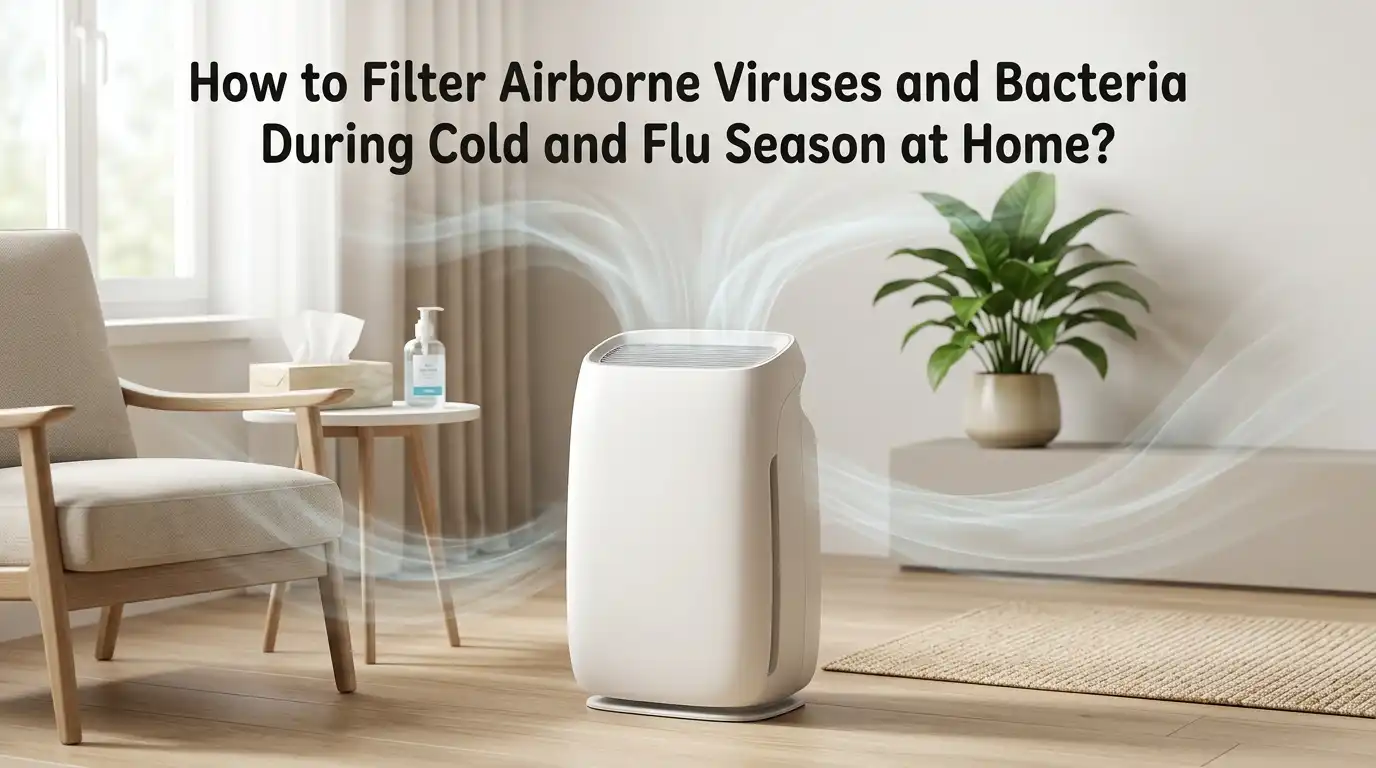
How to Filter Airborne Viruses and Bacteria During Cold and Flu Season at Home?
Cold and flu season can make any room feel stressful. A family room, office, classroom, or bedroom can hold tiny droplets and particles that stay in the air longer than most people think.
That is why cleaner air matters. If you lower the amount of germs in the air, you lower the chance that someone breathes them in.
The good news is simple. You do not need one perfect fix. You need a smart mix of steps that work together. Open air helps. Better filters help. A true HEPA cleaner helps. Good humidity helps.
In a Nutshell
- Cleaner air lowers risk. Airborne viruses and some bacteria spread more easily indoors because particles build up in shared air. Your goal is simple. You want to remove dirty air, bring in cleaner air, and trap harmful particles before people breathe them in. Think of it as lowering the germ load in the room. A lower germ load often means a lower chance of illness.
- Fresh air is your first move. Open windows a little when weather allows. Use bathroom and kitchen exhaust fans. Let outdoor air dilute what is floating indoors. This step costs little, and it works fast in many homes. The main limit is comfort. Very cold weather, smoke, pollen, or outdoor pollution can make this harder.
- Filters matter a lot. A better HVAC filter can catch more particles as air moves through your system. A true HEPA room cleaner can remove a very high share of small particles from one room. These tools work best when they run long enough and fit the room size. A strong filter that is too small for the room will disappoint you.
- Room setup changes results. Put the air cleaner where people gather most. Keep airflow clear. Close the door if you want to clean one room faster. Run your system before guests arrive and keep it going after they leave. Small placement choices can change performance more than people expect.
- Humidity and personal habits support filtration. Dry air can bother your nose and throat. Very damp air can feed mold and other problems. Aim for a safe middle zone. Add masks in crowded indoor settings if risk is high. Filtration works best when it teams up with good habits.
- Use a layered plan. No single method removes all risk. That is why the best answer is a mix of steps. Use ventilation, filtration, humidity control, and smart daily habits together. This approach is simple, practical, and strong during peak cold and flu season.
Understand what you are trying to remove
Airborne viruses and bacteria move in tiny wet droplets and dry particles. Some fall fast. Others stay in the air, especially in closed rooms with weak airflow. That is why a room can still hold germs even after a cough ends. The problem is not only the sick person. The problem is the shared air.
Your job is to lower the number of particles in that air. You can do this in three ways. First, bring in cleaner outdoor air. Second, trap particles with filters. Third, reduce the time people spend breathing the same stale air.
Pros: This way of thinking is simple and helps you choose better solutions.
Cons: It takes more than one step, and results improve over time, not in one minute.
Once you see the goal clearly, every later choice becomes easier. You stop guessing and start building a room that is safer to breathe in.
Start with fresh outdoor air
Fresh outdoor air is often the fastest low cost way to lower airborne germs. Open one or two windows for short periods during the day. If possible, create cross airflow by opening windows on opposite sides of the room. Even a small air exchange can help reduce particle buildup. Short bursts are often easier than leaving windows open all day.
Try this step before guests arrive, during group time, and for a while after people leave. If one room feels stuffy, that is a clear sign you need better airflow. A simple window routine can make a room feel fresher fast.
Pros: Low cost, easy, and useful in many homes.
Cons: Weather, noise, smoke, and outdoor pollution can limit this method.
If outdoor conditions are bad, do not force it. Use indoor filtration instead. Fresh air works best as part of a larger plan, not as your only answer.
Use exhaust fans in the rooms that need them most
Bathroom and kitchen exhaust fans do more than remove smells and steam. They also help move indoor air out of the home. That matters during cold and flu season because stale air lets particles build up. A fan that vents outside can support cleaner air without opening every window.
Turn on the bathroom fan after showers and during busy family mornings. Run the kitchen fan while cooking and when people gather nearby. If a guest is sick, use the bathroom fan after that person uses the room. These small habits can improve airflow in spaces where moisture and germs may collect.
Pros: Easy to use, already built into many homes, and good for moisture control.
Cons: Some fans are noisy, and some older units do not move much air.
Check that the fan really vents outside. A weak or dirty fan cannot do much. Clean the cover and test it so the method actually works when you need it.
Upgrade your HVAC filter if your system can handle it
Your central heating and cooling system can help clean air across the home. A better filter can trap more particles each time air passes through. Many air experts suggest a filter rated MERV 13 if your system can handle it. This level can capture a good share of fine particles, including those that carry germs.
Before you upgrade, check your system manual or ask an HVAC pro. A filter that is too restrictive for your system can reduce airflow. Change filters on time because a clogged filter cannot do its job well.
Pros: Covers more than one room and works quietly in the background.
Cons: Not every system can use a higher rated filter, and dirty filters reduce performance.
This step is strong for whole home support. It is even better when paired with a room air cleaner in the busiest room.
Run your HVAC fan longer during high risk times
A good filter only helps when air moves through it. That is why fan settings matter. If your system has a fan option, switch from auto to on during visits, family gatherings, or when someone in the home feels sick. Longer fan time means more air passes through the filter. More passes usually mean cleaner air over time.
You do not need to run it this way every hour of every day. Use it in smart blocks. Start before people gather. Keep it running during the visit. Let it continue after the room clears. This gives the filter time to catch more particles.
Pros: Easy to do and helpful if you already have a decent filter.
Cons: It can raise energy use and may dry the air in some homes.
This method is simple, but it is often missed. Many people buy a better filter and forget that airflow is what makes the filter matter.
Add a true HEPA air cleaner to busy rooms
A true HEPA air cleaner is one of the best tools for one room. HEPA filters can capture at least 99.97 percent of particles at 0.3 micron, and they can trap larger and smaller particles very well too. That makes them useful for airborne particles that may carry viruses and bacteria. A bedroom, family room, home office, or nursery is a great place to start.
Use the unit in the room where people spend the most time. Keep it running during shared indoor time and for a while after. A quiet low speed is better than a powerful setting that people turn off.
Pros: Strong particle removal, simple setup, and very useful in one room.
Cons: It only cleans the space it serves, and filter changes add cost.
Choose performance over looks. The best unit is the one that fits the room and stays on long enough to do real work.
Match the air cleaner to the room size
One common mistake is buying an air cleaner that is too small. Room size matters. So does ceiling height. A unit that is perfect for a small bedroom may struggle in a large living room. That is why clean air delivery rate matters more than marketing words.
Measure the room length and width. Multiply them to get the floor area. If the room opens into another space, count the larger area. If the ceiling is high, size up. If the room is large, two units can work better than one.
Pros: Proper sizing gives faster and more reliable cleaning.
Cons: Larger units cost more and may make more noise on high speed.
This step solves many complaints before they begin. If people say an air cleaner did nothing, the unit was often too small, placed badly, or turned off too often.
Place the unit where airflow can actually work
Placement changes results. Put the air cleaner where people breathe and gather, not hidden behind a couch or curtain. Leave open space around the intake and outlet. Air must move freely through the unit to clean the room. A blocked unit cleans badly, even if the filter is excellent.
Good spots include near the center of the room, beside a desk, or near the sleeping area while keeping airflow comfortable. If one person is sick, place the unit in that person’s room and keep the door mostly closed. That helps the cleaner focus on one space.
Pros: Free improvement with no new cost.
Cons: Good placement may take up floor space or create a draft.
Do a quick airflow check with your hand. If curtains, furniture, or bedding block the path, move the unit. Small changes can lift performance fast.
Keep indoor humidity in a safe middle range
Humidity affects comfort and air health. Very dry air can irritate your nose, throat, and eyes. Very damp air can feed mold and other problems. A safe middle range helps the body and protects the home. In many homes, a target around 30 to 50 percent is a practical everyday goal.
Use a simple humidity meter so you are not guessing. If air is too dry, use a clean humidifier and empty it often. If air is too damp, use exhaust fans or a dehumidifier. Do not chase high humidity during winter because wet windows, mold, and dust mites can create a new problem.
Pros: Better comfort and support for healthy indoor air.
Cons: Poor humidifier care can spread germs, and too much moisture can damage the home.
Humidity control supports filtration. It does not replace it. Think of it as a helper, not the main fix.
Use masks as personal air filters in high risk moments
Room filtration helps shared air. Masks help the air that reaches your nose and mouth. During cold and flu season, a well fitting mask or respirator can add strong personal protection in crowded indoor places. This is very useful when you cannot control the room’s ventilation. Buses, clinics, waiting rooms, and packed events are common examples.
If someone at home is sick, masks can help during close care, especially in small rooms. Fit matters more than fashion. A loose mask leaks. A well sealed one filters better and protects more.
Pros: Fast, portable, and useful anywhere.
Cons: Some people find masks warm or tiring during long wear.
Masks are not a sign of fear. They are a practical filter that works close to your face. In peak season, that simple step can make a real difference.
Consider UV air cleaning for hard to fix spaces
Some spaces stay risky even with windows and filters. A basement office, a small clinic room, or a crowded shared area may need more help. In those cases, UV air cleaning can be useful if it is installed and designed well. Upper room UV and in duct UV systems can reduce germs in moving air.
This is not a casual do it yourself project. UV systems need safe design and correct placement. The wrong setup can fail or create safety issues. For most homes, better ventilation and HEPA filtration should come first. UV makes more sense when a room has a known airflow problem or when higher risk people use the space often.
Pros: Helpful for hard spaces and strong as part of a layered plan.
Cons: Higher cost, needs expert setup, and is not the first step for most homes.
Think of UV as an advanced tool, not the starter tool.
Build a simple clean air routine for every day
Good results come from repeatable habits. Set a routine that your household can keep. Open windows for short periods when outdoor air is good. Run the HVAC fan during visits. Keep the HEPA cleaner on in the busiest room. Check humidity once a day. Simple routines beat random effort. Consistency lowers risk more than one big cleanup.
A useful daily plan might look like this. Air out the home in the morning. Run the room cleaner during work, study, or family time. Use the kitchen and bathroom fans as needed. Replace filters on schedule. Add masks if someone feels sick or if visitors are coming.
Pros: Low stress, easy to remember, and very effective over time.
Cons: Requires daily follow through and a little planning.
The best system is the one people actually use. Keep it simple enough that it becomes normal.
Avoid the mistakes that weaken your results
Many people do the right thing in the wrong way. They buy an air cleaner but place it behind furniture. They install a better filter and forget to replace it. They open windows on one mild day and expect that to solve the whole season. Cleaner air works best when the details are right. Small mistakes can cancel a strong plan.
Watch for these common problems. Do not block airflow. Do not ignore filter changes. Do not buy ozone producing devices sold as air cleaners. Do not let humidifiers get dirty. Do not use one tiny unit for a giant open room. Do not turn off the cleaner because high speed sounds loud. Use a lower steady setting instead.
Pros: Fixing mistakes is often free.
Cons: It takes attention and honest review of your setup.
FAQs
Can air cleaners remove all viruses and bacteria from a room?
No. Air cleaners lower the amount of particles in the air, but they do not remove all risk. They work best as one part of a layered plan. Use them with fresh air, good filters, smart humidity control, and staying home when sick. That mix gives much better protection than one tool alone.
Is a HEPA air cleaner better than a higher rated HVAC filter?
They do different jobs. A HEPA room cleaner is often best for one room where people spend a lot of time. A better HVAC filter helps the whole home if the system can handle it. Many homes do best with both. Use the central filter for broad support and the HEPA unit for your highest use room.
How long should I run an air cleaner during cold and flu season?
Longer is usually better. Run it during the hours when people are in the room, and keep it going after shared time ends. A lower quiet setting that stays on is often more useful than a loud high setting that people switch off. Steady use usually gives the best real life results.
What should I avoid buying for air cleaning?
Avoid devices that make ozone on purpose. Ozone can irritate the lungs. Be careful with vague claims and flashy terms that do not explain filtration clearly. Look for clear filter details, room sizing, and safe use instructions. Simple and proven beats fancy and unclear every time.

I’m Maya Brown, the voice behind Pure Breeze Vault. I write detailed, honest, and easy-to-follow air purifier reviews to help readers compare features, understand filter technologies, and choose products with confidence. My goal is to make research simpler, clearer, and more practical for anyone improving indoor air quality at home.