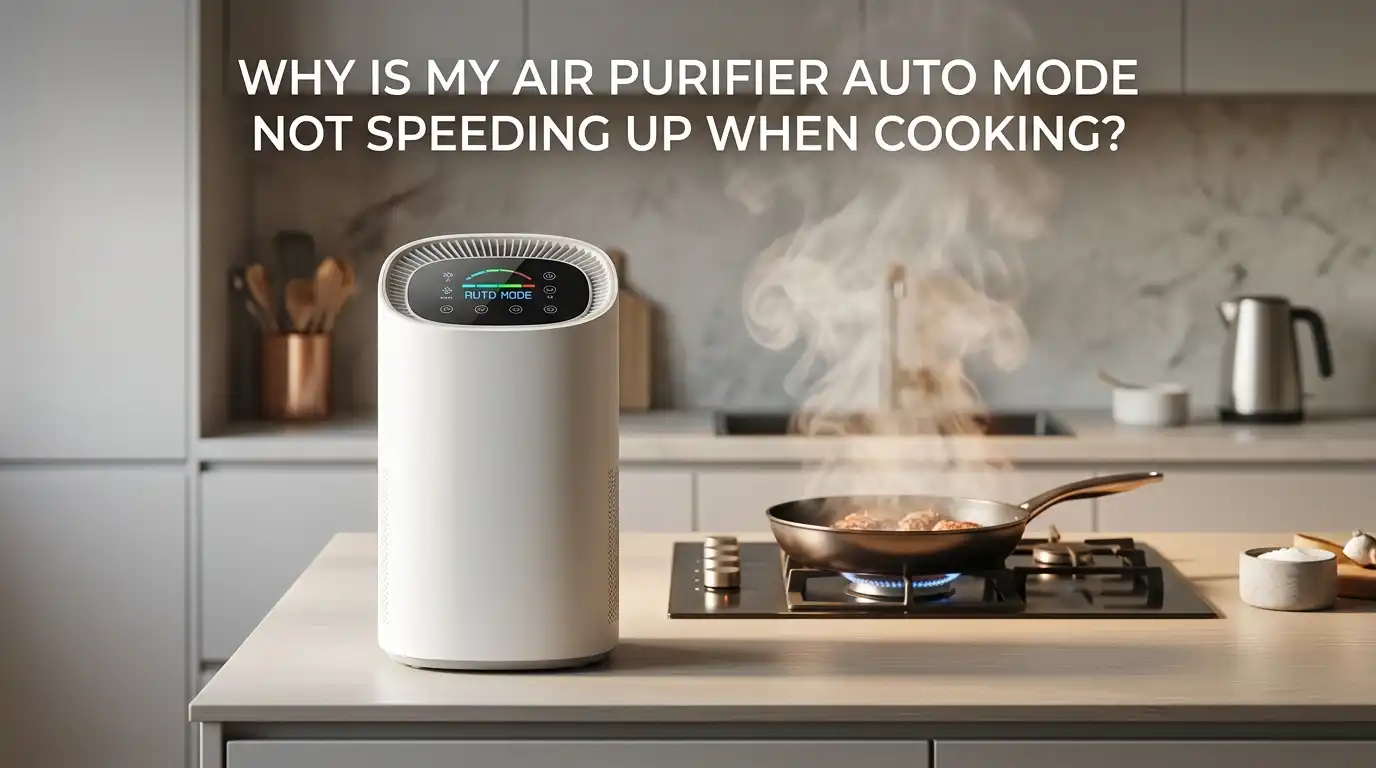
Why Is My Air Purifier Auto Mode Not Speeding Up When Cooking?
If your air purifier sits quietly while you cook, you are not imagining the problem. Many people expect auto mode to react fast to smoke, smell, steam, and heat. Then dinner starts, oil warms up, onions hit the pan, and the purifier still acts like the air is clean. That feels frustrating.
The good news is that this problem usually has a clear cause. In many homes, the purifier is reading the wrong thing, sitting in the wrong place, or waiting too long to respond.
Cooking can also create more than one type of pollution. Some machines react well to particles. Some react better to odor and gas. Some do a weak job in auto mode, even if they clean well on manual high.
Key Takeaways
- Auto mode does not always react to cooking smell. Many purifiers watch particles more than odor. If your food gives off strong smell but low visible smoke, the machine may stay calm even though your kitchen feels stuffy.
- Cooking creates more than one kind of indoor pollution. It can create fine particles, very small particles, grease mist, and in some cases gases from a gas burner. That means one sensor may miss part of the problem. A quiet purifier does not always mean clean air.
- Manual high speed often works better for cooking than auto mode. This is one of the simplest fixes. Turn the purifier to a higher speed a few minutes before cooking. That gives it a head start before the air gets dirty.
- Sensor care matters more than most people think. Dust, grease, and residue can make the sensor slow or inaccurate. A quick cleaning can improve response time and help the unit detect kitchen pollution more reliably.
- Placement changes everything. If the purifier is too far from the kitchen, behind furniture, or trapped in a corner, it may not sample the polluted air soon enough. A better spot often fixes the issue faster than buying anything new.
- Source control still matters most. Use your range hood, cook on back burners when possible, avoid burning oil, and ventilate the room. An air purifier helps, but it should support good kitchen airflow, not replace it.
What Auto Mode Is Actually Measuring
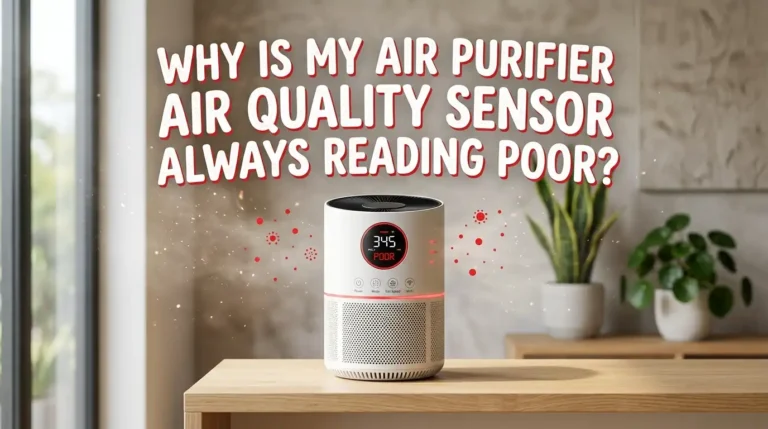
Auto mode sounds smart, but it is usually simple. The purifier checks the air with a small built in sensor. Then it chooses a fan speed based on what that sensor detects. That means the machine only reacts to what it can measure.
Some units mainly track particle levels. These include dust, smoke, and some tiny bits from cooking. Other units can also react to odor or gases, but that depends on the model and the filter setup.
This matters because cooking creates a mixed cloud. You can get steam, oil mist, smell, and gases at the same time. A purifier may react to one part and ignore the rest.
Pros of auto mode: easy use, lower noise, lower power use.
Cons of auto mode: slower response, limited sensor range, weak reaction to some cooking events.
So the first fix is mental. Do not assume auto mode understands everything happening in your kitchen.
Why Cooking Smell Can Fool Auto Mode
A strong food smell does not always mean the purifier will speed up. That surprises many people. The reason is simple. Smell and particles are not the same thing. Your nose can notice odor fast, but your purifier may be waiting for a particle spike.
This is common with simmering sauces, boiled foods, toasted spices, or oven cooking that fills the home with smell but creates less visible smoke. The kitchen feels loaded, yet the sensor does not see enough change to move the fan up.
Gas cooking adds another layer. A gas burner can add gases and combustion byproducts that some basic particle sensors do not track well. So the room can need cleaning even when the display still looks fine.
Pros of trusting smell as a clue: fast human warning, easy to notice.
Cons: your nose cannot measure actual particle level, and it gets used to odors after a while.
If the smell says the air is changing, act before auto mode does.
Check Your Sensor Type Before Anything Else
Before you change settings, find out what your purifier is built to detect. This is one of the most useful steps in the whole process. Look in the manual, app, or support page for words like particle sensor, PM2.5 sensor, odor sensor, VOC sensor, or gas sensor.
A purifier with only a dust or PM sensor may react well to frying smoke but poorly to cooking odor. A model with both particle and odor sensing may handle cooking better, though even those can vary in speed and accuracy.
Some brands also let you choose what triggers auto mode in the app. If that option exists, check it. You may be able to use particles only or particles plus gases.
Pros of checking sensor type: clear answer, better expectations, smarter setup.
Cons: manuals can be vague, and some brands make the feature sound broader than it is.
If you know the sensor type, you can stop guessing and start fixing the real problem.
Clean the Sensor and Air Inlet
A dirty sensor can make a smart purifier act dumb. Kitchen air often carries dust, grease, and tiny residue. Over time, that film can settle near the sensor opening and slow its response. This is a very common reason auto mode stays weak during cooking.
Turn the unit off first. Then check the manual for the sensor location. In many models, the sensor sits near a small side vent or cover. Use a soft brush, dry cloth, or gentle vacuum on the opening if the brand allows it. Do not spray cleaner into the sensor area unless the manual says it is safe.
Also clean the air inlet and outer grill. A blocked intake can reduce airflow and delay detection.
Pros of this fix: cheap, fast, safe, often effective.
Cons: some sensors are hard to reach, and heavy grease buildup may return if the purifier sits too close to the stove.
Do this first before assuming the machine is broken.
Move the Purifier Out of the Wrong Spot
Placement can decide whether auto mode reacts in one minute or fifteen. If the purifier is too far from the kitchen, it may sample clean air while smoke and odor stay near the stove.
If it is tucked behind a chair, under a shelf, or in a corner, airflow can stay weak. The purifier needs access to the real air stream in the room.
At the same time, too close to the stove is also bad. Direct heat, steam, and grease can coat the unit and stress the sensor. The best spot is usually near the kitchen edge or between the kitchen and the main living area, where polluted air passes naturally.
Try a new location for a few days and watch the response.
Pros of a better spot: free fix, better detection, better circulation.
Cons: may look less tidy, may take testing to find the best area.
A small move can create a big change.
Start Manual High Before Cooking Begins
If auto mode reacts late, stop waiting for it. Turn the purifier to a higher fan speed a few minutes before you cook. This simple habit often works better than any sensor tweak. It builds clean airflow early and reduces the peak pollution that collects once oil, food, and heat rise.
This method works well for frying, searing, grilling, roasting, and any meal that usually fills the room with smell. Think of it as preheating your air control, just like preheating a pan.
Leave the purifier on manual high during the main cooking period. Then lower it later if the room clears.
Pros of manual high: fast action, reliable, great for heavy cooking.
Cons: more noise, more power use, less convenient than full automation.
If you cook at the same time most days, this can become easy. Use your purifier like a tool, not a guessing game.
Use Your Range Hood Like a Capture Tool
An air purifier cleans room air after pollution spreads. A range hood tries to catch pollution at the source before it spreads. That is why your hood matters so much. If the purifier is quiet during cooking, the hood should be your first line of defense.
Turn the hood on before food hits the pan. Use the back burners when you can, because the hood often captures those better. If your hood has more than one speed, use a stronger setting for frying, browning, or smoky food. Starting early matters because the first burst of heat and oil can send particles up fast.
Pros of using the hood well: catches pollution early, lowers smell spread, helps both gas and particle control.
Cons: some hoods are loud, some recirculate instead of venting outside, and weak models capture poorly.
A purifier helps after the fact. A hood helps during the fact.
Add Window Venting Without Spreading Smoke
A window can help, but it needs a smart approach. If you open the wrong window or create poor airflow, you may push smoke deeper into the home. The goal is to move polluted air out, not mix it everywhere.
If your kitchen has a window, crack it open while the hood or purifier runs. Try to create a gentle path for air to leave the cooking area. If the home has another nearby opening, test a mild cross flow. Keep it gentle, because a strong draft can blow burner flames or move smoke into other rooms.
Watch what happens to smell and haze over ten to fifteen minutes. Every home has a different airflow pattern.
Pros of window venting: free, effective, useful for odor and heat.
Cons: outdoor air may be dirty, cold, hot, or humid, and airflow can be hard to control.
Use window venting as a helper, not as blind guesswork.
Check the Pre Filter HEPA Filter and Carbon Filter
A purifier may stay slow in auto mode because the inside is struggling. A loaded pre filter cuts airflow. A full carbon layer loses odor control. An old main filter can reduce overall cleaning speed. Even a good sensor cannot fix weak airflow and tired filters.
Start with the pre filter. Remove dust and lint if your model allows cleaning. Then check the filter age and replacement schedule. If cooking smell stays long after the PM reading drops, the carbon section may be spent. That is common in homes with frequent frying, spices, or gas cooking.
Remember this point too. A HEPA style filter helps with particles. Carbon helps with gases and odor. One does not fully replace the other.
Pros of filter maintenance: better airflow, better odor control, more stable performance.
Cons: replacement costs money, and carbon life can be shorter in active kitchens.
Healthy filters help auto mode make better choices.
Make Sure the Purifier Is Big Enough for the Room
Some auto mode problems are really size problems. The purifier may detect pollution, but it still cannot move enough air to make a visible difference fast. Cooking can create a sharp spike in fine particles, and a small machine may get overwhelmed.
This issue is common in open kitchens that connect to a dining room or living room. The purifier may be rated for a bedroom sized space, yet it is trying to clean a much larger zone. That makes response feel slow and weak.
Look at room size guidance and smoke CADR if the brand provides it. For cooking pollution, smoke related airflow matters more than comfort marketing words. A unit that handles dust in a small room may still struggle with dinner in an open plan home.
Pros of proper sizing: faster cleanup, stronger circulation, better real life results.
Cons: larger units cost more, take more space, and can be louder.
The purifier must match the problem.
Cut Smoke at the Pan and Burner
Sometimes the best fix is to make less pollution in the first place. Cooking method changes can lower the burden on both the hood and purifier. Less smoke means less waiting, less odor, and better air by default.
Use medium heat instead of blasting the burner unless the recipe truly needs it. Avoid overheating oil until it smokes. Clean old grease from pans so it does not burn again. Choose lids when possible. If food starts charring, lower the heat fast. Burnt food can send particle levels up very quickly.
For gas stoves, keep flames blue and steady. A weak or uneven flame may signal a burner issue that needs cleaning.
Pros of source control: immediate benefit, lower smell, less filter stress.
Cons: can change cooking speed or texture, and some recipes still need high heat.
Cleaner cooking gives your purifier an easier job.
Reset the Unit and Watch Its Behavior for a Week
Some purifiers use a baseline or learning period. If the unit has been near dust, cleaning spray, or stale air for a long time, auto mode may settle into odd behavior. A reset can help clear bad habits and let you test the machine more fairly.
Check the manual for sensor reset, filter reset, or app calibration steps. If the brand offers firmware updates, install them. Then test the purifier for several cooking sessions. Use the same meal types if possible so your comparison stays fair.
Watch for patterns. Does it react to frying but not boiling? Does it react only after smoke reaches the living room? Those clues tell you whether the issue is the sensor, the placement, or the mode itself.
Pros of reset and tracking: low effort, useful for diagnosis, can restore normal behavior.
Cons: results take time, and some models still behave poorly in auto mode.
Patterns beat guesswork every time.
Know When Auto Mode Is the Wrong Tool
Auto mode sounds convenient, but convenience is not the same as control. In many homes, cooking is a planned event. You know when it starts. You know which meals create smoke. That means you do not need to wait for a sensor to give permission.
If your purifier keeps missing cooking events, use a routine instead. Turn on the hood first. Set the purifier to a higher speed before cooking. Keep it there during the main smoke period. Then let it run for a while after the meal. This simple routine often beats auto mode by a wide margin.
Auto mode still has value for everyday dust and background air changes. But for dinner, manual control is often the smarter choice.
Pros of giving up on auto for cooking: reliable, predictable, fast.
Cons: less hands off, more noise, more user effort.
Sometimes the real fix is using the wrong feature less.
FAQs
Why does my air purifier react to frying but not to soup or baking?
Frying often creates more particles and grease mist, so the sensor sees a bigger change. Soup, simmering, and baking can create strong smell with fewer particles. That means your nose may notice the food before the purifier notices the air. If your unit uses mainly a particle sensor, this behavior is very normal.
A simple fix is to switch to manual high before these lower smoke meals. You can also check whether your purifier supports odor or gas based triggers. If it does not, do not expect auto mode to respond well to every kind of cooking.
Should I keep my air purifier in the kitchen?
Usually, yes, but with care. The purifier should be close enough to sample kitchen air, yet far enough from direct heat, steam, and grease. A spot near the kitchen edge often works better than placing it right beside the stove. Too close can dirty the sensor and filters faster. Too far can delay detection.
If your kitchen opens into the living room, place the unit where polluted air naturally moves after cooking. Then test it for a few meals. A good location can improve both auto mode response and overall air cleaning.
Can an air purifier remove gas stove pollution and cooking odor?
It can help, but results depend on the filter type. A particle filter helps with smoke and fine particles. A carbon filter helps with some odors and gases. One filter type does not fully do the job of the other. That is why some homes still smell like food even after the PM reading drops.
Also, gas removal is harder to rate than particle removal. If gas cooking is a regular part of your home, use the range hood, add ventilation, and treat the purifier as a helper. It is useful, but it should not be your only plan.
How long should I run the purifier after cooking?
A good starting point is twenty to sixty minutes after the meal, depending on how smoky the cooking was and how large the room is. Heavy frying, searing, and burnt food usually need more time. Light boiling or reheating may need less.
Watch what happens in your space. If odor hangs around, the carbon filter may need help or the room may need better venting. If the room clears fast on manual high, keep that setting a bit longer before stepping down. In many homes, the best routine is to start early, run strong during cooking, and keep cleaning after the pan is off the heat.

I’m Maya Brown, the voice behind Pure Breeze Vault. I write detailed, honest, and easy-to-follow air purifier reviews to help readers compare features, understand filter technologies, and choose products with confidence. My goal is to make research simpler, clearer, and more practical for anyone improving indoor air quality at home.