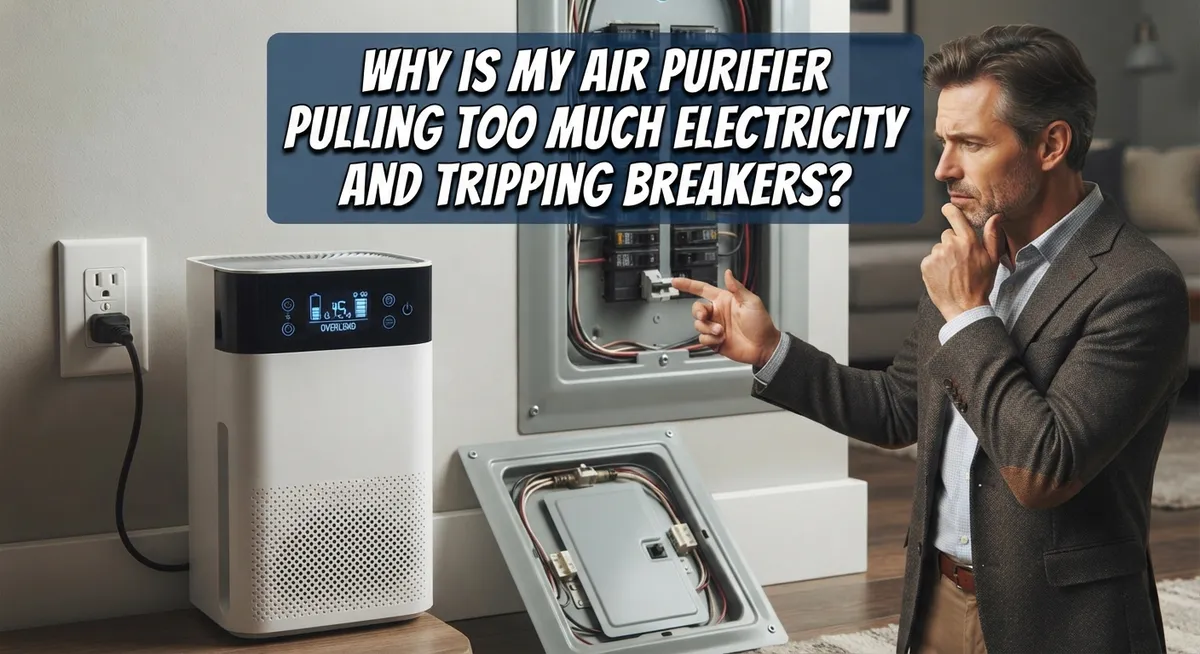
Why Is My Air Purifier Pulling Too Much Electricity And Tripping Breakers?
Does your air purifier trip the breaker every time you turn it on? You are not alone. This is a common problem that leaves many homeowners confused and frustrated.
Your air purifier itself may seem harmless. But it could be pulling more electricity than your circuit can handle.
Circuit overload is often the main culprit. When your purifier shares a circuit with other high draw devices, it can push the total power use too high. This causes the breaker to trip as a safety measure.
Sometimes the issue runs deeper. Loose wiring, a faulty breaker, or an outdated electrical panel can also cause this problem.
In a Nutshell
- Circuit overload is the top reason your air purifier trips a breaker. Too many devices sharing one circuit pull more power than it can handle.
- Loose wiring at the breaker can cause overheating and sudden shutoffs. This often happens with older installations.
- A faulty breaker may trip even under normal loads. Testing it helps confirm if replacement is needed.
- An outdated electrical panel might lack capacity for modern appliances like air purifiers with higher wattage.
- Electrical shorts or ground faults create unsafe conditions and will trip breakers instantly for safety.
- The fix often starts with checking your circuit load and moving devices to different outlets.
- If wiring or breaker issues persist, calling an electrician ensures safety and proper diagnosis.
- Simple solutions include using a heavy duty extension cord from a separate breaker when needed.
Understanding Circuit Overload and Why It Happens
A circuit overload happens when too much electrical current flows through a single breaker at the same time. Your air purifier demands significant power, especially during startup. When you run it alongside other devices on the same circuit, the total load exceeds what the breaker can safely handle.
Think of your electrical circuit like a water pipe. The breaker acts as a safety valve. When water pressure gets too high, the valve shuts off to prevent damage. Your breaker does the same thing with electricity.
Most homes have 15 amp or 20 amp circuits. A typical air purifier uses 5 to 12 amps depending on its size and speed setting. Add a microwave, coffee maker, or space heater to that same circuit, and you instantly exceed the limit. The breaker trips to protect your home from fire hazards and electrical damage.
The problem worsens during peak usage times. Morning routines mean multiple appliances running together. Your air purifier kicks on while someone uses a hair dryer or toaster. The circuit cannot handle all that demand at once.
Location matters too. Older homes often have fewer circuits than modern ones. Kitchens and bathrooms typically share circuits with living areas. You might not realize how many devices connect to the same breaker.
Understanding your circuit layout is the first step. Check which outlets belong to the same breaker by flipping switches at your electrical panel. Turn off one breaker and see which devices stop working. This shows you exactly what shares a circuit with your air purifier.
Once you map out your circuits, you can make smart choices. Avoid running your air purifier with high power devices simultaneously. Spread your appliance usage across different times of day. This simple awareness often prevents most breaker trips without any repairs needed.
Signs Your Breaker Is Tripping Because of the Air Purifier
Your air purifier trips the breaker for specific reasons. Learning to spot these signs helps you fix the problem faster.
The most obvious sign is that your breaker flips off right when you turn on the air purifier. This happens instantly or within seconds of startup. You hear a click at your electrical panel, and the power cuts out completely.
Another common sign is repeated tripping throughout the day. Your breaker trips multiple times even when the air purifier runs on low speed. This suggests the circuit struggles to handle the load consistently rather than failing all at once.
You might notice the breaker trips only when other appliances run simultaneously. For example, the breaker holds fine when just the air purifier operates. But it fails when you use the air purifier plus a heater, microwave, or hair dryer on the same circuit. This is a classic overload indicator.
Warm or hot breaker switches signal trouble too. Feel the breaker handle at your electrical panel. If it feels hot to the touch, excessive current is flowing through it. This heat buildup forces the breaker to trip as a safety measure.
Some breakers trip and then reset themselves without you touching them. This automatic reset suggests an intermittent electrical issue rather than a permanent overload.
Pay attention to whether the breaker trips only in certain weather conditions. High humidity or extreme temperatures sometimes trigger tripping because appliances work harder in these conditions.
Burning smells near the panel or outlet are serious warning signs. Never ignore this. It indicates potential electrical damage or unsafe wiring that needs immediate professional attention.
If you see any of these signs, start by checking which devices share your air purifier’s circuit. Then consider moving the air purifier to a different outlet on a separate breaker. This simple step often solves the problem without any repairs needed.
How to Identify Which Breaker Controls Your Air Purifier
Your electrical panel contains multiple breakers, each controlling different circuits throughout your home. Finding the right one takes just a few minutes and helps you understand what’s causing the trip.
Start by locating your electrical panel. It’s usually in a basement, garage, utility room, or exterior wall. Open the panel door carefully. Inside you’ll see rows of switches labeled with room names or appliance types like “kitchen,” “bedroom,” or “living room.”
Turn off your air purifier first. Then flip each breaker switch to the off position one at a time. After switching each one, go check which outlet stops working. When you find the dead outlet where your air purifier plugs in, you’ve identified the correct breaker.
Write down the breaker number and its amperage. Most residential breakers are either 15 amps or 20 amps. The amperage rating tells you how much current that circuit can safely handle.
Look at what else is on that same circuit. Check other outlets in the same room and nearby rooms. Plug in a lamp or phone charger to test which outlets share the breaker. Many people don’t realize that outlets in different rooms can belong to the same circuit.
This discovery is crucial. If your air purifier shares a breaker with your microwave, toaster, or space heater, you’ve found your problem. These devices draw heavy current simultaneously and overload the circuit.
Take a photo of your panel with the breaker numbers visible. Note which outlets connect to the breaker controlling your air purifier. This information helps you make informed decisions about where to plug devices and whether you need an electrician’s help redistributing your electrical load.
Step-by-Step: Diagnosing Loose Wires and Faulty Breaker Connections
Loose wires and faulty breaker connections are serious electrical issues that require careful attention. These problems can cause your air purifier to trip the breaker repeatedly or pull excessive power.
Start by turning off power to your entire electrical panel. Safety comes first when inspecting electrical connections. Wait a few minutes to ensure all power has dissipated before touching anything.
Next, locate the specific breaker that controls your air purifier. Look at the connection point where the wire attaches to the breaker terminal. You should see a screw that holds the wire firmly in place. Use a screwdriver to gently tighten this screw. Do not over tighten, as this can damage the connection.
Inspect the wire itself for visible damage. Look for frayed insulation, burn marks, or discoloration around the connection point. Any of these signs indicate a serious problem that needs professional help.
Check if the wire feels loose when you gently tug it. A secure connection should not move at all. If the wire shifts easily, the screw definitely needs tightening.
Examine the breaker switch itself for signs of damage. A faulty breaker may have a tripped handle that won’t stay in the on position. It might also feel loose or wobbly in the panel.
If you notice burn marks, melted plastic, or a burning smell near the breaker, stop immediately. Do not attempt any further repairs. Call a licensed electrician right away.
A defective breaker cannot be fixed. It must be replaced by a qualified professional. Attempting to replace it yourself is dangerous and often violates electrical codes.
After tightening connections, turn the power back on slowly. Flip the breaker to the on position and monitor your air purifier for several hours. If tripping continues, the breaker itself is likely faulty and requires professional replacement.
How to Redistribute Electrical Load Across Circuits
Redistributing your electrical load across circuits is one of the most effective ways to stop your air purifier from tripping breakers. This approach moves power consumption to different circuits so no single circuit becomes overloaded.
Start by listing every device on the same circuit as your air purifier. Walk through the room and note your microwave, toaster, space heater, coffee maker, and any other appliances. These items draw large amounts of power. When your air purifier runs at the same time as even one of these devices, the circuit exceeds its safe limit.
Next, identify which other circuits are available in your home. Your electrical panel has multiple breakers, each controlling different areas. Some circuits may have very few devices plugged in. These underused circuits have available capacity.
Move your air purifier to a different outlet that connects to a separate breaker. This requires you to physically relocate the unit or use an extension cord. Check that the new outlet actually connects to a different breaker by flipping switches at your panel and testing which outlets lose power.
If you cannot move the air purifier itself, unplug other high-draw appliances from that circuit. Stop using your microwave and toaster on the same circuit when running your air purifier. Stagger when you use these devices instead of running them simultaneously.
Consider which devices truly need to stay on that circuit. Your refrigerator belongs there, but your hair dryer could move elsewhere. Be strategic about what stays and what goes.
After redistributing your load, monitor your breaker for one week. If it still trips, the problem likely involves loose wires or a faulty breaker itself. At that point, contact a licensed electrician. They can inspect connections and test your breaker safely.
Common Mistakes That Make Breaker Tripping Worse
Many people make mistakes that actually make breaker tripping worse. Understanding these errors helps you avoid them.
Plugging multiple high draw appliances into one circuit is the biggest mistake homeowners make. Your air purifier might pull 500 to 1500 watts by itself. Add a microwave, toaster, or space heater to the same circuit, and you exceed the breaker’s capacity. The breaker trips to protect your wiring from overheating and potential fire hazards.
People often ignore loose wiring connections as a cause. A loose wire creates resistance and heat buildup. This heat can damage the breaker itself or cause it to trip repeatedly even when the circuit isn’t truly overloaded. You might think the breaker is faulty when really the connection just needs tightening.
Assuming the breaker is always the problem leads to wasted time and money. Yes, breakers do fail. But before replacing one, check if your circuit is simply overloaded or if wires are loose. Many people replace perfectly good breakers when they should redistribute their electrical load instead.
Another common error is running extension cords from the same outlet. This doesn’t solve the underlying problem. The extension cord still connects to the same circuit breaker. You’re just adding more devices to an already overloaded line.
Some homeowners also delay calling an electrician when they should act quickly. If you see burn marks on a breaker, smell burning plastic, or notice melted insulation on wires, stop using that circuit immediately. These signs indicate serious electrical problems that need professional attention right away.
The key is recognizing that circuit overload causes most breaker trips. Reduce simultaneous device usage on your air purifier’s circuit. Move appliances to different outlets connected to separate breakers. This simple step solves the problem for most people without needing expensive repairs or replacements.
When an Outdated Panel or Electrical Short Is the Real Problem
Your electrical panel might be the culprit behind your air purifier’s constant breaker trips. Older homes often have panels that simply lack the capacity to handle modern appliances. An outdated panel cannot distribute power efficiently across circuits, forcing breakers to work harder than they should.
Outdated panels typically have limited amperage. Many homes built before the 1980s came with 60 or 100 amp panels. Today’s households need 150 to 200 amps to safely run multiple devices. When your panel cannot supply enough power, breakers trip as a safety measure to prevent fires.
An electrical short or ground fault presents a more serious issue. This occurs when damaged wiring allows electricity to escape where it should not go. The breaker detects this unsafe condition and shuts off power immediately. You might notice a burning smell, scorch marks around outlets, or the breaker tripping even when nothing else runs on that circuit.
Ground faults are dangerous and require immediate attention. A ground fault interrupter (GFI) outlet can help detect these problems in kitchens and bathrooms, but your main panel may need inspection too.
If your home has an outdated panel, you have two main options. The first is to upgrade your entire electrical panel to a newer model with higher capacity. This gives you more circuits and safer power distribution. The second option is to have an electrician install a subpanel in the room where your air purifier sits. A subpanel draws power directly from your main panel and provides dedicated circuits.
Call a licensed electrician if you suspect panel issues. They can inspect your wiring, test for shorts, and determine if an upgrade makes sense. Never attempt panel work yourself, as this involves high voltage and serious safety risks. A professional evaluation costs far less than dealing with an electrical fire.
Final Thoughts
Your air purifier should not trip breakers under normal use. When it does, this signals a real electrical issue that needs attention.
Circuit overload remains the top cause of breaker trips. Too many devices sharing one circuit creates excess demand that the breaker cannot handle safely.
Check your electrical panel first. Identify which breaker controls your air purifier and see what else shares that same circuit.
Redistributing your load solves most problems quickly. Move the air purifier to a different outlet on a separate circuit whenever possible.
Loose wiring connections deserve serious attention too. These connections can worsen over time and create fire risks if left unchecked.
Do not assume every trip means a faulty breaker. Many homeowners waste time and money replacing breakers that work just fine.
Test the breaker properly before deciding it needs replacement. A qualified electrician can perform this test safely and accurately.
Older homes often have outdated panels with limited amperage. These panels struggle to support modern appliances alongside existing devices.
If your panel dates before the 1980s, consider having it inspected. An electrician can tell you if an upgrade makes sense for your home.
Electrical shorts and ground faults need immediate professional help. These issues pose safety risks beyond simple inconvenience.
Never ignore repeated breaker trips as normal behavior. Your home’s electrical system is telling you something needs fixing.
Simple fixes work for simple problems. Circuit overload responds well to redistributing devices across different breakers.
Complex issues require expert eyes. Loose wires, faulty breakers, and panel problems all need professional diagnosis and repair.
Taking action early prevents bigger issues later. Address breaker trips now rather than waiting for equipment damage or fire hazards.
Your air purifier deserves a stable power source. With the right circuit setup, it can run safely without interruption.
Frequently Asked Questions
Why does my air purifier trip the breaker when other appliances work fine?
Your air purifier likely shares a circuit with other devices. When multiple appliances run at once, they draw more power than the circuit can handle. This causes the breaker to trip as a safety measure. Check what else plugs into the same outlet or wall outlet nearby. High draw items like microwaves, hair dryers, or space heaters make this worse.
How do I know if the breaker itself is broken?
A faulty breaker trips repeatedly even when you use fewer devices. Test this by unplugging everything on that circuit except the air purifier. Run it alone for several hours. If it still trips, the breaker may be defective. However, loose wire connections at the breaker can also cause false trips. This requires a professional electrician to inspect safely.
Can I use an extension cord to fix this problem?
Yes, but only if it connects to a different breaker. Run the cord from another room’s outlet controlled by a separate breaker. Never use an extension cord from the same outlet. This just adds more load to an already overloaded circuit. Make sure the extension cord matches your air purifier’s power requirements.
When should I call an electrician?
Contact one immediately if you notice loose wires, burnt smells, or repeated trips despite reduced usage. Electricians can identify ground faults, test breaker function, and check panel capacity. Don’t wait on these issues. They pose fire and shock hazards to your home and family.
What’s the fastest way to stop the tripping?
Unplug other devices from the affected circuit first. Move your air purifier to run during off peak hours when fewer appliances are active. This reduces simultaneous power draw. If trips continue with just the purifier running alone, professional inspection becomes necessary.

I’m Maya Brown, the voice behind Pure Breeze Vault. I write detailed, honest, and easy-to-follow air purifier reviews to help readers compare features, understand filter technologies, and choose products with confidence. My goal is to make research simpler, clearer, and more practical for anyone improving indoor air quality at home.