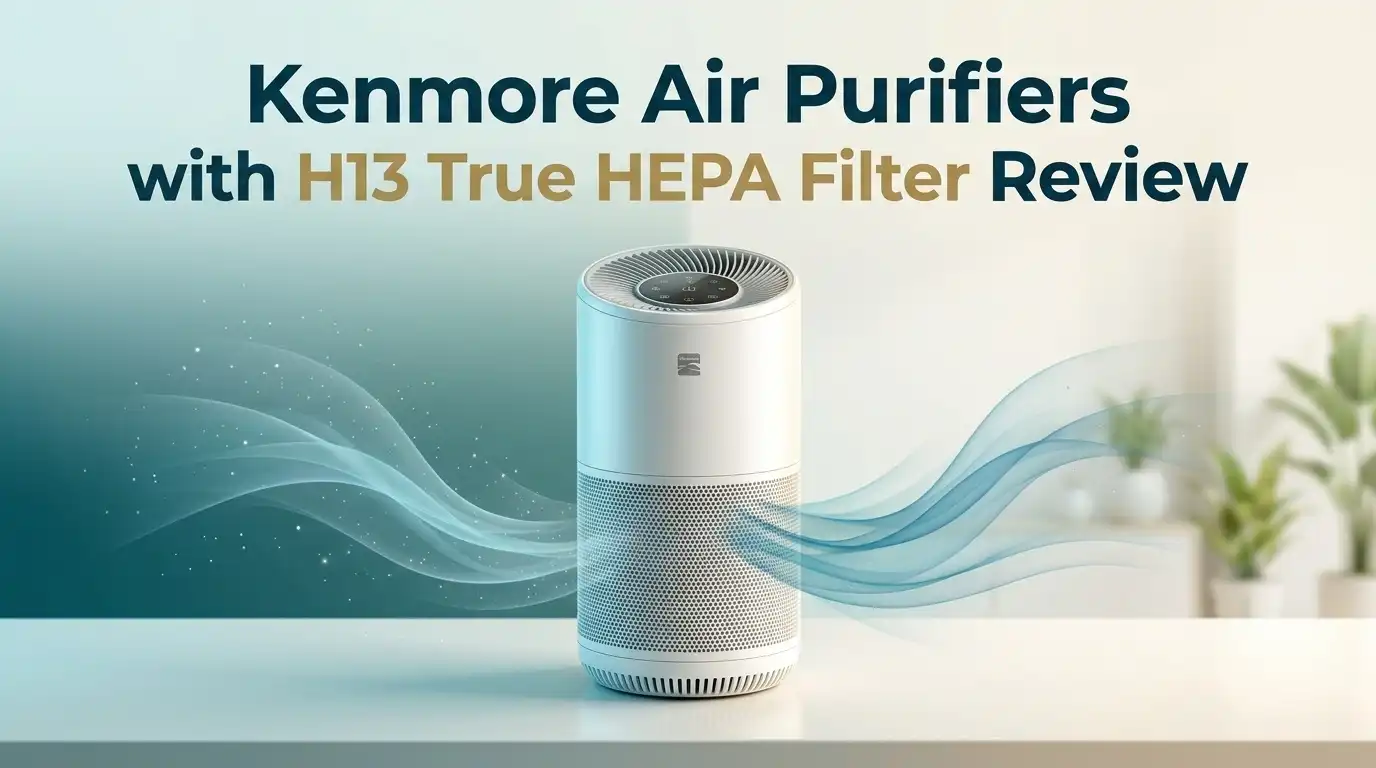
Kenmore Air Purifiers with H13 True HEPA Filter Review 2026
Clean air used to feel like a luxury. Now it feels like a basic need. Dust settles faster. Pollen seasons last longer. Pets shed year round. Cooking smells hang around for hours. Kenmore stepped into this space with a family of air purifiers built around H13 True HEPA filters, and the price tags sit far below premium brands.
But a familiar name on the box does not guarantee clean air. Kenmore no longer builds these units the way it once built washers and dryers. The air purifier line comes from a licensing partnership, and that raises fair questions about build quality, filter cost, and real performance.
I spent time with these machines, read hundreds of owner reports, and compared the specs against the competition. This review covers what works, what disappoints, and whether your money belongs here in 2026.
In a Nutshell:
- Real H13 filtration at a budget price. Kenmore uses genuine H13 True HEPA media that captures 99.97 percent of particles down to 0.3 microns. The filtration grade matches purifiers that cost twice as much.
- Very quiet on low speeds. The SilentClean system runs at roughly 24 dB on the lowest setting. You can sleep next to one and forget it exists. High speed is a different story and gets loud.
- Coverage claims are generous. Kenmore rates models at 348, 850, 1200, 1500, and 2300 square feet. Those numbers assume a single air change per hour, which is weak for allergy sufferers. Cut the claim in half for serious results.
- Filter costs add up. Replacement filters run roughly 30 to 60 dollars and Kenmore recommends swapping them every six months. Budget for this before you buy.
- Published CADR data is thin. Kenmore does not advertise AHAM verified CADR ratings on most models, which makes direct comparison with Coway, Winix, and Levoit harder than it should be.
- Best fit: people who want quiet, affordable HEPA coverage for bedrooms, offices, and living rooms. Poor fit: allergy and asthma sufferers who need maximum air changes per hour.
What H13 True HEPA Filtration Actually Means


Last update on 2026-11-19 / Affiliate links / Images from Amazon Product Advertising API
H13 is a grade, not a marketing word. It sits one step above standard HEPA in the European EN 1822 classification system. An H13 filter traps 99.95 percent or more of particles at the most penetrating size, which lands around 0.3 microns.
That size matters. Particles smaller than 0.3 microns bounce around and get caught easily. Larger particles get trapped by simple impact. The 0.3 micron range is the hardest to capture, so performance there defines the filter.
Kenmore pairs the H13 layer with a pre filter for hair and large dust, plus an activated carbon layer for odors and gases. This three stage setup is the industry standard. The carbon layer in Kenmore units is thin, which limits odor performance over time, but the HEPA layer itself is legitimate.
Kenmore PM1005 850 Series Air Purifier Review
The PM1005 is the model most people meet first. It is a tower shaped desktop unit rated for 850 square feet, and it frequently drops under 100 dollars during sales.
Performance in a medium bedroom is solid. Particle counts drop noticeably within 30 to 45 minutes on medium speed in a 200 square foot room. The touch screen is responsive. A soft night light sits on top, and you can switch it off completely.
Three fan speeds give you less control than the larger models offer. The jump from speed two to speed three is abrupt and noisy. The unit also forgets your settings after a power outage and restarts on default, which annoys owners who run it on a schedule.
For bedrooms and home offices, this is honest value.
Kenmore PM3020 1500e Series Air Purifier Review

Last update on 2026-11-19 / Affiliate links / Images from Amazon Product Advertising API
The PM3020 is the model I recommend to most households. It covers up to roughly 1550 square feet, carries five fan speeds, and adds a digital display with a live particle counter.
That particle sensor changes how you use the machine. You watch the number climb while you sear a steak, then watch it fall. Auto mode responds to the sensor and ramps the fan up without any input from you. It works well and the response time is quick.
The build is plastic but tight. No rattles. No panel gaps. The filter slides out from a rear door in about ten seconds.
Downsides exist. The sensor reads particles only, not VOCs or gases. Speed five produces a strong rush of noise. The display stays bright unless you dim it manually each time.
Top 3 Alternative for Kenmore Air Purifiers

Last update on 2026-11-17 / Affiliate links / Images from Amazon Product Advertising API
Coway Airmega Mighty Air Purifier

Last update on 2026-11-18 / Affiliate links / Images from Amazon Product Advertising API
Levoit Core 300S Smart Air Purifier

Last update on 2026-11-17 / Affiliate links / Images from Amazon Product Advertising API
Winix 5510 True HEPA Air Purifier
The Unboxing Experience
Kenmore keeps packaging simple. The purifier arrives in a plain brown box with molded foam caps on the top and bottom. No plastic clamshells. No excess padding. Recycling the whole thing takes two minutes.
Inside you get the unit, a power cord already attached on most models, a quick start card, and the filter preinstalled behind the rear panel. The filter ships sealed in a plastic bag inside the machine, and you must remove that bag before first use. Skip this step and airflow drops to almost nothing.
The purifier feels lighter than expected. The PM3020 weighs around 12 pounds and carries easily with one hand using the recessed grip on the back.
No tools. No assembly. The only setup task is peeling a protective film off the display panel.
Setup and First Run
Setup takes under five minutes. You unbag the filter, snap the rear panel back into place, plug the unit in, and press power. Kenmore does not require app registration on any model except the PM4030 smart version.
The first run produces a faint plastic smell from the new carbon layer. It fades within a day or two. Run the unit on high for one hour in a ventilated room to speed that up.
Placement matters more than people expect. Keep at least 12 inches of clearance on all sides. Pushing the unit against a wall chokes the rear intake and cuts performance badly.
The control panel is intuitive. Fan speed, timer, auto mode, sleep mode, and filter reset sit in a single row. No manual required.
Noise Levels in Real Use
Kenmore advertises 24 dB on the lowest setting, and that figure holds up. Speed one is genuinely hard to hear from across a room. It produces a soft white noise that many sleepers find pleasant.
Speed two stays comfortable for conversation and television. Speed three is noticeable but tolerable. Speeds four and five on the larger models produce a loud rush that measures closer to 55 dB.
Here is the honest tradeoff. The quiet speeds move very little air. To actually clean a large room quickly, you need speed four or five, and at that point the unit is loud enough to interrupt a phone call.
Most owners settle on auto mode and accept short loud bursts.
Real Performance on Dust, Pollen, and Pet Dander
Dust is where Kenmore shines. Surfaces need wiping less often within the first week of use, and that is the change people notice most.
Pet dander results are strong too. Dander particles are relatively large and the pre filter grabs them before they reach the HEPA layer. Homes with cats report the clearest improvement, especially near litter areas.
Pollen performance depends entirely on sizing. A PM1005 in a 300 square foot bedroom with the door closed will drop pollen counts hard. The same unit in an open 800 square foot living area will struggle.
My advice is simple. Buy the model rated for roughly double your actual room size. Kenmore’s coverage numbers assume one air change per hour, and allergy relief needs four or five.
Smoke and Cooking Odor Control
This is the weakest area. Kenmore uses a thin activated carbon layer bonded to the HEPA media rather than a separate thick carbon block.
Light cooking odors clear well. Fried fish, burnt toast, and garlic disappear within 20 to 30 minutes on high. Heavy odors and tobacco smoke are a different matter.
The carbon saturates within two to three months in a smoking household, and once saturated it stops adsorbing gases entirely. The HEPA layer still catches smoke particles, so visible haze clears, but the smell lingers.
Wildfire smoke performance follows the same pattern. Particulate removal is genuinely good. Gas phase pollutants pass straight through.
If odor control is your main goal, a purifier with a dedicated carbon canister serves you better.
Filter Replacement Cost Over Time
Kenmore recommends replacing filters every six months. Real life varies. Heavy pet homes need swaps closer to four months. Clean single occupant bedrooms stretch to eight.
Genuine replacement filters cost roughly 30 to 60 dollars depending on model. That means 60 to 120 dollars per year per unit. Run three purifiers and the math turns serious.
Third party filters exist on Amazon at lower prices. Quality is inconsistent and some fit poorly, which allows unfiltered air to bypass the media entirely. I stick with genuine filters on this brand.
The pre filter is not washable on most models, unlike Winix and Coway units that let you rinse and reuse that layer. This is a real cost disadvantage over five years of ownership.
Energy Use and Running Costs
Kenmore air purifiers carry Energy Star certification, and the power draw is genuinely low. Most models pull between 5 and 50 watts depending on fan speed.
Running a PM3020 on auto mode for 24 hours a day costs roughly 3 to 6 dollars per month at average United States electricity rates. That is cheaper than most people assume before buying.
Sleep mode drops consumption to near nothing. The display shuts off and the fan drops to minimum.
Electricity is not the expense to worry about here. Filters are. Over a five year period you will spend far more on replacement media than on power, and that holds true for every HEPA purifier on the market.
What Kenmore Does Not Do Well
Honest reviews name the flaws, so here they are.
No published AHAM verified CADR numbers on most models. This is the biggest issue. Without CADR you cannot compare Kenmore fairly against Coway or Winix, and the square footage claims lean optimistic.
The carbon layer is thin and saturates fast. Odor control fades within months.
Settings reset after a power outage. The unit restarts on default speed instead of resuming your choice.
The particle sensor on display models reacts to humidity and sometimes spikes during showers or steam cooking.
Customer service runs through a licensing partner rather than Kenmore itself, and response times get mixed reports.
Finally, the plastic housing feels light. It is not fragile, but it does not feel premium.
Pros and Cons
Pros
- Genuine H13 True HEPA media that captures 99.97 percent of particles at 0.3 microns
- Extremely quiet on low speeds at roughly 24 dB, excellent for bedrooms
- Energy Star certified with very low power draw
- Simple setup with no app or registration required
- Five model sizes covering 348 to 2300 square feet
- Frequent sale pricing that undercuts most major brands
- Fast filter access and tool free replacement
- Auto mode with live particle display on larger models
Cons
- No AHAM verified CADR ratings published for most models
- Coverage claims assume only one air change per hour
- Thin carbon layer fails on heavy odors and tobacco smoke
- Pre filter is not washable, unlike key competitors
- Settings reset after power interruptions
- High fan speeds are loud
- Filter costs of 60 to 120 dollars per year per unit
- Support handled by a licensing partner, not Kenmore directly
Who Should Buy a Kenmore Air Purifier
Kenmore fits a specific buyer well. You want real HEPA filtration, quiet operation, and a fair price. You are managing everyday dust, pet dander, and light seasonal pollen in a bedroom, nursery, office, or living room.
You do not need app control or air quality analytics. You want to plug something in and forget it.
Kenmore is a poor fit if you have severe asthma, live with a smoker, or face regular wildfire smoke. Those situations demand verified CADR numbers and thick carbon filtration.
Multi unit buyers should also pause and run the filter math. Three Kenmore units cost less upfront than three Coway units, but the gap narrows fast across five years of filter purchases.
Kenmore Compared to Coway, Winix, and Levoit
Coway Airmega Mighty remains the performance benchmark. It publishes verified CADR figures, uses a washable pre filter, and delivers more air changes per hour. It also costs more upfront.
Winix offers similar strength with washable carbon filters that last longer than Kenmore’s bonded layer. Winix units include an ionizer that some owners prefer to leave off.
Levoit competes on price and adds genuine app control, voice assistant support, and clear published specs. Levoit filters tend to cost less than Kenmore replacements.
Kenmore wins on sale pricing and on quietness. It loses on transparency. When a brand will not publish CADR, you are buying on trust rather than data, and that is the central weakness of this lineup.
Final Verdict
Kenmore air purifiers deliver real H13 True HEPA filtration at a price that is hard to argue with. The quiet operation is genuine. The build is adequate. Dust and pet dander results satisfy most owners.
I rate the lineup 3.9 out of 5. The PM3020 is the model worth your money because the particle sensor and five speeds give you control the smaller units lack.
Buy one if you want affordable, quiet, everyday air cleaning and you size it generously for your room.
Skip it if you need verified performance data, strong odor control, or relief from severe respiratory symptoms. In those cases, spend more on a Coway or Winix and buy certainty instead of a familiar name.
Frequently Asked Questions
Is Kenmore H13 True HEPA a real HEPA filter?
Yes. H13 is a legitimate filtration grade under the EN 1822 standard. It captures at least 99.95 percent of particles at the most penetrating particle size, and Kenmore advertises 99.97 percent at 0.3 microns. The filter media itself is not the weak point in these units.
How often should I replace a Kenmore air purifier filter?
Kenmore recommends every six months. Homes with pets or heavy cooking should plan on four months. The unit has a filter indicator light, but that light runs on a timer rather than an actual sensor, so judge by smell and visible dust buildup.
Does a Kenmore air purifier remove smoke?
It removes smoke particles well. It removes smoke odor poorly after the first two or three months. The thin carbon layer saturates quickly and cannot be refreshed or washed.
Are Kenmore air purifiers loud?
Not on low or medium. Speed one measures around 24 dB and disappears into background noise. Speeds four and five are clearly audible and interrupt conversation.
Can I use third party replacement filters?
You can, and many cost half the price. Fit quality varies and poor seals let unfiltered air bypass the media. If you try one, check that the frame sits flush with no gaps around the edges.
Which Kenmore air purifier model is best?
The PM3020 1500e series offers the best balance. It adds five fan speeds, a live particle display, and auto mode for a modest price increase over the smaller units. Size up rather than down if your room sits between two model ratings.

I’m Maya Brown, the voice behind Pure Breeze Vault. I write detailed, honest, and easy-to-follow air purifier reviews to help readers compare features, understand filter technologies, and choose products with confidence. My goal is to make research simpler, clearer, and more practical for anyone improving indoor air quality at home.