BlueDri Air Shield 550 HEPA Air Scrubber Review 2026: Worth Buying?
Dusty air can ruin a job and your health. Drywall dust, mold spores, and smoke particles float around long after the work ends. A good air scrubber fixes that problem fast.
The BlueDri Air Shield 550 is one of the best known scrubbers in restoration work. Contractors use it for water damage, mold jobs, and remodels. Many homeowners also buy it for big cleanup projects.
But is it right for you? In this review, we cover the unboxing, the filters, real performance, and the weak spots. Read on before you spend your money.
Key Takeaways
- Strong airflow for its size: The Air Shield 550 moves up to about 550 CFM with a 1/3 HP motor. BlueDri says it covers around 1,400 square feet. It clears dust quickly in most rooms and job sites.
- Three stages of filtration: It uses a pre filter, an optional second stage filter, and a true HEPA filter. The HEPA stage traps 99.97% of particles down to 0.3 microns. This includes dust, mold spores, and smoke particles.
- Built for job sites: The unit weighs about 39 pounds and stacks easily. It has a GFCI outlet for daisy chaining, an hour meter, and a filter change light. These small features save time on busy jobs.
- Not a quiet bedroom purifier: It is loud on high speed. It also lacks smart features, an air quality sensor, and a remote. Buy it for work, not for silent home use.
- Running costs add up: HEPA filters cost money to replace. Heavy jobs clog the pre filters fast. Plan for regular filter spending.
- Good value overall: It usually sells for around $499. That price sits in the middle for a commercial scrubber. Most buyers get solid value for that money.
BlueDri Air Shield 550 HEPA Air Scrubber Overview

Last update on 2026-11-20 / Affiliate links / Images from Amazon Product Advertising API
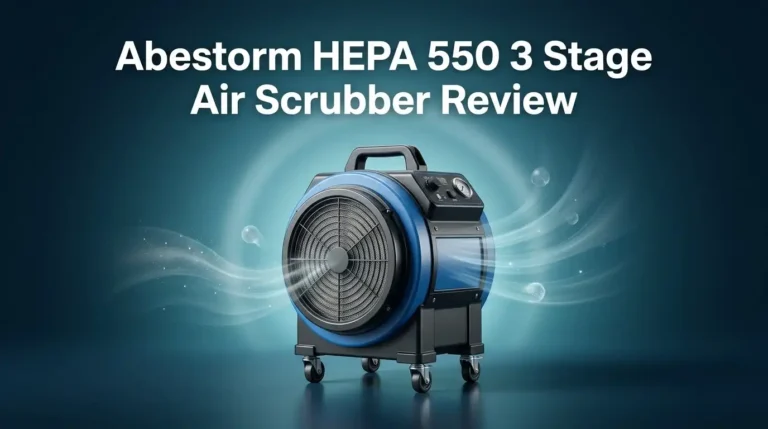
The BlueDri Air Shield 550, also called the AS-550, is a commercial HEPA air scrubber. BlueDri builds it for restoration crews, painters, and builders. It also works well in crawlspaces, attics, and fire damage cleanups.
The machine pulls dirty air through three filter stages. Clean air then leaves through the outlet. You can run it as a normal air cleaner in the room. You can also attach ducting to create negative air pressure in a sealed work zone.
BlueDri claims the unit delivers at least 40% more CFM than leading competitors in its class. That is a bold claim. In real use, the airflow does feel strong for a machine this compact.
You can buy it in blue, green, red, or grey. The color choice helps crews tell their units apart on big jobs.
Unboxing Experience
The box arrives large and heavy. Two people can carry it more easily, but one person can manage it. The unit sits snug inside thick foam pieces. Our unit arrived with no dents or scratches.
Inside the box, you find the scrubber, the installed filters, and an owner’s manual. The pre filter sits at the front of the unit. The HEPA filter sits deeper inside the housing. Check that the HEPA filter sits firmly in place before your first run. Shipping can sometimes shift it.
The plastic shell feels thick and solid. The handles feel comfortable in your hand. The control panel looks simple, with only a few buttons and dials.
First impression: it looks like a tool, not a home gadget. It took about five minutes to unpack and switch on. No assembly was needed.
Key Specifications at a Glance
Here is a simple summary of the main specs. These numbers come from the manufacturer’s details.
The motor is rated at 1/3 HP. Airflow reaches up to about 550 CFM on the highest setting. BlueDri says the unit covers about 1,400 square feet.
The unit weighs about 39 pounds. It measures roughly 24 inches deep, 15 inches wide, and 23 inches tall. The housing is rotomolded plastic, which resists dents and rust.
The filters include a pre filter, an optional second stage filter, and a true HEPA filter. The HEPA filter captures 99.97% of particles at 0.3 microns.
Extra features include variable speed control, an LED filter change light, an hour meter, and a GFCI outlet for daisy chaining. The stackable shape helps with storage and transport.
Top 3 Alternative for BlueDri Air Shield 550
AlorAir CleanShield HEPA 550 Air Scrubber

Last update on 2026-11-22 / Affiliate links / Images from Amazon Product Advertising API
XPOWER X-2830 HEPA Mini Air Scrubber

Last update on 2026-11-22 / Affiliate links / Images from Amazon Product Advertising API
XPOWER X-3580 Commercial Air Scrubber


Last update on 2026-11-22 / Affiliate links / Images from Amazon Product Advertising API
Design and Build Quality
The Air Shield 550 has a tough rotomolded shell. This plastic takes bumps from ladders, tools, and truck beds. It does not rust like metal cabinets can.
The handles are built into the body. They make the unit easy to lift into a van. The flat top and bottom let you stack two or more units without them sliding off.
The unit stands upright or lies flat. This gives you more options in tight spaces like crawlspaces and closets.
The build feels made for years of hard work. The latches on the filter door feel firm. The cord is long enough for most rooms.
One small complaint: the unit has no wheels. At 39 pounds, carrying it up stairs gets tiring. A wheeled cart helps a lot if you move it often.
Three Stage Filtration System
The filtration system is the heart of this scrubber. It uses three stages to catch particles of different sizes.
Stage one is the pre filter. It catches large dust, hair, and debris. This stage protects the more expensive filters behind it. You will replace it often on dirty jobs.
Stage two is optional. You can add a carbon filter here for odors or a second filter for fine dust. Carbon helps with smoke, paint fumes, and musty smells.
Stage three is the HEPA filter. It traps 99.97% of particles at 0.3 microns. This includes mold spores, fine drywall dust, pollen, and smoke particles.
This setup works well for mixed job sites. The pre filter does the hard work up front. That keeps the HEPA filter cleaner for longer and saves you money.
Airflow and Performance
Airflow is where this unit shines. On high speed, it moves air fast. Dust from sanding drywall cleared from a 300 square foot room in noticeably less time than with an open window fan.
The variable speed dial lets you control the airflow. Low speed works for overnight runs. High speed works for active demolition or sanding.
You can also attach flex ducting to the outlet. This lets you push dirty air outside and create negative pressure. Mold remediation crews rely on this feature to stop spores from spreading.
Keep in mind that airflow drops as filters load up with dust. A clogged pre filter can cut performance a lot. Check the filters often to keep the unit running at full power.
Overall, the performance matches the claims for most real jobs.
Noise Level
Let us be honest here. The Air Shield 550 is loud on high speed. It sounds like a strong shop fan running nonstop. You will need to raise your voice to talk near it.
On low speed, the noise drops to a steady hum. Most people can work or rest in the next room without trouble. Low speed is fine for overnight use in a garage or basement.
This is normal for commercial scrubbers. They push a lot of air through dense filters. Silence is not their goal.
If you want a quiet purifier for a bedroom or office, this is not your machine. Home air purifiers are much quieter, but they move far less air.
For job sites, the noise is acceptable. Most crews already work with saws, vacuums, and dehumidifiers running nearby.
Ease of Use and Controls
The controls are simple. You get a power switch, a speed dial, and a few indicator lights. Anyone can learn them in one minute.
The LED filter light tells you when the pre filter needs a change. This removes guesswork. You do not need to open the unit to check the filter every day.
The hour meter tracks total run time. Restoration companies use this to bill clients accurately. Homeowners can use it to plan filter changes.
The filter door opens without tools. Swapping a pre filter takes less than a minute.
Simple controls mean fewer things can break. There is no screen, app, or remote to fail. Some buyers will miss those extras, but most contractors prefer this basic setup.
Daisy Chain and Stackable Design
The GFCI outlet on the unit is a smart feature. You can plug a second machine into the first one. This is called daisy chaining.
Daisy chaining reduces the number of cords running across the floor. It also saves outlets on job sites with limited power. The GFCI protection adds safety in wet areas.
Be careful with total power draw, though. Do not overload a single circuit with too many machines. Read the manual for the safe limits.
The stackable shape also helps. You can stack units in a truck or storage room. Two stacked units take up the floor space of one.
For restoration companies with many machines, these two features save real time and space. For homeowners with one unit, they matter less.
Filter Maintenance and Running Costs
Every air scrubber needs filter care. The Air Shield 550 is no different.
Pre filters are cheap but need frequent changes. On a heavy dust job, you may change them daily. BlueDri sells them in multi packs, which lowers the cost per filter.
HEPA filters cost much more. A replacement HEPA filter can cost a good share of the unit’s price. Third party filters exist and cost less, but quality varies.
The good news is that clean pre filters protect the HEPA filter. If you change pre filters often, your HEPA filter lasts much longer.
Budget for filters before you buy. A cheap scrubber with costly filters is not cheap in the long run. For the Air Shield 550, filter costs are fair for its class.
Who Should Buy It
This scrubber suits several types of buyers.
Restoration professionals will get the most value. Water damage, mold, and fire jobs need strong airflow and HEPA filtration. The hour meter and daisy chain features help on big jobs.
Contractors and remodelers also benefit. Drywall sanding, demolition, and painting create a lot of fine dust. The scrubber keeps the air cleaner for workers and clients.
DIY homeowners can use it for big projects. Think basement remodels, attic cleanups, or post fire smoke cleanup. It works well for short term heavy jobs.
Woodworkers can run it in a home shop. It catches fine sawdust that dust collectors miss.
People who want a quiet, smart bedroom purifier should look elsewhere.
What It Does Not Do Well
No product is perfect. Here is what the Air Shield 550 does not do well.
It is noisy. High speed is too loud for living spaces where people need quiet.
It has no air quality sensor. You cannot see real time particle levels. Some competitors, like the XPOWER X-2830, include a PM2.5 sensor.
It has no wheels. Moving it between floors gets tiring, especially on long jobs.
HEPA filters are expensive. Long term costs add up for heavy users.
The 40% more CFM claim is hard to verify. Airflow drops as filters load, so real numbers vary.
It also has no smart controls, timer, or remote. For pros, that is fine. For home users who want convenience, it may feel too basic.
Pros and Cons
Pros
- Strong airflow of up to about 550 CFM clears dust quickly in rooms up to about 1,400 square feet.
- Three stage filtration with a true HEPA filter captures 99.97% of particles at 0.3 microns.
- Tough rotomolded housing resists dents, rust, and job site abuse.
- Stackable design saves space in trucks and storage areas.
- GFCI outlet allows safe daisy chaining of multiple units.
- Hour meter and filter light make tracking and maintenance simple.
- Ducting option supports negative air setups for mold and containment work.
Cons
- Loud on high speed, so it is not suited for bedrooms or offices.
- No wheels, which makes moving the 39 pound unit tiring.
- No air quality sensor or smart controls.
- Replacement HEPA filters are costly for heavy users.
- Airflow drops noticeably when the pre filter gets dirty.
Final Verdict
The BlueDri Air Shield 550 is a strong, reliable air scrubber for real work. It moves a lot of air, filters it well, and survives rough job sites.
Its best features are the HEPA filtration, the stackable body, and the daisy chain outlet. These make it a favorite among restoration crews. The simple controls also mean less can go wrong.
It does have weak spots. It is loud, it has no wheels, and filter costs add up. It also lacks the sensors that some newer competitors offer.
So, is it worth buying? Yes, if you need a work machine. For contractors, restoration pros, and serious DIY users, it offers great value at around $499. If you want a quiet home purifier, choose a smaller residential model instead.
Frequently Asked Questions
How much area does the BlueDri Air Shield 550 cover?
BlueDri says the unit covers about 1,400 square feet. Real coverage depends on ceiling height, dust levels, and filter condition. For heavy dust jobs, use it in smaller zones for faster results.
Can I use the Air Shield 550 for mold remediation?
Yes. The HEPA filter traps mold spores. You can also attach ducting to create negative air pressure. This keeps spores from spreading into clean areas during remediation.
How often should I change the pre filter?
It depends on the job. On heavy dust jobs, you may change it daily. In lighter use, it can last much longer. The LED filter light tells you when it needs a change.
Is the BlueDri Air Shield 550 good for home use?
It works well for big home projects like remodels and smoke cleanup. It is too loud for daily use in bedrooms or living rooms. A residential purifier suits quiet everyday use better.
Can I run the Air Shield 550 all day?
Yes. It is built for long run times on job sites. The hour meter tracks total use. Keep the filters clean so the motor does not have to strain.
Does the Air Shield 550 remove odors?
The standard setup focuses on particles. To reduce odors, add a carbon filter in the second stage. Carbon helps with smoke, paint fumes, and musty smells.
Can I daisy chain two units together?
Yes. The built in GFCI outlet lets you plug a second unit into the first. Always check your circuit’s power limits and follow the manual to avoid overloading.

I’m Maya Brown, the voice behind Pure Breeze Vault. I write detailed, honest, and easy-to-follow air purifier reviews to help readers compare features, understand filter technologies, and choose products with confidence. My goal is to make research simpler, clearer, and more practical for anyone improving indoor air quality at home.