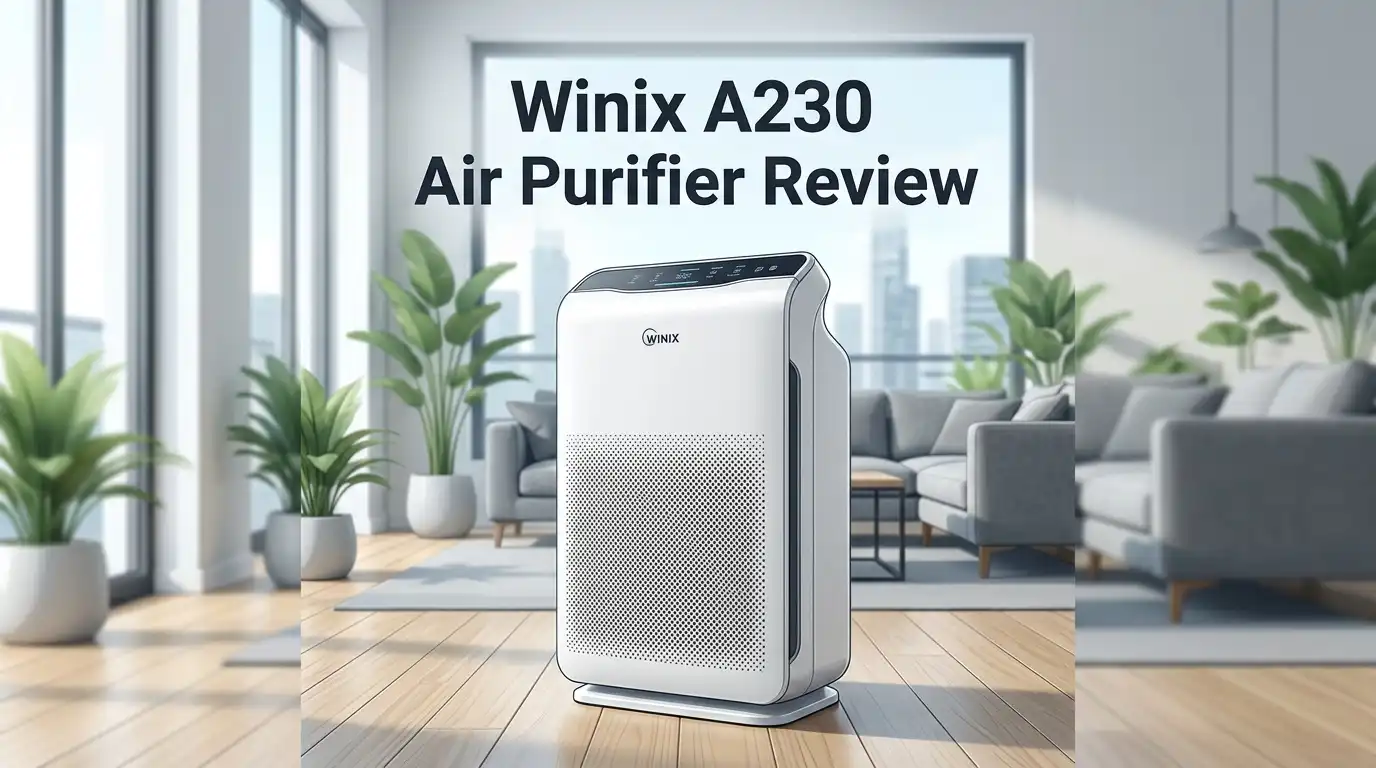
Winix A230 Air Purifier Review 2026: Still Worth Buying?
Clean air inside your home should not cost a fortune. Yet most compact purifiers either underperform or hide weak filters behind pretty shells. The Winix A230 takes a different route. It packs a true HEPA filter, a real air quality sensor, and PlasmaWave technology into a cylinder smaller than a desk lamp.
I bought one, ran it in a bedroom for weeks, and tracked how it behaved on quiet nights and dusty afternoons.
This review shares what the A230 does brilliantly, where it stumbles, and whether the 2026 price tag still makes sense. No fluff. Just honest observations, test data from independent labs, and the annoyances nobody mentions in product listings.
In a Nutshell:
- Particle removal is excellent. Independent lab testing showed a 95% air quality improvement inside a 194 sq. ft. room in sixty minutes. In a larger 320 sq. ft. room, it still hit 92%. That beats several pricier rivals in the same size class.
- Coverage suits small spaces. The CADR rating sits at 147 CFM for smoke, 149 for dust, and 154 for pollen. Winix rates it for 230 sq. ft. at 4.8 air changes per hour, or roughly 1110 sq. ft. with a single hourly air change.
- Odor control disappoints. The carbon layer is a fiber sheet coated with carbon, not carbon pellets. Cooking smells and smoke linger longer than you want. This is the single biggest weakness.
- Quiet on sleep mode, loud on high. Sleep mode measured about 40 dBA, which is gentle background noise. Maximum speed measured 66.5 dBA, making it one of the loudest compact units at full tilt.
- Running costs are average, not low. It draws 40.6W on high, which works out near $3.56 per month if you run it nonstop. The upside is a filter lasting up to twelve months.
- No app, no remote. You control everything with touch buttons on top. For some buyers that simplicity is a feature. For others it feels dated in 2026.
Why the Winix A230 Still Gets Attention in 2026


Last update on 2026-11-17 / Affiliate links / Images from Amazon Product Advertising API
Winix built its reputation on midsize units like the 5500 series. The A230 was the brand’s first serious attempt at a small, affordable purifier, and it landed well. Years after launch, it keeps appearing in recommendation lists.
The reason is simple. Most budget purifiers in this bracket skip sensors entirely. You press a button and hope. The A230 includes a real sensor, auto mode, and a light sensor, features usually reserved for units costing twice as much.
Pricing helps too. It hovers near the $80 to $100 mark, often dipping lower during sales. That puts it right beside the Levoit Core 300S, its closest rival.
Strong filtration plus smart automation at a low price explains the staying power. Shoppers want fewer decisions, and this unit makes most of them for you.
Winix A230 Air Purifier
The A230 is a cylindrical tower measuring 9.5 x 9.5 x 14.6 inches and weighing 6.75 lbs. Air enters through openings around the entire base, passes through the filter stack, then exits upward from grilles on top.
Four filtration stages handle the work. A nylon mesh pre filter grabs hair and large dust. A true HEPA layer captures 99.97% of particles down to 0.3 microns. An activated carbon sheet targets odors. PlasmaWave forms the optional fourth stage.
You get four fan settings: sleep, low, medium, and high. Auto mode adjusts speed based on sensor readings. The ring around the control panel glows blue, orange, or red to show current air quality.
Winix backs the unit with a two year warranty, which is generous for this price bracket. Filters last roughly twelve months before replacement.
Unboxing Experience: What Actually Arrives
The box is compact and surprisingly light. Mine arrived with minimal packaging waste, which I appreciated. Inside you find the purifier wrapped in a thin fabric sleeve, a printed user manual, and nothing else.
No remote. No spare filter. No fancy accessories. The simplicity feels intentional rather than cheap.
The filter ships preinstalled, but it sits inside plastic wrap. You must open the bottom cover, slide the filter out, strip the plastic, then reinsert it. Skip this step and airflow drops to almost nothing. Plenty of frustrated reviews online trace back to exactly this mistake.
Lifting the unit out revealed solid plastic with no flex or creaking. The top panel has a matte finish that resists fingerprints better than glossy rivals.
Total setup time was under three minutes. That is genuinely refreshing.
Top 3 Alternative for Winix A230
Levoit Core 300S

Last update on 2026-11-18 / Affiliate links / Images from Amazon Product Advertising API
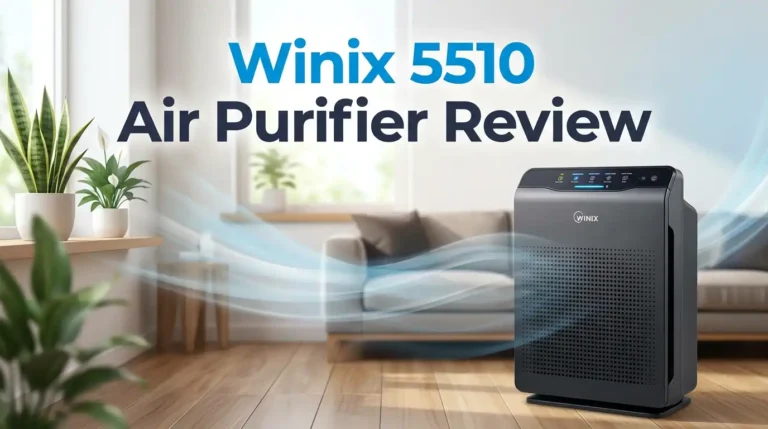
Winix 5510

Last update on 2026-11-17 / Affiliate links / Images from Amazon Product Advertising API
Levoit Core 200S

Last update on 2026-11-17 / Affiliate links / Images from Amazon Product Advertising API
Design and Build Quality
The cylinder shape is not original. Dozens of compact purifiers share it. Winix wisely focused on execution instead of novelty.
Build quality is the standout. The plastic feels thick and dense, panels align tightly, and the bottom cover clicks shut with confidence. It does not have that hollow, toy like quality found on cheaper units.
Two colors exist: black and white. The black version hides dust poorly but looks sharp in modern rooms. White blends into most bedrooms.
My main gripe is the missing carry handle. At 6.75 lbs you can move it one handed, but you end up gripping the top grille, which feels awkward.
The sensor sits at the back. Keep at least 12 inches of clearance around the unit or airflow suffers noticeably. That spacing requirement limits placement in tight corners.
Cleaning Performance: The Numbers That Matter
This is where the A230 earns its reputation. Independent testing with a laser particle meter produced genuinely impressive results.
In a 194 sq. ft. room, PM2.5 levels dropped from 105.6 to 5.5 µg/m³ in one hour on maximum speed. AQI fell from 138 to 7. That represents a 95% improvement.
Pushed into a 320 sq. ft. room, larger than its official rating, it still delivered a 92% improvement. PM2.5 went from 101.7 to 8.1 µg/m³.
For comparison, the Levoit Core 300S managed 94% in the same smaller room test. Several other compact units landed in the low 80s.
Dust, pollen, pet dander, and fine smoke particles are handled well. In my own bedroom, visible dust accumulation on surfaces dropped within the first week.
Noise Levels: Can You Sleep Beside It?
Winix advertises a 25 dB minimum. Real measurements tell a different story.
Sleep mode measured around 40.2 dBA, which is quiet but not silent. The sound quality matters more than the number though. The A230 produces smooth white noise rather than a whiny whir, so it fades into the background easily.
Low speed hit 48.2 dBA. Medium reached 54.3 dBA.
High speed is the problem. At 66.5 dBA it becomes genuinely loud, louder than most competing compact units at full power. Some rivals run more than 10 dBA quieter on their top setting.
My honest advice: run it on high for thirty minutes before bed, then switch to sleep mode. You get the cleaning benefit without the noise penalty. Sleep mode also dims all indicator lights, which bedroom users will appreciate.
Filter System Explained
The filter is a single cylindrical cartridge sitting in the lower housing. Three layers combine into one replaceable unit.
Pre filter: A nylon mesh bonded to the HEPA layer. It traps pet hair and chunky dust. Vacuum it every two weeks to keep airflow strong.
True HEPA: The workhorse. It captures 99.97% of airborne particles at 0.3 microns, covering pollen, dust mite debris, mold spores, smoke particles, and pet dander.
Activated carbon: This is the weak link. It is a fibrous sheet coated with carbon rather than loose pellets. Less carbon means less odor absorption capacity.
Replacement filters are affordable and widely available, which keeps long term ownership reasonable. Always buy genuine Winix filters. Third party versions often use thinner media and reduce performance measurably.
PlasmaWave Technology: Useful or Marketing?
PlasmaWave is Winix’s signature feature, and it generates debate.
The technology creates a brief electrical discharge producing positive and negative ions. Those ions attach to airborne pollutants and break them into water vapor and carbon dioxide.
Does it help? Modestly. The HEPA filter does the heavy lifting. PlasmaWave adds a small assist with gases and odors.
The real question is ozone. PlasmaWave releases trace ozone as a byproduct. The A230 holds CARB certification, meaning output stays below California’s legal threshold.
Still, anyone with asthma or sensitive lungs should know this. The feature turns on automatically at startup, but one button press disables it. It also shuts off automatically in sleep mode.
My recommendation: leave it off unless you are fighting specific odors. Filtration performance barely changes.
Smart Sensors and Auto Mode
The air quality sensor sits at the rear and runs constantly, even in standby. That is unusual and genuinely useful.
Readings feed into the glowing ring around the control panel. Blue means good air, orange means fair, red means poor. A quick glance tells you everything.
Auto mode uses those readings to adjust fan speed without input. Good air triggers low speed. Fair air brings medium. Poor air jumps to high.
One limitation deserves mention. The sensor detects odors and gases rather than particle counts. So frying bacon spikes the reading while fine dust may not.
The sensor also needs about four minutes after startup before readings stabilize.
The light sensor is a nice touch. When your room goes dark, the unit shifts to sleep mode automatically. Set it once and forget it.
Power Use and Running Costs
Here the A230 underwhelms. Winix fitted a 55W motor, which is large for a compact purifier.
Measured consumption breaks down like this. Standby draws 0.3W. Sleep mode uses 9.9W. Low speed jumps to 29.2W. Medium hits 31.3W. High reaches 40.6W.
Running it nonstop on maximum speed for a month costs roughly $3.56 at 12 cents per kWh. That is higher than nearly every comparable small purifier.
The power to CADR ratio could clearly be better. Rivals deliver similar cleaning with less electricity.
Filters balance the equation somewhat. One filter lasting twelve months at a modest price keeps total yearly ownership cost reasonable. Most buyers spend more on filters than electricity anyway.
Practical tip: running sleep or low mode most of the day cuts costs sharply while still maintaining clean air.
Filter Replacement and Maintenance
Nothing here is washable or permanent. You replace the cartridge roughly once a year.
A filter reset indicator lights up when replacement time arrives. Do not ignore it. A clogged filter strains the motor and reduces airflow.
Replacement takes under two minutes. Flip the unit, twist off the bottom cover, pull the old filter, drop the new one in, close the cover, then hold the reset button.
The pre filter needs attention more often. Vacuum the mesh every two weeks, especially in homes with pets. Skipping this step is the fastest way to lose performance.
One real world note: filter life depends heavily on your environment. In a dusty home with two cats, mine showed noticeable loading at the eight month mark. Clean households should reach the full twelve months comfortably.
What the Winix A230 Does Not Do Well
Honest reviews name the flaws. Here are mine after extended use.
Odor removal fades fast. This bothered me most. The carbon sheet handled kitchen smells acceptably during the first weeks, then weakened noticeably. Heavy cooking odors, cigarette smoke, and litter box smells need a purifier with real carbon pellets. The larger Winix 5510 performs far better here.
High speed is loud. At 66.5 dBA you cannot hold a comfortable conversation beside it.
No app or remote. Every adjustment requires walking to the unit and touching the panel. In 2026 that feels like a miss, especially since the sensor already collects useful data.
Power hungry for its size. A 55W motor in a small purifier is hard to justify.
No carry handle. Minor, but noticeable when moving it between rooms.
Pros and Cons of the Winix A230
Pros
- Outstanding particle removal, hitting 95% air quality improvement in one hour of testing
- True HEPA filtration capturing 99.97% of particles at 0.3 microns
- Real air quality sensor that runs continuously, even in standby
- Auto mode and light sensor automate daily operation
- Sleep mode is quiet and produces smooth, nonintrusive white noise
- Excellent build quality with thick, solid plastic
- Filter lasts up to twelve months and costs little to replace
- Two year warranty beats most competitors in this price range
- CARB certified, so PlasmaWave stays within legal ozone limits
- Compact footprint fits nightstands, desks, and shelves easily
Cons
- Odor and VOC performance is weak because the carbon layer is fiber based
- Very loud at maximum speed, measured at 66.5 dBA
- No smartphone app and no remote control
- Consumes 40.6W on high, more than similar sized rivals
- No carry handle for moving between rooms
- Sensor reads odors rather than particle levels
- Needs 12 inches of clearance, limiting placement options
Who Should Buy the Winix A230?
This purifier suits specific people very well.
Buy it if you need clean air in a bedroom, nursery, dorm room, home office, or small living space up to roughly 230 sq. ft. Allergy sufferers dealing with pollen, dust, and pet dander will notice real improvement.
It also fits anyone who wants automation without app setup. The sensor and auto mode handle everything quietly.
Skip it if odors are your main concern. Kitchen smells, smoke, and strong VOCs demand heavier carbon filtration. Look at larger Winix models instead.
Also skip it if you want app control, scheduling, or voice commands.
Light sleepers should still consider it. Sleep mode is genuinely usable as long as you avoid high speed overnight.
Final Verdict
The Winix A230 earns a strong recommendation with one clear caveat.
As a particle removal machine it is outstanding, beating most rivals in its size and price class. Build quality is excellent. The sensor and auto mode add real convenience. A twelve month filter and two year warranty make ownership easy.
The odor weakness is real though. If smells drive your purchase, this is not your unit.
Power draw and maximum noise are the other compromises. Neither is a dealbreaker, but both deserve mention.
At its typical price, the A230 delivers more filtration performance per dollar than almost anything comparable. I still run mine daily, and my bedroom air is measurably cleaner.
Verdict: a smart buy for dust, allergies, and small rooms. A poor buy for odor control.
Frequently Asked Questions
Is the Winix A230 the same as the A231?
Yes, essentially. The A230 and A231 share identical internals and performance. The main difference is color and regional availability. The A230 typically ships in black. In Europe the same unit sells as the Winix Zero Compact.
Does the Winix A230 produce ozone?
PlasmaWave releases a trace amount of ozone as a byproduct. The A230 holds CARB certification, meaning output stays below permitted levels. You can disable PlasmaWave with one button press if you prefer zero ozone output.
How often should I replace the Winix A230 filter?
Roughly once every twelve months under normal conditions. The filter reset indicator lights up when replacement time arrives. Homes with pets or heavy dust may need replacement closer to the eight or nine month mark.
Can the Winix A230 handle a large living room?
Not really. It is rated for 230 sq. ft. at 4.8 air changes per hour. Testing showed it still performed well in a 320 sq. ft. room, but anything larger needs a bigger unit.
Is the Winix A230 loud at night?
Sleep mode measures around 40 dBA and produces smooth white noise, so most people sleep through it easily. Avoid high speed overnight, since that setting reaches 66.5 dBA.
Does the Winix A230 have an app?
No. There is no smartphone app, no WiFi, and no remote control. All controls sit on the touch panel at the top of the unit. Auto mode and the light sensor handle most adjustments automatically.
Does the Winix A230 help with pet odors?
Only partially. It captures pet dander and hair very effectively, but the fiber based carbon layer struggles with strong pet smells. A purifier with carbon pellets works better for odor control.

I’m Maya Brown, the voice behind Pure Breeze Vault. I write detailed, honest, and easy-to-follow air purifier reviews to help readers compare features, understand filter technologies, and choose products with confidence. My goal is to make research simpler, clearer, and more practical for anyone improving indoor air quality at home.