Shark Air Purifier Max Review 2026: Worth It?
Air quality shapes how you sleep, breathe, and feel at home. Most people only notice the problem when dust settles on furniture or pet odors linger in the living room.
The Shark Air Purifier MAX promises a fix for under two hundred dollars. It covers large rooms, shows your air quality on a screen, and runs quietly enough to forget it exists.
This review covers the unboxing, the filtration, the noise, the running costs, and the parts Shark would rather you skip. By the end, you will know if this purifier belongs in your home or if your money belongs elsewhere.
In a Nutshell:
- Coverage is generous but measured loosely. Shark rates the HP202 for 1200 square feet, and that number assumes just one air change per hour. For allergy relief, experts suggest four or five air changes hourly, which drops practical coverage closer to 250 to 300 square feet.
- Filtration quality is genuinely strong. The NanoSeal HEPA system captures 99.98% of particles in the 0.1 to 0.2 micron range, which exceeds standard HEPA requirements. Dust, dander, pollen, and smoke all get trapped effectively.
- Noise performance is a highlight. On speeds one and two, the unit is nearly silent. Even at maximum, the sound stays low and smooth rather than sharp and whiny.
- Clean Sense IQ is useful but optimistic. The display shows live air quality readings and adjusts fan speed automatically. It also loves to report “Clean Air 100%” within minutes, which feels generous.
- No app, no smart control. This model has zero WiFi connectivity. If you want phone control or scheduling, look at other brands.
- Filter costs add up. Replacement filters run around seventy dollars and need changing roughly every twelve months.
Shark Air Purifier MAX HP202


Last update on 2026-11-17 / Affiliate links / Images from Amazon Product Advertising API
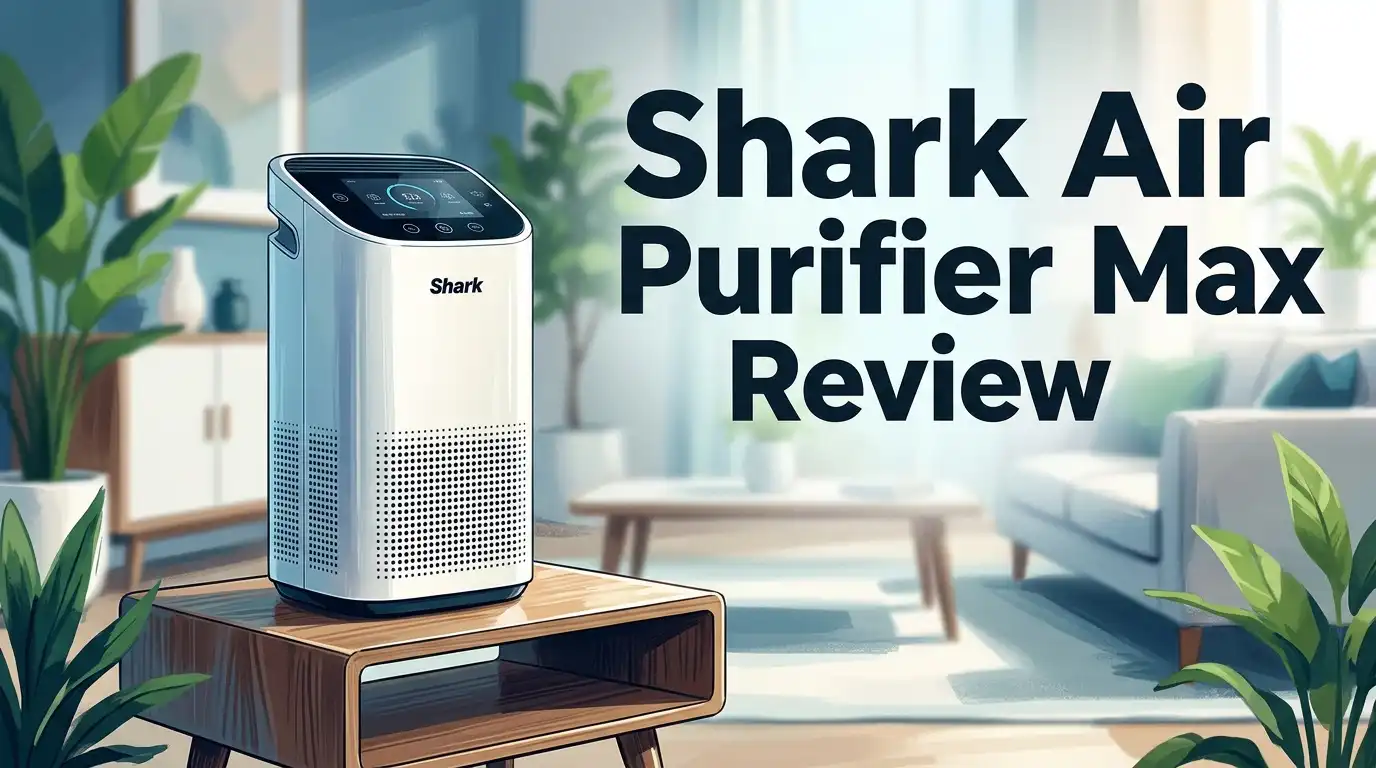
The Shark Air Purifier MAX HP202 is a tower style purifier standing just over 24 inches tall with a 12.6 inch square footprint. It weighs about 10.5 pounds, which makes it easy to carry between rooms. Shark built it around what they call Pure Air MicroForce, a fan and airflow design meant to push clean air farther across a room.
The unit uses a three stage filtration system: a mesh pre filter for hair and large debris, a NanoSeal HEPA filter for fine particles, and an activated carbon layer for odors. Four fan speeds give you control, and the Clean Sense IQ sensor handles automatic adjustments.
It retails between $169 and $199 depending on the retailer, and frequent sales push it lower. That price positions it right against the Levoit and Coway heavyweights, which is a tough neighborhood.
The Unboxing Experience
Shark keeps packaging simple. The box arrived with the purifier wrapped in a thin fabric sleeve, cradled by two molded cardboard end caps. No plastic clamshells, no foam peanuts, no mess. I appreciated that.
Inside you get the purifier, the pre installed NanoSeal HEPA filter, and a short quick start guide. That is it. No remote, no extra filter, no cleaning brush. The filter ships already seated in the base, but it still has a plastic wrapper on it, and the guide tells you clearly to remove that wrapper first.
Setup took me four minutes. You twist off the bottom cover, pull the filter, strip the plastic, reseat the filter, lock the cover, and plug in. The unit beeps once and lights up. Nothing about the process felt confusing, which is more than I can say for some competitors.
Design and Build Quality
The HP202 looks clean rather than exciting. The body is matte plastic in charcoal grey or black, with a mesh intake grille wrapping most of the lower section. Air exits through the top. There are no visible seams that rattle and no flex when you press the sides.
The top panel holds a small circular display and touch controls. The display shows a numeric air quality percentage, the active fan speed, and filter status. Buttons respond immediately, with a soft beep you can mute.
Build quality feels solid for the price, though it clearly is not premium. The plastic sounds hollow when tapped. There is no handle, so carrying it means hugging the body. The 72 inch cord is a genuinely nice touch and gives you real flexibility with outlet placement. No wheels, no carry grip, no cord wrap.
Top 3 Alternative for Shark Air Purifier MAX

Last update on 2026-11-11 / Affiliate links / Images from Amazon Product Advertising API
Levoit Core 400S Smart Air Purifier

Last update on 2026-11-17 / Affiliate links / Images from Amazon Product Advertising API
Coway Airmega AP-1512HH Mighty Air Purifier

Last update on 2026-11-17 / Affiliate links / Images from Amazon Product Advertising API
Winix 5510 True HEPA Air Purifier
Filtration System Explained
The three layers each do a specific job. The washable mesh pre filter catches pet hair, lint, and dust clumps before they reach the expensive filter. You rinse it under a tap every month or so.
The NanoSeal HEPA layer is the core of the system. Shark seals the filter edges so air cannot sneak around the pleats, which is a real weakness in cheaper purifiers. Testing to the IEST RP CC007 standard shows 99.98% capture at 0.1 to 0.2 microns. That range matters because it includes virus carrying droplets, smoke particles, and the finest dust.
The activated carbon layer handles odors and volatile organic compounds. It works well on cooking smells and pet odors. It struggles with heavy smoke smell, and the carbon loses effectiveness faster than the HEPA media does. Shark also offers a pet specific filter upgrade with extra carbon.
Clean Sense IQ and Automatic Mode
Clean Sense IQ uses a particle sensor to read PM 1.0 through PM 10 levels, then displays a percentage and adjusts the fan accordingly. In practice, the sensor reacts quickly. I lit a candle across the room and the reading dropped within fifteen seconds while the fan jumped to full speed.
The problem is the ceiling. The display reports “Clean Air 100%” whenever particle levels fall below the sensor detection limit, not when the air is actually pollutant free. Shark says this plainly in the fine print. Many owners read 100% all day and assume perfection.
Auto mode is still the setting I recommend for daily use. It keeps the unit on speed one most of the time and only ramps up when something changes. Energy use stays low and noise stays invisible. Just treat the percentage as a trend, not a lab measurement.
Real World Cleaning Performance
In my 400 square foot living room, the HP202 brought visible dust down noticeably within the first week. Surfaces needed wiping less often. Morning allergy symptoms improved in the bedroom test, though I want to be honest that this is subjective.
Measured against competitors, the HP202 clears a room slower. Independent testing shows its particle removal rate trails units like the Levoit Core 400S and the Coway Mighty at comparable speeds. It gets the job done, just with more time on the clock.
For a bedroom under 300 square feet, performance is excellent. For a large open plan space, I would run it on speed three continuously rather than trusting auto mode. The 1200 square foot rating is a marketing figure based on a single air change per hour. Treat 300 square feet as the realistic comfort zone.
Noise Levels and Sleep Use
This is where the Shark earns real praise. On speed one, I measured roughly 32 decibels at three feet, which is quieter than most refrigerators. Speed two sits around 40 decibels. Speed four reaches the mid fifties, loud enough to notice but still smooth.
The sound profile matters as much as the volume. The HP202 produces low frequency white noise rather than a high pitched whine. That tone disappears into the background easily. I slept next to it without a single disturbance.
The display dims automatically in low light, and you can turn the lights off entirely. Button beeps can be silenced. For light sleepers, this purifier is one of the better options at its price. My only complaint is that auto mode occasionally ramps up at night, which briefly changes the sound level.
Energy Use and Running Costs
The HP202 draws 36 watts in normal operation and peaks at 54 watts. Running it on auto mode roughly twelve hours daily costs about two dollars monthly at average United States electricity rates. Running it continuously on high pushes that closer to five dollars monthly.
Filters are the real expense. The standard NanoSeal replacement costs around $69.99, and the pet version runs $79.99. Shark recommends annual replacement, though heavy use with pets shortens that to eight or nine months.
Over five years, filters alone could cost you $350 or more. That figure explains exactly why Shark launched the NeverChange line. Factor filter costs into your decision rather than looking only at the sticker price. The purifier is cheap. Owning it is not especially cheap.
What the Shark Air Purifier MAX Does Not Do Well
Honest reviews name the flaws, so here they are. There is no WiFi, no app, and no voice assistant support. In 2026, that omission stings at this price. You cannot schedule it, monitor it remotely, or check filter life from your phone.
The coverage claim is misleading. Shark’s 1200 square foot number uses one air change per hour, which is far below what allergy sufferers need. Buyers expecting whole home coverage will be disappointed.
Cleaning speed trails the competition. If fast smoke or odor clearing is your priority, other units do it better for similar money.
Customer ratings reflect some of this. The HP202 sits near 3.1 out of 5 on Shark’s own site, with complaints about sensor accuracy, filter cost, and units failing after a year or two. Long term reliability is a genuine question mark.
Pros and Cons
Pros
- Excellent filtration with sealed NanoSeal HEPA capturing 99.98% of fine particles
- Very quiet operation on lower speeds with pleasant low frequency sound
- Responsive air quality sensor that adjusts fan speed automatically
- Simple four minute setup with clear instructions
- Dimmable display and mutable beeps for sleep friendly use
- Compact 12.6 inch footprint with a long 72 inch power cord
- Frequent discounts bring the price well below competitors
- Washable pre filter extends main filter life
Cons
- No WiFi, app control, or voice assistant integration
- Coverage rating of 1200 square feet is based on just one air change per hour
- Slower particle removal than Levoit and Coway rivals
- Filter replacements cost $69.99 and need annual changing
- Air quality display reads 100% too easily and too often
- No remote included in the box
- No carry handle despite the 10.5 pound weight
- Mixed reports on durability past the two year warranty
Shark Air Purifier MAX vs Shark NeverChange MAX
Shark sells two MAX models and the difference matters. The HP202 uses a replaceable filter. The NeverChange HP302 uses a filter rated for five years of life, plus it covers 1400 square feet and adds Odor Neutralizer Technology.
The NeverChange costs more upfront, usually $100 to $150 extra. But it saves roughly $300 in filter replacements over five years. The math favors NeverChange for anyone planning to keep the unit long term.
The HP202 makes sense if you want the lowest entry price, if you expect to use the purifier seasonally, or if you catch a steep sale. It also makes sense for renters who may not keep the unit for five years. For everyone else running a purifier daily, the NeverChange version is the smarter buy.
Who Should Buy the Shark Air Purifier MAX
This purifier fits specific people well. Bedroom users win the most. A room under 300 square feet, a light sleeper, and a tight budget make the HP202 a strong match.
Pet owners benefit too, especially with the pet filter upgrade. The washable pre filter handles shedding better than most, and carbon tackles litter box odors.
It suits buyers who want simple controls over smart features. No app means no account, no firmware updates, and no privacy questions.
Skip it if you need whole home coverage, app control, fast smoke clearing, or the lowest possible five year cost. Allergy and asthma sufferers in large rooms should spend more and buy higher airflow. Heavy wildfire smoke regions should also look at units with larger carbon beds.
Setup and Maintenance Tips
Place the unit at least twelve inches from walls and furniture so air can enter freely. Corners choke the intake and hurt performance significantly. Center placement beats corner placement every time.
Rinse the mesh pre filter monthly. Let it dry fully before reinstalling, because damp filters grow mildew. This single habit extends HEPA filter life meaningfully.
Wipe the sensor opening every few months with a dry cotton swab. Dust buildup on the sensor causes false readings, which is behind many complaints about inaccurate air quality numbers.
Run auto mode during the day and speed one at night. Reset the filter indicator after each change by holding the filter button. Keep the receipt and register the product for the two year warranty. Shark honors claims reasonably well when you have proof of purchase.
Final Verdict
The Shark Air Purifier MAX HP202 is a good purifier with real limits. The filtration is legitimately strong, the noise performance is excellent, and the price is fair during sales. Those three things cover what most buyers actually need in a bedroom or medium room.
The weak points are real too. Coverage claims are inflated, cleaning speed trails rivals, and the missing app feels dated. Filter costs push the true ownership price higher than the sticker suggests.
My recommendation: buy the HP202 for a bedroom at a sale price. Buy the NeverChange MAX if this will run daily for years. Buy a Levoit or Coway if raw cleaning speed and smart features top your list. The Shark is a solid middle option, not a category leader.
Frequently Asked Questions
Does the Shark Air Purifier MAX have a true HEPA filter?
Yes. The HP202 uses a sealed NanoSeal HEPA filter that captures 99.98% of airborne particles in the 0.1 to 0.2 micron range. That exceeds the standard HEPA requirement of 99.97% at 0.3 microns.
How often do you change the Shark Air Purifier MAX filter?
Shark recommends replacing the filter every twelve months with typical use. Homes with pets, smokers, or heavy dust may need replacement closer to every eight months. The filter indicator light on the display tracks usage hours.
Can the Shark Air Purifier MAX connect to WiFi or an app?
No. The HP202 has no WiFi, no app, and no voice assistant support. All control happens through the touch panel on top of the unit. Shark’s smart models, like the BreatheClear series, add app connectivity.
What room size does the Shark Air Purifier MAX really cover?
Shark rates it for 1200 square feet at one air change per hour. For allergy relief with four or five air changes hourly, realistic coverage is roughly 250 to 300 square feet.
Is the Shark Air Purifier MAX loud?
No. On speed one it measures around 32 decibels, quiet enough for sleeping. Maximum speed reaches the mid fifties, which is noticeable but produces smooth low frequency sound rather than a sharp whine.
Does it remove cooking smells and pet odors?
The activated carbon layer handles everyday cooking smells and pet odors well. It performs less effectively against heavy cigarette smoke or wildfire smoke. The pet filter upgrade adds more carbon for stronger odor control.

I’m Maya Brown, the voice behind Pure Breeze Vault. I write detailed, honest, and easy-to-follow air purifier reviews to help readers compare features, understand filter technologies, and choose products with confidence. My goal is to make research simpler, clearer, and more practical for anyone improving indoor air quality at home.