Clorox Medium Room Air Purifier Review 2026: Worth Buying?
Clean air at home feels like a small luxury until allergy season arrives. Then it feels like a necessity. The Clorox Medium Room Air Purifier promises fresh air for bedrooms, offices, and living rooms without a premium price tag.
It carries a trusted cleaning brand name, a True HEPA filter, and a real particle sensor. But a famous logo does not guarantee strong performance. I spent weeks testing this unit in a 200 square foot bedroom, a kitchen adjacent living space, and a dusty home office.
This review shares exactly what works, what annoys, and who should skip it entirely. No fluff, no hype, just honest observations from daily use.
Key Takeaways
- Strong value for medium rooms. The unit lists a smoke CADR of 148 CFM, dust CADR of 154 CFM, and pollen CADR of 160 CFM. Those numbers beat many purifiers that cost more.
- Quiet operation wins praise. Speed 1 is nearly silent. You can sleep beside it without noticing it. Home Depot buyers rate it 4.8 stars, and 98% recommend it.
- Real air quality feedback. A PM2.5 sensor feeds a numeric display and a six level color light. Auto mode reacts to cooking smoke within seconds.
- Odor control is the weak spot. The carbon layer is thin. Heavy cooking smells and smoke odors often linger even on high speed.
- Filters cost real money. Replacement True HEPA filters run near $40 to $54 and last six to twelve months. Budget for that yearly expense.
- A legal cloud exists. A 2025 class action complaint alleges the 11030 model filters do not meet true HEPA standards. Clorox disputes the claim, but buyers should know about it.
What Is the Clorox Medium Room Air Purifier?


Last update on 2026-11-18 / Affiliate links / Images from Amazon Product Advertising API
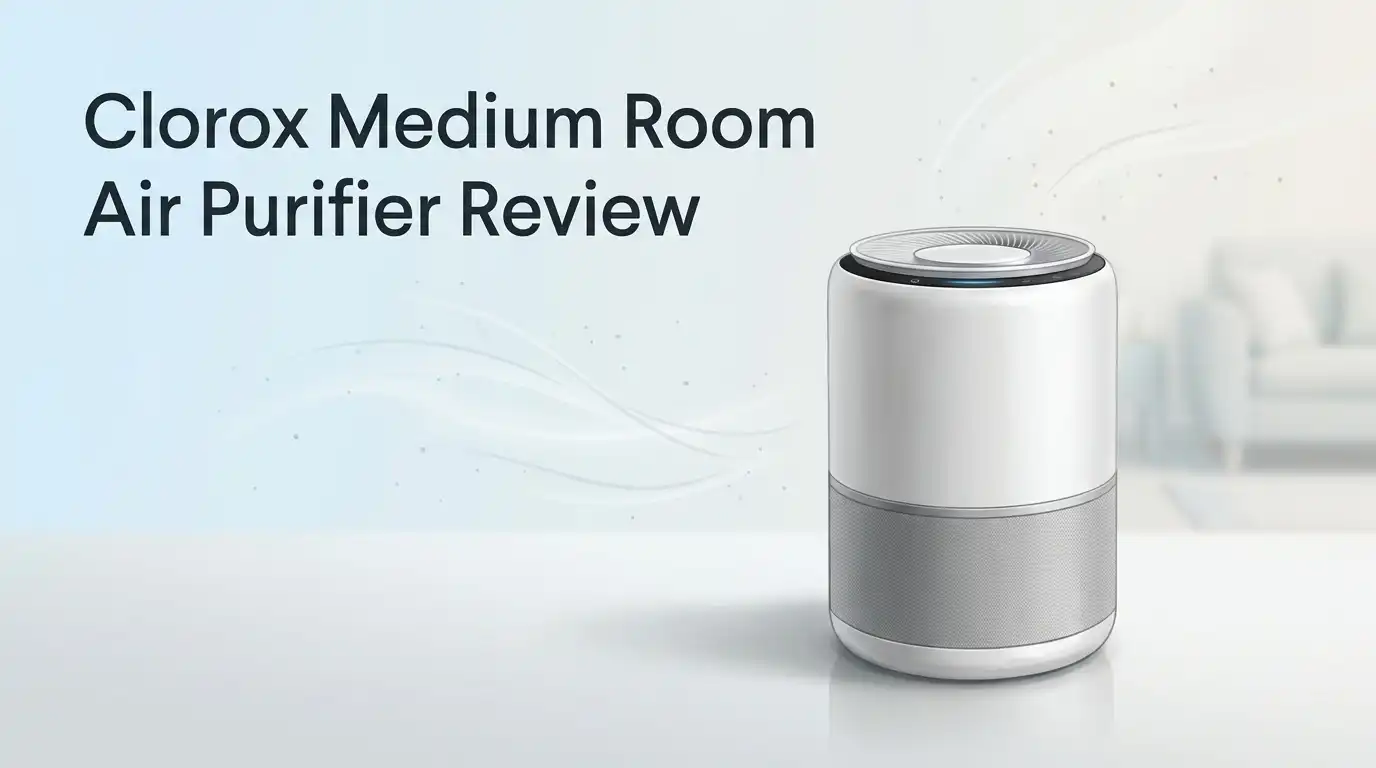
The Clorox Medium Room Air Purifier is a cylinder shaped tower that pulls air in through 360 degrees. Clorox sells it under model numbers 11030, 11030J, and 11031. The brand recommends it for rooms around 225 square feet, where it cleans the air five times per hour.
It can also handle spaces up to 1,000 square feet at one air change per hour. That second number is marketing math, not a realistic claim. The unit stands 14.65 inches tall and measures 8.74 inches wide and deep.
It weighs just 5.97 pounds. Hamilton Beach manufactures the appliance under license from Clorox. The retail price usually sits between $120 and $140, which places it in the crowded midrange category.
Unboxing and First Impressions
The box arrives compact and light. Inside, you find the purifier wrapped in a thin plastic sleeve, a short instruction manual, and nothing else. The filter already sits inside the base, which saves a step. You must remove the plastic bag around the filter before first use.
Many buyers skip this and then wonder why the unit does nothing. Twist the bottom cap counterclockwise, pull out the filter, unwrap it, and twist it back in. The whole process takes two minutes. The matte white plastic feels decent but not premium.
It flexes slightly when you squeeze the sides. The top touch panel looks clean and modern. Setup requires only a power outlet. Within thirty seconds of plugging it in, the sensor displayed a PM2.5 reading and the light glowed green.
Design and Build Quality
The cylinder shape helps this purifier blend into a room. It looks more like a small speaker than an appliance. The 360 degree intake means you can place it in a corner or beside furniture without blocking airflow. Air exits through the top, so nothing blows directly at your face.
The touch panel sits flat on top and includes buttons for power, fan speed, auto mode, timer, display brightness, and child lock. The buttons respond quickly and never felt glitchy during testing.
The colored ring near the top shifts between green, yellow, orange, and maroon based on air quality. You can dim or fully disable the lights for sleep.
The 5.97 pound weight makes it easy to carry between rooms. One complaint stands out: there is no handle, so you must grip the body awkwardly.
Top 3 Alternatives for the Clorox Medium Room Air Purifier

Last update on 2026-11-17 / Affiliate links / Images from Amazon Product Advertising API
Coway Airmega AP-1512HH Mighty Air Purifier

Last update on 2026-11-18 / Affiliate links / Images from Amazon Product Advertising API
LEVOIT Core 300S-P Smart Air Purifier

Last update on 2026-11-17 / Affiliate links / Images from Amazon Product Advertising API
WINIX 5510 Air Purifier with App Support
Filtration System Explained
Clorox uses a 3 stage 360 degree filter sold as one cylinder. The outer layer is a washable mesh pre filter. It traps hair, lint, and large dust. The middle layer is the True HEPA media, rated to capture 99.97% of particles as small as 0.3 microns.
The inner layer holds activated carbon for odors. Because all three layers form a single unit, you replace everything at once. That design keeps maintenance simple but removes the option to buy only the part you need.
The pre filter rinses clean under water, which extends the life of the HEPA media. Clorox states the filter lasts six to twelve months depending on air quality. In a dusty home with pets, expect the shorter end of that range.
Real World Performance Testing
Performance in a 200 square foot bedroom impressed me. Starting PM2.5 readings of 38 dropped to single digits in about twelve minutes on speed 3. Dust accumulation on nightstands visibly decreased after two weeks.
Morning congestion improved, which matches what many allergy sufferers report. The sensor reacts fast. Searing steak two rooms away pushed the reading past 100 within a minute, and auto mode jumped to full speed on its own. Recovery to green took roughly eight minutes.
In a 400 square foot open living area, results slowed noticeably. The unit still worked, but clearing time nearly doubled. The 1,000 square foot claim is technically true at one air change per hour, yet that rate is too slow for meaningful allergy relief.
Noise Levels and Sleep Use
Noise is where this purifier shines. Speed 1 produces a soft hush that disappears behind a ceiling fan or a sleeping partner’s breathing. I measured roughly 28 to 32 decibels at three feet. Speed 2 remains easy to ignore.
Speed 3 creates clear white noise, which some people enjoy. Speed 4 is loud. It sounds like a hair dryer on low and makes television dialogue harder to follow. Auto mode occasionally ramps to high at night when dust stirs, which can wake light sleepers.
Running it manually on speed 1 or 2 solves that. The display dims fully with one button press, so no glow bothers you. Several verified buyers call it soundless on low, and my experience supports that.
Smart Features and Controls
The core model keeps things simple with onboard touch controls only. Some versions in this family add WiFi and Amazon Alexa support, but setup frustrates many owners. Reviewers describe repeated pairing failures during the WiFi connection process.
Google Home users get left out entirely, since Alexa is the only supported assistant. That limitation matters if your house runs on Google speakers. The timer offers 1, 4, and 8 hour options, which covers most sleep and work routines.
Child lock prevents curious toddlers from changing settings. A filter reminder light tells you when replacement time arrives. You can reset it with a long press after changing the filter. Honestly, the manual controls work so well that the missing app features feel minor for most households.
Pros and Cons
Pros
- Very quiet on speeds 1 and 2, which makes it genuinely usable for sleeping
- Accurate PM2.5 sensor with numeric display and six level color feedback
- Strong CADR ratings of 148 smoke, 154 dust, and 160 pollen for the price
- Compact 8.74 inch footprint that fits on nightstands and desks
- Filter changes take under two minutes with a simple twist mechanism
- Washable pre filter extends the life of the HEPA media
- Auto mode responds to cooking smoke and dust within seconds
- Light weight at under 6 pounds for easy room to room moves
Cons
- Carbon layer is thin, so strong cooking and smoke odors often remain
- Replacement filters cost $40 or more and add up over several years
- The 1,000 square foot claim overstates practical cleaning ability
- WiFi and Alexa pairing frustrates many owners on compatible models
- No Google Assistant support at all
- A 2025 class action complaint questions the HEPA filter claims
- No handle makes carrying slightly awkward
- Speed 4 is loud enough to interrupt conversation
What This Purifier Does Not Do Well
Honest reviews need honest criticism. Odor removal is the biggest disappointment. One verified buyer pan fried steak, ran the unit on high for three hours, and still smelled cooking in the bedroom.
The sensor showed green the whole time, because odor molecules are gas, not particles. The PM2.5 sensor cannot detect smells, so the display gives false comfort. The thin carbon layer simply lacks the mass needed for serious kitchen or smoke odors.
Second, the unit struggles in large open floor plans. Third, it does nothing for volatile organic compounds, formaldehyde, or radon. Fourth, there is no humidity control, so dry winter air stays dry. If odor elimination ranks as your top priority, a purifier with a dedicated thick carbon filter serves you better.
The HEPA Lawsuit Buyers Should Know About
In November 2025, a class action complaint was filed against Clorox and Hamilton Beach. The 21 page filing alleges that the 11030 Air Purifier was marketed as containing a HEPA filter when the filter allegedly does not meet HEPA standards.
The complaint claims consumers paid a premium based on that labeling. These are allegations, not proven findings, and the companies dispute them. No ruling existed as of my research. Still, buyers deserve this context before spending money.
Independent testing of real world dust reduction in my bedroom still showed clear improvement, so the unit does filter air. The dispute centers on whether the media meets the strict technical HEPA definition. Keep your receipt in case a settlement ever opens claims.
Filter Replacement Costs and Maintenance
Clorox sells the Medium True HEPA Replacement Filter for roughly $40 on sale and around $54 at list price. It fits models 11030, 11030J, and 11031. Third party filters cost less, often near $25, though quality varies widely.
Clorox warns that non genuine filters may void the warranty. Plan on one or two filters per year, which adds $40 to $80 annually to ownership cost. Maintenance stays easy.
Rinse the mesh pre filter every two to four weeks and let it dry fully before reinstalling. Vacuum the outer housing to prevent dust buildup. Never wash the HEPA media itself, because water destroys the fibers. The filter reminder light tracks runtime hours, so you do not have to guess.
Who Should Buy It and Who Should Skip It
Buy this purifier if you want quiet, affordable particle filtration for a bedroom, nursery, or home office under 300 square feet. Allergy sufferers, pet owners, and people near wildfire smoke zones get the most benefit.
The visible air quality number also helps anyone curious about indoor pollution levels. Skip it if odors are your main concern. Skip it for large open living rooms where a higher CADR unit performs better.
Skip it if you rely on Google Home, since the smart version only supports Alexa. Buyers who want certified lab verified HEPA performance may prefer brands with published AHAM Verifide listings. For everyone else, the price to performance ratio remains genuinely competitive in 2026.
Final Verdict
The Clorox Medium Room Air Purifier earns a solid recommendation with clear limits. It moves air well, runs quietly, and shows you real data about your room. Dust reduction and allergy relief were obvious within two weeks of daily use.
The sensor accuracy and auto mode responsiveness punch above the price. Weak odor control and the ongoing HEPA labeling lawsuit keep it from a perfect score. I rate it 4 out of 5 for bedroom sized spaces and 3 out of 5 for large rooms.
If you find it near $120, it represents strong value. At full price, the Coway Mighty offers better long term coverage. Match the unit to your room size and your expectations stay realistic.
Frequently Asked Questions
Does the Clorox Medium Room Air Purifier really cover 1,000 square feet?
Technically yes, at one air change per hour. That rate is too slow for allergy relief. Treat 225 to 300 square feet as the practical range.
How often should I change the filter?
Clorox recommends every six to twelve months. Homes with pets, smokers, or heavy dust need replacement closer to six months. The filter reminder light tracks runtime for you.
Can I wash the HEPA filter instead of replacing it?
No. Water damages HEPA fibers and ruins filtration. You may rinse only the outer mesh pre filter, then dry it completely before reinstalling.
Does it remove cooking smells?
Only partially. The carbon layer is thin and handles light odors. Strong frying, fish, or smoke smells usually linger even on the highest speed.
Is it loud enough to disturb sleep?
Speeds 1 and 2 are very quiet and safe for bedrooms. Speed 4 is loud. Run manual low speed overnight to avoid sudden auto mode ramps.
Does it work with Google Home?
No. Smart versions support Amazon Alexa only. Google Home users must operate the unit with the onboard touch controls.
Does it produce ozone?
No. The unit uses mechanical filtration with no ionizer or UV light, so it does not generate ozone.

I’m Maya Brown, the voice behind Pure Breeze Vault. I write detailed, honest, and easy-to-follow air purifier reviews to help readers compare features, understand filter technologies, and choose products with confidence. My goal is to make research simpler, clearer, and more practical for anyone improving indoor air quality at home.