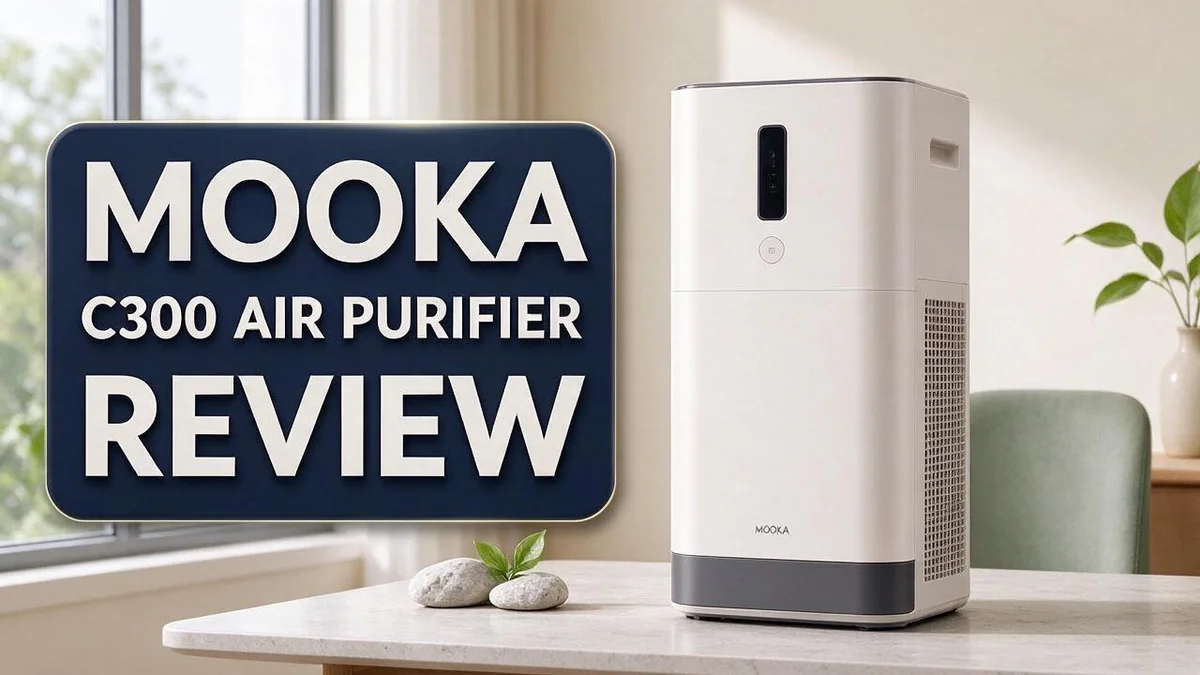
MOOKA C300 Air Purifier Review: Coverage, Filtration, Sensor, and Filter Upkeep
Is the air in your home really clean? Most people never think about it. Yet indoor air can hold dust, pollen, and tiny particles that you cannot see.
The MOOKA C300 Air Purifier is one option worth a closer look. It uses a double-sided design. The brand rates it for rooms up to 2,800 sq ft, so it can suit larger spaces.
Inside, you get a HEPA filter and dual washable filters. A PM2.5 air quality sensor measures fine particles in the room. Auto mode handles settings for you.
In this review, we will cover what works, what does not, and whether this purifier fits your home.
In a Nutshell
- Large room coverage: This unit is rated for rooms up to 2,800 square feet. It suits open layouts and bigger living spaces.
- Unique layout: The double sided design gives the purifier a distinct shape compared with many standard models.
- Hands-off operation: Auto mode lets the unit adjust on its own. You can set it up once and let it run.
- Air quality sensor: A PM2.5 sensor tracks fine particles in the room. The research does not show how accurate it is.
- Refill planning: The replacement pack includes two HEPA filters and four washable prefilters. Keeping spares on hand helps you stay on schedule.
- Brand reputation: One Reddit user calls MOOKA not a very good brand and says sensors on even good brands are so-so. Read more reviews before you decide.
- Open questions: Noise levels and long-term upkeep remain unanswered in our research. Test these points yourself if they matter to you.
Airflow and Room Coverage


Last update on 2026-11-19 / Affiliate links / Images from Amazon Product Advertising API
Room coverage depends on airflow. A purifier only cleans the air that moves through it. So the way air travels around your room matters as much as the rating on the box.
Think about where you place the unit. Put it in an open spot, away from walls, couches, and curtains. Blocked intake areas slow the flow and reduce how much air gets treated.
Corners often hold stale air. A unit tucked into one corner may leave the far side of a long room with less cleaning power. Placing it near the center of the room or the main activity zone helps.
Closed doors cut off airflow. If you shut a bedroom door, the unit cannot pull air from the rest of the house. Keep doors open while it runs, or give each main space its own cleaning plan.
Ceiling fans can help spread filtered air. They gently mix the room so clean air reaches more corners. Use a low fan speed so dust does not kick up from the floor.
Cooking and heating create strong air currents. Smoke, steam, and fumes may travel faster than the purifier can capture them. Run the unit on a higher setting while you cook.
Open floor plans need more thought. Air moves freely across the space, so one unit may not reach every zone. If your home feels split into areas, focus on where people spend the most time.
The sensor on the unit reads air at one spot only. Moving the unit changes what it reports. Watch the readings for a few days after each move to find the best location.
Test the setup before you settle in. Run the unit for a full day in your chosen spot. Notice how the air feels at the edges of the room, not just near the unit. Small changes can make a clear difference.
Filtration Stages and HEPA Performance
Air passes through the MOOKA C300 in stages. Each stage catches a different particle size. Think of it like a set of sieves, with coarse mesh first and fine mesh last.
The first stage is the prefilter. It catches larger bits like hair, pet fur, and loose dust. Those particles would clog the finer layers fast, so this step protects the rest of the system.
The HEPA stage handles the smallest particles. HEPA is a filter class, and the C300 uses a HEPA filter in this role. A true HEPA filter traps at least 99.97 percent of particles that measure 0.3 microns.
That number describes the filter material under lab conditions. It does not promise the same result in every room. Airflow, fan speed, and how much air actually reaches the filter all shape what you feel at home.
Seal matters more than many people expect. Gaps around the filter let dirty air slip past it. Check that each filter sits snugly in its slot every time you change it.
The PM2.5 sensor fits into this picture too. PM2.5 particles are fine enough for the HEPA stage to catch. Still, our research did not find independent tests showing how well the C300 removes PM2.5 in real rooms.
Washing the prefilter on schedule keeps airflow steady. A clogged prefilter forces the fan to work harder. Rinse it, dry it fully, then slide it back in before you run the unit.
Filter life also depends on how you use the unit. Running the fan on high all day creates more strain than shorter sessions on lower settings. Match the speed to your needs so the filters last longer.
Try a simple habit: write down the date you clean each filter. A short note helps you track wear. It also shows when the HEPA stage may need replacing based on how often you run the unit.
Air Quality Sensor and Auto Mode
Think of the sensor as a quick check on your room. Instead of guessing, you can see a reading at a glance. That makes it easier to notice when something changes.
Watch the trend, not just one number. A single reading can jump after you cook or open a door. Check the reading over several hours to see the pattern.
A simple log helps too. Jot down the reading each morning for one week. You will spot patterns faster.
Auto mode pairs well with that habit. The unit can respond to changes without you touching the controls. This suits busy homes where nobody remembers to adjust settings.
Night use deserves a closer look. Many people run auto mode while they sleep, so quiet operation matters. Our research does not answer noise questions, so test the unit on your first night.
Readings also reveal your habits. Notice which activities push the numbers up. Frying food, burning candles, and vacuuming often raise dust levels.
Keep the sensor area clear. Dust, pet hair, or objects near the sensor may affect what it reads. A quick wipe with a dry cloth helps keep readings fair.
Pay attention to sudden spikes. A jump in the reading can signal a new source of particles. Think about recent changes, like new cleaning products, fresh paint, or a pet that spends more time indoors.
Seasons can change what the sensor shows in your room. Cold months often mean windows stay shut, so particles can build up. Warmer months may bring more outdoor dust through open doors.
Trust your senses too. If the air smells stale or feels stuffy, take note even when the number looks fine. The sensor adds information, but it does not replace your own observations.
Give the auto setting a fair trial. Run it for several days during normal routines. Then decide whether the sensor and auto mode fit your home.
Top 3 Alternatives
Levoit Core 300

Last update on 2026-11-19 / Affiliate links / Images from Amazon Product Advertising API
This compact purifier fits well in bedrooms and small offices. It uses a True HEPA filter to trap dust, pollen, and pet dander. The unit runs quietly, so it works well overnight. Sleep mode dims the light and lowers the fan speed. The fan has three speeds, so you can pick the right level. The control panel uses simple buttons. A filter indicator tells you when to swap the filter.
Coway Airmega 400

Last update on 2026-11-18 / Affiliate links / Images from Amazon Product Advertising API
Need more power for larger rooms? This model covers wide living spaces with ease. It includes an air quality sensor that adjusts fan speed on its own. You can check readings on the display at a glance. The filter lasts a long time, so replacements come less often. Its design blends well with most home decor. The auto mode handles most days without any fuss.
Blueair Blue Pure 211+

Last update on 2026-11-17 / Affiliate links / Images from Amazon Product Advertising API
This purifier stands out for its simple design. A washable fabric pre-filter catches larger particles first. A HEPA-style filter then captures fine dust and allergens. It also helps reduce some odors. Cleaning the pre-filter takes only a few minutes. The unit stays quiet on its lowest setting. It suits people who want an easy routine for cleaner air.
Noise Levels and Sleep Use
Noise is often the first worry for light sleepers. A purifier runs all night. Even a soft hum can wake you up.
Current research does not include verified noise numbers for the MOOKA C300. You should test the unit yourself before you rely on it for sleep.
Start with a simple listening test. Turn the unit on during the evening. Then sit where you normally rest.
Listen for a steady hum, a rattle, or a whoosh that rises and falls. A rattle can point to something loose, so note it.
Check the fan speed before bedtime. Higher speeds clean the air faster. They also make more sound.
Lower speeds run quieter but clean more slowly. Pick the setting that keeps the room fresh without disturbing your rest.
Auto mode can help or hurt your sleep. The unit may speed up when the sensor picks up more particles. It slows down once the air settles.
A sudden change in fan speed can wake a light sleeper. Watch for that pattern during your first few nights.
Distance from your bed matters too. Place the unit several feet away from your pillow. Sound often feels softer from a short distance than from right beside your head.
Give your ears a few nights. Most people adjust to steady background sound over time. Keep a short note each morning about how well you slept.
If you wake often, try a lower speed. You can also move the unit farther away.
A steady hum often blends in. It sounds a lot like a ceiling fan or a white noise machine. Sharp clicks or uneven pulses stand out more. If those appear, check that all parts sit firmly in place.
Test before you commit to nightly use. Run the unit on your normal sleep schedule for at least one week. Quiet sleep comes from careful testing, not guessing.
Washable Prefilters and Replacement Filters
Washable prefilters make upkeep easier. They trap the largest debris first, so they fill up fastest. A simple routine keeps them in good shape.
Start by pulling the prefilters out of the unit. Shake off loose dust outside over a trash can. Then rinse them under lukewarm water until the water runs clear.
Let them dry fully before reinstalling. Damp filters can grow mold and cause a musty smell. Set them on a towel in a warm spot and wait until they feel completely dry.
Never use soap or harsh cleaners on the mesh. Strong chemicals can break down the material. Plain water does the job for most dust.
Check the prefilters once a month. Look for gray buildup or a visible film. If the mesh looks stiff or torn, replace it right away.
Keep spares on hand. The replacement pack includes two HEPA filters and four washable prefilters. Having extras lets you swap in a clean set while the others dry.
Four prefilters give you a helpful rotation. Two HEPA filters cover a full replacement cycle. Keep the set together in one spot so nothing gets lost.
Label each filter with a date. A simple note helps you track when you last cleaned it. This habit also shows when a HEPA filter needs swapping.
Most HEPA filters should not be washed. Water can damage the fine fibers. Replace them on schedule instead of rinsing them.
Some owners forget the prefilters entirely. Dirty prefilters let more dust reach the filter stack. That shortens the life of the HEPA filter.
Write a short reminder on your phone. Set it for the first day of each month. Small habits keep the whole system working well.
Regular upkeep also saves you time later. A quick rinse beats a long deep clean. Keep that habit and your room stays fresh all year.
Pros and Cons
Pros
– Covers big spaces: Rated for rooms up to 2,800 square feet.
– Two sided layout: The unit is built with air flow on both sides.
– Washable filters: Rinsing filters means less waste over time.
– HEPA filter class: Designed to trap fine airborne particles.
– PM2.5 sensor: Tracks tiny particles that affect air quality.
Cons
– Brand reputation: One Reddit user calls MOOKA not very good.
– Sensor doubts: That same user says even good brand sensors are so-so.
– Noise is unclear: Verified sound levels are not in the current research.
– Particle results unclear: PM2.5 performance is not confirmed yet.
Who Should Buy It
The MOOKA C300 fits people with large spaces best. Open living rooms and big family areas often need strong airflow. A rating for rooms up to 2,800 square feet gives you a clear starting point.
Some buyers want fewer filter purchases over time. Washable prefilters can be rinsed and reused instead of tossed. That habit keeps waste lower and feels good for the planet.
Busy households may enjoy the auto mode. You do not need to change settings every hour. The sensor can adjust the fan when the air gets dirtier. This helps people who often forget to check.
Pet owners may want to watch closely. Hair and dander can build up fast in shared rooms. Check the prefilters more often in these homes to keep airflow strong.
Shoppers who need proof should wait a little. The research does not confirm PM2.5 results yet. Buyers who want hard numbers should look for independent tests first. Those tests can show how the unit performs in real homes.
Allergy sufferers should think carefully. A HEPA class filter sounds promising for fine particles. Still, no verified results exist yet. Track your symptoms for a few weeks before you rely on it.
Brand trust matters to many people. One Reddit user called MOOKA not very good. That opinion adds doubt, so read more owner feedback. Look for people who used the unit for several months.
Final tip: measure your room first. A smaller room may not need this much power. If your space is large and you want a sensor with auto mode, this model deserves a close look. Read the listing details carefully and compare other options before you decide.
Final Verdict
Our final verdict is a cautious yes. The MOOKA C300 may suit shoppers with large open spaces. Still, some key answers remain missing.
Think of this unit as a good fit for a specific job. It is built for wide areas, not tiny bedrooms. Keep that in mind before you buy.
Think about your daily routine. Do you run a fan, cook often, or open windows? Those habits change how much work the unit must do.
Set up a simple trial plan. Measure your room before ordering. Run the unit on auto for one week. Note dust, odors, and how often it cycles.
A store with easy returns lowers your risk. That window gives you time to test the claims at home. Use it well.
Pick the right spot for it. Place the unit where air can move freely. Keep it away from corners and heavy curtains. Good placement helps any model work better.
Build a short shortlist. Compare models with similar room ratings. Look for clear test data and simple controls. Hands on tests beat marketing claims every time.
Light sleepers should be careful. Test the noise at night before you rely on it. A quiet room matters more than a big spec sheet.
Our bottom line is simple. If you need strong coverage for a large space, the MOOKA C300 deserves a close look. If you need verified test data, wait for more independent results before you commit.
Final tip for buyers. Write down your top three needs before you shop. Then check each one against the facts you find. Trust that plan more than any single review. Good shopping takes a little patience.
Keep an eye out for new owner feedback. Fresh reviews can shift this verdict fast. Trust your own room test most of all.
Frequently Asked Questions
Will the MOOKA C300 work well in a bedroom?
It can work well in a larger bedroom. Auto mode keeps things running without constant checks. Listen to it on your first night, since quiet rooms show sound changes fast.
How do I care for the washable prefilters?
Rinse the prefilters with clean water. Let them dry fully before you put them back. Damp filters can cause problems, so patience matters here. Set a reminder every few weeks so the routine becomes a habit.
What replacement parts should I keep on hand?
The replacement listing includes 2 HEPA filters and 4 washable prefilters. That mix covers both layers of the setup. Store a spare set in a dry place. This helps you avoid gaps in airflow when it is time to swap.
Can this unit handle smoke or strong odors?
The research does not confirm smoke or odor results. Treat any claim here as unproven. Run the unit in one room first and notice how the air feels. This simple test gives you a clearer picture before you rely on it.

I’m Maya Brown, the voice behind Pure Breeze Vault. I write detailed, honest, and easy-to-follow air purifier reviews to help readers compare features, understand filter technologies, and choose products with confidence. My goal is to make research simpler, clearer, and more practical for anyone improving indoor air quality at home.