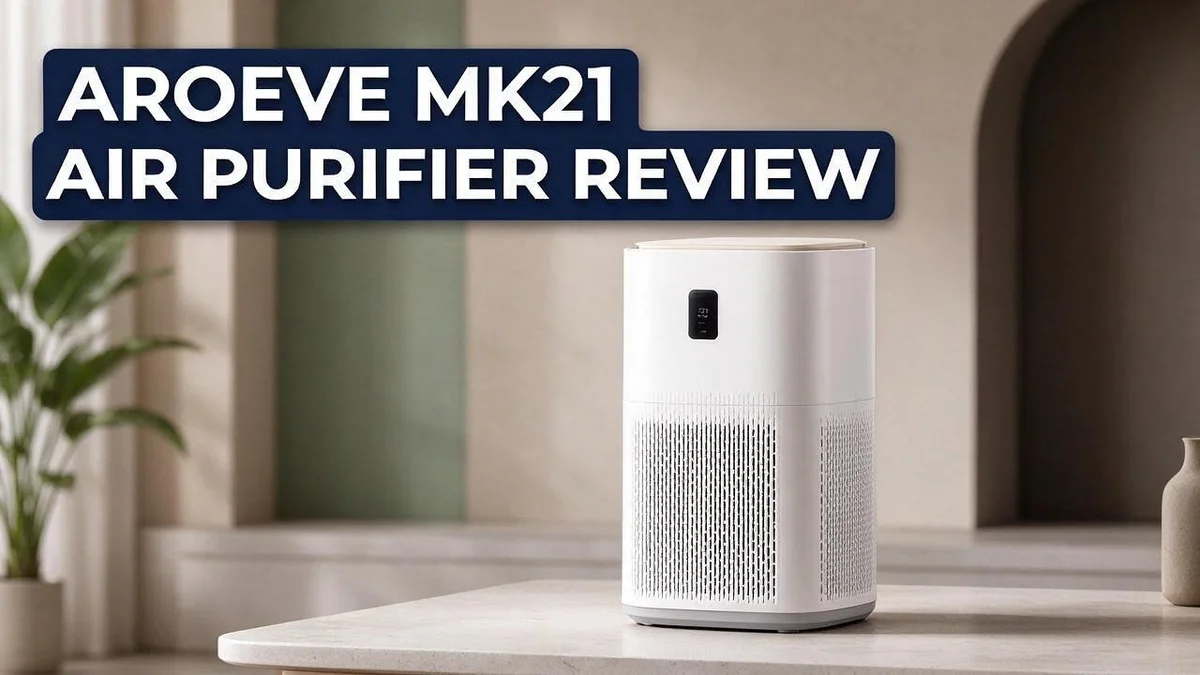
AROEVE MK21 Air Purifier Review: Filtration, Room Coverage, and Who It Suits
Clean air matters more than most people think. Dust, pet hair, and pollen can build up fast inside a home. A good air purifier can help you breathe easier every day.
Looking for a compact option for your bedroom or office? The AROEVE MK21 may be on your list. It is a small unit with a simple design and a low power draw.
Here is the good news. Its sleep mode and low power draw stand out. Still, it has limits. It offers no auto mode, sensor, app, or remote control.
In this review, we take a closer look at what the MK21 does well. We also cover where it falls short, so you can decide if it fits your space.
In a Nutshell
- Quiet nights: The sleep mode lets the unit run softly while you rest. Light sleepers often value that calm background hum. Set it on low for the quietest results.
- Low power use: The unit draws only about 5 watts. You can run it for hours without adding much to your energy use.
- Strong particle capture: An H13 HEPA filter traps tiny particles like dust, pollen, and pet hair. Three filter stages work together to clean the air in steps.
- Simple controls: There is no app, remote, or auto mode. You adjust settings by hand, which suits people who like straightforward gadgets.
- Slower cleaning: Cleaning can feel gradual in larger rooms. One tester noticed particles still floating after five hours, so set your expectations early. Pair it with closed doors for better results.
- Confirm the exact model: Some listings mix up AROEVE models. Check the product details before you decide if this unit fits your space.
Filtration Performance

Last update on 2026-11-19 / Affiliate links / Images from Amazon Product Advertising API
Filtration performance shapes how the AROEVE MK21 feels in daily use. The unit moves air through three stages. Each stage handles a different job, so the finer layers last longer.
Larger debris gets caught first. The prefilter stops hair and lint before they reach the core filter. This setup helps the purifier work steadily over time.
The H13 grade sits high on the HEPA scale. Not every HEPA label means the same thing. Check the filter rating on the packaging so you know exactly what you get.
Results depend on the room itself. A closed bedroom gives the purifier a fair chance. An open space with constant foot traffic brings in new particles all day.
One owner report says the unit never reached zero particles after five hours. That detail deserves context. Zero is rare in homes where doors open and close often. Steady improvement matters more than a perfect number.
Set goals that fit the job. The MK21 can freshen a bedroom or home office with ease. Strict allergy relief may need extra steps, such as keeping windows closed on high pollen days.
Pet owners often notice the difference most. Fur and dander drift across rooms during the day. Regular runtime helps catch these particles before they settle on furniture.
Filter care keeps performance steady. Dust builds up on the prefilter quickly. Wipe or vacuum it often, and replace the main filter on schedule. A clean filter moves air better.
Placement also matters. Keep the unit away from walls and heavy furniture. Set it near where you sit or sleep so it pulls air from your breathing zone.
Since there is no sensor or auto mode, timing falls to you. Run the unit on a steady setting rather than switching it on and off. Continuous use keeps air cycling through the filters.
Overall, the filtration gives a dependable base for cleaner air. Pair it with regular cleaning, and open windows only when outdoor air is clear.
Room Coverage and Sizing
Room size decides how well any air purifier works. Before you buy, measure the length and width of your space. Multiply those numbers to find the floor area.
Listings for the MK21 show two different coverage figures. One lists 215 square feet, while another lists 150 square feet. Use the smaller number as your safer guide.
Ceiling height matters too. A tall room holds more air, so the unit has more work to do. Vaulted ceilings call for extra margin.
Think about air changes, not just square footage. A purifier works by pulling air through its filter again and again. The more often the air cycles, the cleaner the room becomes.
Open doors change the picture. A closed bedroom keeps air in one place. A room linked to a hallway or living area lets dust drift away from the unit.
Shape matters as much as size. Long narrow rooms and spaces split by bulky furniture can block airflow. Place the unit where air moves freely around it.
Kitchens need different thinking. Cooking releases fine particles and grease, so a kitchen may need a larger capacity. A quiet home office usually creates a lighter load.
Busy households also add to the workload. Shoes, bedding, and daily movement stir up dust throughout the day.
Breathing zones deserve the most attention. Place the unit close to where you sit or sleep. This short distance helps cleaner air reach you quickly.
Write down your numbers before shopping. Keep notes on room length, width, and ceiling height. A clear record makes comparing models much easier.
Give yourself some room to spare. Choose a unit rated for a space bigger than yours. Extra capacity lets the purifier run at lower speeds, which puts less strain on the filter and keeps the air steady.
Final check before you decide. Compare your measured floor area with the listed coverage and your room layout. If your room sits near the top of that range, consider a larger model or a second unit for the best results.
Noise and Sleep Mode
Noise decides whether you keep a purifier running at night. A fan that buzzes can turn a calm bedroom into a distraction. For most sleepers, sound matters as much as airflow.
The research available does not list a decibel rating for this unit. You cannot judge the sound from numbers alone. Your own ears become the best test.
Try a listening test before bedtime. Switch the unit on in the room where you sleep. Stand near your bed and listen for ten minutes. Notice whether the hum fades into the background or pulls your attention away.
Hard floors and bare walls can make sound bounce around the room. Rugs, curtains, and a bookshelf can soften that echo. A quieter room helps the purifier blend in.
Distance changes everything. Place the unit a few feet from your head rather than right beside your pillow. Set it on a stable, level surface so small vibrations stay small.
A steady hum often feels easier to ignore than a sound that rises and falls. Choose a speed that stays even through the night. Your sleep will likely feel more settled.
Watch for changes over time. A clogged filter can make the fan work harder and sound louder. If the hum seems stronger than it used to, check the filter first.
Pair sleep mode with a simple bedtime routine. Close the door, dim the lights, and let the unit run as you wind down. Over time, your body learns that the soft sound means rest.
Keep your expectations realistic. A quiet purifier still makes some sound. Aim for a level you stop noticing within a few minutes. That goal helps you judge each night fairly and decide whether the unit suits your sleep.
Top 3 Alternatives
Levoit Core 300


Last update on 2026-11-19 / Affiliate links / Images from Amazon Product Advertising API
This compact unit fits easily in a bedroom or small office. It uses a True HEPA filter to trap dust, pollen, and pet dander. The air quality light changes color, so you can see when the air needs attention. Its sleep mode runs very quietly at night. It is a great pick for small rooms and everyday allergy relief.
Coway Airmega AP-1512HH

Last update on 2026-11-17 / Affiliate links / Images from Amazon Product Advertising API
This model suits larger rooms, covering up to 361 square feet. It combines a True HEPA filter with an activated carbon layer. The carbon helps reduce odors, smoke, and cooking smells. The auto mode adjusts fan speed based on particle levels. Many people also like the eco mode for saving energy. It works well in living rooms and busy family spaces.
Blueair Blue Pure 211+

Last update on 2026-11-17 / Affiliate links / Images from Amazon Product Advertising API
This purifier uses a fabric filter layer that catches large particles first. A HEPA filter and activated carbon then handle fine dust and gases. It runs quietly on low settings, so it works well for sleeping or working nearby. The clean, modern design blends easily into most homes. Its simple controls make daily use easy. Choose this option if you want a straightforward machine that looks good in any room.
Power Use and Running Costs
Power use is one of the simpler parts of owning the AROEVE MK21. Most people want to know how much energy the unit pulls before they run it every day.
Research points to a draw of about 5 watts. An AROEVE bedroom listing gives this figure. That works out to roughly 0.12 kWh over 24 hours.
One caution applies here. The sources do not name the MK21 directly, so treat this number as a close guide rather than a sure match.
A low draw means the unit can run for long stretches without a big jump in your meter reading. Over a full month of nonstop use, the total comes to about 3.6 kWh.
That makes a real difference when you compare it with other home devices. A space heater or hair dryer pulls far more power, but only in short bursts. A purifier sips energy in a steady way.
Plan your daily hours. Some households run a purifier most of the day. Others switch it on only during cooking, cleaning, or guest visits. Either approach uses a small share of your total home power.
Track your usage for a week. Write down the hours the unit runs each day. Multiply those hours by 0.005 kilowatts to estimate the energy used. This simple method shows your true pattern.
Check the real number at home. A plug-in energy monitor shows the exact draw in your space. Connect the unit to it for a full day and note the reading.
Your results may shift with fan speed and room conditions. If your version offers speed settings, a lower setting often keeps the draw modest. Higher speeds usually pull a bit more power.
Think about where you place the outlet. A wall outlet close to your bed or desk avoids long extension cords. Short, safe connections keep the setup neat and easy to manage.
Overall, the MK21 looks light on energy. Its small size and gentle draw suit people who want steady air cleaning every day. A quick test at home will confirm what your own outlet delivers.
Pros and Cons
Pros
– It is compact. It fits on a shelf or nightstand.
– It is light, so you can move it from room to room.
– Sleep mode suits bedtime use.
– It uses a three stage filter system.
– It includes an H13 HEPA filter for fine particles.
Cons
– Cleaning speed is slow.
– One review says it never reached zero particles in five hours.
– It has no auto mode, sensor, app, or remote.
– Some listings may describe other AROEVE models instead.
Who Should Buy It
If you want a simple machine that just runs, this unit may suit you. It has no app, no sensor, and no auto mode. You set the speed yourself, so you stay in control.
Renters often need gear that moves easily. This compact unit can travel with you during a move. It also fits in a rental where a larger system would not work.
Students in dorm rooms or shared flats may find it useful too. Shared spaces can feel stuffy fast. A small purifier can freshen one personal corner, such as a study desk.
Home office workers form another good group. If you sit at a desk for long hours, the unit can sit beside your chair. It gives you a little cleaner air where you spend the most time.
Some people with allergies may consider it as a second device. Think of it as a helper for one room, not a full home solution. Keep your main cleaning routine in place.
People who like simple tools with few settings will appreciate this style. You do not need to learn menus or link a phone. You plug it in, choose a speed, and get on with your day.
Who should look elsewhere? Large open spaces need more than one small unit. If you want the device to react on its own to smoke or pollen, a model with a sensor will serve you better. People who want app alerts or remote control will also feel limited here.
Patience matters with this type of purifier. Slow cleaning means you should give it time before judging results. Set a reminder to check the room after a few days. Clean air builds over hours, not minutes.
Final Verdict
The bottom line is simple. The AROEVE MK21 suits one small room well. It will not solve every air problem, but it does a steady job when you use it the right way.
Before you buy, confirm the model. The research does not name the MK21 directly. Some listings describe other AROEVE units instead. Check the model number on the box and the product page.
Room size needs a close look too. One listing claims 215 square feet, while another claims 150. Plan around the smaller number. That keeps your expectations realistic and your results more predictable.
Brand history offers useful clues. HouseFresh rated the MK01 among the worst purifiers it tested. The MK07, on the other hand, earns mostly positive owner feedback, with most ratings at the top score. Those results do not transfer directly to the MK21, but they show how much quality can vary across the brand.
Ask one question before you decide. Does this room need a small helper or a major upgrade? If you need a small helper, this model deserves a place on your list.
Think about the long term, too. A purifier works best as part of a wider routine. Keep windows closed on smoky or dusty days. Vacuum and dust often so the unit has less work to do. Follow the manufacturer’s guidance on filter care.
Overall, the MK21 leans into simplicity rather than speed or extra features. That trade off may feel fine for a bedroom or study nook. It may feel limiting in a busy living area.
Give it a fair trial. Run it in your main space for several days. Notice how the air feels when you wake up. Look for dust on shelves and how easily you breathe at night. Those signs tell you more than any spec sheet.
Final thought: The MK21 offers a simple path to cleaner air in a small room. Confirm the model, match it to your space, and keep your expectations honest. Then you can decide with confidence.
Frequently Asked Questions
Does the MK21 remove odors from cooking or pets?
A HEPA filter catches tiny particles, but it does not trap gases. Some listings mention a three stage system, yet they do not confirm a dedicated odor layer. Check the product details before you expect strong odor removal from cooking or pets.
Does the MK21 run quietly at night?
One AROEVE listing mentions a sleep mode. Sleep modes often lower the fan speed, which can keep noise down. Run the unit in your bedroom for one night before you rely on it every evening.
How much electricity does the MK21 use?
An AROEVE bedroom listing shows about 5 watts, or 0.12 kWh over 24 hours. That is a low draw for a small machine. Real use can change with fan speed, so test it with a plug-in monitor to see the true number.
How does the MK21 compare to other AROEVE models?
Research shows mixed results across the brand. One tester named HouseFresh rated the MK01 among the worst purifiers it tested. In contrast, owners rate the MK07 very well, with 81% giving five stars. Remember that these are different models, so they do not prove how the MK21 performs.
How should I care for the filter?
Filter care matters for any HEPA unit. Check the manual for the cleaning and replacement schedule. Keep the intake clear of dust and pet hair so the fan does not work harder than it should. Write the replacement date on a calendar so you never miss it.

I’m Maya Brown, the voice behind Pure Breeze Vault. I write detailed, honest, and easy-to-follow air purifier reviews to help readers compare features, understand filter technologies, and choose products with confidence. My goal is to make research simpler, clearer, and more practical for anyone improving indoor air quality at home.