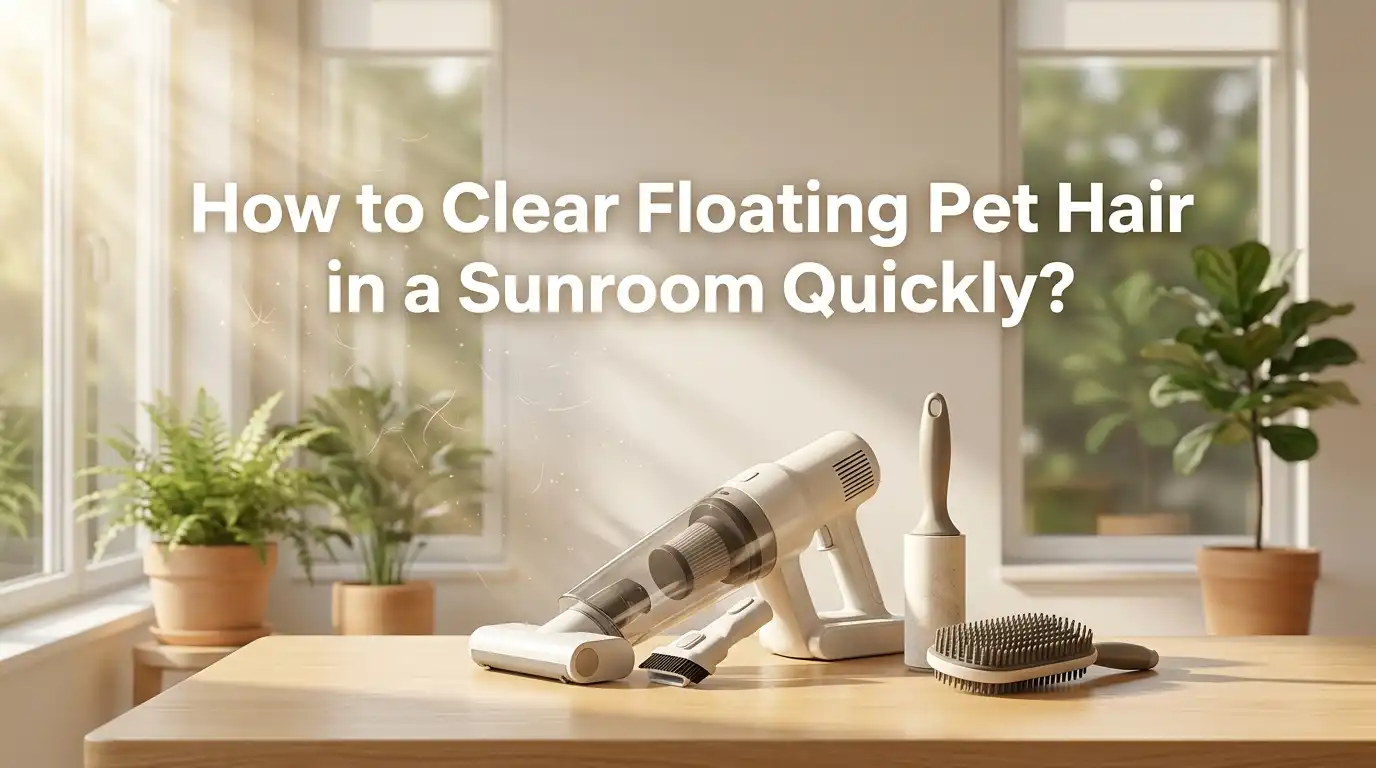
How to Clear Floating Pet Hair in a Sunroom Quickly?
A sunroom should feel bright, calm, and easy to enjoy. But if you live with a dog or cat, that same bright light can make every floating strand of fur look worse than it is. Hair drifts through the air, lands on glass and wicker, and gathers in corners fast.
The good news is that you do not need a long cleaning session to fix it. You need the right order, the right level of moisture, and a few habits that stop loose hair from lifting back into the air.
Pet allergens also travel on small airborne particles, so a smart clean up plan matters for comfort as well as looks.
Key Takeaways
- Turn the air still before you clean. Shut off fans, close the door, and pause open windows for a few minutes. This simple move stops hair from circling while you work. In a sunroom, moving air can keep loose fur visible and floating longer than you expect.
- Use light moisture first. A slightly damp microfiber cloth or mop traps hair better than dry wiping or sweeping. Dry tools often push fur around and send it back into the air. CDC guidance supports damp mopping and HEPA vacuuming over methods that stir particles up.
- Vacuum after you wipe, not before. Lift hair from shelves, window sills, and furniture first. Then vacuum the floor and rugs slowly. This top to bottom order keeps you from cleaning the same area twice and gives faster visible results.
- Control the air after the cleanup. A portable air cleaner with a HEPA filter can reduce airborne particles in one room, but it does not replace cleaning or source control. Research also found strong reductions in airborne cat and dog allergens with air filtration.
- Keep humidity in a healthy middle range. EPA recommends indoor humidity between 30 and 50 percent. That range helps with indoor air quality, and a bit more moisture in the air can also reduce static that makes fur cling to fabric and glass.
- Reduce loose hair before it reaches the sunroom. Regular brushing works. AKC advises brushing more often during heavy shedding and explains that brushing in both directions helps pull out dead hair. Less loose coat on the pet means less floating hair in your room.
Why Floating Pet Hair Gets Worse in a Sunroom
A sunroom makes pet hair look dramatic for three reasons. First, sunlight shows every strand. Second, large windows and warm surfaces create gentle air movement that keeps loose fur drifting. Third, dry indoor air can increase static, so hair clings to cushions, screens, and glass before lifting again.
There is also a hidden part of the problem. Pet allergens can stay airborne on very small particles. One study found strong reductions in airborne cat and dog allergen when portable air filtration was used, which helps explain why some rooms feel dusty even after you remove visible fur. What you see is hair, but what you feel may be the finer particles around it.
Start With a 10 Minute Reset Before You Clean
The fastest win is to stop the hair from moving. Turn off ceiling fans and portable fans. Close the sunroom door. If the weather allows, keep windows shut for a short time while you clean. This prevents the same hair from lifting off the floor and landing on furniture again.
Next, gather only what you need. Bring a damp microfiber cloth, a vacuum with a good filter, a soft rubber glove or rubber brush, and a trash bag. Move the pet out of the room for a few minutes.
Then start at the highest surfaces and work down. This order saves time because gravity helps you.
Pros: fast setup, less repeat cleaning.
Cons: you need a few minutes of planning before you begin.
Use a Slightly Damp Microfiber Cloth on Hard Surfaces First
Dry dusting looks quick, but it often fails in a sunroom. Loose fur is light, so a dry cloth or feather duster can send it back into the air. A slightly damp microfiber cloth works better because it grabs hair instead of pushing it away. Wipe window sills, tables, chair arms, baseboards, and any broad flat surface before you touch the floor.
Keep the cloth only a little damp. You do not want streaks on glass or moisture sitting on wood. Fold the cloth so you can switch to a clean side often.
Pros: low cost, quick, very good for visible hair.
Cons: you must rinse the cloth often, and it is slower on large fabric areas. CDC guidance favors damp mopping and cleaning methods that do not stir allergens into the air.
Vacuum Floors and Rugs in the Right Order
Once surfaces are wiped, vacuum the floor slowly. Start with edges, corners, and under furniture. Then move to the center of the room. If your sunroom has an area rug, vacuum it in overlapping passes. Slow passes matter because quick vacuuming can miss fur that has worked into weave and seams.
A sealed vacuum with a good filter is the better choice here. EPA explains that HEPA filters can remove at least 99.97 percent of particles at 0.3 microns, and allergy experts note that HEPA vacuum filters help trap small airborne irritants instead of sending dirty air back out.
Pros: strong pickup on floors and rugs, good for fine debris.
Cons: noisy, slower than sweeping, and poor quality vacuums can blow light hair around. Skip dry sweeping if you want a quick real result.
Use Rubber Tools for Cushions, Pet Beds, and Wicker
Soft surfaces trap hair in ways hard floors do not. Cushions, pet beds, and wicker chairs in a sunroom often hold fur deep in texture. A slightly damp rubber glove or a rubber brush can pull hair into small clumps fast. Run your hand in one direction, gather the fur, and lift it off before you vacuum what remains.
This method is simple, but it works best on dry fabric, not wet fabric. On wicker, move gently so you do not shove hair deeper into cracks.
Pros: very fast on upholstery, low cost, great on woven surfaces.
Cons: hands on work, less useful for fine dust, and you still need a follow up vacuum. For quick cleanups, this is often the best visible fix in the room. Regular cleaning of pet fur is also part of basic indoor allergen control.
Clean Window Tracks, Screens, and Corners Before Hair Lifts Again
Sunrooms collect pet hair in places many people skip. Window tracks, screen edges, sliding door grooves, and tight corners act like fur traps. When the room warms up later in the day, that hair can lift and spread again. If you want the room to stay clean longer, target these spots during the same session.
Use a crevice tool first. After that, wipe the track with a barely damp cloth or cotton swab. For screens, brush gently from top to bottom, then vacuum the floor under the screen.
Pros: stops repeat mess, improves the look of the room fast.
Cons: detail work takes patience, and screens can tear if you scrub too hard. This step matters more than most people think. Clean and dry spaces are also part of EPA indoor air guidance.
Improve Airflow Without Blowing Hair All Over the Room
After the visible hair is gone, you can use airflow in a smarter way. The goal is to filter the air, not stir it. That means avoiding a ceiling fan during cleanup and using a room air cleaner after cleanup if you have one. EPA says portable air cleaners can reduce indoor particles in a single room, though they cannot remove all pollutants or solve the source of the problem.
This is where a HEPA unit can help. EPA says HEPA filters can remove at least 99.97 percent of 0.3 micron particles. Research in homes with dogs found meaningful drops in airborne dog allergen with HEPA air cleaners, and another study found large reductions in airborne cat and dog allergens with filtration.
Pros: helps with the leftover floaters, useful after vacuuming.
Cons: not instant on heavy hair, needs filter care, and does not replace cleaning.
Control Humidity and Static So Hair Stops Clinging
If pet hair seems glued to fabric, glass, or your own clothes, static may be part of the problem. Dry air makes static worse.
A University of Akron teaching resource explains that static is more noticeable during dry indoor conditions, while moisture helps reduce static electricity. EPA recommends keeping indoor humidity between 30 and 50 percent.
For a sunroom, that means using a hygrometer and correcting very dry air if needed. You do not need a wet room. You need balanced air.
Pros: less cling, more comfort, fewer floating strands.
Cons: too much humidity can create moisture problems, so do not overdo it. Aim for balance, not dampness. If the room feels very dry, solving that can make every other hair removal step work better.
Reduce Shedding at the Source With Better Grooming
The quickest way to clear less hair is to release less hair in the first place. Brush your pet before the fur reaches the sunroom. AKC advises more frequent brushing during heavy shedding and recommends brushing against hair growth first to pull out dead hair, then brushing with hair growth to remove it.
Try brushing outside, in a mudroom, or on an easy to clean floor instead of in the sunroom. During peak shedding, a short daily session can do more than a long weekend clean.
Pros: cuts the mess at the source, improves coat care, saves cleaning time later.
Cons: takes consistency, and some pets need time to accept brushing. If you only change one habit, change this one. Less loose coat on the pet means fewer floating strands in the air.
What Not to Do If You Want a Quick Result
Some common habits make the problem worse. Do not dry sweep a hairy floor and expect it to stay clean. Do not run a fan while you dust. Do not smack cushions to remove fur in the middle of the room. Those moves create a cloud of floating hair that simply lands somewhere else a minute later.
Also, do not rely on an air cleaner alone for visible fur. EPA is clear that air cleaners can reduce particles, but they cannot remove all pollutants and they do not replace source control or regular cleaning.
Pros of avoiding these mistakes: faster cleanup, less repeat work, and less hair drifting back into sunlight.
Cons: you may need to slow down and use a better order. Quick is good, but random is not.
Build a Simple Daily and Weekly Sunroom Plan
A short routine beats a big scramble. Each day, do a two to three minute pass. Wipe the most visible hard surfaces with a lightly damp cloth. Gather fur from cushions with a rubber glove. Check corners near doors and window tracks. This keeps hair from building into a bigger job.
Once a week, do the full top to bottom reset. Wipe high surfaces, vacuum soft items, clean tracks and screens, then vacuum the floor and rug slowly. Brush your pet before or after the room clean, not during it.
Pros: easier maintenance, less visible hair, less stress.
Cons: it only works if you stay regular. Small routine, big payoff. That pattern matches the basic indoor air advice from EPA and CDC to keep spaces clean and use cleaning methods that reduce stirred up particles.
FAQs
Why does pet hair look worse in a sunroom?
Sunlight makes loose hair easy to see, and warm glass plus moving air can keep strands drifting. Dry air can also increase static, which makes fur cling and then lift again later. That is why the room can look messy even right after a fast sweep.
Is sweeping or vacuuming better for floating pet hair?
Vacuuming is usually better, especially after you wipe surfaces first. Dry sweeping often moves light hair around instead of trapping it. CDC guidance supports HEPA vacuuming and damp cleaning methods that do not send allergens back into the air.
Will an air cleaner remove visible pet hair fast?
It can help with fine floaters after you clean, but it will not replace wiping and vacuuming. EPA says portable air cleaners reduce particles in one room, yet they do not remove all pollutants or fix the source of the problem.
How often should I brush a shedding pet?
It depends on coat type and shedding season, but AKC says many dogs that shed a lot need brushing weekly, a few times a week, or even daily during heavy shedding. More brushing outside the sunroom means less fur floating inside it.

I’m Maya Brown, the voice behind Pure Breeze Vault. I write detailed, honest, and easy-to-follow air purifier reviews to help readers compare features, understand filter technologies, and choose products with confidence. My goal is to make research simpler, clearer, and more practical for anyone improving indoor air quality at home.