How To Fix A Grinding Noise Coming From The Air Purifier Motor?
That sharp, grinding sound from your air purifier can turn a peaceful room into a stressful one. You bought the unit for clean air and quiet comfort, but now it sounds like a coffee grinder running nonstop. The good news is that most grinding noises have simple causes you can fix at home.
In most cases, the problem comes from a dirty filter, a loose fan blade, dust on the motor, or worn bearings. You do not always need a technician or a new machine. With basic tools, a little time, and the right steps, you can bring back the quiet hum your air purifier had on day one.
This guide walks you through every fix, from the easiest checks to deeper motor repairs. You will learn what causes the noise, how to open the unit safely, and when replacement makes more sense than repair.
Key Takeaways
- A clogged filter is the top cause of strange noises in air purifiers. Dirty filters force the motor to work harder, which creates grinding, humming, or rattling sounds. Check the filter first before opening the unit.
- Loose or warped fan blades often hit the housing and make a grinding noise. A small bump or a fallen pet hair clump can throw the blade off balance and cause friction.
- Dust on the motor shaft and bearings dries out the lubricant. Once the metal parts rub without oil, you hear that classic grinding sound. Cleaning and light lubrication usually solve this.
- Worn bearings inside the motor are a deeper issue. You can replace bearings if you are handy, but a full motor swap is often easier and safer.
- Always unplug the unit before any repair. Air purifier motors carry enough current to cause a shock, even after being turned off.
- Know when to stop. If the motor smells burnt, sparks, or runs hot, replace it rather than repair it.
Why Your Air Purifier Motor Is Making A Grinding Noise
A grinding noise means metal or plastic parts are rubbing against each other where they should not. The motor inside your air purifier spins at high speed, often over 1,000 rotations per minute. Even a tiny obstruction creates a loud, harsh sound.
The most common reasons include a dirty HEPA filter, a misaligned fan blade, dust on the motor shaft, worn ball bearings, or a loose mounting screw. Sometimes a small object like a hair tie or a piece of paper falls inside and jams the blades.
Knowing the cause matters because each problem needs a different fix. A grinding sound from the bearings will not stop with a filter change. A blade hitting the housing will not improve with oil. Start with the simplest checks and move deeper only if needed.
Step 1: Unplug The Unit And Inspect The Outside
Safety comes first. Pull the power cord out of the wall before you touch anything. Do not just turn the switch off, because some models keep a small current flowing to the control board.
Now look at the outside of the purifier. Is it sitting on a flat surface? A tilted purifier can cause the fan to lean and scrape the housing. Move it to a level floor and listen again. Sometimes that single step fixes the noise.
Check the air intake and outlet grills for visible dust, hair, or small objects. Run your finger gently along the grill to feel for anything stuck. Use a flashlight to peek inside. If you spot debris near the blades, that is likely your culprit.
Pros of this step include being quick, free, and risk free. The only con is that it solves the problem in maybe one out of three cases, so you may need to keep going.
Step 2: Check And Clean The Air Filter
A clogged filter is the number one reason for noisy air purifiers. When the HEPA filter or pre filter fills with dust, the motor pulls harder to move air through it. That extra strain often sounds like grinding or growling.
Open the filter compartment, usually at the back or side. Remove each filter and look at it under a bright light. If the surface is gray, brown, or matted with dust, it needs cleaning or replacement.
Vacuum the pre filter with a soft brush attachment. Never wash a HEPA filter unless the manual says it is washable, because water destroys the fibers. Most HEPA filters need full replacement every six to twelve months.
Pros: cheap, fast, and improves air quality. Cons: replacement filters cost money, and this only fixes noises caused by airflow strain, not mechanical damage inside the motor.
Step 3: Inspect The Fan Blades For Damage Or Debris
If cleaning the filter did not help, the fan blades are your next target. Remove the back cover or grill to reach them. Most units use small Phillips screws, so a basic screwdriver works.
Once exposed, spin the blade gently with your finger. It should turn smoothly without wobble or resistance. If you feel a scrape, look closely for cracks, bent edges, or a loose hub.
Check the space between the blade tips and the housing. A gap of about two to three millimeters is normal. If the blade rubs the housing on one side, it is bent or the motor shaft is off center.
Pull out any hair, lint, or paper wrapped around the shaft. Use tweezers and work slowly. Pros: solves most mechanical grinding noises. Cons: bent blades usually cannot be straightened well, and a replacement blade can be hard to find for older models.
Step 4: Clean Dust Buildup On The Motor And Shaft
Dust loves to settle on the motor itself, especially around the shaft where the blade attaches. Over months, this dust cakes up and dries out the factory lubricant inside the bearings.
After removing the fan blade, use a soft brush and compressed air to clear dust from the motor body. Hold the can upright and use short bursts. Long blasts can spin the shaft too fast and damage the bearings.
Wipe the shaft with a lint free cloth. Do not use water or harsh cleaners near the motor windings. Isopropyl alcohol on a cotton swab works well for stubborn grime around the shaft base.
Pros: this restores smooth airflow and reduces strain on the motor. Cons: you must reassemble the unit carefully, and forcing the wrong cleaner inside can cause electrical damage. Take your time and let everything dry fully before plugging back in.
Step 5: Lubricate The Motor Bearings
If your motor has accessible bearings, a drop of lubricant can silence a grinding noise within minutes. Look for a small opening near the motor shaft. Some motors have a felt pad you can reach by removing a thin cover.
Use a light machine oil such as sewing machine oil or electric motor oil. Apply one or two drops only. Avoid WD 40 for long term lubrication, because it dries out quickly and can attract more dust over time.
Spin the shaft by hand to spread the oil. Wipe away any excess so it does not splatter when the motor runs. Reassemble and test the unit.
Pros: cheap, fast, and often gives months of quiet operation. Cons: this only works on bearings you can reach. Sealed motor bearings cannot be lubricated, and oil cannot save a bearing that is already worn out.
Step 6: Tighten Loose Screws And Fan Mounts
A loose screw is a quiet villain. As the motor vibrates day after day, screws slowly back out. Once the motor mount shifts, the fan blade can scrape the housing or rattle against its bracket.
Open the unit and check every visible screw on the motor housing, fan hub, and mounting bracket. Use the correct size screwdriver to avoid stripping the heads. Turn each one until snug, but do not overtighten plastic parts.
Pay close attention to the central hub nut that holds the blade on the shaft. If this nut loosens, the blade wobbles and grinds. Tighten it firmly but gently.
Pros: zero cost and a quick win. Cons: if the screw holes are stripped or the plastic mount is cracked, tightening will not hold. You may need thread locker or small washers to keep them secure.
Step 7: Realign A Misaligned Fan Blade
Sometimes the blade itself is fine, but it sits crooked on the shaft. This happens after a bump, a drop, or a careless cleaning. The blade then strikes the housing once per rotation, creating that grinding rhythm.
Loosen the central hub nut just enough to let the blade move. Slide the blade gently until it sits flat and centered on the shaft. Spin it by hand and check the gap on all sides.
Once the gap looks even, tighten the hub nut while holding the blade steady. Do not let it twist as you tighten. Spin again to confirm smooth rotation.
Pros: free, simple, and solves a common cause of grinding. Cons: a warped blade will never sit straight no matter how you align it. In that case, you need a replacement blade from the manufacturer or a parts supplier.
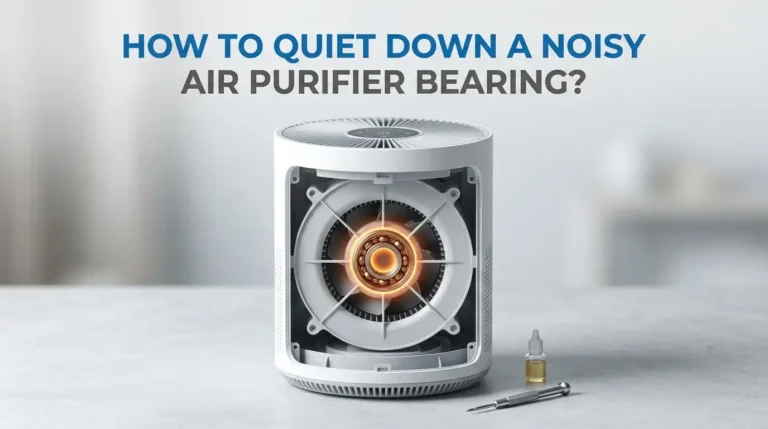
Step 8: Replace The Motor Bearings
If the noise comes from inside a sealed motor, the bearings are likely worn. Bearing replacement takes patience and basic tools, but it can extend the life of your purifier by years.
Remove the motor from the unit and note the wire positions. Use a small puller or two flat screwdrivers to pop off the fan blade and end caps. Slide the rotor out and inspect the bearings at each end.
Match the new bearings exactly by size and type. Bearing numbers are usually printed on the side. Press the old ones out and the new ones in using a socket that matches the outer ring.
Pros: cheaper than a new motor and very satisfying when it works. Cons: it requires mechanical skill, the right tools, and a steady hand. One wrong move can damage the windings and end the repair.
Step 9: Replace The Entire Motor Assembly
When bearings are not replaceable, or the motor smells burnt, swap the whole motor. Many air purifier brands sell replacement motors online or through their service centers. Universal motors of the right size also work in some models.
Photograph the wiring before you disconnect anything. Match the new motor’s voltage, wattage, and shaft size to the original. A mismatch can damage the control board or cause poor performance.
Bolt the new motor in place, reconnect the wires, and reinstall the fan blade. Test the unit on the lowest speed first before running it on high.
Pros: a full motor swap gives you a like new purifier. Cons: replacement motors can cost a significant portion of a new unit’s price. If your purifier is more than five years old, buying a new machine may make more sense.
Step 10: Reduce Vibration With Rubber Pads And Placement
Even a healthy motor can sound grindy if the purifier vibrates against a hard surface. Wood floors, glass tables, and tile amplify motor noise like a speaker box.
Place the unit on a flat, soft surface such as a thin rug or foam mat. You can also stick small rubber pads under the feet. These pads absorb vibration before it spreads to the floor.
Keep the purifier at least six inches away from walls and furniture. Sound bounces off nearby surfaces and can make a small noise feel much louder.
Pros: cheap, takes two minutes, and improves comfort even on quiet units. Cons: this only masks vibration noise. It will not fix a real mechanical grinding problem inside the motor, so use it together with the other steps.
When To Call A Professional Or Replace The Purifier
Some grinding noises point to deeper problems that DIY cannot fix. If the motor smells like burnt plastic, smokes, or trips your circuit breaker, stop using it right away. These signs mean electrical damage, not just mechanical wear.
Call a technician if your purifier is still under warranty. Opening the unit yourself often voids the coverage, so check the paperwork before you grab a screwdriver.
For older units, do the math. A new motor plus your time may cost as much as a new purifier with better filters and smarter features. Replacement makes sense when the unit is over five years old or when parts are hard to find.
Pros of replacement: peace of mind, full warranty, and improved performance. Cons: higher upfront cost and the waste of throwing out a unit that might have years left in it.
Frequently Asked Questions
Why does my air purifier sound like it is grinding only on high speed?
Higher speeds put more stress on worn bearings and loose blades. At low speed, the motor turns slowly enough that small problems stay quiet. On high, the same issue becomes loud and clear. Start with cleaning and lubrication, then check the blade alignment.
Can I use WD 40 on my air purifier motor?
WD 40 is a solvent, not a long term lubricant. It can free a stuck shaft for a few hours, but it dries out and attracts dust. Use light machine oil or electric motor oil for lasting results instead.
How long should an air purifier motor last?
Most air purifier motors last between five and ten years with regular cleaning and filter changes. Cheap units may fail sooner. Running the unit constantly on high speed shortens the lifespan, while moderate use extends it.
Is it safe to keep using a grinding air purifier?
Light grinding from a dirty filter is safe for a short time, but you should fix it soon. Loud grinding, burning smells, or sparks mean stop using the unit immediately. Continued use can damage the motor permanently or create a fire risk.
Why does my new air purifier already make a grinding noise?
New units sometimes ship with loose parts or shipping foam stuck inside. Open the filter compartment and remove all packaging. If the noise stays, contact the seller for a warranty exchange rather than opening the motor yourself.

I’m Maya Brown, the voice behind Pure Breeze Vault. I write detailed, honest, and easy-to-follow air purifier reviews to help readers compare features, understand filter technologies, and choose products with confidence. My goal is to make research simpler, clearer, and more practical for anyone improving indoor air quality at home.