How to Know When to Replace a Medical Grade HEPA Filter?
A medical grade HEPA filter does a serious job. It helps protect patients, staff, products, and clean air zones by trapping tiny particles that can carry dust, spores, and other harmful matter. But even a strong filter does not last forever.
The hard part is this. A HEPA filter can still look fine from the outside while its performance is already falling. That is why many people replace too early and waste money, or replace too late and risk poor airflow, weak room pressure, and failed clean air goals.
This guide makes the decision easier. You will learn the exact signs to watch, the tests that matter most, and the step by step process that helps you replace a medical grade HEPA filter at the right time.
In a Nutshell
- A medical grade HEPA filter is usually replaced by condition, not by guesswork. Age matters, but age alone does not tell the full story. A better method checks pressure drop, airflow, leak test results, and room performance. That gives a safer and smarter answer.
- The first warning sign is often rising resistance. As a filter collects more particles, air has a harder time moving through it. The fan may work harder, airflow may fall, and room pressure may drift. If you only wait for visible dirt, you can miss the real problem.
- Leak testing matters as much as loading. A filter can be dirty and still seal well. A filter can also look clean but fail an integrity test. If a filter leaks, it cannot do a medical job safely. In critical spaces, a failed leak test often means replacement is the right move.
- There is no one perfect calendar for every site. Some filters last much longer because good prefilters protect them. Others need faster changeout because the room has heavy dust load, construction activity, frequent door openings, or long run time. Fixed schedules are simple, but they can be wasteful or risky.
- The best plan is a simple checklist. Record the install date, the starting pressure drop, the normal airflow, the room pressure target, and the test dates. Then compare new readings against that baseline. This turns filter replacement into a clear yes or no decision instead of a guess.
- Do not wait for a full failure. If pressure is near the limit, airflow is slipping, alarms are common, or energy use is rising, act before the room falls out of spec. Early action protects clean air and prevents urgent shutdowns.
What a Medical Grade HEPA Filter Actually Does
A medical grade HEPA filter is built to capture very fine particles with very high efficiency. In healthcare and clean environments, these filters are used to help protect rooms where air quality must stay controlled and stable.
Many medical grade HEPA filters are rated to capture 99.97 percent of 0.3 micron particles. That level matters in spaces where airborne particles can affect patient safety, product quality, or infection control.
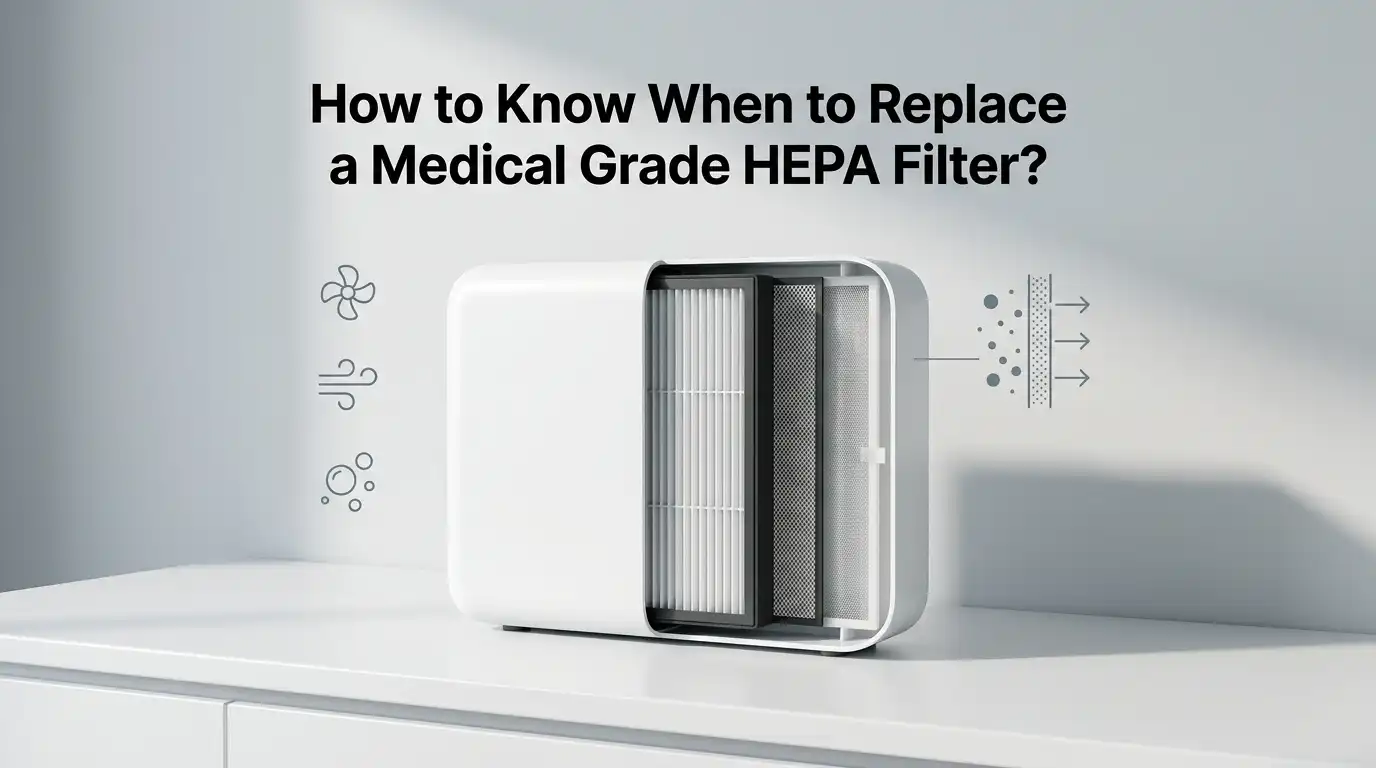
The filter works by trapping particles inside a dense media. Over time, more particles build up in that media. That buildup is normal, but it also raises resistance to airflow. That is the key reason replacement becomes necessary.
A HEPA filter is not just a dust catcher. It is part of a whole air system. If the filter starts to fail, the room can lose airflow balance, pressure control, and clean air performance.
Why Replacement Timing Matters in Medical Spaces
In a medical setting, a late filter change can do more than reduce comfort. It can affect room pressure, air changes, and clean air direction. That creates risk in spaces that depend on stable airflow every day.
A filter that stays in place too long may cause the fan to work harder. That can raise energy use and strain the equipment. If the fan cannot keep up, airflow can drop below the room design target.
A filter replaced too soon creates a different problem. You spend more money, use more labor, and throw away useful filter life. That is why the best answer is not early or late. The best answer is right on time.
Medical spaces need a decision method that is simple and repeatable. Good teams use readings, test results, and trend data. That method protects both the room and the budget.
The First Signs That Tell You a Filter Is Getting Close
The first sign is often reduced airflow. Staff may notice weaker supply air, slower recovery after door openings, or room pressure that drifts more than usual. These changes can show up before the filter looks dirty.
Another sign is a rising pressure drop across the filter. As the media loads with particles, resistance rises. That change is one of the most useful early warnings. It tells you the filter is working harder and the system is paying the cost.
You may also notice more fan noise, more frequent alarms, or higher energy use. In some rooms, particle counts or pressure readings start to move out of the normal range.
Visible dirt can help, but it is a weak signal by itself. A HEPA filter can be loaded deep inside the media even when the surface looks fine. That is why smart replacement decisions use more than one clue.
Why a Fixed Calendar Alone Is Not Enough
A fixed calendar is simple. Many sites like it because it is easy to train, easy to budget, and easy to track. You can say every year or every two years and move on.
The problem is that real filter life changes from site to site. Room class, outdoor dust, nearby construction, prefilter quality, fan run time, and door traffic all affect loading. Two filters with the same install date may age very differently.
A calendar only plan can cause early replacement in clean, well protected systems. It can also cause late replacement in dirty or high use spaces. That is a risk in medical areas.
Pros
Simple to manage
Easy for teams with limited data
Cons
Ignores actual filter condition
Can waste money or miss a performance drop
A calendar works best as a backup reminder, not as the only decision tool.
Method 1 Check Pressure Drop and Compare with Baseline
Pressure drop is one of the best ways to judge filter loading. When a HEPA filter is new, record its starting pressure drop at normal airflow. That reading becomes your baseline.
As months pass, compare current readings to that starting point. If the number keeps rising, the filter is loading with particles. In many maintenance programs, replacement becomes likely when the pressure drop reaches the maker’s final limit or grows to a level the system can no longer handle.
Some programs also use a rule where pressure drop should stay below about twice the initial value, but your own filter and system data must lead the decision. Always compare with the exact spec for your unit.
Pros
Objective and easy to trend
Good early warning before airflow fails
Cons
Needs gauges and good records
A high reading alone does not confirm a leak
Method 2 Watch Airflow and Room Performance
Airflow tells you whether the room is still getting what it needs. A filter can stay in service only if airflow remains strong enough to meet the room design. In medical spaces, that means the room must still hold its air changes and pressure target.
Start by recording normal airflow when the filter is installed. Then check supply volume, face velocity, or room pressure on a regular schedule. If the fan has to run harder to maintain the same result, the filter may be near the end of useful life.
This method is practical because it focuses on what the room actually receives. A filter that still looks fine but no longer supports room performance is already a problem.
Pros
Connects the filter to real room function
Helps protect air change and pressure goals
Cons
Needs proper testing tools
Airflow changes can also come from fan or damper issues
Method 3 Use Leak Testing and Integrity Testing
A loaded filter and a leaking filter are not the same problem. A loaded filter restricts airflow. A leaking filter lets particles pass through or around the media. In medical and clean spaces, that second problem can be serious.
That is why integrity testing matters. Many critical clean areas use aerosol leak testing at planned intervals. If the filter fails the test, replacement is often the safest answer. In some settings, small repairs may be allowed, but in highly critical areas repair may not be accepted.
A filter can pass pressure checks and still fail integrity. This is why leak testing is a core part of replacement planning, not an extra step. Use it on schedule and after any event that may damage the filter or its seal.
Pros
Confirms real filtration integrity
Finds hidden leaks that gauges cannot show
Cons
Needs trained staff and test equipment
Can take more time than routine checks
Method 4 Inspect Prefilters and Upstream Dust Load
A HEPA filter lasts longer when prefilters do their job well. Prefilters catch larger particles before they reach the fine media. If prefilters stay dirty too long or fit poorly, the HEPA filter loads faster and may need early replacement.
Check prefilters often. If they are heavily soiled, replace them on time and make sure they seal correctly. Also look at upstream conditions. Construction, outdoor smoke, high dust seasons, and frequent door openings all add load to the system.
This method does not replace pressure or leak testing, but it helps explain why a HEPA filter is aging faster than expected. It also gives you a direct way to extend filter life before problems grow.
Pros
Low cost and easy to apply
Can extend HEPA life in a clear way
Cons
Does not prove HEPA condition by itself
Can be ignored if teams focus only on final filters
Method 5 Review Alarms, Energy Use, and Fan Strain
Sometimes the system tells you the story before staff do. If static pressure alarms increase, fans run at higher speed, or energy use climbs without another clear cause, the filter may be creating too much resistance.
This method is very useful in larger systems with trend logs. A slow rise in fan effort over time often matches the slow loading of the HEPA filter. That pattern helps you plan changeout before the room loses control.
You should still confirm with direct checks. A bad sensor, blocked duct, or fan problem can create similar signs. But if alarms, rising resistance, and falling airflow all point in the same direction, the filter is likely close to replacement time.
Pros
Useful for early planning
Helps reduce surprise failures and urgent shutdowns
Cons
Needs trend data or building controls
Symptoms can overlap with other equipment faults
Build a Simple Replacement Log and Decision Checklist
Good records make filter decisions easier. Every filter should have a simple log with the install date, model, location, baseline pressure drop, normal airflow, room pressure target, and test dates.
Then add each new reading in the same place. Over time, you will see a clear pattern. Some filters rise fast. Some stay stable for months. This trend view turns maintenance from guesswork into a plan.
Add a short checklist before every replacement. Ask these questions. Has pressure reached the limit? Has airflow dropped below target? Has the filter failed integrity testing? Has the room started to fall out of spec? If the answer is yes to one major item or several small ones, replacement is likely due.
This system is simple, cheap, and very effective.
Common Mistakes That Lead to Early or Late Replacement
One common mistake is using age alone. That can lead to early changeout in clean systems and late changeout in hard use rooms. Another mistake is trusting visual inspection too much. A HEPA filter can look decent and still be near the end.
Some teams ignore prefilters. That causes faster HEPA loading and shorter life. Others skip baseline readings, so they have no clear point of comparison later. Without that starting number, every future reading is harder to judge.
A bigger mistake is treating one test as the whole answer. Pressure, airflow, and leak results should work together. No single method gives the full picture every time.
The best approach is balanced. Use several simple checks, keep records, and act before a room fails its clean air goal.
Step by Step Decision Plan for Replacing at the Right Time
Step 1 is to record the baseline when the new filter goes in. Write down pressure drop, airflow, room pressure, and test results.
Step 2 is to inspect prefilters and upstream conditions every month or on your normal site schedule. Fix easy causes of extra loading early.
Step 3 is to trend pressure drop and airflow. If pressure keeps rising or airflow slips, increase the review frequency.
Step 4 is to perform integrity testing on the required schedule and after any event that could damage the filter. A failed leak test is a major decision point.
Step 5 is to compare all results with the filter maker’s limit and the room design target. If the filter is near the final limit, can no longer hold room performance, or fails integrity, replace it.
This plan is simple, safe, and practical.
The Best Rule for Most Facilities
The best rule is this. Replace a medical grade HEPA filter when measured condition shows it can no longer support safe room performance. That usually means one or more of these things has happened. Pressure drop is at or near the final limit. Airflow no longer meets design needs. Room pressure drifts out of target. Integrity testing shows a leak. Energy and fan strain keep rising with no other cause.
This rule works because it balances safety and cost. It respects the real job of the filter instead of using a guess.
If you manage a critical medical space, build your plan around baseline data, trend checks, and scheduled testing. A clean filter is good. A tested and proven filter is better. That is how you know it is still safe to keep, or smart to replace.
FAQs
Can I replace a medical grade HEPA filter based only on age?
You can use age as a reminder, but age alone is weak. A better choice uses pressure, airflow, and integrity results together.
What is the most reliable sign that replacement is due?
There is no single perfect sign. The strongest answer usually comes from a mix of high pressure drop, poor airflow, room drift, and a failed leak test.
Does a dirty looking filter always mean it must be replaced?
No. Surface dirt does not tell the full story. Some filters look dirty and still perform well. Others look fine and are already near the end.
Can good prefilters really extend HEPA life?
Yes. Good prefilters reduce the dust load that reaches the HEPA media. That can slow pressure rise and extend useful life.
Should I repair a leaking filter instead of replacing it?
That depends on the room and the site rules. In some critical spaces, replacement is the safer answer. In the most sensitive areas, repair may not be allowed.

I’m Maya Brown, the voice behind Pure Breeze Vault. I write detailed, honest, and easy-to-follow air purifier reviews to help readers compare features, understand filter technologies, and choose products with confidence. My goal is to make research simpler, clearer, and more practical for anyone improving indoor air quality at home.