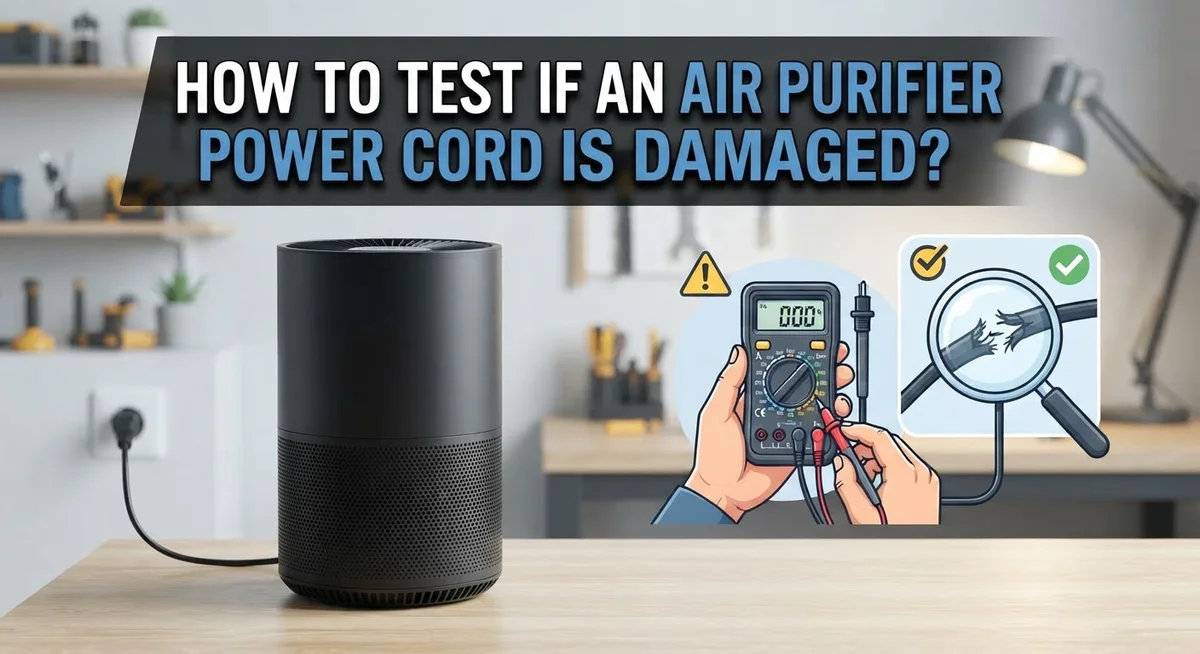
How To Test If An Air Purifier Power Cord Is Damaged?
Your air purifier keeps the air clean. But a damaged power cord can turn this helpful device into a safety risk.
Cords wear out over time. Pets chew them. Furniture bends them. Heat and daily use cause cracks you might not notice right away.
A damaged cord is more than an inconvenience. It can cause shocks, sparks, or even fires. That’s why checking your cord regularly matters so much.
The good news? You don’t need special tools or training to spot the warning signs. A few simple checks can tell you if your cord is safe to use.
In a Nutshell
- Look closely at the cord. Check for fraying, cuts, or odd bends along its length. These are early signs of damage.
- Inspect the power adapter too. The brick shaped box can crack or overheat. Damage here is just as risky as a damaged cord.
- Power on the device. If your air purifier doesn’t turn on, the cord might be the problem. This is a simple but useful test.
- Watch for exposed wires. Any visible wiring means the cord is unsafe. Stop using it right away.
- Pets can cause hidden damage. Chewed cords often need a full replacement. Steel braided cords can help prevent this in the future.
- Don’t patch a damaged cord. Temporary fixes are not safe for daily use. Replacing the cord is always the safer choice.
Why Checking Your Power Cord Matters
Your air purifier’s power cord is the lifeline of your device. Without a working cord, your purifier cannot run and cannot clean your air. A damaged cord creates real safety risks in your home.
Why does this matter so much? A broken power cord stops electricity from reaching your device. Your air purifier sits idle while dust and allergens fill your space. More importantly, a damaged cord can cause electrical fires or shocks. These hazards put your family and home at risk.
Catching damage early saves you money and stress. A small problem with your cord today becomes a big problem tomorrow. If you wait too long, the damage spreads. The entire cord may need replacement instead of a simple fix.
Safety comes first with power cords. Unlike other parts of your air purifier, the cord carries electrical current. Damaged cords expose wires that can spark or overheat. You cannot see electricity, but you can see the warning signs on your cord.
Regular checks prevent emergencies. Taking five minutes to inspect your cord keeps your purifier working safely. You avoid sudden breakdowns when you need clean air most. Your device runs smoothly without interruption.
Damaged cords fail quickly. Once a cord starts to wear, problems multiply fast. Fraying spreads along the length. Cracks in the adapter worsen with each use. What starts as minor damage becomes major within days or weeks.
Your responsibility is simple. Look at your cord regularly. Test your device to confirm power flows through. Spot problems before they become dangerous. A healthy cord means a healthy air purifier that protects your home.
Signs of a Damaged Power Cord
A damaged power cord shows clear warning signs you can spot yourself. Start by looking at the entire length of the cord from the wall outlet to your air purifier. Run your fingers along it gently to feel for soft spots, lumps, or areas where the outer covering feels thin or cracked.
Fraying is one of the most obvious signs. The outer plastic coating breaks down, and the inner layers start to separate. You’ll see loose strands or fibers sticking out from the cord. This happens when cords bend repeatedly or get caught under furniture.
Look for cuts or punctures in the cord’s surface. Even small slits can expose the wires inside and create electrical hazards. Check the power adapter too, which is the brick shaped box where the cord connects to your wall outlet. Cracks, burn marks, or discoloration on this box mean damage exists.
Bent or kinked cords need attention. Sharp bends damage the wires inside, even if the outer covering looks fine. If your cord has a permanent crease or loop, the internal damage may have already started.
Exposed wires are the most serious sign. You should never see copper or colored wiring. If you do, stop using the device immediately.
Test if your air purifier powers on normally. If it doesn’t turn on but your outlet works, the cord might be broken inside. Listen for buzzing sounds near the cord or adapter. Smell the cord too. A burning or plastic smell means heat damage has occurred inside.
Pet damage is common but often hidden. Chewed cords may look minor on the surface but have serious internal breaks. When pets chew through cords, replacement becomes the safest choice rather than repair.
Step-by-Step: How To Test the Cord for Damage
Start by unplugging your air purifier from the wall outlet. Safety comes first when you inspect electrical components.
Look at the entire cord length carefully. Run your fingers along the plastic covering. Feel for soft spots, cracks, or areas where the material feels thin. Check both sides of the cord, including the bottom.
Examine the power adapter next. This is the brick shaped box where the cord connects to your device. Look for scorch marks, melting, or discoloration on its surface. A damaged adapter can be just as dangerous as a damaged cord.
Bend the cord gently near both ends. Move it slowly through your hands. A healthy cord flexes smoothly without resistance. If you hear cracking sounds or feel stiffness, internal damage may exist even if the outside looks fine.
Check for exposed wires anywhere on the cord. This is a serious warning sign. Do not use the device if you see any copper or colored wiring showing through.
If you have pets, inspect areas they can reach. Pet damage often hides under the outer layer. Look for small punctures or bite marks. These tiny openings can expose dangerous wires over time.
Test your air purifier by plugging it back in. Press the power button. If the device doesn’t turn on and you’ve ruled out other issues, the cord might be faulty. A working cord delivers power consistently every time.
Take photos of any damage you find. This helps you remember exactly where problems exist. Keep these images if you contact a repair service or the manufacturer for support.
How To Inspect the Power Adapter Brick
The power adapter brick is the thick rectangular box where your cord connects to the wall outlet. This component takes the most stress during daily use, so it needs careful inspection.
Start by looking at the entire surface of the adapter. Check for cracks, dents, or splits in the plastic casing. Run your fingers gently over it to feel for any soft spots or areas where the plastic feels damaged. Cracks allow moisture inside, which creates serious electrical hazards.
Next, examine where the cord enters the adapter brick. This connection point experiences constant bending and flexing. Look for fraying wires or exposed metal at this junction. The plastic should fit snugly around the cord without gaps or separation.
Check both sides of the adapter for burn marks or discoloration. Dark spots or scorch marks indicate electrical problems inside. These marks mean the adapter overheated at some point. Stop using the device immediately if you see burn marks.
Feel the adapter brick with your hand. It should feel cool to the touch when plugged in. A hot adapter means internal components are failing. Unplug it right away if it feels warm or hot.
Look at the prongs on the adapter. They should be clean and shiny, not corroded or blackened. Corroded prongs prevent proper electrical connection and create fire risks.
Pay special attention to the seams where the adapter halves meet. Cracks along these seams let water and dust inside. Even small gaps are problematic for safety.
If you find any damage during inspection, stop using the adapter. Don’t attempt repairs on this component. The adapter contains dangerous voltages that require professional handling or complete replacement.
What To Do If You Find Exposed Wires
Exposed wires on your power cord create a serious electrical hazard. You must stop using the air purifier immediately when you spot bare wires.
Do not attempt to use the device. Exposed wires can cause electric shock or start a fire. Even a small amount of bare wire poses danger to you and your family.
Your first action is to unplug the cord from the wall outlet. Keep the air purifier unplugged until you address the problem. Never leave it plugged in, even if the device appears to work normally.
Take a clear photo of the exposed wire area. This photo helps you explain the damage to a repair technician or manufacturer support team. It also serves as documentation if you need to file a warranty claim.
Do not wrap the exposed wires with tape or other materials. This temporary fix creates a false sense of security. Tape degrades over time and does not provide true electrical safety. The underlying damage remains hidden beneath the covering.
Contact your air purifier manufacturer for guidance. Many companies offer repair services or replacement cords. Some manufacturers provide free replacements if the cord fails within the warranty period.
Electronics repair shops can assess the damage and discuss your options. Full cord replacement is the safest solution for exposed wires. Repair technicians have proper tools and training to handle electrical components safely.
Keep children and pets away from the damaged cord. Store the air purifier in a safe location until repairs are complete. Never attempt to use it in the meantime.
Order a replacement cord through the manufacturer or authorized repair channels. Installation typically takes just minutes once you receive the new cord.
Repair vs Replacement: Understanding Your Options
When your air purifier cord shows damage, you face two main choices: repair or replacement. Understanding these options helps you make the safest decision for your home.
Full cord replacement is the preferred safety method. This approach removes all risk because you get a brand new cord with proper insulation and connections. Manufacturers sell replacement cords designed specifically for your model. Electronics repair shops can also source and install new cords. This option costs more upfront but eliminates uncertainty about cord safety.
Repairing an existing cord is possible but comes with trade-offs. Technicians can resolder connection points if damage occurs at the cord ends. They may also use heat shrink tubing to seal small cuts in the plastic covering. However, patching a damaged cord does not restore it to factory condition.
Steel braided shielding offers protection for future damage. If pets chew your cords regularly, ask repair shops about upgraded cords with reinforced covering. This preventive step reduces repeat damage in pet-friendly homes.
Professional repair services provide expert assessment. Technicians examine your specific damage and recommend the safest path forward. They have tools to test cord integrity that you cannot use at home.
Consider your situation carefully. If damage is minor and confined to one small area, repair might work temporarily. If damage is widespread, multiple areas show problems, or exposed wires exist, replacement is your only safe option.
Never attempt temporary fixes like electrical tape on safety-critical components. These create false confidence while actual hazards remain. Your air purifier’s safety depends on a properly functioning power cord. Invest in the right solution now rather than risking electrical problems later.
Common Mistakes When Handling a Damaged Cord
Many people make critical errors when dealing with damaged air purifier cords. Understanding these mistakes helps you stay safe and protect your equipment.
The biggest mistake is continuing to use a damaged cord. Some people think minor fraying or small cuts won’t cause problems. This puts you at serious risk of electrical shock or fire. Stop using the device immediately if you notice any damage.
Another common error is attempting temporary fixes on the cord itself. Wrapping exposed wires with electrical tape, duct tape, or other materials seems like a quick solution. This approach is dangerous because it creates a false sense of security. The tape doesn’t actually fix the underlying problem and can fail over time.
People often delay getting professional help after spotting damage. They tell themselves they’ll fix it “later” or “when they have time.” This delay increases the risk to your home and family. Address cord damage as soon as you discover it.
Some individuals try to repair cords themselves without proper training. Reattaching wires or soldering connections requires specific skills and equipment. Mistakes during DIY repairs can make the problem worse.
Pet owners frequently ignore repeated damage from chewing. If your pet keeps damaging cords, you need a long-term solution, not repeated repairs. Discuss protective options with repair professionals.
Never assume a cord is fine just because the device still powers on. Damaged cords can work temporarily while becoming increasingly dangerous. Visual inspection is essential before every use.
Finally, avoid storing damaged cords for future use. A cord that once worked may develop internal damage you can’t see. Always replace rather than reuse compromised cords.
Preventing Future Cord Damage
Preventing future cord damage starts with understanding what causes the problem in the first place. Pets are the leading culprit, especially dogs and cats that chew on cords out of curiosity or stress. Keep your air purifier cord away from pet areas or use barriers to block access.
Environmental factors also matter. Avoid placing cords in high traffic areas where people step on them repeatedly. Don’t bend the cord sharply or wrap it too tightly around the device. Heat sources can weaken cord insulation over time, so keep the power cable away from radiators and direct sunlight.
Moisture and humidity damage cords gradually. If your air purifier sits in a damp basement or bathroom, consider relocating it to a drier space. Moisture seeps into the insulation and creates electrical hazards.
Store your air purifier properly when not in use. Coil the cord loosely rather than wrapping it tightly. Tight wrapping creates stress points that eventually crack the insulation.
Inspect your cord monthly as part of routine maintenance. A quick visual check takes seconds and catches early warning signs before they become serious problems.
Consider cord protection options for vulnerable situations. Steel braided shielding wraps around the cord and resists chewing and abrasion. This extra layer works well if you have pets or live in rough conditions.
Regular inspection is your best defense. Catch small frays or minor damage before they develop into exposed wires. Replace cords at the first sign of trouble rather than waiting for complete failure. This simple habit keeps your air purifier safe and functional for years.
Final Thoughts
Testing your air purifier’s power cord takes just a few minutes. This small step protects your home and family.
A damaged cord poses real risks. Fraying, cuts, and exposed wires can cause shocks or fires. You should never skip this check.
Start with a simple visual scan. Look at the entire cord length. Check the power adapter too.
Next, test if your device powers on normally. A flickering light or intermittent power often signals hidden damage. Trust these warning signs.
Make cord inspection part of your regular routine. Monthly checks catch problems early. This habit saves you from bigger headaches later.
If you spot any damage, act right away. Don’t wait to see if it gets worse. Cords rarely repair themselves.
Replacement remains the safest choice for most situations. A new cord removes all guesswork. Your peace of mind is worth the small cost.
Some people try quick fixes like tape or DIY soldering. These methods often fail and create new hazards. Professional help is always the better path.
Pet owners face unique challenges with cord damage. Regular chewing means regular inspection. Consider protective shielding if this keeps happening.
Remember that cords wear down over time. Environmental factors like moisture speed up this process. Storage matters just as much as usage.
Your air purifier only works well with a healthy cord. Testing takes little time but prevents serious problems. Make this check a habit, not an afterthought.
Stay alert, inspect often, and act fast when you notice damage. This simple practice keeps your home safe and your air purifier running smoothly for years to come.
Frequently Asked Questions
Can a chewed power cord be safely repaired?
Chewed cords should be replaced rather than repaired. While some electronics repair shops can resolder connections, full replacement is the safer choice. Pets often damage cords unpredictably, and patching creates weak spots that fail later.
Replacement cords cost less than emergency repairs or a new air purifier. If your pet has chewed the cord, remove the device from use immediately and get a replacement.
What does a damaged power cord look like?
Look for these visible signs of damage. Fraying around the cord’s outer jacket means the protective layer is failing. Small cuts or nicks expose inner wires and create shock hazards.
Bending or kinking the cord repeatedly damages internal wires even if the outer coating looks fine. Discoloration or burn marks indicate heat damage. Check the power adapter (the brick shaped box) for cracks or damage too.
Should I use electrical tape to fix a damaged cord?
No. Tape is a temporary fix that creates a false sense of security. It does not restore the cord’s safety or electrical integrity.
Electrical tape does not stop electrical current from leaking through damaged areas. It also traps moisture inside the cord, which causes rust and further breakdown. Tape can slip off during use, leaving exposed wires uncovered.
How do I know if the cord is damaged if the device still powers on?
Power flowing to your device does not mean the cord is safe. Damaged cords can still deliver electricity while posing serious fire and shock risks.
A device that powers on normally may have internal wire damage you cannot see. Always inspect the cord visually first. If you spot any damage, stop using the device regardless of whether it turns on.

I’m Maya Brown, the voice behind Pure Breeze Vault. I write detailed, honest, and easy-to-follow air purifier reviews to help readers compare features, understand filter technologies, and choose products with confidence. My goal is to make research simpler, clearer, and more practical for anyone improving indoor air quality at home.