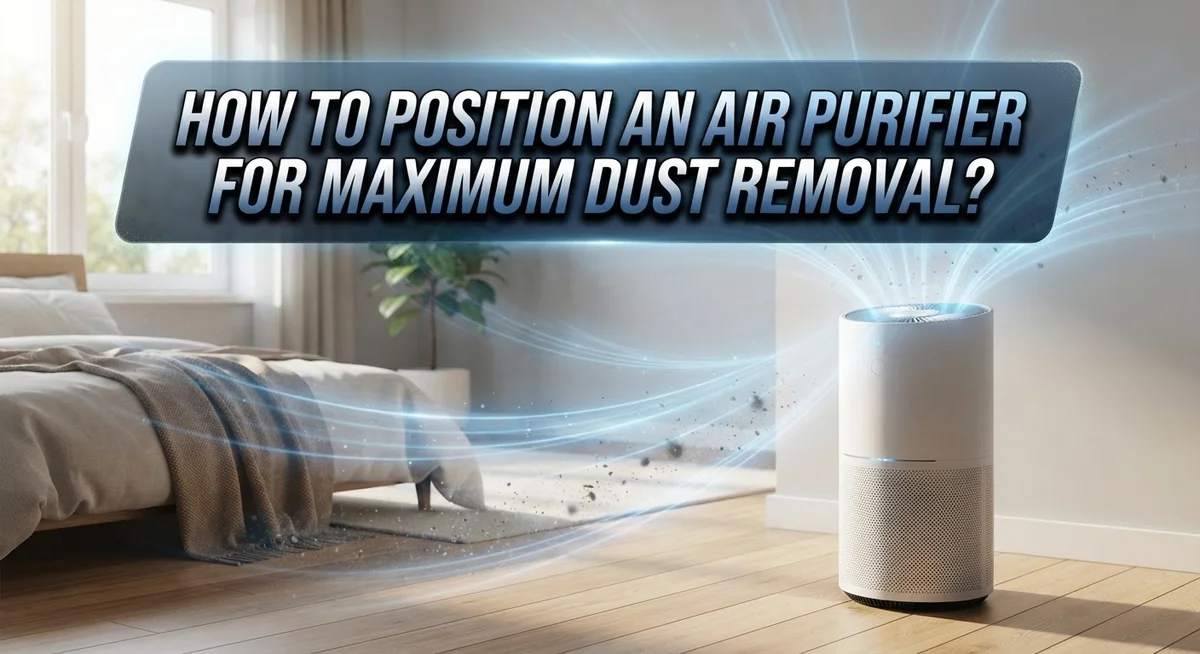
How To Position An Air Purifier For Maximum Dust Removal?
Dust builds up fast in every home. It settles on shelves, floats in the air, and sneaks into corners you forget about.
An air purifier can help you fight this problem. But placement matters just as much as the machine itself.
Many people buy a great purifier and still see dust everywhere. Why? They place the unit in the wrong spot.
A purifier tucked behind a couch or squeezed into a corner cannot pull in dirty air properly. It ends up working harder while cleaning less.
In a Nutshell
- Choose a central spot in the room. Open placement lets the purifier pull air from every direction.
- Keep it 6 to 10 feet from your bed or seating area. This distance sits inside the natural air flow pattern of the room.
- Give the intake room to breathe. Leave at least 18 inches of space around the intake vents.
- Maintain side clearance. Keep 1 to 2 feet of open space on each side of the unit.
- Never push it against a wall. Keep the inlet at least 6 inches away from any wall surface.
- Avoid damp rooms. Skip bathrooms or spots near humidifiers, since moisture affects filter performance.
- Pick high-traffic rooms first. Your bedroom or living room usually needs the purifier most.
Why Placement Matters for Dust Removal
Air purifier placement directly affects how well dust gets removed from your home. When you position a unit correctly, it pulls in more dirty air and filters it faster. Poor placement means dust keeps circling your room without getting captured.
The core reason placement matters is airflow. An air purifier works by drawing air through its intake vents, passing it through filters, and releasing clean air back into the room. If something blocks these vents, the unit cannot do its job. Dust particles need a clear path to reach the intake.
Distance from your body also plays a role. When you sit or sleep too close to the purifier, you breathe in filtered air that hasn’t circulated through the room yet. Placing it farther away lets the unit pull in air from around your entire space first.
Room size and layout affect results too. A large bedroom needs the purifier positioned where air can flow freely in all directions. Tight corners trap stale air and prevent proper circulation. Open central spots allow the unit to reach dust floating everywhere.
Humidity levels in your chosen location matter as well. Bathrooms and areas near humidifiers create moisture that clogs filters faster. Dry rooms let your purifier work longer without losing effectiveness.
Think about where you spend the most time. Your bedroom or living room should get priority since you breathe that air for hours daily. Placing the purifier in a room you rarely use wastes its filtering power.
Proper placement multiplies your purifier’s dust removal ability. A unit in the right spot catches far more particles than one squeezed into a bad location. Your setup determines real world performance.
Choosing the Best Room for Your Air Purifier
Choosing the right room for your air purifier is the first step toward better dust removal. Focus on spaces where you spend the most time. Your bedroom and living room are the top choices because you breathe that air for many hours each day.
Bedrooms deserve special attention. You sleep in this space for 6 to 8 hours, so dust exposure matters here most. A bedroom purifier catches particles before they settle on your pillow and bedding. Living rooms rank second because families gather there during evenings and weekends.
Skip bathrooms and laundry areas entirely. These rooms have high moisture levels that damage filters faster and reduce cleaning power. Humidity also makes dust stick to surfaces, which means your purifier works harder for worse results. Keep the unit away from humidifiers, steam vents, and shower areas.
Think about room size when making your choice. Larger rooms need purifiers placed where air can travel freely without obstacles. Smaller rooms may need placement closer to your main activity zone. A 200 square foot bedroom needs different positioning than a 400 square foot living room.
Consider your daily routine too. If you work from home in an office, that space becomes important. If you cook often, the kitchen air quality matters. However, kitchens can have grease and cooking oils that clog filters, so position it in an adjacent dining area instead.
Avoid corners and cramped spaces. These locations trap stale air and prevent the purifier from pulling in fresh, dust-filled air from the room. Open, central areas let the unit work at full strength. Pick a room with clear sightlines and good air circulation patterns for maximum effectiveness.
Step-by-Step: Finding the Ideal Spot
Finding the ideal spot for your air purifier requires understanding how air moves through your room. Start by looking at your space and identifying areas where people spend the most time. These zones need your purifier’s attention first.
Measure distances carefully from furniture and walls. Place your unit at least 6 to 10 feet away from where you sleep or sit. This distance lets the purifier pull in air effectively while you breathe cleaner air. Closer placement doesn’t improve performance and may actually reduce it.
Check clearance around all vents on your purifier. The intake needs 18 inches of open space. Keep 1 to 2 feet of clearance on each side of the unit. Your purifier’s outlet should point toward the center of the room, not toward a wall.
Never tuck your purifier into corners or tight spaces. Air gets trapped in these spots. Your purifier can’t pull in enough dust particles. Open, central locations work best for maximum coverage.
Keep the inlet at least 6 inches away from walls. This small gap makes a big difference in how much air your unit can draw. Blocked intakes force your purifier to work harder and pull in less dust.
Consider the room’s layout too. Avoid placing your purifier behind large furniture like sofas or cabinets. These obstacles block airflow paths. Position it where air can move freely around the entire unit.
Think about your daily schedule. The room where you spend the most hours should get priority. Your bedroom or living room typically needs better air quality. Once you’ve positioned your purifier correctly, dust removal improves significantly.
Clearance Requirements for Intake and Outlet Vents
Your air purifier’s intake and outlet vents need proper breathing room to work effectively. Think of these vents like lungs—they need clear space to pull in dirty air and push out clean air.
Maintain at least 18 inches of clearance on the sides of your unit. This space lets air flow freely around the purifier without hitting walls or furniture. When vents get blocked, your purifier works harder and pulls in less dust overall.
The inlet (where air enters) requires special attention. Keep it at least 6 inches away from any wall or large object. This prevents the unit from recycling already filtered air. If the inlet sits too close to a wall, it simply recirculates the same clean air instead of pulling fresh, dust filled air from the room.
Your outlet vent (where clean air exits) should have 1 to 2 feet of open space in front of it. Never point the outlet directly at walls, furniture, or curtains. Blocked outlets force clean air to bounce back and reduce the purifier’s overall effectiveness.
Position your unit in an open area of the room rather than in corners or against walls. Open placement allows air to circulate naturally throughout the space. This circulation pattern helps the purifier catch dust particles that float through your room.
Check both the top and sides of your purifier too. Some units have vents on multiple surfaces. Clear space around all vent locations ensures maximum airflow. When you give your purifier room to breathe, it removes significantly more dust from your home. This simple step makes a real difference in air quality.
Positioning Relative to Beds, Sofas, and Airflow Patterns
Air movement patterns in your room directly affect how well your purifier removes dust. Position your unit where air naturally circulates rather than in dead zones. If your bed or sofa sits near a window or door, place the purifier across the room so it can pull dust-laden air toward itself.
Beds and sofas act as dust magnets since we shed skin cells and fabric fibers while sitting or sleeping. Keep your purifier 6 to 10 feet away from these furniture pieces. This distance allows the unit to pull air from the seating area without being blocked by the furniture itself.
Side clearance matters more than you might think. Maintain at least 18 inches of open space on both sides of your purifier. This spacing lets air flow freely around the unit instead of getting trapped against furniture or walls.
The outlet vent deserves careful attention too. Point it toward an open area of your room, not directly at your bed or sofa. Clean air should flow into the space you occupy, not get blocked immediately by furniture. Leave 1 to 2 feet of clearance in front of the outlet.
Consider how air moves when doors open and close. Position your purifier so it captures air from the main pathways people use. If your bedroom has air conditioning vents, place the purifier where it can work with that airflow rather than against it.
Avoid positioning the unit directly under ceiling vents or fans. These create competing airflow patterns that reduce the purifier’s effectiveness. Instead, place it where natural room circulation helps distribute cleaned air throughout your space.
Environmental Factors to Avoid When Placing Your Unit
Certain environmental conditions make air purifiers less effective at removing dust. Understanding what to avoid helps you place your unit in the best location for maximum performance.
High humidity areas are your first concern. Bathrooms, kitchens near stovetops, and rooms with humidifiers create moisture that damages filters quickly. Wet filters can’t trap dust particles effectively. They also develop mold and odors over time. Keep your purifier away from these spaces entirely.
Extreme temperature zones also reduce efficiency. Don’t place your unit near heating vents, air conditioning units, or direct sunlight. Temperature fluctuations stress the motor and reduce airflow. Cold or hot air moving past the purifier confuses its sensors and wastes energy.
Dusty source areas require careful consideration. Avoid placing your purifier right next to where dust originates. Examples include workshop spaces, garages with sawdust, or areas near fireplaces. Your purifier will work overtime trying to handle concentrated dust clouds instead of maintaining clean air throughout the room.
Poorly ventilated spaces limit effectiveness. Basements, attics, and sealed rooms trap stale air. Your purifier can’t circulate air properly in these confined areas. Air gets recirculated without fresh oxygen mixing in.
Areas with strong odors can overwhelm your unit. Kitchens with cooking smells or rooms with chemical cleaners force the purifier to process too many particles at once. This reduces its ability to focus on dust removal.
Drafty locations create uneven air distribution. Hallways, entryways, and spaces near open windows pull air away from your purifier’s intake. The unit can’t maintain consistent coverage when external air movement interferes with its operation.
Choose stable, moderate environments for best results.
Common Positioning Mistakes That Reduce Efficiency
Many people make simple mistakes when positioning their air purifiers that seriously hurt dust removal performance. Understanding these errors helps you avoid them and get better results.
Blocking airflow with furniture is one of the biggest problems. When you place your purifier behind a couch, bed, or large cabinet, air cannot reach the unit easily. The intake vents get starved of air, and the purifier works much harder while removing less dust. Your unit needs open space to pull air from all directions.
Placing the unit too close to walls creates dead zones where dust collects. Air bounces off the wall and gets trapped instead of flowing smoothly into the intake. This reduces how much dust your purifier actually captures from the room.
Positioning near obstacles that block airflow is equally problematic. Curtains, drapes, or hanging clothes near your unit restrict air movement. Even stacked boxes or storage containers can create barriers that reduce efficiency.
Ignoring outlet vent direction is another common mistake. When the clean air outlet points toward a wall or furniture, it bounces back and mixes with dusty air again. This wastes the purification work your unit just completed.
Placing the purifier in isolated spots where air doesn’t circulate well reduces effectiveness. Rooms with poor air movement patterns, like dead corners or sealed closets, trap the unit’s output. The purified air never reaches the rest of your room.
Overcrowding the space around your unit prevents proper air circulation. Stacking items on top of or immediately beside your purifier blocks both intake and outlet vents. Leave breathing room on all sides for optimal dust removal and consistent air cleaning throughout your space.
Troubleshooting Poor Dust Capture After Placement
If your air purifier isn’t capturing dust well after placement, several fixable issues are likely at work. Start by checking your clearance distances. Your unit needs at least 15 centimeters from walls and 18 inches around intake vents. Dust won’t reach the purifier if furniture or walls block the airflow path.
Next, measure the distance from your seating or sleeping area. The ideal range is 6 to 10 feet away. If you’ve placed it closer or farther, dust particles may not enter the intake before they settle elsewhere in the room.
Inspect your intake and outlet vents for blockages. Dust buildup on these areas reduces suction power significantly. Clean the exterior vents with a soft brush or cloth. A clogged filter also cuts performance dramatically, so check your filter status and replace it if needed.
Consider the room’s air circulation pattern. Is your purifier positioned where air actually flows? If doors and windows create dead zones, dust accumulates there instead. Reposition your unit to sit within the main airflow path of the room.
Check for competing air sources. Ceiling fans, open windows, or heating vents can redirect dust away from your purifier. Minimize these conflicts by adjusting fan speeds or closing windows temporarily.
Humidity levels matter too. If your room feels damp or sticky, moisture causes dust to clump and settle faster. In high humidity spaces, your purifier works harder and captures less effectively.
Finally, verify that large furniture isn’t creating barriers. Sofas, cabinets, or storage boxes block air from reaching the unit. Clear these obstacles and test your purifier’s performance again within 24 hours.
Final Thoughts
Getting your air purifier’s position right makes a real difference in dust removal. It’s a simple fix that costs nothing but a bit of thought.
Place your unit where air moves freely. Avoid corners, tight spaces, and areas crowded with furniture.
Keep it 6 to 10 feet from your bed or favorite chair. This distance lets the purifier clean air right where you breathe most.
Give the intake and outlet vents room to work. Clearance around these areas directly affects how much dust your unit can pull in and process.
Think about your room’s natural airflow. Doors, windows, and vents all move air in certain patterns. Your purifier works best when it fits into that pattern rather than against it.
Skip high humidity spots like bathrooms. Also stay away from spaces with extreme temperatures. These conditions strain your unit and reduce its dust catching power.
Central placement often beats corner placement. When possible, position your purifier in the open rather than tucked against a wall.
Small adjustments can lead to big improvements. If dust still lingers after a few days, check your setup again.
Look at furniture placement, vent clearance, and distance from your seating area. These three factors solve most positioning problems.
Remember that every room is different. What works in your living room might need slight changes in your bedroom.
Trust the basics: clear space, proper distance, and good airflow. Follow these guidelines and your air purifier will capture more dust with less effort.
Good positioning turns a decent air purifier into an excellent one. Take a few minutes to check your setup today.
Frequently Asked Questions
Can I place my air purifier in a corner to save space?
Corner placement is not ideal for dust removal. Corners create dead zones where air doesn’t flow as well. Your purifier works best when positioned in open, central areas of your room. If space is tight, place the unit along a wall with at least 15 cm clearance from the wall itself. This keeps air moving freely around the intake and outlet vents.
How far should the air purifier be from my bed?
Position your purifier 6 to 10 feet away from your bed. This distance lets the unit pull air from your breathing zone without being too close. The purifier should sit across the room from your bed within the same air circulation pattern. This setup ensures dust particles travel toward the unit naturally.
What if my bedroom is very small?
Small rooms need smart placement too. Place the unit at least 6 feet from your bed, even in tight spaces. Make sure nothing blocks the intake and outlet vents. Keep the purifier away from walls, furniture, and other obstacles. Even in small rooms, airflow matters more than perfect distance.
Should I move my air purifier to different rooms?
You can move it, but prioritize the rooms where you spend the most time. Most people benefit most from placing it in their bedroom or living room. If you move it frequently, check that it has proper clearance in each new location. Consistent placement in your main living area gives better results than constant relocation.
Can humidity affect where I place my air purifier?
Yes. Avoid placing your purifier in high humidity areas like bathrooms or near humidifiers. Moisture can damage the filter and reduce effectiveness. Choose dry, well-ventilated rooms instead. Bedrooms and living rooms typically offer the best humidity levels for air purifier operation.

I’m Maya Brown, the voice behind Pure Breeze Vault. I write detailed, honest, and easy-to-follow air purifier reviews to help readers compare features, understand filter technologies, and choose products with confidence. My goal is to make research simpler, clearer, and more practical for anyone improving indoor air quality at home.