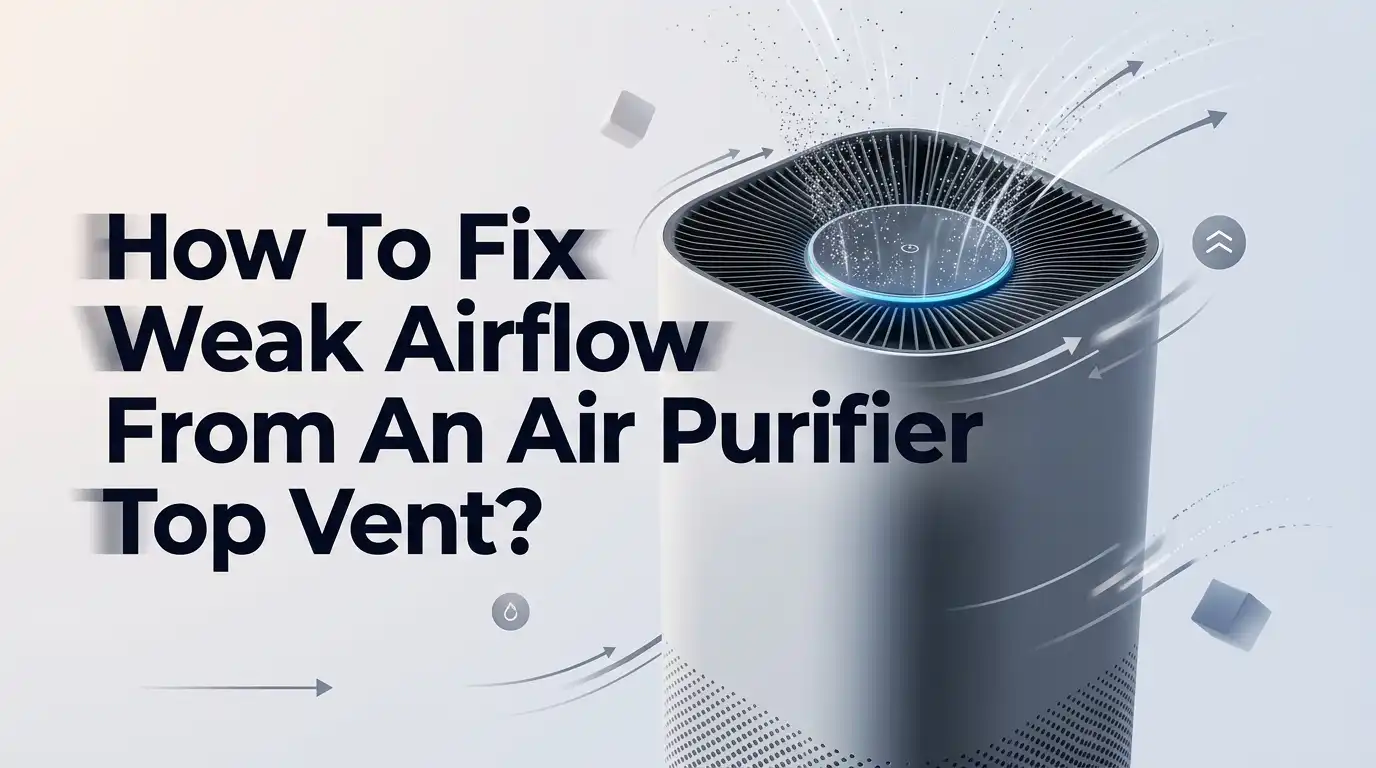
How To Fix Weak Airflow From An Air Purifier Top Vent?
Your air purifier hums along all day, but you barely feel any air coming out of the top vent. That weak breeze is more than just annoying.
It often means your machine is not cleaning your room the way it should. The good news is that most airflow problems have simple causes. You can fix many of them in minutes with tools you already own at home.
This guide walks you through every reason your top vent feels weak. You will learn how to spot the problem, fix it fast, and keep it from coming back. Each section gives you clear steps, plus the pros and cons of each fix. Let us get your air purifier blowing strong again.
Key Takeaways
- A clogged filter is the number one cause of weak airflow from the top vent. Dust packs into the filter and blocks air from passing through.
- Dirty fan blades and motor housing slow down the air. A buildup of dust on the fan reduces how much air the machine can push out.
- Bad placement blocks airflow in many homes. Walls, curtains, and furniture near the vent stop air from moving freely.
- The pre filter often gets ignored, yet it traps the most dust. Cleaning it regularly keeps your main filter and fan working well.
- Filters wear out over time and must be replaced. No amount of cleaning fixes a filter that has reached the end of its life.
- Low fan settings and eco modes can make airflow feel weak even when nothing is broken. Always check your settings first.
Why Weak Airflow From The Top Vent Matters
The top vent is where your air purifier pushes out clean air. When the airflow feels weak, your machine moves less air through the filter each minute. This means fewer pollutants get trapped, and your room stays dirtier for longer.
Weak airflow is often the first warning sign that something inside needs attention. It can point to a clogged filter, a dusty fan, or poor placement. Ignoring it makes the problem worse and can shorten the life of the motor.
A purifier with strong airflow cleans a room faster and keeps allergens, dust, and odors under control. So fixing weak airflow protects both your health and your machine. The fixes below are easy, and most cost nothing at all.
Check The Fan Speed And Settings First
Before you open the unit, look at the control panel. Many people set their purifier to a low or quiet mode and forget about it. Eco mode and sleep mode both lower the fan speed on purpose to save energy and reduce noise. This makes the top vent feel weak.
Press the fan button and raise the speed to the highest setting. Feel the top vent again. If the air now blows strong, your machine works fine. The weak airflow was just a setting, not a fault.
Some smart purifiers also drop the fan speed when their sensors read clean air. Check your app or display for an auto mode. Turn it off to test the full power.
Pros: This fix takes seconds and costs nothing. Cons: It only helps if settings were the real cause, so you may still need to look deeper.
Inspect And Clean The Pre Filter
The pre filter sits at the front or side of your machine. It catches large dust, hair, and pet fur before they reach the main filter. This part clogs faster than any other part because it faces the dirty air first.
Open the unit and slide out the pre filter. Hold it up to a light. If you cannot see through it, dust is blocking your airflow. A blocked pre filter chokes the whole system and weakens the top vent.
Most pre filters are washable. Rinse it under cool water, shake off the excess, and let it dry fully before you put it back. You can also vacuum it with a brush attachment for a quick clean.
Pros: Cleaning the pre filter is cheap and brings airflow back fast. Cons: You must do it often, every two to four weeks in dusty homes.
Clean Or Replace The Main HEPA Filter
The HEPA filter is the heart of your purifier. It traps the tiny particles that the pre filter misses. Over time, this filter fills with dust and packs tight, which blocks air and weakens the top vent. This is the most common cause of poor airflow.
Pull out the HEPA filter and look at its surface. A gray or brown color means it is full. A clogged HEPA filter cannot be ignored, since it slows airflow more than anything else.
Most HEPA filters are not washable. Washing them can damage the fibers and ruin their ability to trap particles. Instead, replace the filter every six to twelve months, or sooner in dusty rooms. Check your manual for the exact schedule.
Pros: A fresh filter restores full airflow and cleaning power. Cons: New filters cost money and add a recurring expense.
Clear The Air Intake Vents
Air enters your purifier through intake vents on the back or sides. If these vents are blocked, air cannot reach the fan, and the top vent suffers. Less air in means less air out.
Look closely at the intake openings. Dust often cakes across the grille and slows the flow. Pet hair, lint, and cobwebs gather here too. A blocked intake starves your fan even when the filters are clean.
Wipe the intake grille with a dry microfiber cloth. For stuck dust, use a soft brush or a vacuum with a brush head. Make sure no furniture, bags, or curtains press against the intake side.
Pros: This fix is fast and free, and it often gives an instant boost. Cons: Dust returns, so you need to wipe the vents every few weeks.
Clean The Fan Blades And Motor Housing
Behind the filters sits the fan that pushes air out the top. Dust builds up on the fan blades over months of use. This extra weight and surface drag slow the blades down, so they move less air. The top vent then feels weak even with clean filters.
Unplug the unit first for safety. Open the housing if your model allows it. Use a soft brush or a can of compressed air to clear dust from the blades and the motor area. Never use a wet cloth near the motor, as moisture can damage the electric parts.
A clean fan spins freely and pushes more air. Wipe gently and avoid bending the blades.
Pros: This restores airflow that filter changes alone cannot fix. Cons: It takes more effort, and some sealed units are hard to open safely.
Fix Poor Air Purifier Placement
Where you put your purifier changes how well it breathes. A unit pushed into a corner or against a wall cannot move air freely. Walls and furniture block both the intake and the top vent, which makes airflow feel weak.
Move your purifier so it sits at least one to two feet away from walls, curtains, and large furniture. Clear space around every vent lets air flow in and out without resistance.
Placing the unit on a raised surface, around three to five feet off the floor, also helps. This puts the clean air output in your breathing zone and improves circulation across the room.
Pros: Better placement boosts airflow and cleaning power with zero cost. Cons: You may need to rearrange furniture or find a new spot, which is not always easy in small rooms.
Remove Any Plastic Wrap Or Stickers
This sounds simple, but it trips up many new owners. Brand new purifiers ship with plastic wrap around the filter. This wrap protects the filter during shipping. If you forget to remove it, no air can pass through, and the top vent stays weak.
Open the unit and check the filter. Peel off any plastic film, bags, or tape you find. A wrapped filter blocks airflow completely, so this is always worth a quick check.
Some models also have stickers over the intake or vent openings. Look for these and peel them away too. Then close the unit and test the airflow again.
Pros: This fix is instant and free, and it solves a surprising number of cases. Cons: It only applies to newer units or freshly replaced filters.
Check For A Failing Or Weak Motor
If you have cleaned everything and airflow is still weak, the motor itself may be tired. Motors wear down after years of daily use. The bearings can dry out, and the fan loses speed even when nothing blocks it.
Listen to your purifier on the highest setting. A grinding, rattling, or whining sound often points to a motor problem. A weak or noisy motor cannot push air the way it once did.
You can try a small drop of machine oil on accessible bearings, but most motors are sealed. In that case, you may need a replacement part or a new unit. Contact the maker before you open a sealed motor.
Pros: Spotting a bad motor saves you from chasing fixes that will not work. Cons: Motor repair is hard, and replacement can cost as much as a new machine.
Reset Your Air Purifier
Sometimes the problem is not dust or hardware at all. A software glitch can lock the fan at a low speed or confuse the auto sensors. A simple reset clears these errors and often brings the airflow back.
Unplug the unit from the wall. Wait about thirty seconds, then plug it back in. This power cycle refreshes the control board. Many smart purifiers behave normally again after a quick reset.
If your model has a reset button or a filter reset option, use it after you clean or change the filter. This tells the machine to recalculate its settings and run at full power.
Pros: A reset is fast, free, and fixes hidden software faults. Cons: It will not help if the real cause is a clogged filter or a dirty fan.
Make Sure You Replace Filters On Time
Cleaning helps, but every filter has a limit. A filter at the end of its life blocks airflow no matter how much you clean it. The fibers stay packed with fine particles that you cannot wash or brush away.
Follow the schedule in your manual. Pre filters often last two to six months. HEPA filters usually run six to twelve months. Carbon filters for odors wear out too, often within a few months.
Mark a reminder on your phone or calendar. Many homes with pets, smoke, or heavy dust need to swap filters sooner than the average. Always use the correct filter model for your machine.
Pros: Fresh filters keep airflow strong and your air truly clean. Cons: This is an ongoing cost that adds up over the years.
Build A Simple Maintenance Routine
A little regular care keeps weak airflow from ever returning. Most airflow problems come from skipped cleaning, so a routine solves them before they start. You do not need much time, just a steady habit.
Once a week, wipe the intake and top vents with a dry cloth. Every two to four weeks, clean or vacuum the pre filter. Every few months, open the unit and dust the fan blades. Set calendar reminders so you never miss a step.
Keep the area around your purifier clear at all times. Avoid placing it in damp rooms, since moisture can clog the filter media and harm the motor.
Pros: A routine prevents most problems and extends the life of your machine. Cons: It takes a small, steady commitment of your time.
When To Replace The Whole Air Purifier
Some machines reach a point where fixes no longer help. If the motor is dead and parts cost too much, a new unit makes more sense. Older purifiers also lose efficiency even with fresh filters.
Think about a replacement if your machine is more than eight to ten years old. A weak motor, cracked housing, or a unit too small for your room are all signs it is time to upgrade.
Before you buy, match the purifier to your room size. Look at the clean air delivery rate, often shown as CADR. A unit sized for your space will always give stronger, more reliable airflow.
Pros: A new, well sized unit gives the best airflow and cleaning power. Cons: It costs the most of all the options, so try every fix first.
Frequently Asked Questions
Why does my air purifier have weak airflow even after I changed the filter?
Check that you removed the plastic wrap from the new filter. Also clean the intake vents and dust the fan blades. A new filter alone does not fix a dirty fan or blocked intake.
Can I wash my HEPA filter to improve airflow?
Most HEPA filters are not washable. Washing can damage the fibers and reduce their ability to trap particles. Wash only the pre filter, and replace the HEPA filter when it gets clogged or old.
How often should I clean my air purifier to keep airflow strong?
Wipe the vents weekly and clean the pre filter every two to four weeks. Dust the fan blades every few months. Homes with pets or heavy dust need cleaning more often.
Is it normal for the top vent airflow to feel weak on sleep mode?
Yes, this is normal. Sleep mode and eco mode lower the fan speed to reduce noise and save energy. Raise the fan to the highest setting to feel the full airflow.
Does the placement of my air purifier affect the airflow?
Yes, it does. A unit pushed against a wall or hidden behind furniture cannot move air freely. Keep at least one to two feet of clear space around every vent for the best flow.
When should I replace my air purifier instead of fixing it?
Replace it if the motor fails, parts cost too much, or the unit is over eight to ten years old. A machine too small for your room will also struggle no matter what you fix.

I’m Maya Brown, the voice behind Pure Breeze Vault. I write detailed, honest, and easy-to-follow air purifier reviews to help readers compare features, understand filter technologies, and choose products with confidence. My goal is to make research simpler, clearer, and more practical for anyone improving indoor air quality at home.