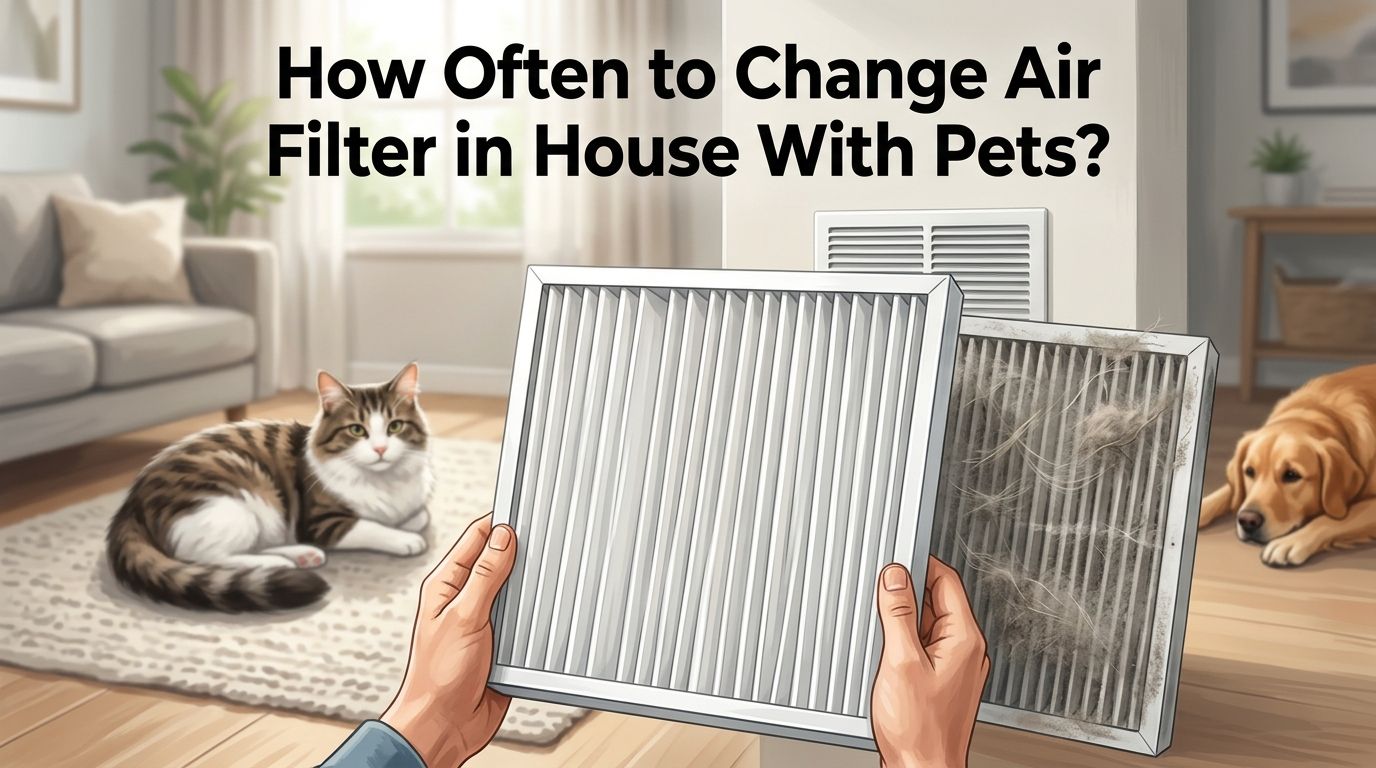
How Often to Change Air Filter in House With Pets?
If you share your home with a dog, cat, or bird, you already know the joy they bring. But you may not realize how much their fur, dander, and feathers affect your indoor air.
Pet dander is microscopic and jagged, which means it stays airborne longer than most other allergens. It settles on furniture, floats through vents, and clogs your HVAC air filter much faster than you might expect.
A standard home without pets can go about 90 days between filter changes. A home with pets? That timeline shrinks dramatically. A clogged filter does more than reduce air quality.
In a Nutshell
- Pet owners should change their HVAC air filter every 30 to 60 days instead of the standard 90 days recommended for pet free homes. Homes with multiple pets or heavy shedders may need a fresh filter every 20 to 30 days. This single habit protects your air quality, your health, and your HVAC system.
- The right MERV rating matters as much as the schedule. Filters rated MERV 8 to 13 capture pet dander, hair, and other fine particles effectively. A MERV 11 filter is the sweet spot for most pet households because it traps about 85% of particles in the 3 to 10 micron range without restricting airflow too much.
- A dirty filter costs you real money. Your HVAC system consumes up to 15% more energy when forced to push air through a clogged filter. For a home with a $150 monthly energy bill, that adds up to roughly $270 per year in wasted electricity.
- Watch for warning signs between scheduled changes. Visible dust around air vents, weak airflow from registers, musty odors, and increased allergy symptoms all point to a filter that needs replacement before its scheduled date.
- Seasonal shedding changes the game. Most dogs and cats shed more heavily in spring and fall. During these periods, check your filter every two weeks and replace it the moment it looks gray or feels stiff with trapped debris.
Why Pets Make Your Air Filter Work Harder
Pets release dander, fur, saliva particles, and tracked in dirt into your home every single day. Pet dander particles are extremely small, often between 2.5 and 10 microns. They are light enough to stay suspended in the air for hours before settling on surfaces or getting pulled into your HVAC return vents.
The American Lung Association notes that pet allergens can linger in the air longer than many other common indoor pollutants. Dogs and cats also bring pollen, dust, and outdoor allergens inside on their coats. All of these particles end up trapped in your air filter.
A home without pets produces far less airborne debris. A pet household generates two to three times more airborne particulate matter. This means your filter reaches its capacity much faster, and a saturated filter can no longer do its job.
The General Rule: Every 30 to 60 Days
The standard recommendation for homes without pets is to change the air filter every 90 days. Pet owners should cut that timeline in half or more. Most HVAC professionals recommend a replacement every 30 to 60 days for homes with one pet.
If you have two or more pets, aim for every 20 to 30 days. Homes with both cats and dogs should lean closer to the 20 day mark because these animals produce different types of dander and fur that compound the problem.
This schedule applies to standard 1 inch disposable pleated filters. Thicker 4 to 5 inch media filters can sometimes last longer, but they still need more frequent replacement in pet households than the manufacturer suggests.
How the Number and Type of Pets Changes the Schedule
One small, short haired pet like a Chihuahua or a domestic shorthair cat produces less airborne fur and dander. You can usually follow a 60 day replacement cycle with a single low shedding pet.
One large or heavy shedding pet like a Golden Retriever, Husky, or Persian cat pushes you to a 30 day schedule. These breeds release significant amounts of undercoat fur, especially during seasonal coat changes.
Multiple pets of any size call for filter checks every two to three weeks. Replace the filter as soon as it shows visible buildup. Homes with three or more animals may need monthly changes year round, regardless of shedding season.
Birds also affect filter life. Feather dust from cockatiels, cockatoos, and African Greys is especially fine and clogs filters quickly. Bird owners should follow a 30 to 60 day replacement schedule.
Understanding MERV Ratings for Pet Owners
MERV stands for Minimum Efficiency Reporting Value. It measures how well a filter captures particles of different sizes. The scale runs from 1 to 20, with higher numbers catching smaller particles.
For pet households, HVAC experts recommend filters rated MERV 8 to 13. A MERV 8 filter captures large pet hair and some dander. A MERV 11 filter catches about 85% of particles between 3 and 10 microns, which covers most pet dander. A MERV 13 filter captures roughly 95% of large particles and about 80% of smaller ones.
Pros of higher MERV ratings: Better air quality, more allergen removal, and cleaner ducts. Cons of higher MERV ratings: Greater airflow resistance, which can strain older HVAC systems and increase energy use if the system was not built for dense filters. Always check your HVAC manual before upgrading to MERV 13 or above.
If your system uses a standard 1 inch filter slot, stick with MERV 8 to 11. Systems with 4 to 5 inch filter cabinets can safely handle MERV 13 without airflow issues.
Signs Your Filter Needs Changing Before the Scheduled Date
Even with a regular schedule, your filter may clog sooner than expected. Here are clear signals to watch for.
Visible dust on or around your air vents means particles are bypassing or overloading the filter. If you wipe a vent and find a thick layer of gray dust within days of cleaning, the filter is likely full.
Weak airflow from your registers is a strong indicator. Hold your hand near a vent while the system runs. If the air feels noticeably weaker than usual, a clogged filter is the most common cause.
Increased allergy or asthma symptoms among household members point to poor filtration. Sneezing, itchy eyes, and congestion that worsen indoors suggest the filter is no longer trapping allergens.
A musty or stale odor coming from the vents can mean trapped pet dander and moisture are breeding bacteria or mold in the filter material. Replace the filter immediately and inspect the ductwork if the smell persists.
The Cost of Ignoring Filter Changes
Skipping filter replacements may seem like you are saving a few dollars, but the real costs add up fast. A clogged filter forces your HVAC system to work up to 15% harder to push air through the blocked material. That translates directly into higher monthly energy bills.
For a household spending $150 per month on energy, a dirty filter can add roughly $22 per month, or about $270 per year in extra costs. Over time, the strain also shortens the lifespan of your HVAC equipment. Replacing a furnace or air conditioner costs thousands of dollars, while a new filter costs just a few dollars each time.
A neglected filter can also cause the evaporator coil to freeze, the blower motor to overheat, or the system to short cycle. Each of these problems requires a professional service call that costs far more than a year’s worth of replacement filters.
Step by Step Guide to Changing Your Air Filter
Replacing your HVAC filter is a simple task that takes less than five minutes. Follow these steps to do it correctly.
Step 1: Turn off your HVAC system. This prevents unfiltered air from circulating while the filter slot is open.
Step 2: Locate the filter. It sits in the return air duct, usually near the furnace, air handler, or behind a large return vent on a wall or ceiling.
Step 3: Slide out the old filter. Note the size printed on the frame. Common sizes include 16x20x1, 20x20x1, and 16x25x1.
Step 4: Check the airflow arrow on your new filter. This arrow must point in the direction of airflow, which is toward the furnace or air handler and away from the return duct.
Step 5: Slide the new filter into place, turn the system back on, and write the date on the filter frame so you know when you installed it.
Washable vs. Disposable Filters for Pet Homes
Pet owners often wonder if a washable, reusable filter is a better choice than disposable ones. Both options have clear strengths and weaknesses.
Disposable pleated filters are the most popular choice. They come in a wide range of MERV ratings and are easy to swap out. Pros: Convenient, widely available, and effective at trapping pet dander. Cons: Ongoing cost of buying new filters every month or two, and they create waste.
Washable electrostatic filters can be rinsed with water and reused for years. Pros: Lower long term cost and less waste. Cons: Most washable filters have a lower MERV rating, typically around MERV 4 to 6, which may not capture fine pet dander effectively. They also require thorough drying before reinstallation to prevent mold growth.
For most pet owners, a disposable pleated filter rated MERV 11 offers the best balance of filtration performance, airflow, and convenience. If sustainability matters to you and your household has minimal allergy concerns, a washable filter can work as a baseline option paired with a portable air purifier for extra filtration.
Seasonal Adjustments for Pet Owners
Your filter replacement schedule should flex with the seasons. Spring and fall are peak shedding times for most dogs and cats. During these months, your filter will fill up faster than usual.
Check the filter every two weeks during shedding season. If it looks gray or feels heavy, replace it immediately. During summer and winter, you can often stick to a 30 to 45 day cycle if shedding is moderate.
Allergy season also plays a role. In spring and early summer, pets bring pollen and outdoor allergens indoors on their paws and coats. This adds to the filter load beyond just pet hair and dander.
If you run your HVAC system continuously during extreme heat or cold, the filter processes more air and fills up faster. Homes in humid climates should also watch for moisture buildup on the filter, which can encourage mold growth and reduce effectiveness.
Extra Steps to Reduce the Load on Your Filter
Changing your filter on time is essential, but you can make each filter last longer and keep your air cleaner by reducing how much pet debris enters the HVAC system in the first place.
Brush your pet regularly. Daily brushing for heavy shedders and weekly brushing for short haired pets removes loose fur before it becomes airborne. Do this outdoors if possible.
Vacuum carpets, rugs, and upholstered furniture at least twice per week using a vacuum with a HEPA filter. This captures settled dander and hair before it recirculates through your air system.
Bathe your pets on a regular schedule. A bath every two to four weeks reduces the amount of dander your pet sheds. Use a pet safe shampoo and dry them thoroughly afterward.
Keep pets out of bedrooms if anyone in the home has allergies. This reduces the allergen load in sleeping areas and gives the HVAC system less work to do.
Wash pet bedding weekly in hot water. Dander and fur accumulate heavily on pet beds and blankets, and these particles become airborne every time your pet moves.
How to Set Up a Reminder System That Works
The biggest reason people skip filter changes is simply forgetting. A reliable reminder system solves this problem completely.
Use your phone’s calendar app to set a recurring monthly reminder. Set the alert for a specific day, like the first Saturday of each month, so it becomes a habit tied to a routine.
Write the installation date on the filter frame with a marker when you install it. Every time you walk past the return vent, you can quickly see how long the current filter has been in place.
Smart thermostats like the Nest or Ecobee can send automatic filter change notifications based on system runtime hours. This is especially useful because it accounts for how much your system actually runs rather than just tracking calendar days.
Buy filters in bulk so you always have replacements on hand. Having a stack of filters in the closet removes the friction of needing to go to the store, which is a common reason people delay the change.
When to Call a Professional
Most filter changes are a simple DIY task. But certain situations call for a professional HVAC technician.
If changing the filter does not improve airflow, your ducts may have buildup that requires professional cleaning. Pet hair and dander accumulate in ductwork over time, and no amount of filter changes can fix that once it reaches a certain level.
If you notice a burning smell from your vents, turn off the system and call a technician. A severely clogged filter can cause the blower motor to overheat, which is a fire risk.
If your energy bills keep climbing despite regular filter changes, the HVAC system may have other issues. Leaking ducts, a failing blower motor, or refrigerant problems can all mimic the symptoms of a dirty filter.
Annual HVAC maintenance is worth the investment for pet owners. A technician can inspect coils, clean blower components, and check for buildup that routine filter changes alone do not address.
Frequently Asked Questions
Can I just vacuum my air filter instead of replacing it?
Vacuuming a disposable filter is not recommended. It may remove surface dust, but it cannot restore the filter’s ability to trap fine particles like pet dander. The fibers in disposable filters become saturated at a microscopic level. Vacuuming also risks damaging the filter material, which can allow particles to pass through. Always replace disposable filters rather than trying to clean them. Washable filters are the exception and can be rinsed with water according to the manufacturer’s instructions.
What happens if I use a filter with too high a MERV rating?
A filter with a MERV rating that is too high for your system restricts airflow. This causes the HVAC system to work harder, increases energy consumption, and can lead to frozen evaporator coils or blower motor damage. If your system has a standard 1 inch filter slot, stay at MERV 11 or below. Systems with 4 to 5 inch media filter cabinets can handle MERV 13. Always check your system’s manual or consult a technician before upgrading.
Do air purifiers reduce how often I need to change my HVAC filter?
A portable air purifier with a HEPA filter can capture pet dander and other particles before they reach your HVAC system. This can extend the life of your HVAC filter somewhat, but it will not eliminate the need for regular changes. Think of air purifiers as a supplement, not a replacement, for proper HVAC filter maintenance. They work best in individual rooms where pets spend the most time.
Is there a difference between pet hair and pet dander for filter purposes?
Yes, and it matters. Pet hair is large and visible, and even a basic filter will catch it. Pet dander is microscopic, often 2.5 to 10 microns in size, and requires a higher quality filter (MERV 8 or above) to capture effectively. Dander is the primary allergen, not the hair itself. A filter that catches hair but misses dander will not protect allergy sufferers or keep your air truly clean.
Should I change the filter more often if someone in the home has asthma?
Absolutely. Homes with asthma or allergy sufferers and pets should change filters every 20 to 45 days. A MERV 11 or MERV 13 filter is ideal for these households, as long as the HVAC system supports it. Pair regular filter changes with frequent vacuuming, pet grooming, and minimal carpeting to keep indoor air as clean as possible.

I’m Maya Brown, the voice behind Pure Breeze Vault. I write detailed, honest, and easy-to-follow air purifier reviews to help readers compare features, understand filter technologies, and choose products with confidence. My goal is to make research simpler, clearer, and more practical for anyone improving indoor air quality at home.