GermGuardian CDAP5500 Elite Air Purifier Review 2026: Still Worth It?
Air quality is one of those things you ignore until your nose reminds you. Dust settles on shelves. Pet smells linger after dinner. Pollen sneaks in through a cracked window.
The GermGuardian CDAP5500 Elite promises to fix all of that from one tall white tower in the corner of your room.
This purifier has been around for a while, and that history matters. It carries a True HEPA filter, a UVC bulb, a charcoal layer, and a smart air quality sensor. It also carries some baggage that newer buyers deserve to know about before they spend money.
In A Nutshell:
- Strong filtration for the price. The CDAP5500 uses a True HEPA filter that captures 99.97% of particles down to 0.3 microns, backed by a charcoal layer for odors and a UVC bulb for germs. Dust, pollen, and pet dander drop noticeably within a day.
- Real coverage sits around 171 square feet for serious cleaning. The brand quotes up to 825 square feet, but that number means one air change per hour. For allergy relief, treat this as a medium room purifier, not a whole house machine.
- The smart app no longer works. This is the biggest problem. The original Guardian TE app was shut down, so WiFi control, Alexa routines, and remote scheduling are gone. You control the unit with the buttons on top.
- Noise is honest, not silent. Speed one works as soft white noise. Speeds four and five push real air and sound like a box fan.
- Running costs stay low. Replacement filters cost roughly $30 to $45 and last six to eight months. The UVC bulb lasts longer and costs less than most brand filters.
- Best for budget buyers who want filtration, not gadgets. If smart features matter to you, look at the alternatives listed below.
GermGuardian CDAP5500 Elite Air Purifier
No products found.
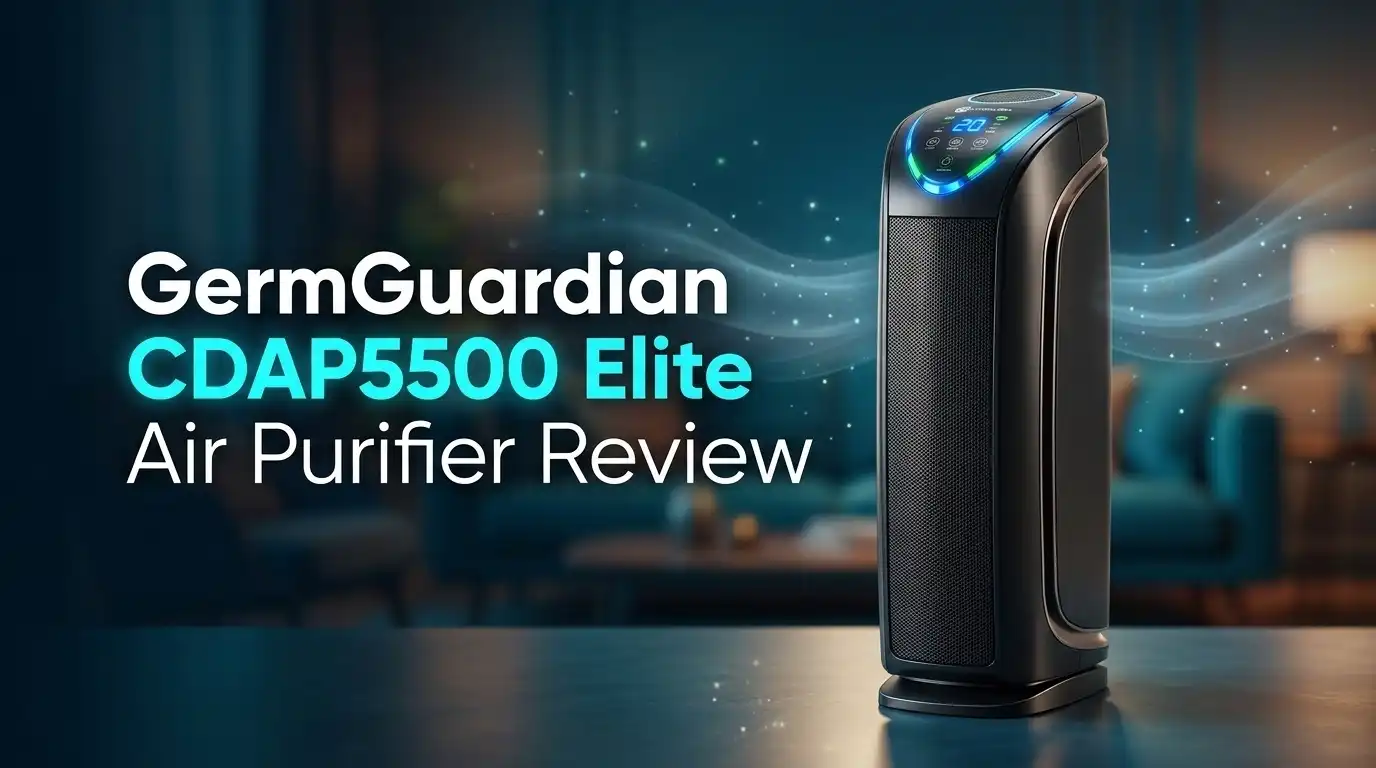
The CDAP5500 is a 28 inch tower that weighs 11.6 pounds. It stands slim at 6.69 inches wide and 9.06 inches deep, so it tucks beside a dresser without blocking walkways. The shell comes in black or white plastic with a matte finish.
Inside sits a three stage system. A charcoal wrapped pre filter grabs hair and large dust. The True HEPA filter traps fine particles. A UVC bulb then targets germs and mold spores as air passes the chamber.
The control panel sits on top with five fan speeds, a timer, a UVC toggle, and a filter indicator. A built in air quality sensor shifts the fan automatically in auto mode. The sensor reacts to cooking smoke within seconds, which is satisfying to watch.
Verified performance numbers list 110 CFM smoke CADR and 118 CFM dust CADR. Those figures place it in the solid mid range for bedrooms and small living rooms.
Unboxing Experience And First Impressions
The box arrives tall and surprisingly light. You lift the tower out in one piece, wrapped in a thin plastic sleeve with foam caps on each end. There is no complicated assembly, which is a relief.
Inside the lower compartment you find the filter already installed, sealed in a clear bag. You must remove that bag before the first run. Plenty of owners forget this step and then wonder why airflow feels weak.
The manual is short and readable. A quick start card covers the buttons in about ten seconds of reading. Setup takes under five minutes from box to running.
First impressions are mixed in an honest way. The plastic feels thin when you tap it, and the grille flexes slightly. Yet the unit stands stable, the power cord is long enough, and the control panel lights look clean. For a budget tower, the presentation feels fair rather than premium.
Design, Build Quality And Room Placement
The tall narrow shape is the best design decision here. It pulls air through a front grille and pushes clean air out the top, so you can place it against a wall without choking airflow. A round purifier needs breathing room on all sides. This one does not.
Build quality is average. The panels are lightweight ABS plastic. Nothing rattles during normal use, but the body does not feel heavy or luxurious. The filter door clips shut firmly, which keeps air from bypassing the HEPA media.
The control lights glow brightly in a dark bedroom. There is no full dimming option, so light sensitive sleepers often drape a cloth over the top or turn the unit to face away.
Place it at least a few inches off the wall and away from curtains. Air needs a clear path to the exhaust vent, and curtains love to get sucked against the intake.
Filtration System Explained Simply
Stage one is the activated charcoal pre filter. It wraps around the HEPA cylinder and handles pet odor, cooking smells, and smoke smell. This layer clogs first because it catches hair and lint.
Stage two is the True HEPA filter. This is the part doing the heavy lifting. It captures 99.97% of particles at 0.3 microns, which covers dust mite debris, pollen, mold spores, and pet dander.
Stage three is the UVC light. It shines on air passing the chamber and reduces some airborne germs. Be realistic here. Contact time is short, so UVC helps a little but does not replace good filtration or ventilation.
The filter is labeled Filter C. You can buy the standard FLT5000 version or the FLT5250PT pet version. Both fit the same housing. Buying the pet version costs a few dollars more and handles dander better.
Top 3 Alternative For GermGuardian CDAP5500 Elite Air Purifier


Last update on 2026-11-19 / Affiliate links / Images from Amazon Product Advertising API
Coway Airmega AP 1512HH Mighty Air Purifier

Last update on 2026-11-19 / Affiliate links / Images from Amazon Product Advertising API
Levoit Core 300P Air Purifier

Last update on 2026-11-17 / Affiliate links / Images from Amazon Product Advertising API
Winix 5510 Air Purifier
Real World Cleaning Performance
Performance depends entirely on room size, and this is where expectations go wrong. The marketing figure of 825 square feet describes one air change per hour. One air change per hour does almost nothing for allergies.
For real relief, you want four or five air changes per hour. At that rate, the CDAP5500 comfortably serves a room near 171 square feet, which is a typical bedroom or home office.
In that size space, results show up fast. Dust on nightstands builds slower. Morning congestion eases within a few days. Cooking odors clear in about twenty minutes on speed four.
Push the unit into a large open living room and the effect fades. Air moves too slowly to keep up with a big volume. This machine rewards closed doors and modest rooms. Treat it as a bedroom specialist and you will be happy with it.
Noise Levels And Sleep Performance
Speed one is genuinely quiet. It produces a low hush that most people describe as pleasant white noise. Light sleepers often leave it on all night without complaint.
Speed two stays easy to live with. Speed three is noticeable but still fine for daytime background noise while you work.
Speeds four and five are loud. The tone becomes a steady rush of air similar to a desk fan at full tilt. You will raise the television volume. Most owners use these speeds for quick clearing after cooking, then drop back down.
Auto mode can be unpredictable at night. The sensor sometimes jumps to a higher speed when a blanket moves or dust stirs, which wakes light sleepers. Running speed one manually gives the most consistent sleep experience. There is no dedicated sleep mode that dims the panel lights, which feels like a missed detail.
The Smart Features Problem You Must Know
This purifier was sold as a smart device with WiFi, Bluetooth, and Alexa voice control through the Guardian TE app. That app no longer functions. The company behind the brand shut down the supporting servers, and owners received little warning.
The practical result is simple. WiFi control is dead. Alexa routines are dead. Remote scheduling is dead. The app opens to a blank screen.
Your unit still cleans air perfectly well using the physical buttons. Nothing about filtration changed. But you paid for a smart tower and you now own a manual one.
This matters most if smart home integration is your reason for buying. Owners have tried Bluetooth workarounds and smart plugs, with limited success. A smart plug can cut power, but the unit does not always resume its last setting.
Buy this model for the filter, not the features.
Energy Use And Running Costs
Energy use is modest. On low speed the unit draws a small amount of power, similar to a light bulb, so leaving it on around the clock will not shock your electricity bill. On the highest speed, consumption climbs but stays reasonable for a fan driven appliance.
Filters are the real ongoing cost. A genuine Filter C replacement typically runs $30 to $45, and the brand recommends changing it every six to eight months.
The carbon pre filter wraps can be replaced separately in four packs, which saves money. Vacuuming the pre filter every month extends HEPA life noticeably.
The UVC bulb needs replacing roughly once a year if you use it constantly. Bulbs cost around $15 to $20.
Across a full year, expect to spend somewhere between $50 and $70 on consumables. That is cheaper than most competing brands.
Filter Replacement And Maintenance
Changing the filter takes about two minutes. Press the release, slide off the lower panel, pull the old cylinder out, and drop the new one in. No tools, no screws, no confusion.
The filter indicator light reminds you when service is due. The indicator runs on a timer, not on actual filter condition, so check the filter visually too. When the white media turns gray, it is finished.
You can vacuum the charcoal wrap with a brush attachment. You cannot wash the HEPA portion. Water destroys HEPA media and voids the warranty.
Set a phone reminder for every six months. Owners who ignore the filter report weak airflow and a musty smell, then blame the purifier.
Keep the intake grille free of dust with a quick wipe. The sensor window also needs occasional cleaning, because dust on the sensor causes strange auto mode behavior.
What The CDAP5500 Does Not Do Well
Honest reviews list the weak points, so here they are plainly.
The dead app is the headline failure. A product advertised as smart lost its smart functions, and there is no official fix.
Coverage claims oversell the machine. 825 square feet is marketing math, not allergy relief. Judge it by the 171 square foot figure instead.
Build materials feel cheap compared to Coway or Winix. The plastic is thin and the panel lights cannot be dimmed.
Loud high speeds limit flexibility. You either get quiet air or fast air, rarely both.
The UVC light produces only modest real benefit. It is a nice extra, not a germ shield.
Finally, the sensor is basic. It reacts to particles but does not display actual numbers like PM2.5 readings. Newer purifiers at the same price show real data on screen.
Pros And Cons
Pros
- True HEPA filtration captures 99.97% of fine particles including pollen, dust, and pet dander
- Slim 28 inch tower fits beside furniture and against walls without blocking airflow
- Five fan speeds give real control from quiet night use to fast room clearing
- Charcoal layer handles cooking smells and pet odor better than expected
- Replacement filters cost less than most competing brands
- Filter changes take two minutes with no tools required
- Backed by a long warranty from an established air purifier brand
Cons
- The smart app was discontinued, so WiFi and Alexa control no longer function
- Advertised room coverage overstates practical allergy performance
- Highest fan speeds are loud enough to interrupt conversation
- Panel lights stay bright and cannot be dimmed for sleeping
- Plastic housing feels light and basic compared to premium rivals
- Air quality sensor shows colors only, with no numerical readings
- UVC benefit is limited by short air contact time
Who Should Buy The GermGuardian CDAP5500
No products found.
Buy this purifier if you want strong filtration in a bedroom or office without paying premium prices. Allergy sufferers, pet owners, and people in dusty apartments get the most value from it.
It suits anyone who prefers simple button controls. If you never planned to use an app, you lose nothing.
Skip it if smart home control sits at the top of your list. Skip it also if you need to clean a large open plan living area, because airflow will not keep pace.
Renters like it because it is light enough to move between rooms. Parents like it for nurseries, though the bright panel lights need covering.
The deciding question is simple. Do you want clean air or connected air? This machine delivers the first one honestly and the second one not at all.
How It Compares To Other GermGuardian Models
The CDAP5500 shares its body and filter with the AC5000E and AC5350B. Internally these units are close cousins, which is why they all use Filter C.
The AC5000E costs less and skips the sensor and smart hardware. For most buyers in 2026, that model makes more financial sense, since the smart features no longer work anyway.
The AC5350B adds a few conveniences and a slightly different control layout. Performance differences between the three are small.
Newer GermGuardian models like the AirSafe line include working apps and modern sensors with real readings. They cost more, but they come with support that still exists.
Compare current prices carefully. If the CDAP5500 sells at a steep discount, it remains good value. If it costs more than the AC5000E, choose the simpler model instead.
Setup Tips For Better Results
Remove the plastic bag from the filter first. This single step solves most complaints about weak airflow.
Close the door of the room you want cleaned. Purifiers work by circulating a fixed volume of air, and open doors multiply that volume.
Place the unit a few feet from your bed or desk rather than across the room. Closer placement delivers clean air where you actually breathe.
Run it continuously on a low speed instead of occasionally on high. Steady filtration beats short bursts every time.
Use the UVC light only if you want it. The unit filters fine without it, and the bulb lasts longer when used selectively.
Vacuum the pre filter once a month. It takes thirty seconds and adds months to your HEPA filter life. Keep a spare filter in the closet so replacement day never turns into a week of waiting.
Final Verdict
The GermGuardian CDAP5500 Elite is a good air purifier wearing the ghost of a smart device. The filtration works. The build is adequate. The price is fair. The smart features are gone.
Judged purely as a filter in a tower, it earns a solid recommendation for bedrooms and offices. Allergy symptoms improve, dust settles slower, and odors clear faster.
Judged as the connected purifier it was sold as, it disappoints. That failure belongs to the company, not the hardware.
Buy it on discount and treat it as a manual purifier. At full price, newer models offer working apps and better sensors for similar money. Go in with clear expectations and you will not regret it.
Frequently Asked Questions
Does the GermGuardian CDAP5500 app still work in 2026?
No. The original Guardian TE app was discontinued and the supporting servers were shut down. WiFi control, Alexa voice commands, and app scheduling no longer function. The purifier still works normally using the buttons on top of the unit.
What size room does the CDAP5500 actually clean?
It performs best in rooms around 171 square feet with four to five air changes per hour. The advertised 825 square foot figure represents only one air change per hour, which is too slow for meaningful allergy relief.
How often should I change the filter?
Replace the Filter C cartridge every six to eight months depending on use. Vacuum the charcoal pre filter wrap monthly. Replace the filter immediately if the white media turns gray or black.
Is the UVC light safe to leave on?
Yes. The bulb sits inside the sealed chamber and never shines directly at you. The unit is ETL listed and the UVC function is optional, so you can switch it off at any time.
Does this purifier produce ozone?
GermGuardian units of this type are built to meet strict ozone limits, and there is no ionizer stage here. The UVC bulb targets germs rather than generating ions, so ozone output stays negligible.
Can I use cheaper third party filters?
Yes, and many owners do. Third party filters usually cost less, though fit and media quality vary. Genuine filters guarantee proper sealing and protect your warranty coverage.
Is it loud enough to disturb sleep?
Speed one is quiet and works well as white noise. Speeds four and five are loud. Most people run low speed overnight and higher speeds during the day.

I’m Maya Brown, the voice behind Pure Breeze Vault. I write detailed, honest, and easy-to-follow air purifier reviews to help readers compare features, understand filter technologies, and choose products with confidence. My goal is to make research simpler, clearer, and more practical for anyone improving indoor air quality at home.