Jafanda JF260 Air Purifier Review 2026: Worth Buying?
Indoor air carries more junk than most people expect. Dust from carpets, dander from pets, smoke from the kitchen, and pollen that sneaks in through window screens all float around your rooms.
You breathe that mix for hours every day. The Jafanda JF260 promises to clean it up in spaces as large as 1,190 square feet, and it does so at a price that undercuts most big name rivals.
This review covers the good parts, the annoying parts, and the things Jafanda does not advertise. By the end you will know whether the JF260 belongs in your home or whether your money is better spent elsewhere.
In a Nutshell:
- Strong coverage for the price. The JF260 pushes 153 CFM and handles rooms up to 1,190 square feet once per hour, 595 square feet twice per hour, and 238 square feet five times per hour. Five air changes per hour is the number allergy sufferers should care about.
- Genuine H13 True HEPA filtration. The single composite cartridge stacks a pre filter, an H13 HEPA layer, and a high iodine activated carbon layer. It captures 99.97% of particles down to 0.3 microns and tackles odors, smoke, and VOCs.
- Very quiet on sleep mode. Jafanda rates the unit at 23 dB on its lowest setting and 54 dB at full blast. Sleep mode is quiet enough to disappear behind a ceiling fan.
- Useful PM2.5 sensor and auto mode. A color coded display shows real numbers, not vague smiley faces, and the fan adjusts itself between speeds one and four.
- Running costs stay low. Rated power is 32 watts, standby draw is under 0.5 watts, and the filter lasts roughly 3,000 hours. Replacement filters cost around $36.
- It is not perfect. No app, no WiFi, no HEPA plus carbon separation, and the carbon layer saturates faster in smoky homes. Read the weaknesses section before you buy.
What Is the Jafanda JF260 Air Purifier?

Last update on 2026-11-18 / Affiliate links / Images from Amazon Product Advertising API
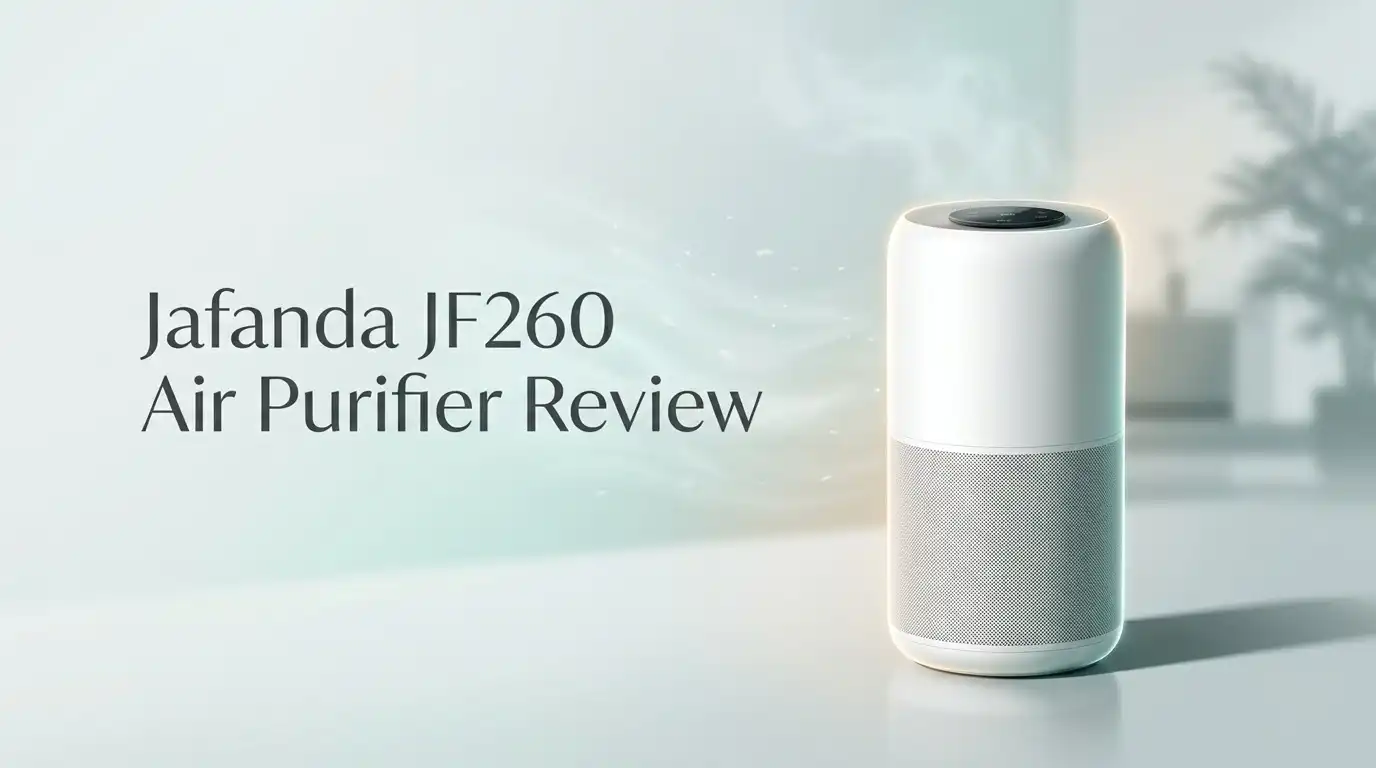
The Jafanda JF260 is a tower style air purifier built for medium and large rooms. It stands 14.41 inches tall with a square footprint of 8.66 by 8.66 inches, and it weighs only 6.6 pounds.
Air enters through vents that wrap the lower body, passes through a cylindrical composite filter, and exits through the top.
Jafanda is a smaller brand than Levoit or Coway, but the company has built a solid following among allergy sufferers. The JF260 carries ECARF allergy certification and Energy Star recognition.
The headline claim is 1,190 square feet of coverage at one air change per hour. That figure sounds generous, and it is, so pay attention to the smaller room ratings instead. For real allergy relief, treat this as a 238 square foot machine.
Unboxing the Jafanda JF260
The box arrives compact and surprisingly light. Inside you get the purifier itself, two composite filters, a 24 volt power adapter, and a printed manual. Getting a spare filter in the box is rare at this price and saves you about $36 right away.
Setup takes under three minutes. Flip the unit upside down, turn the base knob to the open position, lift the base off, slide the filter out, and peel away the plastic bag. Drop the filter back in, lock the base, and plug in the adapter. A soft ding confirms power.
One small warning. The plastic wrap around the filter is easy to miss if you rush. People who skip this step complain about weak airflow, then discover the bag is still sealed. The unit also defaults to auto mode on every fresh power up, which feels sensible.
Design and Build Quality
The JF260 wears a clean white shell with a matte finish. There are no sharp edges, no gaudy logos, and no glossy panels that show fingerprints. It looks at home on a nightstand, beside a sofa, or tucked into a home office corner.
Build quality sits in the fair to good range. The plastic feels thinner than what you get from Coway, and the base knob has slight play when you twist it. Nothing rattles during operation, though, and the foot pads keep it steady on hardwood.
The top mounted touch panel is the best design decision here. Controls face upward, so you read them while standing. A small ambient light ring glows beneath the body with five brightness settings. At 6.6 pounds, you can carry it between rooms with one hand, which many heavier purifiers make awkward.
Top 3 Alternatives for Jafanda JF260


Last update on 2026-11-19 / Affiliate links / Images from Amazon Product Advertising API
Levoit Core 300 P Air Purifier

Last update on 2026-11-17 / Affiliate links / Images from Amazon Product Advertising API
Coway Airmega AP1512HH Mighty Air Purifier

Last update on 2026-11-17 / Affiliate links / Images from Amazon Product Advertising API
Winix 5510 Air Purifier
Three Stage Filtration Explained
All three filtration layers live inside one cylindrical cartridge. You replace the whole thing as a unit rather than swapping parts separately.
The outer pre filter catches hair, large dust, lint, and pet fur. You can vacuum this surface monthly to stretch the cartridge life. The middle layer is H13 True HEPA, which traps particles down to 0.3 microns at 99.97% efficiency. That covers pollen, mold spores, fine dust, smoke particles, and most bacteria sized matter.
The inner layer uses high iodine activated carbon to absorb VOCs, cigarette smell, cooking odor, and pet smell. Jafanda packs roughly 300 grams of carbon into the cartridge, which beats the thin carbon mesh found in many budget purifiers.
The downside of a combined cartridge is obvious. If the carbon saturates before the HEPA layer clogs, you still throw out the whole filter.
Coverage Area and CADR Performance
The official CADR rating is 153 CFM, or 260 cubic meters per hour. That number tells you how much clean air the unit delivers per minute, and it is the single most honest spec on the box.
Here is how the math works out. The 1,190 square foot claim assumes one air change per hour in a room with eight foot ceilings. One air change per hour barely helps anyone with allergies or asthma. Aim for four or five air changes instead, which brings real coverage down to about 238 square feet.
In my 200 square foot bedroom, the JF260 dropped PM2.5 readings from the mid forties to single digits in roughly 20 minutes on speed four. In a 400 square foot open living room, the same cleanup took closer to an hour. Match the machine to the room size and it performs well.
Noise Levels in Real Rooms
Noise makes or breaks a bedroom purifier. The JF260 is rated from 23 dB at the lowest setting to 54 dB at speed five.
Sleep mode genuinely earns its rating. At 23 dB you hear a faint air movement sound and nothing else. All lights switch off automatically, including the display and the ambient ring, so your room stays dark. This is one of the quietest sleep modes I have tested in this price bracket.
Speeds one through three stay comfortable for daytime use. Speed four becomes noticeable but not irritating, similar to a bathroom fan two rooms away. Speed five is loud. You will raise your voice to talk over it, and you will hear it through a closed door.
Most people will park the machine on auto and let it drift between speeds one and three.
PM2.5 Sensor and Auto Mode
The built in laser PM2.5 sensor is the feature that separates the JF260 from cheaper purifiers. The display shows an actual numeric reading rather than a vague indicator.
A color coded light backs up the number. Green means 0 to 12 and excellent air. Blue covers 13 to 35 and good air. Yellow signals 36 to 55 and poor air. Red appears above 55 and means severe pollution.
Auto mode ties the sensor to the fan. The purifier climbs between speeds one and four based on the reading, then settles back down once the air clears. It reacts fast to cooking smoke, candles, and vacuuming. Light a candle nearby and the display jumps to red within seconds.
Accuracy is decent but not laboratory grade. Readings sit close to dedicated monitors, though the sensor sometimes lags behind slow odor buildup.
Control Panel, Timer and Child Lock
The touch panel keeps things simple. You get power, speed, sleep and filter reset, timer, light, and auto.
The timer runs from one to 12 hours in single hour steps. Press it while running to schedule a shutdown, or press it on standby to schedule a start. Child lock activates by holding two buttons for three seconds, which stops toddlers and cats from changing your settings.
Light control cycles through five modes, including one that kills the display entirely while leaving the buttons readable. Memory function recalls your last fan speed and light setting, though unplugging the adapter resets everything back to auto.
Two small complaints. The touch buttons need a deliberate press rather than a light tap, and there is no remote control. You walk to the unit every time you want a change.
Energy Use and Running Costs
The JF260 draws 32 watts at full power and under 0.5 watts on standby. Running it 24 hours a day on a moderate speed costs most households somewhere between $2 and $4 per month, depending on local rates.
Filters are the bigger ongoing expense. Each composite cartridge lasts about 3,000 hours, which works out to four to six months of continuous use. Replacements run roughly $36 from Jafanda directly, and third party options sell for less on Amazon in multipacks.
Your first year costs almost nothing extra because a spare filter ships in the box. Budget around $70 to $90 per year afterward if you run the unit constantly.
Third party filters are tempting but risky. Several buyers report thinner carbon layers and shorter life from off brand cartridges, so the savings often vanish.
Filter Life and Replacement Routine
The display tracks filter life with five indicator lights. One light drops off every 600 hours. When remaining life falls under 150 hours, the filter button glows red and the last light blinks.
Replacement follows the same steps as the initial setup. Power down, unplug, flip the unit, unlock the base, pull the old cartridge, unwrap the new one, reinstall, lock, and plug back in. Then hold the filter button for three seconds until you hear the ding to reset the counter.
Forgetting the reset is the most common user mistake. The blinking light continues until you complete it.
Vacuum the pre filter surface once a month to extend cartridge life. Never wash the composite filter. Water destroys the HEPA media and ruins the carbon, and Jafanda voids warranty claims tied to washed filters.
Where the Jafanda JF260 Falls Short
Honest reviews name the flaws, so here they are.
No WiFi and no app. You cannot schedule the unit from your phone, check air quality remotely, or link it to a smart home system. Competitors at similar prices offer app control.
No remote control. Every adjustment requires walking to the machine.
The coverage claim oversells reality. That 1,190 square foot figure applies at one air change per hour, which does little for allergies.
Carbon saturates quickly in heavy odor homes. Smokers and frequent fryers will replace filters closer to the three month mark than six.
Brand support is smaller. Jafanda handles service by email rather than phone, and response times vary.
The plastic housing also feels less premium than the price suggests. It functions fine, but it does not feel built for a decade of use.
Jafanda JF260 Pros and Cons
Pros
- Genuine H13 True HEPA with a thick activated carbon layer that handles odors well
- Accurate PM2.5 display with numeric readings and color coded air quality lights
- Sleep mode at 23 dB stays genuinely silent with all lights switched off
- A spare filter ships inside the box, saving roughly $36 on day one
- Light at 6.6 pounds and easy to move between rooms with one hand
- Low 32 watt draw keeps monthly electricity costs minimal
- Auto mode reacts quickly to cooking smoke, candles, and dust
- Child lock, 12 hour timer, and five fan speeds cover most daily needs
Cons
- No WiFi, no app, and no voice assistant support
- No remote control included
- Coverage claim of 1,190 square feet assumes only one air change per hour
- Combined cartridge means you discard HEPA media even when only carbon is spent
- Housing plastic feels thinner than premium rivals
- Customer support runs through email only
- Touch buttons need firm presses
Who Should Buy the Jafanda JF260?
This purifier suits specific buyers very well.
Bedroom users benefit most. The silent sleep mode, the lights off behavior, and the 238 square foot five change rating all point at sleeping spaces. Allergy sufferers who wake up congested will notice a difference within a week.
Pet owners get real value from the thick carbon layer and the hair catching pre filter. Dog and cat smells fade noticeably after a few days of running.
Budget conscious shoppers who want measured air quality data rather than guesswork will appreciate the PM2.5 display at this price.
Skip it if you need smart features. Anyone building a connected home should spend extra on an app enabled model. Skip it also if you want one machine for a whole open floor plan. Buy two smaller units instead of stretching one past its limit.
Final Verdict on the Jafanda JF260
Last update on 2026-11-18 / Affiliate links / Images from Amazon Product Advertising API
The Jafanda JF260 delivers more than its price suggests. You get real H13 HEPA filtration, a generous carbon load, an accurate PM2.5 sensor, a whisper quiet sleep mode, and a spare filter in the box. For a bedroom or a medium living space, it performs close to purifiers that cost significantly more.
The missing smart features are the main compromise. No app, no remote, and no voice control feel dated in 2026. The marketing coverage number also stretches reality, so set expectations around 238 square feet for serious allergy relief.
Would I recommend it? Yes, with conditions. Buy it for a bedroom, a nursery, a home office, or a pet room. Match the machine to the room size, vacuum the pre filter monthly, and replace the cartridge on schedule. Do that and the JF260 earns its keep.
Frequently Asked Questions
Does the Jafanda JF260 come with a filter installed?
Yes. Two composite filters ship inside the box, and one sits pre installed in the machine. Remove the plastic bag before first use or airflow will stay weak.
How often should I replace the JF260 filter?
The filter lasts about 3,000 hours, which equals four to six months of continuous use. Homes with smoke, heavy cooking, or multiple pets may need replacements closer to three months.
Is the Jafanda JF260 quiet enough for sleeping?
Yes. Sleep mode runs at 23 dB and turns off every light, including the display and ambient ring. Most users report it fades into the background within minutes.
Does the JF260 produce ozone?
No. The JF260 uses mechanical filtration only. It has no ionizer, no UV lamp, and no plasma technology, so it does not generate ozone.
Can I wash the Jafanda JF260 filter?
No. Washing destroys the HEPA media and the activated carbon. You may vacuum the pre filter surface gently once a month, but never rinse the cartridge.
What room size does the JF260 actually cover?
It covers 1,190 square feet at one air change per hour, 595 square feet at two changes, and 238 square feet at five changes. Use the 238 square foot figure for allergy relief.
Does the Jafanda JF260 have WiFi or an app?
No. The JF260 is a manual unit with touch controls and auto mode. Jafanda offers smart models in other product lines if app control matters to you.
What warranty does Jafanda offer?
Jafanda provides a one year warranty from the purchase date. Registering the product on the official website extends coverage by an additional year.

I’m Maya Brown, the voice behind Pure Breeze Vault. I write detailed, honest, and easy-to-follow air purifier reviews to help readers compare features, understand filter technologies, and choose products with confidence. My goal is to make research simpler, clearer, and more practical for anyone improving indoor air quality at home.