MEGAWISE Compact HEPA Air Purifier Review 2026: Still Worth It?
Small rooms collect dust fast. Pet hair, cooking smells, and pollen build up in a bedroom or office within hours. A full size purifier costs too much for a 150 square foot space. That gap is where the MEGAWISE Compact HEPA Air Purifier lives.
I tested this little tower for several weeks in a bedroom, a home office, and a kitchen corner. I tracked noise, airflow, filter cost, and the parts that annoyed me.
This review covers all of it. You will learn what the MEGAWISE does well, where it falls short, and whether a cheaper or stronger rival makes more sense in 2026.
In a Nutshell:
- The price is the main selling point. The MEGAWISE compact model sits near the $50 mark, and replacement filters cost around $13. Five years of ownership lands close to $180 total, which beats most rivals in the budget class.
- The H13 True HEPA filter does real work. It captures 99.97% of particles down to 0.3 microns. In testing, a room with an air quality index of 140 dropped to 15 after two hours on turbo.
- You must run it on high or turbo. The lowest fan setting barely moves air. Treat the quiet setting as a background hum, not a cleaning mode.
- Noise is the biggest complaint. Turbo hits roughly 57 decibels. That is loud enough to interrupt a phone call or light sleep.
- Room coverage is modest. Expect strong results in spaces up to about 110 square feet, and slower results in anything larger.
- Warranty support is thin. You get a short return window rather than a long multi year guarantee, so buy with that in mind.
What Is the MEGAWISE Compact HEPA Air Purifier?


Last update on 2026-11-19 / Affiliate links / Images from Amazon Product Advertising API
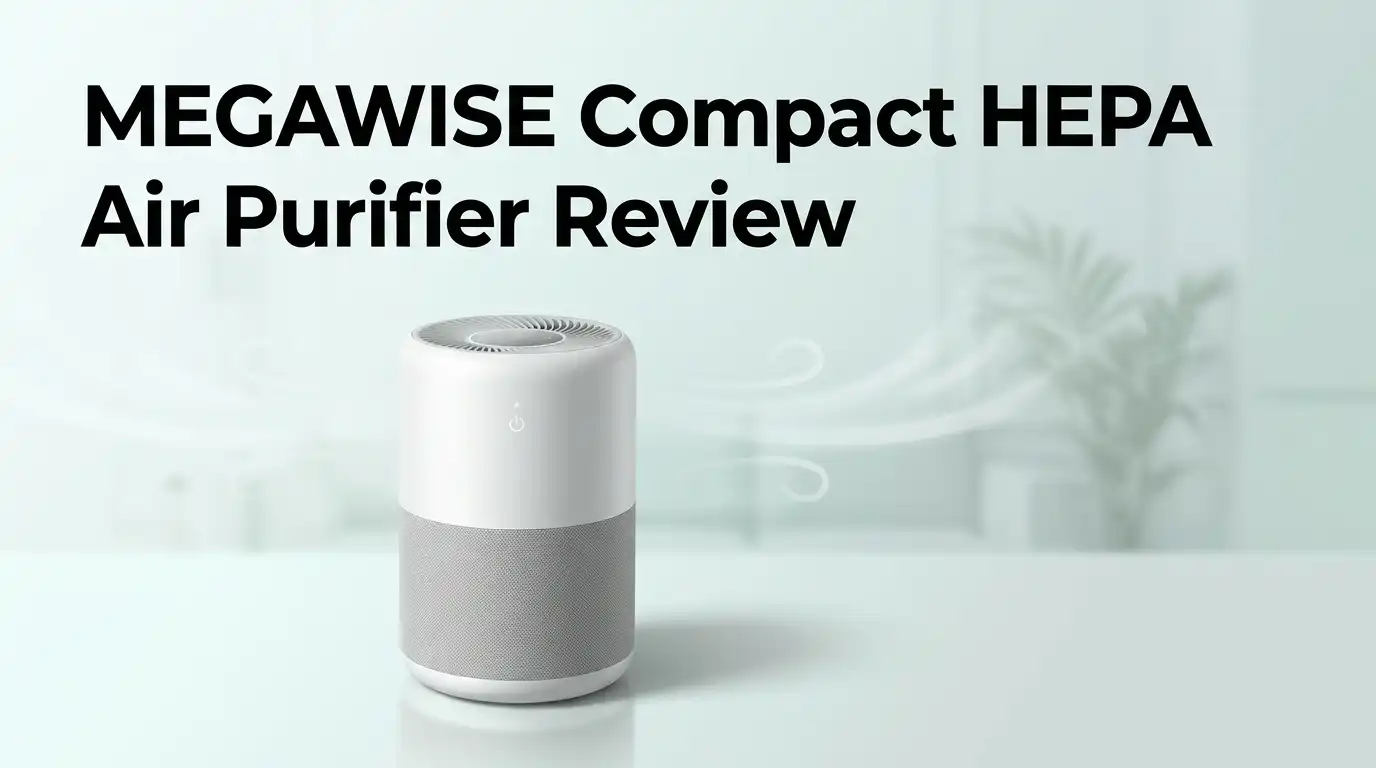
The MEGAWISE Compact HEPA Air Purifier is a desktop tower built for small rooms. It stands about 13 inches tall and weighs under 3 pounds. You can lift it with two fingers and carry it from a nightstand to a desk without unplugging anything heavy.
Inside sits a three stage filter system. Air enters through vents around the base, passes through a pre filter, then a True HEPA layer, then activated carbon. Clean air exits through the top.
MEGAWISE markets this unit for bedrooms, nurseries, dorm rooms, and small offices. The brand sells several versions, including one with a soft night light and one without. Both share the same core filter and motor.
It runs on roughly 9 watts at low speed. That is less than a standard light bulb.
Unboxing Experience and First Impressions
The box arrived small and light, closer to a shoebox than an appliance carton. Inside, the purifier sat in molded cardboard with a thin foam wrap. No plastic clamshell, no wasted space.
The package included the purifier, a power adapter, a quick start card, and a single preinstalled filter. Do not skip the plastic wrap removal step. The filter ships inside a sealed bag tucked in the base. Many bad reviews online come from people who ran the unit with that bag still on.
Setup took under three minutes. I twisted off the base cover, pulled the filter, removed the bag, pushed the filter back, and locked the cover.
The first thing I noticed was the smell. New carbon filters give off a faint chemical scent for the first day. It faded by the second evening.
Design and Build Quality
The MEGAWISE looks plain in a good way. A smooth white or black cylinder with a single button on top. No screen, no blinking cluster of lights, no fake wood trim.
The plastic feels light rather than premium. Tap the side and you hear a hollow sound. That said, nothing rattles during operation, and the base grips a desk well enough to stay put.
The single button handles everything. Press once for low, twice for medium, three times for high, four times for turbo. Hold it to toggle the night light on models that include one.
The simplicity cuts both ways. You never fumble with menus, but you also get no timer, no filter life display, and no app. People who want smart features should look elsewhere.
Top 3 Alternative for MEGAWISE Compact HEPA Air Purifier

Last update on 2026-11-19 / Affiliate links / Images from Amazon Product Advertising API
Levoit Core 300 Air Purifier

Last update on 2026-11-17 / Affiliate links / Images from Amazon Product Advertising API
BLUEAIR Blue Pure 411a Max Air Purifier

Last update on 2026-11-17 / Affiliate links / Images from Amazon Product Advertising API
GermGuardian AC4825 HEPA Air Purifier Tower
Filtration System Explained in Plain Words
The MEGAWISE uses three layers inside one replaceable cartridge. Each layer handles a different job.
The pre filter catches large stuff first. Pet hair, lint, and visible dust stick here. This layer protects the expensive HEPA material behind it.
The H13 True HEPA layer does the heavy lifting. It traps 99.97% of particles as small as 0.3 microns. That covers pollen, mold spores, fine dust, smoke particles, and pet dander.
The activated carbon layer absorbs odors. Cooking smells, litter box odor, and stale air fade noticeably within an hour.
One honest note on carbon. The layer here is thin, closer to a coated mesh than a deep carbon bed. It helps with everyday household smells. It will not erase heavy cigarette smoke or fresh paint fumes.
Real World Cleaning Performance
I ran the purifier in a 200 square foot bedroom with the door closed. A separate air quality monitor tracked the numbers.
Starting reading sat at 140 on the air quality index after burning toast and stirring up dust. Ten minutes on turbo brought it to 83. Thirty minutes brought it to 52. After one hour the reading hit 40, and after two hours it reached 15.
Those results are solid for a $50 machine. The catch is speed. A stronger purifier clears the same room in under 40 minutes.
Performance also slowed after the two hour mark. Clearing the last traces of fine particles took longer than the first big drop.
In a true small room near 100 square feet, results came much faster. That is the space this unit was built for.
Noise Levels and Sleep Mode Reality
Noise is where most buyers form their opinion. Here are the measured numbers.
Low setting registered about 35 decibels, close to a quiet library. Medium hit roughly 45 decibels. High reached around 51 decibels. Turbo pushed to 57 decibels.
Fifty seven decibels is loud. That sits near normal conversation volume. You will hear it across a room and during a video call.
The low setting is genuinely quiet, but it moves very little air. In testing, airflow on low barely registered on a meter. Medium produced usable airflow at a tolerable hum.
My practical routine looked like this. Run turbo for 30 minutes before bed with the door shut, then drop to low or medium for sleep. That approach gave clean air without the fan noise keeping me awake.
Energy Use and Running Costs
This purifier sips power. At the low setting it draws around 9 watts. Even at higher speeds it stays modest for an appliance that runs all day.
Running it 24 hours a day for a month costs roughly the price of a coffee in most regions. That makes continuous operation realistic, which matters because purifiers only help while they run.
Filter cost stays friendly too. Replacement cartridges sell near $13. Swap them every six months and you spend about $26 per year.
Add the purchase price near $50 and five years of filters, and the total lands close to $180. Compare that to premium brands where a single replacement filter can cost $40 or more.
Low lifetime cost is the strongest argument for this machine.
Filter Replacement and Maintenance
Changing the filter takes about one minute. Twist the base counterclockwise, lift it off, pull the old cartridge, insert the new one, and lock the base back.
There is no filter life indicator. You track the schedule yourself. I recommend writing the install date on the filter edge with a marker.
Vacuum the outer vents every two weeks. Dust builds on the intake grill and chokes airflow faster than you expect. A soft brush attachment handles it.
Never wash the HEPA cartridge. Water destroys the pleated media and ruins filtration. Only the outer housing should get a damp wipe.
Pet owners should plan on replacing filters every four months instead of six. Hair loads the pre filter quickly and airflow drops well before the calendar says it should.
Who Should Buy the MEGAWISE Compact HEPA Air Purifier?
Last update on 2026-11-19 / Affiliate links / Images from Amazon Product Advertising API
This purifier fits specific people very well. Students in dorm rooms get real filtration in a footprint that fits a crowded desk. The low price also survives the rough life of campus housing.
Renters and first time buyers benefit too. If you have never owned a purifier and want to test whether it helps your allergies, spending $50 beats spending $300.
Small bedroom and nursery users will see the fastest results. Rooms near 100 to 150 square feet suit the airflow this unit produces.
Skip this model if you have a large open living room, severe asthma, or a smoker in the house. Those situations need stronger clean air delivery rates and a thicker carbon bed. Buying a bigger machine once costs less than buying a small one twice.
What the MEGAWISE Does Not Do Well
Honest reviews name the weak spots. This one has several.
The low fan setting is nearly useless. It is quiet because it barely moves air. Marketing calls it sleep mode, but little cleaning happens there.
Turbo is loud. At 57 decibels it intrudes on quiet rooms and interrupts concentration.
Coverage claims stretch the truth. Large square footage figures assume a single air change per hour, which is weak cleaning. Real results happen in spaces near 110 square feet.
There is no air quality sensor on the base model. You never know when the air is actually clean.
Warranty support is short. You get a limited return window rather than a multi year guarantee.
The carbon layer also saturates fast in smoky homes. Odor control fades after a few months.
Pros and Cons of the MEGAWISE Compact HEPA Air Purifier
Here is the balanced summary after weeks of use.
Pros
- Very low purchase price, usually near $50, which undercuts almost every True HEPA rival on the market.
- Cheap replacement filters at roughly $13 keep the five year ownership cost close to $180.
- Genuine H13 True HEPA filtration captures 99.97% of particles down to 0.3 microns.
- Light and portable at under 3 pounds, so moving it between rooms takes no effort.
- Low power draw near 9 watts makes all day operation affordable.
- Simple one button control with no app, no setup, and no learning curve.
Cons
- Turbo speed reaches 57 decibels, which is loud enough to disturb sleep and calls.
- The low setting moves almost no air, so quiet operation means weak cleaning.
- No air quality sensor or filter life indicator on the base version.
- Coverage is realistically limited to small rooms despite larger advertised figures.
- Thin carbon layer struggles with heavy smoke and strong chemical odors.
- Short warranty period compared with established purifier brands.
MEGAWISE vs Levoit Core 300: Which One Wins?
The Levoit Core 300 is the obvious rival. It costs roughly twice as much and sells in far higher volume.
The Levoit moves more air per minute and holds a thicker filter. It reaches a quiet result faster because it does not need turbo speed to perform. Its sleep mode actually cleans while staying near 24 decibels.
The MEGAWISE wins on price and filter cost. A Levoit replacement filter runs close to $25, nearly double the MEGAWISE cartridge.
My simple rule works like this. If the purifier will sit in a bedroom where you sleep, pay extra for the Levoit and enjoy the silence. If it will sit in an office, kitchen, or spare room where noise matters less, the MEGAWISE saves real money with similar filtration quality.
Setup Tips That Improve Results
A few habits make this purifier work noticeably better.
Close the door. An open door turns a 150 square foot bedroom into a 600 square foot space, and performance collapses.
Give it breathing room. Keep at least 12 inches of clearance around the intake vents. Pushing it against a wall or behind a curtain blocks airflow.
Raise it off the floor. A nightstand or shelf puts the clean air outlet closer to your breathing zone.
Run it before you need it. Start turbo 30 minutes before bedtime rather than at bedtime.
Pair it with simple habits too. Vacuum weekly, wash bedding in hot water, and keep windows closed on high pollen days. A $50 purifier cannot outwork a dusty room on its own.
Final Verdict: Is It Worth Buying in 2026?
The MEGAWISE Compact HEPA Air Purifier earns a cautious recommendation. It delivers real H13 True HEPA filtration at a price that few competitors match, and the cheap filters keep long term costs low.
It is not the best performer in its class. It is the best value. The Levoit Core 300 cleans faster and runs quieter. The Blueair 411a Max feels better built. Both cost more upfront and more per filter.
Buy the MEGAWISE for a desk, dorm, nursery, small bedroom, or home office. Avoid it for large living rooms, heavy smoke, or anyone who needs near silent operation while sleeping.
For around $50, it does the core job honestly. That counts for a lot.
Frequently Asked Questions
Does the MEGAWISE air purifier produce ozone?
No. The unit uses mechanical filtration only, with a pre filter, True HEPA layer, and carbon layer. It contains no ionizer or ultraviolet lamp, so it does not generate ozone as a byproduct.
How often should I replace the filter?
Plan on every six months under normal use. Homes with pets, smokers, or heavy dust should shorten that to every three or four months. Reduced airflow and returning odors are the clearest signs a change is due.
Can I wash the HEPA filter to save money?
No. Washing destroys the pleated HEPA media and permanently ruins filtration. You may gently vacuum the outer pre filter surface, but the cartridge itself must be replaced rather than cleaned.
Will it help with allergies?
Many users report fewer morning sneezes and less eye irritation after a few weeks of nightly use. It captures pollen and dander effectively in small rooms. It is a helpful tool, not a medical treatment.
Is it quiet enough to sleep next to?
On low and medium, yes for most people. On turbo, no. The fan reaches roughly 57 decibels at the highest speed, which is loud enough to disturb light sleepers.
Does it work in a large living room?
Not well. The unit is built for spaces near 110 square feet. In a large open room it will take hours to make a measurable difference, so a higher capacity purifier is the better choice.

I’m Maya Brown, the voice behind Pure Breeze Vault. I write detailed, honest, and easy-to-follow air purifier reviews to help readers compare features, understand filter technologies, and choose products with confidence. My goal is to make research simpler, clearer, and more practical for anyone improving indoor air quality at home.