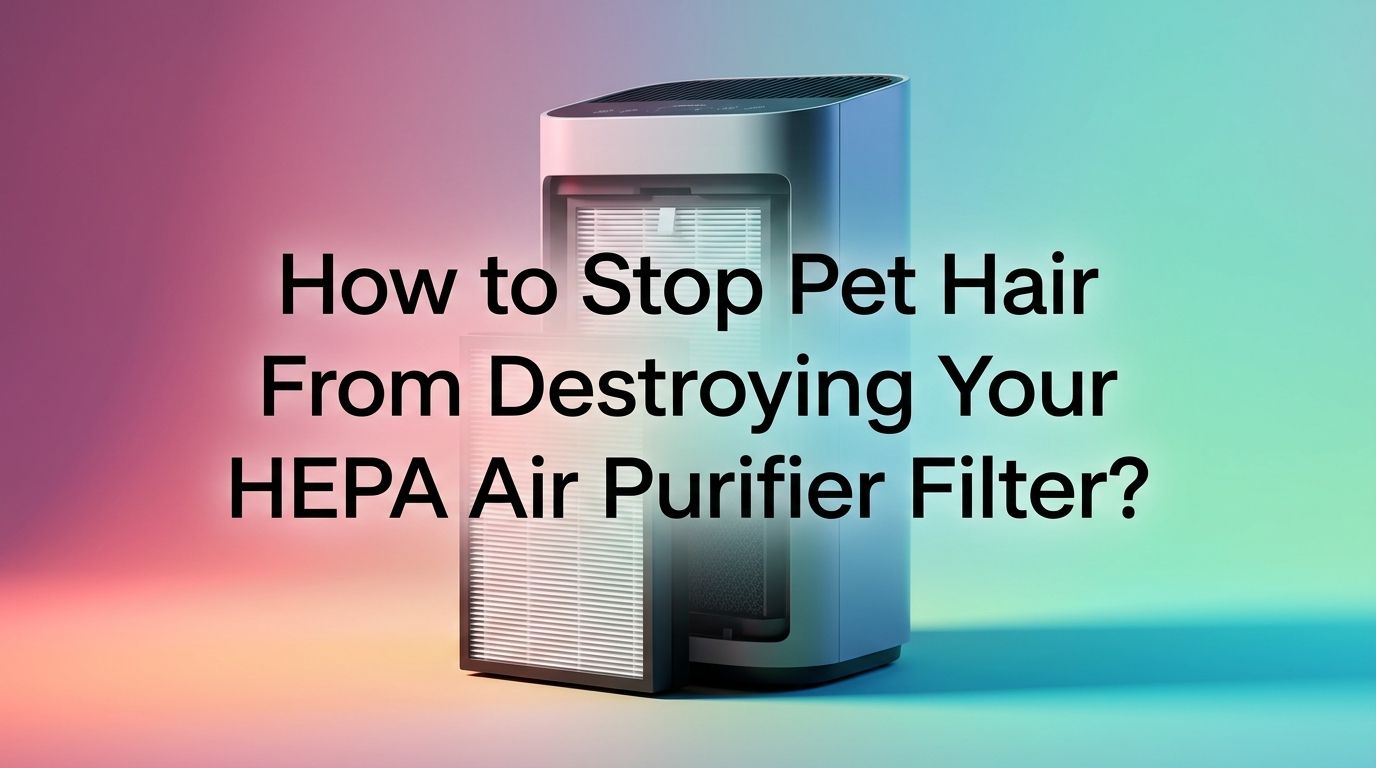
How to Stop Pet Hair From Destroying Your HEPA Air Purifier Filter?
If you share your home with a dog or cat, you already know the struggle. Pet hair gets everywhere. It covers your couch, sticks to your clothes, and floats through the air. But here is something many pet owners miss: all that loose fur is quietly destroying your HEPA air purifier filter.
HEPA filters capture 99.97% of particles as small as 0.3 microns. They do an amazing job with pet dander, dust, and allergens. But pet hair is a large particle.
It clogs the outer layers of the filter fast, forces the motor to work harder, and cuts the filter’s lifespan in half or worse. A replacement HEPA filter can cost anywhere from $30 to $100 or more, so this is a real problem for your wallet too.
In a Nutshell
- A pre filter is your best first defense. Most quality air purifiers include a washable or replaceable pre filter. This layer catches large particles like pet hair before they reach the HEPA filter. Clean it every two to three weeks if you have pets.
- Regular pet grooming cuts shedding at the source. Brushing your dog or cat daily removes loose fur before it enters the air. Studies show that washing dogs twice a week significantly reduces airborne dander and hair.
- Vacuuming before running your air purifier makes a big difference. A HEPA vacuum removes settled pet hair from floors and furniture. This means less hair floating around for your purifier to catch.
- Purifier placement matters more than you think. Keeping your air purifier at least three feet from pet beds and away from high shedding zones protects the filter from direct hair intake.
- Replace and maintain on a shorter schedule. Pet owners should check HEPA filters monthly and plan for replacement every 6 to 9 months instead of the standard 12 months.
- Reducing airborne pet hair requires a multi step approach. No single solution works alone. Combining grooming, cleaning, pre filter care, and smart placement gives you the best results.
How Does Pet Hair Actually Damage a HEPA Filter?
Pet hair is much larger than the particles a HEPA filter is designed to catch. A single strand of dog hair can be 50 to 100 microns wide. HEPA filters target particles at 0.3 microns. This size mismatch creates a real problem.
When pet hair enters the purifier, it collects on the outer surface of the HEPA filter. Over time, this layer of hair acts like a blanket. It blocks airflow and prevents smaller particles like dander, dust, and allergens from reaching the filter media.
The purifier’s motor then works harder to pull air through the clogged surface. This increases energy use and generates extra wear on internal components. The result is a filter that looks dirty fast and loses its cleaning power weeks or months before it should. You end up spending more on replacements and getting worse air quality in the process.
How to Use a Pre Filter to Protect Your HEPA Filter?
A pre filter is a thin mesh or foam layer that sits in front of the main HEPA filter. Its job is simple: catch large particles like pet hair, dust bunnies, and lint before they reach the HEPA filter. This one layer can double the life of your primary filter.
Most modern air purifiers include a pre filter. Some are washable, and some need replacement. Washable pre filters save you money over time. You rinse them under water, let them dry completely, and put them back.
Pros of pre filters: They are cheap or free to maintain, easy to clean, and dramatically reduce buildup on the HEPA filter. Cons: They do not catch small particles like dander or fine dust on their own, and a dirty pre filter that is not cleaned regularly can reduce airflow just as badly as a clogged HEPA filter.
For pet owners, the rule is clear. Clean your pre filter every two to three weeks. If you have multiple pets or a heavy shedding breed like a German Shepherd or Husky, consider weekly cleaning.
How to Groom Your Pet to Reduce Airborne Hair?
The most effective way to protect your air purifier is to stop pet hair at the source. Regular grooming removes loose fur from your pet’s coat before it ever becomes airborne. This is simple, free, and makes every other solution on this list work better.
Brush your dog or cat daily, or at minimum three times per week. Use a deshedding tool for heavy shedders. Always brush your pet outdoors or in a designated grooming area to keep loose hair contained.
Bathing also helps. Research shows that washing dogs twice a week reduces the amount of dander and loose hair in their fur significantly. If twice weekly baths are not realistic, aim for every two to three weeks.
Pros of regular grooming: It reduces shedding throughout your home, improves your pet’s coat health, and decreases allergens. Cons: It requires consistent time and effort, and some pets resist brushing or bathing. Despite this, grooming remains the single most impactful step you can take.
How to Vacuum Strategically Before Running Your Purifier?
Your air purifier works best in a room that has already been cleaned of large debris. Vacuuming before you turn on your purifier removes settled pet hair from surfaces, so less of it becomes airborne and reaches the filter.
Use a vacuum with a true HEPA filter to prevent captured hair and dander from being blown back into the air. Focus on areas where your pet spends the most time: their bed, favorite couch spots, and high traffic hallways.
Experts recommend vacuuming at least every two to three days in homes with pets. Slow, overlapping passes pick up more hair than quick sweeps. Pay extra attention to carpet edges, under furniture, and fabric surfaces.
A robot vacuum can also help by running daily cleaning cycles while you are away. This keeps baseline pet hair levels low and gives your air purifier a much easier job. Think of vacuuming and air purifying as a team. One handles the floors, the other handles the air.
How to Place Your Air Purifier to Avoid Excess Pet Hair?
Where you put your air purifier has a direct impact on how fast the filter clogs. Position your purifier at least three feet away from your pet’s bed, crate, or favorite resting spot. Placing it too close to a shedding zone forces the intake to pull in concentrated amounts of hair.
Keep the purifier elevated if possible. Placing it on a table or shelf about three to five feet off the ground improves air circulation and reduces the amount of settled hair that gets pulled directly from the floor.
Make sure no furniture, curtains, or walls block the airflow around the unit. Leave at least 12 to 18 inches of clearance on all sides. Good airflow means the purifier works efficiently and distributes clean air throughout the room.
Avoid placing the purifier right next to HVAC return vents. Pet hair tends to gather near these vents, and putting your purifier there creates a double clogging problem. Choose a central location in the room where air can flow freely to and from the unit.
How to Create a Pet Hair Cleaning Routine That Protects Your Filter?
Consistency is the key to protecting your HEPA filter from pet hair damage. A simple weekly routine prevents hair from building up to levels that overwhelm your purifier. Here is a basic schedule that works well for most pet owners.
Daily: Brush your pet and do a quick sweep or robot vacuum run in pet areas. Every two to three days: Full vacuum session with a HEPA vacuum, including furniture and fabric surfaces. Every two weeks: Clean or rinse your pre filter. Monthly: Inspect the HEPA filter for visible hair buildup and vacuum the exterior gently with a soft brush attachment.
This routine takes about 15 to 20 minutes per day and prevents the costly cycle of premature filter replacements. Write it on a calendar or set phone reminders until it becomes a habit.
Pros of a set routine: Predictable filter lifespan, better air quality, and lower long term costs. Cons: It requires daily effort and discipline. But the payoff is a purifier that runs efficiently for months longer.
How to Clean a HEPA Filter That Already Has Pet Hair Buildup?
If your HEPA filter already has a layer of pet hair on it, you can extend its life with careful cleaning. Use a vacuum cleaner with a soft brush attachment and gently run it over the filter surface. Move slowly and use light pressure to avoid damaging the delicate filter fibers.
Never blow compressed air into a HEPA filter. This pushes dirt and hair deeper into the filter media, which reduces its ability to capture particles. Always vacuum from the outside surface only.
Some air purifier manuals say you should never wash a true HEPA filter with water. Water can damage the fine fibers and create gaps that let particles pass through. Check your specific model’s instructions before attempting any wet cleaning. Only washable HEPA filters labeled as such should be rinsed.
If the filter looks visibly gray or brown and airflow has noticeably decreased, it is time for a full replacement. No amount of surface cleaning can restore a deeply saturated HEPA filter. At that point, a new filter is the only real solution.
How to Choose the Right Air Purifier for a Pet Friendly Home?
Not all air purifiers handle pet hair equally well. Look for models that include a dedicated, removable pre filter as the first stage of filtration. This feature alone will save your HEPA filter from premature clogging.
A high Clean Air Delivery Rate (CADR) is also important. CADR measures how much clean air the purifier produces per minute. Higher CADR means the unit processes air faster and handles larger rooms or heavier particle loads better.
Choose a purifier with a true HEPA filter rated H13 or higher. These capture 99.97% of particles down to 0.3 microns, including fine pet dander that causes allergies. An activated carbon filter layer is a bonus because it removes pet odors too.
Pros of choosing a pet focused purifier: Better pre filtration, longer HEPA life, and odor control. Cons: These models can cost more upfront. However, the savings on filter replacements and improved air quality make the investment worthwhile for any pet owner.
How to Control Humidity to Reduce Floating Pet Hair?
Indoor humidity plays a surprising role in how much pet hair floats through the air. Dry air causes pet hair and dander to become lighter and more airborne. This means your purifier filter catches more debris in low humidity conditions.
Keeping your indoor humidity between 40% and 50% helps pet hair settle on surfaces instead of floating. Settled hair is much easier to vacuum up and far less likely to reach your purifier’s intake.
Use a hygrometer to monitor humidity levels in your home. In dry winter months, a humidifier can help maintain the right range. In summer, your air conditioning system usually keeps humidity in check.
This approach does not eliminate pet hair from the air entirely. But it reduces the amount that stays airborne long enough to reach your purifier. Think of humidity control as a passive layer of protection that works alongside your grooming and cleaning routine.
How to Know When Your HEPA Filter Needs Replacement?
Most HEPA filters last 6 to 12 months, but pet owners often need to replace them on the shorter end of that range. Knowing the warning signs helps you swap filters before performance drops significantly.
The first sign is reduced airflow. If you hold your hand near the output vent and the air feels weaker than usual, the filter is likely clogged. Some purifiers have built in filter change indicators that use LED lights or app notifications.
Visible discoloration is another clear sign. A new HEPA filter is white or light gray. A filter covered in pet hair and dander turns dark gray or brown. If you can see a thick layer of hair on the surface, replacement is overdue.
Increased noise from the motor is a third warning. The fan works harder to push air through a clogged filter, which creates a louder operating sound. If you notice a change in noise, check the filter immediately.
Plan to inspect your filter monthly. Mark the installation date on the filter frame with a marker so you always know how old it is.
How to Reduce Pet Dander Alongside Pet Hair for Better Filter Life?
Pet dander is tiny skin flakes that are much smaller than hair. Dander and hair together create a sticky combination that clogs HEPA filters faster than either one alone. Reducing both at the same time gives your filter the longest possible life.
Wash your pet’s bedding, blankets, and toys in hot water every one to two weeks. This removes accumulated dander and hair from fabric surfaces. Use a lint roller on furniture and cushions between vacuum sessions for quick dander removal.
Keep pets off beds and upholstered furniture if possible. Designating specific pet zones in your home limits where dander and hair accumulate. This makes targeted cleaning easier and keeps the overall air particle load lower.
An air purifier with an activated carbon filter layer catches dander particles and absorbs odors that HEPA filters alone cannot handle. Using both filter types together provides the most complete protection for pet owners.
How to Save Money on HEPA Filter Replacements as a Pet Owner?
Frequent filter replacements add up fast. The average pet owner spends 30% to 50% more on HEPA filters than a household without pets. But you can cut these costs with a few smart habits.
First, maximize your pre filter. A well maintained pre filter absorbs the bulk of pet hair before it reaches the HEPA layer. This single step can extend your HEPA filter’s life by several months.
Second, buy replacement filters in multi packs. Many manufacturers offer two or three packs at a lower per unit price. Stock up so you always have a fresh filter ready and never run a clogged one longer than necessary.
Third, follow the full routine outlined in this post. Grooming, vacuuming, smart placement, and humidity control all reduce the workload on your purifier. The less your filter has to work, the longer it lasts.
Finally, track your filter replacement dates. Over time, you will see a pattern that tells you exactly how long each filter lasts in your home. This removes guesswork and helps you budget accurately.
Frequently Asked Questions
How often should I clean my air purifier pre filter if I have pets?
Clean your pre filter every two to three weeks in a home with one pet. If you have multiple pets or heavy shedding breeds, clean it weekly. A clogged pre filter forces more debris onto the HEPA filter and reduces overall purifier performance. Rinse washable pre filters under running water and allow them to dry completely before reinstalling.
Can pet hair permanently damage a HEPA filter?
Pet hair does not permanently damage the filter material, but it clogs the filter surface and reduces airflow. Once a HEPA filter is heavily saturated with pet hair and dander, it cannot be fully restored by cleaning. At that point, replacement is the only effective option. Preventing buildup through pre filters and grooming is much cheaper than frequent replacements.
Should I run my air purifier 24/7 if I have pets?
Running your purifier continuously on a low or medium setting is a good practice for pet owners. This keeps airborne dander and hair levels consistently low. However, running it on high all the time increases energy use and can pull in more pet hair faster. Use a medium setting for daily operation and boost to high only after grooming or vacuuming when extra particles are stirred up.
Does the location of the pet bed affect my air purifier filter?
Yes. Placing your pet’s bed directly next to the air purifier’s intake causes concentrated amounts of hair and dander to enter the unit. Keep at least three feet of distance between the pet bed and the purifier. Position the purifier so it pulls air from the general room area rather than directly from your pet’s resting zone.
Is a washable HEPA filter better for pet owners?
Washable HEPA filters allow you to rinse away surface buildup and reuse the filter. This can save money over time. However, washable HEPA filters often have slightly lower particle capture rates than disposable true HEPA filters. If allergies are a concern, a disposable true HEPA filter paired with a washable pre filter typically delivers better air quality.
How can I tell if pet hair has reduced my purifier’s performance?
Hold your hand near the air output vent. If the airflow feels weaker than when the filter was new, pet hair buildup is likely the cause. Increased motor noise, a visible layer of hair on the filter surface, and a musty smell from the purifier are also common signs. Check the filter and clean or replace it as needed.

I’m Maya Brown, the voice behind Pure Breeze Vault. I write detailed, honest, and easy-to-follow air purifier reviews to help readers compare features, understand filter technologies, and choose products with confidence. My goal is to make research simpler, clearer, and more practical for anyone improving indoor air quality at home.