Why Does My Air Purifier Smell Like Sour Milk?
You walk into your room and expect fresh, clean air. Instead, a strange sour milk odor hits your nose. You trace the smell back to the device you bought to clean your air. It feels like a betrayal.
Your air purifier is supposed to help you breathe better, not make your home smell like spoiled dairy. You are not alone in this frustration.
Many people face this exact problem, and the good news is that the cause is usually easy to understand. The smell does not mean your device is broken. It does mean something inside needs your attention right now.
Key Takeaways
- The sour milk smell comes from acetic acid that forms on your activated carbon filter. Oxygen containing groups on the carbon surface react with moisture in the air. This reaction produces acetic acid, the same compound that gives vinegar its sharp sour odor. Over time, the smell builds up and gets pushed out into your room every time the fan runs.
- A dirty or saturated filter is almost always the source of the problem. Filters trap particles, odors, and moisture from your indoor air. After weeks or months of continuous use, the carbon layer becomes full. It can no longer hold the trapped compounds inside. The result is a sour smell that gets stronger with each cycle.
- High humidity speeds up the chemical reaction behind the odor. If you run a humidifier near your air purifier or live in a damp climate, moisture gets pulled into the filter. This moisture reacts with the carbon surface and accelerates acetic acid production.
- You can fix the problem today with a few simple steps. Replace the carbon filter, clean the pre filter and unit interior, and move the purifier away from sources of humidity. These actions usually eliminate the smell within hours.
- Prevention comes down to regular maintenance and smart placement. Change your carbon filter every three to four months. Keep your purifier in a dry area. Do not place it next to humidifiers or in poorly ventilated corners.
- If the smell persists after filter replacement, check for mold inside the unit. Mold colonies can grow in the damp interior of an air purifier. This produces a different kind of sour odor that requires deep cleaning or professional inspection.
What Does a Sour Milk Smell from an Air Purifier Mean?
A sour milk smell from your air purifier is a clear warning signal. It tells you that something inside the device has reached its limit. In most cases, the odor points to a saturated or dirty filter. Think of your air purifier as a sponge.
Every day, it soaks up dust, pollen, pet dander, cooking fumes, and volatile organic compounds from your indoor air. After several months of nonstop work, that sponge becomes full. When a filter cannot hold any more particles and gases, it starts to release them back into the air.
The sour milk smell you notice is the result of this release process. It can also mean that bacteria or mold have started to multiply on the damp filter surface. You should take this smell seriously but not panic.
It does not mean your air purifier is ruined. It simply means the filter has done its job and now needs to be changed or deep cleaned. Acting quickly will restore fresh air to your home.
The Science Behind That Sour Smell: Acetic Acid Explained
The sour odor you smell has a specific chemical name. It is acetic acid. Acetic acid is the same compound that gives vinegar its sharp and tangy smell. So how does acetic acid end up inside your air purifier?
The answer lies in the activated carbon filter. Activated carbon has a huge surface area packed with oxygen containing chemical groups. Two of these groups are called carboxyl groups and lactone groups.
When humidity levels rise inside the filter, these groups detach from the carbon surface. They then combine with moisture to form acetic acid. The reaction happens slowly at first. After three to four months of continuous use, the acid concentration builds up to a level you can smell.
Propionic acid also appears in trace amounts, but its concentration stays low. It does not produce a strong odor. Acetic acid is the real culprit. The science is straightforward: moisture plus carbon plus time equals that sour milk stench.
Pros of knowing this science: You understand that the smell is a chemical reaction, not a device failure. Cons: You cannot reverse the reaction once it starts without replacing the filter.
Activated Carbon Filters Are the Main Culprit
If your air purifier uses an activated carbon filter, that filter is almost certainly the source of the sour smell. Carbon filters trap odors, gases, and volatile organic compounds. They work through a process called adsorption.
The carbon surface grabs and holds onto gas molecules. Over time, this surface becomes crowded with trapped particles. When the carbon reaches its saturation point, it can no longer hold everything inside.
The trapped compounds start to escape, and the acetic acid formed on the carbon surface gets released into your room. Integrated filters that combine HEPA material with a carbon cloth layer tend to produce this smell faster.
Pros of carbon filters: They remove odors, smoke, and chemical fumes from your air. Cons: They saturate quickly and produce sour smells when full. They need frequent replacement.
How Humidity and Moisture Make the Problem Worse
Humidity acts like fuel on a fire for the sour smell problem. Water in the air speeds up every chemical reaction happening inside your carbon filter. More moisture means more acetic acid forms in a shorter period.
This is why many people notice the smell gets worse during rainy seasons or in damp rooms like basements. Running a humidifier in the same room as your air purifier creates a direct path for water vapor to enter the filter.
The carbon surface absorbs the moisture and immediately starts the acid producing reaction. Homes with indoor humidity levels above fifty percent create the perfect conditions for this problem. Cooking without proper ventilation also adds both moisture and odor particles to the air.
Both end up trapped in the filter and accelerate the sour smell. The solution is simple. Keep your air purifier at least several feet away from any humidifier. Use a dehumidifier if your indoor humidity stays high. Open windows when you cook to let steam escape instead of entering the purifier.
Bacteria, Mold, and Yeast Growth on Dirty Filters
A filter that stays damp for too long becomes a breeding ground for microorganisms. Bacteria, mold spores, and yeast cells thrive in dark and moist environments. Your air purifier filter offers exactly that when humidity is high and airflow is low.
These tiny organisms feed on the organic matter trapped in the filter. As they grow and multiply, they produce their own waste products. Those waste products smell sour, musty, and sometimes like spoiled milk.
Mold growth inside an air purifier is especially concerning because the fan blows mold spores back into your room. This can trigger allergies, asthma, and other respiratory issues. You may notice the smell gets stronger after the purifier has been off for a few hours.
Pros of regular cleaning: It stops microbial growth before it starts. Cons: Deep cleaning takes time and requires careful drying to prevent future mold issues.
New Filter Off Gassing Can Mimic a Sour Smell
Not every sour smell means your filter is dirty or old. Sometimes a brand new filter gives off a strange odor that people describe as sour, chemical, or plastic like. Manufacturers use adhesives and binding agents to construct filter layers.
These materials release volatile organic compounds when they are first exposed to moving air. The smell usually fades within a few days of continuous use. You can speed up the process by running the purifier on its highest fan speed near an open window.
Let the unit push out the initial fumes for several hours before using it in a closed room. This off gassing odor is temporary and harmless. However, you should pay attention to how long it lasts.
Pros of running in a new filter: It clears out manufacturing residues quickly. Cons: You lose a few hours of useful filtration time while the unit runs near a window.
How to Diagnose the Source of the Smell Step by Step
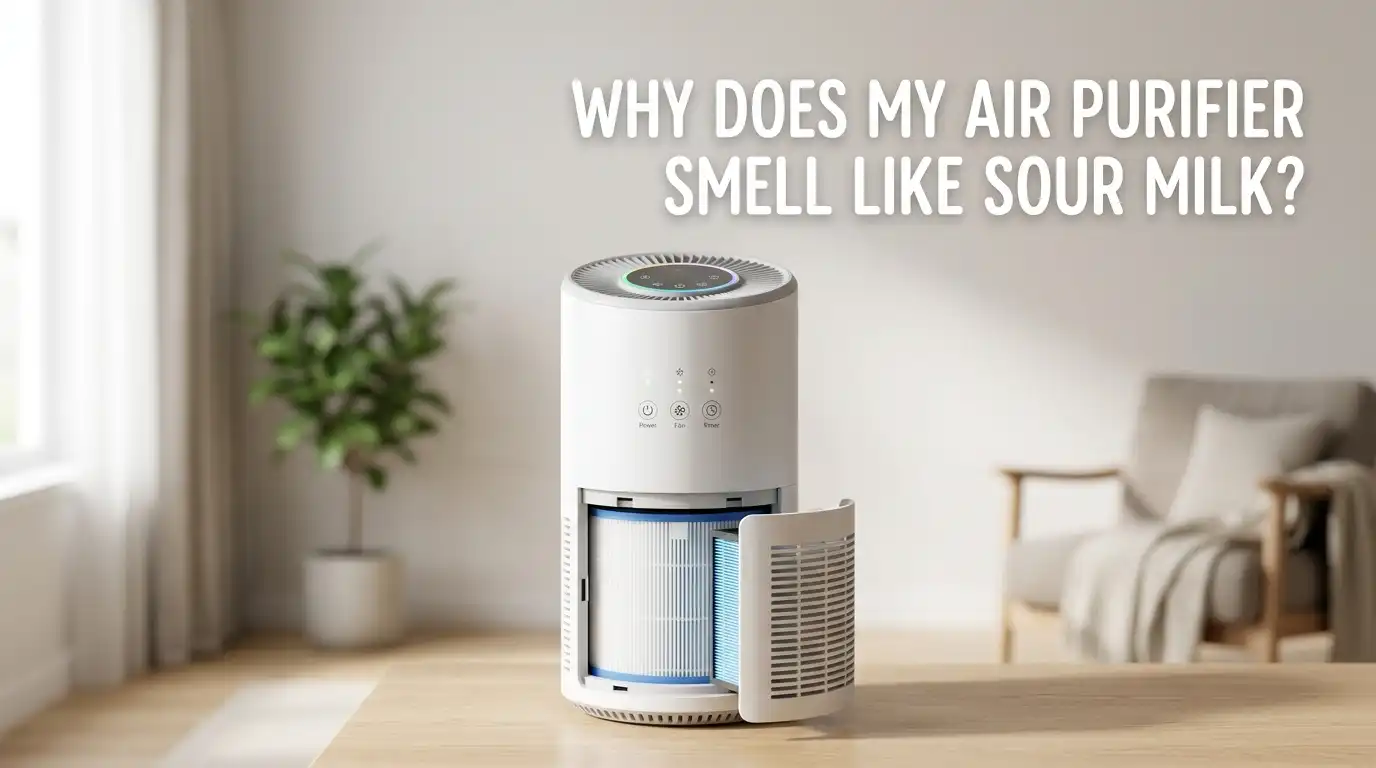
Start by turning off and unplugging your air purifier. Open the front panel and remove the filters one by one. Smell each filter separately. If the HEPA filter smells dusty but not sour, it is likely still fine.
If the carbon filter smells sharp, sour, or like vinegar, that is your problem. Next, run the purifier without any filters installed for five minutes. Stand near the air outlet and smell the airflow. If the machine smells clean without filters, you have confirmed the filters are the source.
If the unit still smells sour with no filters inside, the odor has seeped into the fan blades or interior housing. This happens when mold has grown inside the machine itself. You will need to clean the interior thoroughly.
Solution 1: Replace Your Carbon Filter Immediately
The fastest and most reliable fix for a sour milk smell is a fresh carbon filter. Carbon filters have a limited lifespan. Most manufacturers recommend replacement every three to four months if you run the purifier twenty four hours a day.
Households that cook often, have pets, or live in humid areas may need to replace them even sooner. When you buy a replacement, make sure it is the correct model for your specific purifier.
Using a slightly different size or a generic filter that does not seal properly will let unfiltered air bypass the carbon layer. After you install the new filter, run the purifier on high for a few hours. This clears out any new filter smell and starts pulling fresh air through the system.
Pros of timely replacement: It eliminates the smell instantly and restores full odor removing power. Cons: Replacement filters cost money. Carbon filters wear out faster than HEPA filters.
Solution 2: Clean the Pre-Filter and Unit Interior
Your air purifier likely has a pre filter that catches large particles like hair, lint, and dust. This pre filter does not cause sour smells directly, but a dirty pre filter blocks airflow. Poor airflow keeps moisture trapped inside the unit longer.
That trapped moisture feeds the chemical reaction in the carbon filter. Remove the pre filter and check the manufacturer instructions. Many pre filters are washable. Rinse it under lukewarm water and gently squeeze out the dirt.
Let it dry completely in sunlight before reinstalling. A wet pre filter put back into the unit will make the moisture problem worse. Next, wipe down every interior surface you can reach. Use a soft cloth dampened with a solution of equal parts water and white vinegar.
Pros: A clean interior improves airflow and prevents mold. Cons: The cleaning process takes about an hour from start to finish.
Solution 3: Control Humidity Levels Around Your Purifier
Since moisture is a key ingredient in acetic acid production, controlling humidity is one of the most effective long term solutions. Place a hygrometer in the same room as your air purifier. Check the reading at different times of the day.
Your goal is to keep indoor humidity between thirty and fifty percent. If you use a humidifier for health or comfort reasons, move it to the opposite side of the room. Keep at least six feet of distance between the humidifier and the air purifier.
This gives the water vapor time to disperse before the purifier pulls it in. If you live in a naturally humid region, run a dehumidifier near the air purifier. The dehumidifier will pull excess moisture from the air before it reaches the carbon filter.
Pros of humidity control: It slows the sour smell reaction and protects your entire home from mold. Cons: Dehumidifiers use electricity and need their own maintenance.
Solution 4: Choose an Air Purifier with Separated Filters
If you are still shopping for an air purifier or thinking about replacing your current one, the filter design matters a lot. Air purifiers that combine the HEPA layer and carbon layer into a single integrated filter tend to produce sour smells faster.
The carbon cloth inside these integrated filters has an enormous surface area. That large surface area creates more acetic acid in less time. Purifiers that use separate and independent filters perform better for odor control.
The HEPA filter handles particles while the carbon filter handles gases and smells on its own. When the carbon filter saturates, you replace only that layer. You do not need to throw away the HEPA filter if it still has life left.
Pros of separated filters: Lower long term cost and slower sour smell development. Cons: These models are often larger and may cost more upfront.
How to Prevent the Sour Smell from Returning
Prevention comes down to a simple routine. First, change your carbon filter on a fixed schedule. Write the installation date on the filter frame with a marker. When the date is three months old, swap it out even if it does not smell yet.
Second, clean your pre filter every two weeks. A quick rinse and dry session takes ten minutes and makes a big difference in airflow. Third, inspect the interior of your unit once a month. Look for dust buildup, moisture spots, or any sign of mold.
Wipe it down with a dry microfiber cloth. Fourth, never place your air purifier in a corner or against a wall. Leave at least twelve inches of clearance on all sides for proper air circulation. Fifth, avoid running a humidifier and an air purifier side by side.
When to Call a Professional or Contact the Manufacturer
Most sour smell problems resolve with filter replacement and basic cleaning. But there are situations where you need outside help. Contact the manufacturer if you have replaced the filter twice and the sour smell returns within days each time.
This could point to a design defect or a batch of contaminated replacement filters. Reach out to customer support if you see electrical sparking, hear grinding noises, or notice the unit becoming unusually hot.
These are safety issues, not odor issues. Call a professional HVAC or indoor air quality technician if you suspect the sour smell comes from mold growing inside the ductwork or walls of your home rather than the purifier itself.
Sometimes the purifier pulls in air that already smells bad and simply circulates it. A technician can test your indoor air quality and identify hidden moisture problems. If your unit is still under warranty, do not open sealed internal components yourself.
Pros of professional help: It catches hidden issues you might miss. Cons: Service calls cost money and may leave you without a purifier for days.
FAQs
Why does my air purifier smell sour only when I first turn it on?
This happens because odor compounds build up inside the filter while the unit is off. When you power it on, the fan pushes a concentrated burst of stale and sour air into the room. After a few minutes, the smell fades as fresh air dilutes the trapped odors. This is a classic sign that your carbon filter is near the end of its life.
Can I wash my carbon filter to remove the sour smell?
Most carbon filters are not washable. Water damages the activated carbon structure and reduces its ability to adsorb gases. Rinsing a carbon filter also spreads the acetic acid deeper into the material. The filter may smell better for a few hours and then smell worse than before. Replace it instead.
Is the sour milk smell from my air purifier harmful?
The acetic acid concentration in the air from a sour filter is very low. It is generally not harmful to breathe in small amounts. However, the smell can cause headaches or nausea in sensitive people. More importantly, a dirty filter can also harbor mold spores and bacteria, which may trigger allergies or asthma.
How do I know if the smell is from mold or from the carbon filter?
Remove the filter and smell it closely. A mold smell is musty, damp, and earthy. A carbon filter smell is sharp, sour, and vinegary. If you see black, green, or white fuzzy spots on the filter or inside the unit, you have mold. Replace the filter and clean the unit thoroughly.
Can I run my air purifier without a carbon filter to avoid the smell?
Yes, you can remove the carbon filter and run the unit with only the HEPA filter. The HEPA filter will still capture dust, pollen, and pet dander. You will lose the ability to remove odors and gases from the air. If odor removal is not a priority, this is a valid option that eliminates sour smells permanently.
Does placing my air purifier near a window help prevent the smell?
Placing the purifier near a slightly open window can help by bringing in dry outdoor air. This reduces humidity inside the filter and slows acetic acid production. However, the purifier will also pull in outdoor pollutants, which fill the filter faster. This approach works best when outdoor air quality is good and humidity is low.

I’m Maya Brown, the voice behind Pure Breeze Vault. I write detailed, honest, and easy-to-follow air purifier reviews to help readers compare features, understand filter technologies, and choose products with confidence. My goal is to make research simpler, clearer, and more practical for anyone improving indoor air quality at home.